
Peruvian Apple Cactus
Cereus repandus
Cereus peruvianus, Peruvian Apple, Apple Cactus, Giant Club Cactus, Hedge Cactus, Hildmann's Cereus


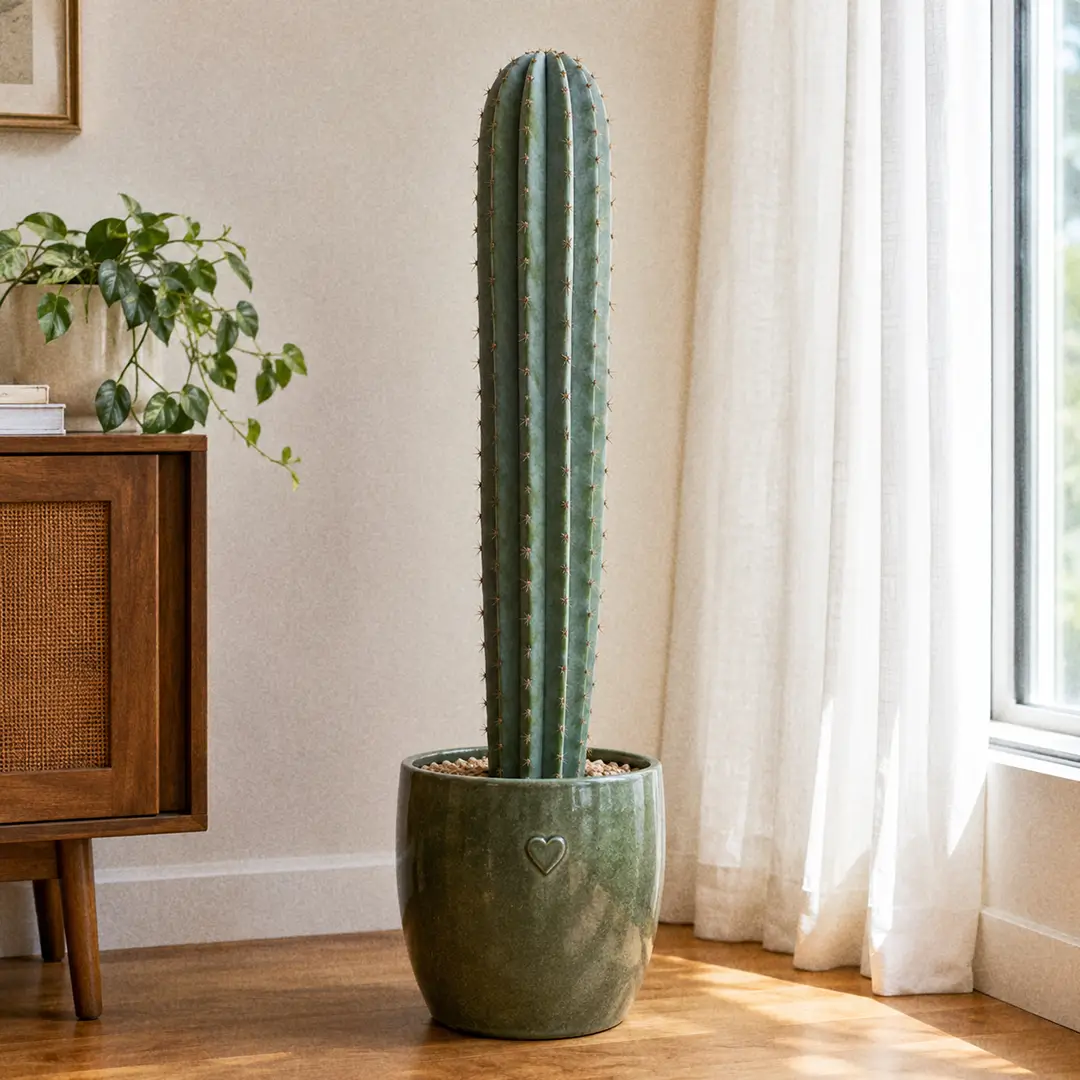
The Peruvian Apple Cactus (Cereus repandus) is a tall, blue-green columnar cactus famous for its bold ribbed silhouette, its fast growth, and the sweet pink-skinned fruit that earned it the "Apple Cactus" name. It is one of the easiest large indoor cacti to keep alive and the closest a houseplant gets to a desert-skyline statue.
📝 Peruvian Apple Cactus Care Notes
🌿 Care Instructions
⚠️ Common Pests
📊 Growth Information
🪴 In This Guide 🪴

☀️ Peruvian Apple Cactus Light Requirements (Full to Bright Indirect Sun)
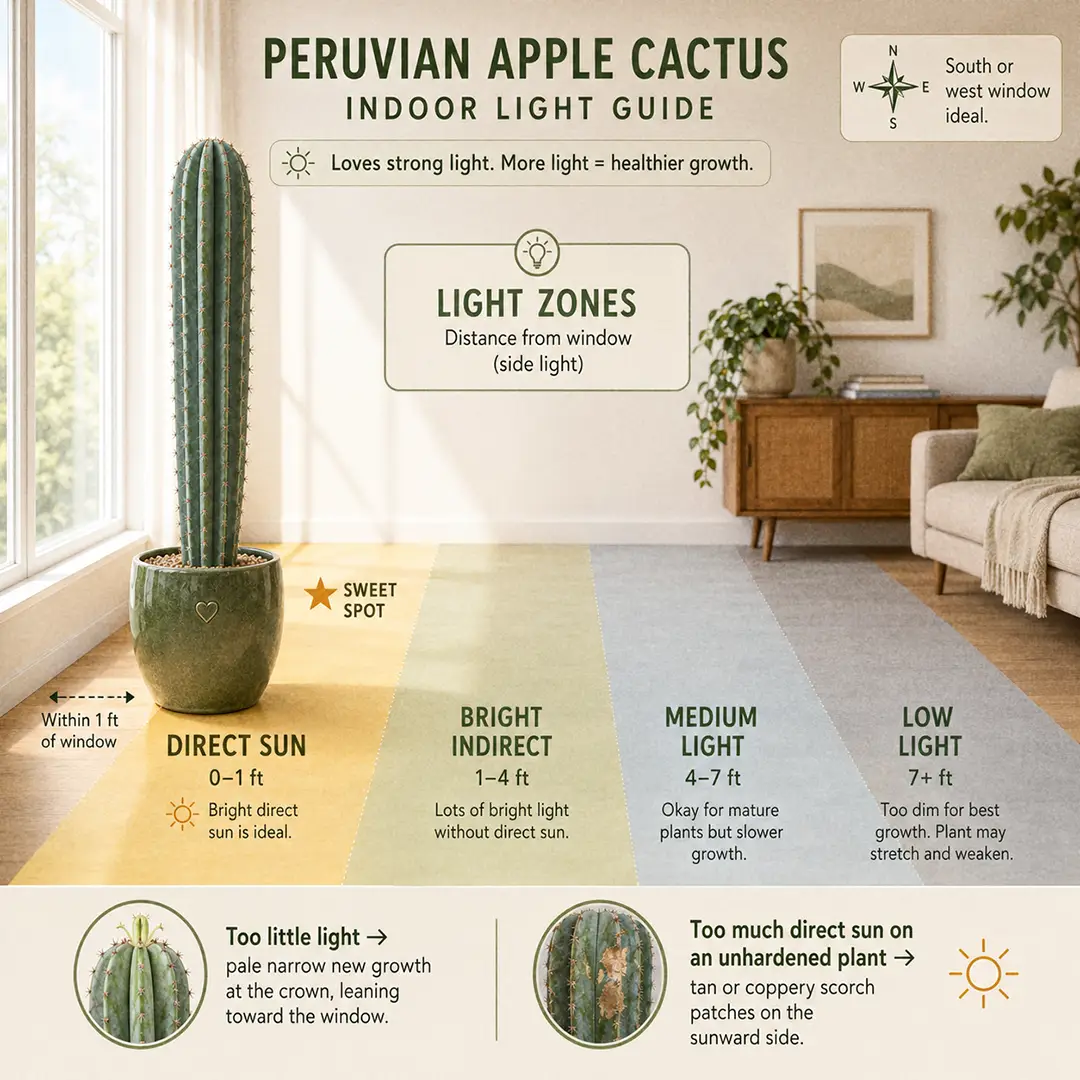
Light is the single biggest variable for this plant. A Peruvian Apple grown in strong sun is dense, blue-green, and grows visibly each summer. The same plant in a dim corner stretches out, pales, and leans toward the nearest window within a few months. This is a desert species that wants as much direct sun as you can give it indoors.
The Sweet Spot
The ideal indoor home is right in front of a south or west window with four to six hours of direct sun a day. An unobstructed east window works too, though growth is slower and the blue-green color a little less intense. Keep the pot within a foot of the glass year-round. In a low-light apartment, a full-spectrum grow light on a 12 to 14 hour timer is a reliable substitute. See light for houseplants for the broader framework.
Too Little Light
In low light, the new growth at the crown comes in pale, narrow, and lighter green, with shallower ribs and weaker spines. Within a year the top can outweigh the base and lean. Move the plant closer to the brightest window or add a grow light directly above the crown.
Too Much Light
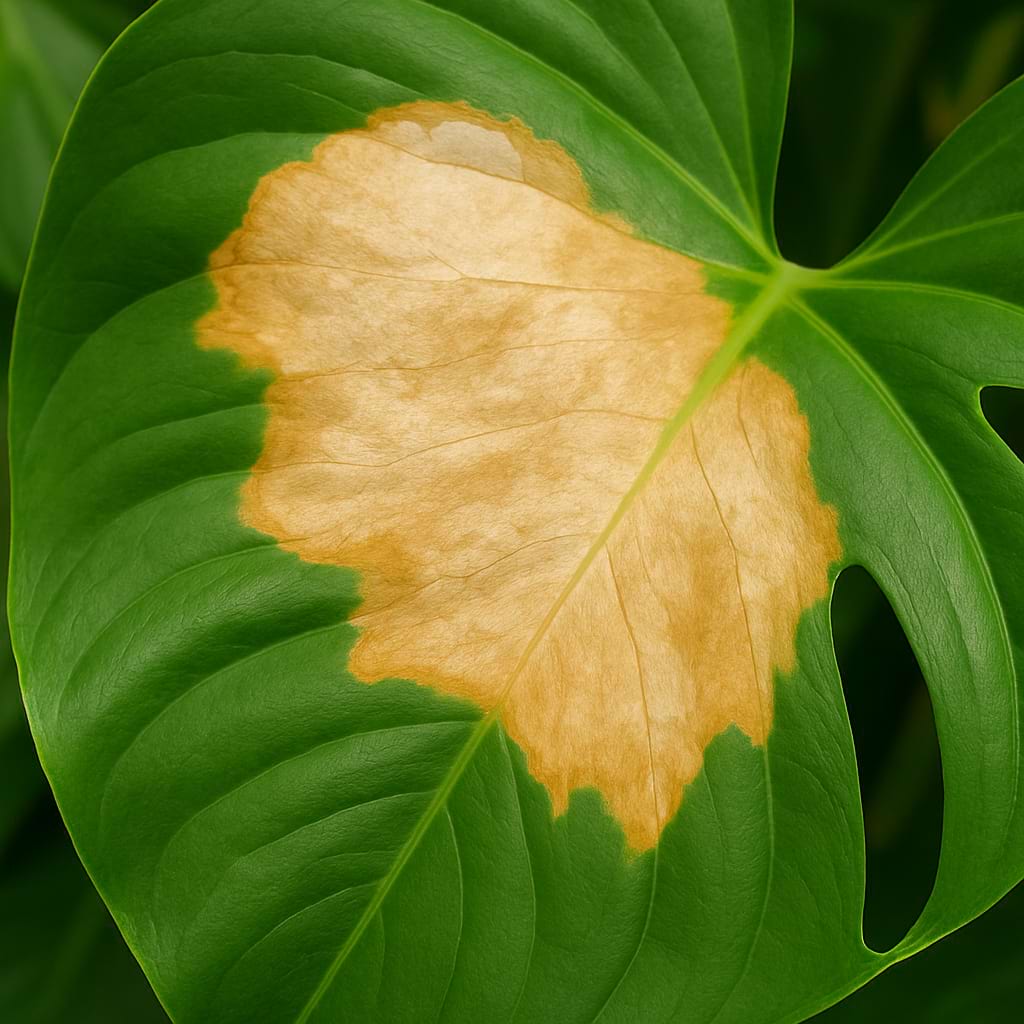
A plant moved suddenly from a shaded shop to a hot south window can scorch on the sunward side within a couple of afternoons, leaving tan or coppery patches that never fade. Acclimate over two weeks instead, moving the pot a foot closer to the glass every few days. A well-hardened mature plant on a south windowsill in midsummer rarely scorches.
💧 Peruvian Apple Cactus Watering Guide (Soak and Dry, Sparingly)
Watering is what kills most large columnar cacti indoors. The Peruvian Apple stores enormous reserves in its body, so it tolerates long droughts comfortably. What it cannot tolerate is sitting in damp soil for more than a day or two.
Watering Frequency
In spring and summer, water deeply only when the soil is bone dry top to bottom. For a 10 inch terracotta pot in a sunny window, that lands roughly every 14 to 21 days; a glazed or plastic pot stretches to three or four weeks. Lift the pot to test. A fully dry pot is shockingly light, and weight beats a finger poked into the top inch. See watering houseplants for the basic technique.
In autumn and winter, cut back hard. A plant in a cool 50 to 60°F (10 to 15°C) room can stay almost dry for three months and come out ready to flower. A plant in a heated 70°F (21°C) living room still needs a small drink every five to six weeks to stop the column from shrivelling.
How to Water
Pour room-temperature water around the base until it runs out the drainage hole, wait ten minutes, then tip out the saucer. Never let the pot sit in standing water. Avoid pouring water down the ribs where it can pool at the spines, since trapped moisture invites fungal spotting. Bottom watering works well if your mix is gritty and your pot is small enough to lift.
Signs of Trouble
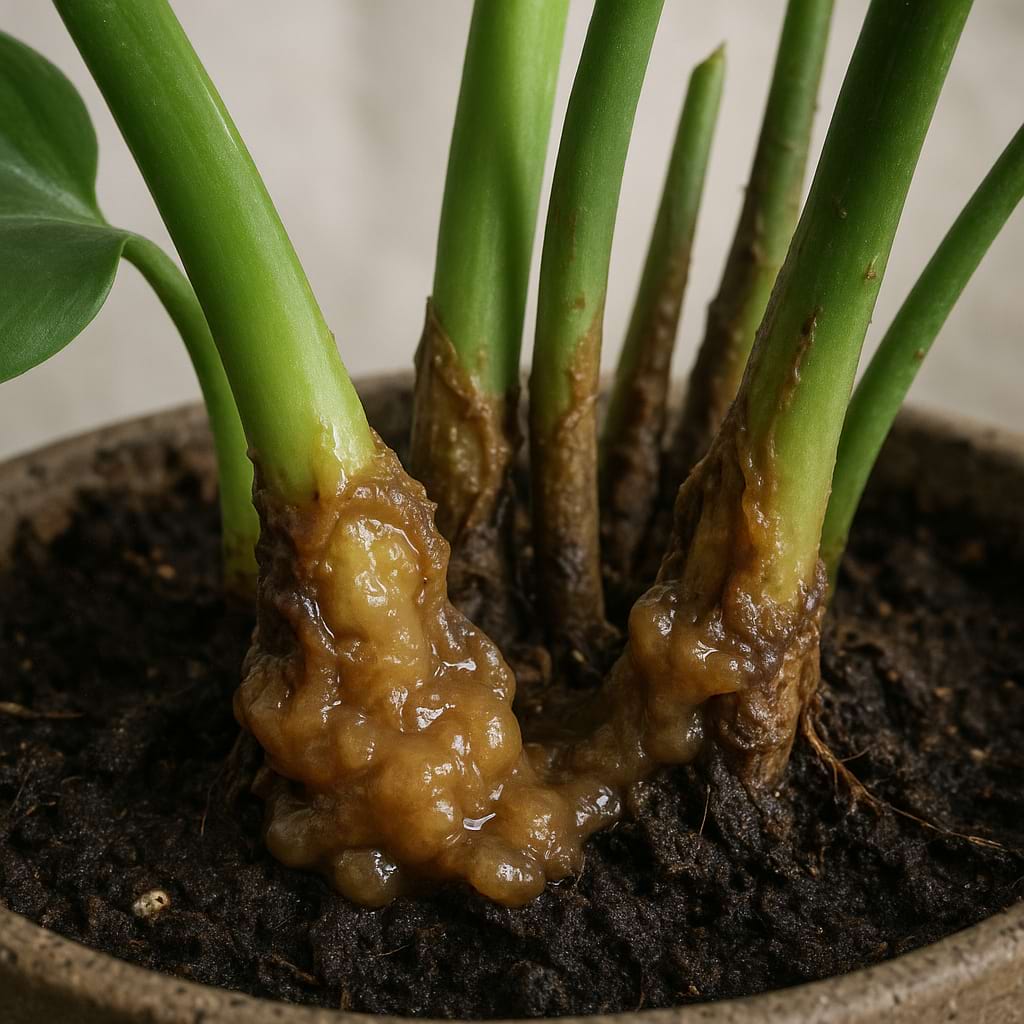
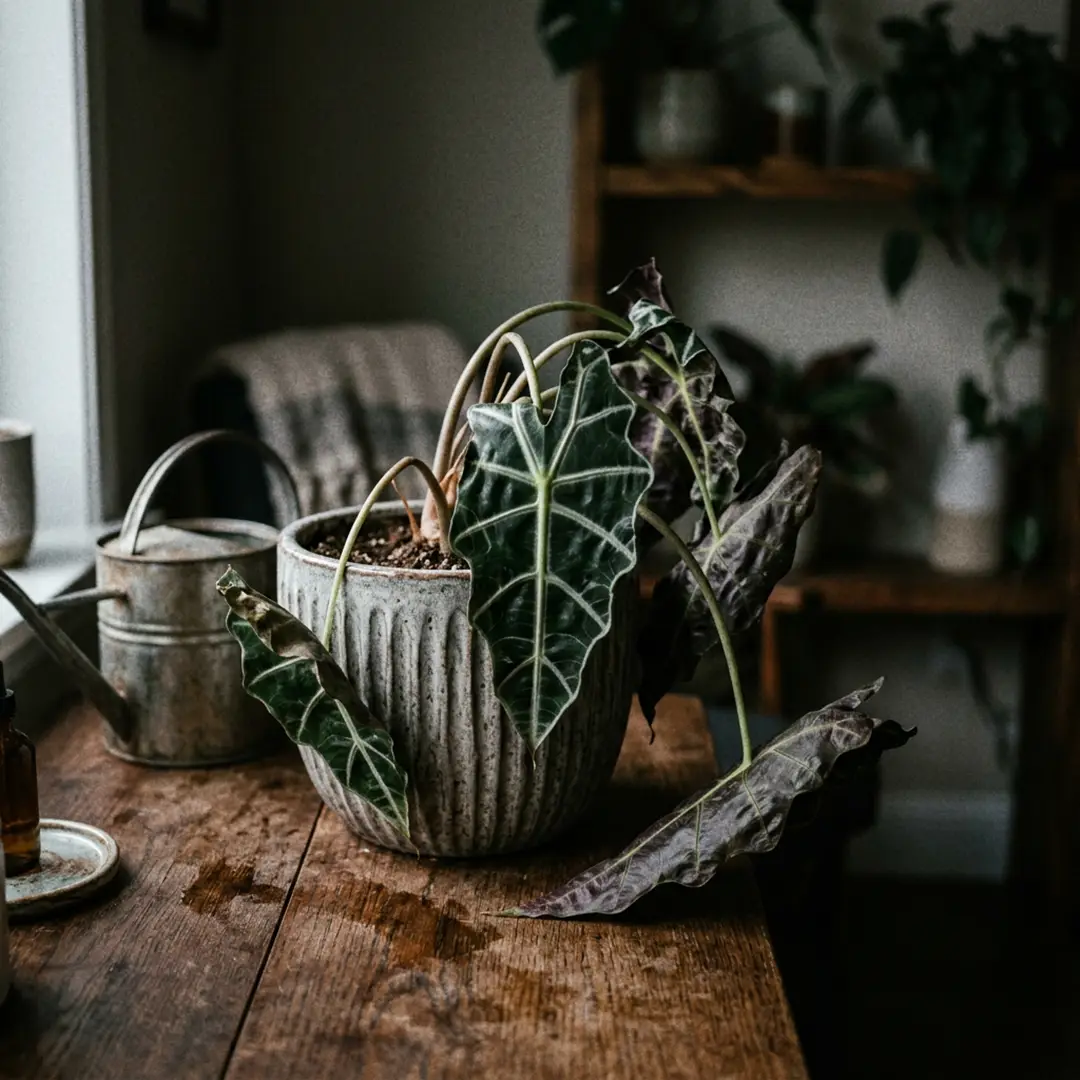
A thirsty Peruvian Apple develops shallow lengthwise creases along the ribs and the body feels slightly soft. One deep water plumps it back within a couple of days. Overwatering looks different: the base discolors brown to mahogany, the column goes squishy at the soil line, and the plant may eventually topple. Once rot has reached the body, slice cleanly above the damage and re-root the healthy top in dry grit.
🪴 Best Soil for Peruvian Apple Cactus (Gritty and Mineral-Heavy)
Soil is the single most useful decision you can make for this cactus. The right mix forgives the occasional watering mistake; the wrong one punishes a careful schedule.
What the Soil Needs
You want a mix that drains in seconds, dries fully within a week, and contains very little peat. The Peruvian Apple grows in thin, gritty soils across northern South America. The species is forgiving on pH, but a slightly alkaline lean suits it best.
DIY Soil Mix
- 1 part standard cactus and succulent mix
- 1 part coarse pumice (or perlite)
- 1 part coarse horticultural sand or fine gravel
Squeeze a damp handful; it should fall apart the moment you open your fingers. If it holds together, add more pumice. For a large floor plant, a small amount of well-aged compost mixed in is fine, since the larger root system handles a touch more organic matter.
Pre-Made Options
Most bagged cactus mixes are too peaty for a Peruvian Apple, especially in a deep pot where moisture lingers at the bottom. Cut any bagged mix 50/50 with pumice or perlite. Avoid anything labeled "moisture retentive". See repotting for the wider context.
🍼 Fertilizing Peruvian Apple Cactus (Light Monthly Feeds)
Compared to many cacti, the Peruvian Apple is a faster grower and a slightly heavier feeder. It still does not need much, but a light monthly feed through the warm season pays off in noticeable new growth.
When and How Often
Feed once a month from late spring through late summer, roughly May through August. Skip the rest of the year entirely and never feed a freshly repotted plant for the first two months. Plants under grow lights with no real seasonal change can be fed lightly year-round if they are actively growing, but most home plants do better with a clean winter rest.
What to Use
Use a low-nitrogen cactus and succulent fertilizer (something around 2-7-7 or 5-10-10) at half the label strength. Always water the plant with plain water first, then apply the diluted feed to damp soil. Liquid kelp at a quarter strength is a gentler organic alternative. See fertilizing houseplants for general guidance.
Over-Fertilizing Signs
A white crust on the soil surface or around the pot rim means salt build-up. Flush the pot with two or three pot volumes of plain water, skip the next planned feeding, and dilute further next time. New growth that comes in unusually pale, soft, or wider than the older column is the early warning that you are pushing the plant too hard.
🌡️ Peruvian Apple Cactus Temperature Range
This cactus is genuinely tough on temperature. The native range runs across hot lowland South America, so warm days do not faze it, and a brief cold snap does no harm if the plant is dry at the root.
Ideal Range
Through spring, summer, and autumn, aim for 65 to 95°F (18 to 35°C). Normal indoor temperatures are perfect, and a hot sunny windowsill in July is no problem on a hardened plant. Mature outdoor plants in zones 9 to 11 survive brief drops to around 28°F (-2°C) if completely dry, but indoor plants should never see below 45°F (7°C).
Winter Rest and Drafts
A cool winter rest at 50 to 60°F (10 to 15°C) for at least six to eight weeks helps trigger flowering on mature plants. An unheated bright porch, a cool spare room, or a window behind a thermal curtain all work. Keep the plant away from cold drafts from a December door and away from the dry blast of a forced-air heating vent, both of which can cause uneven shrivelling on one side of the column.
💦 Peruvian Apple Cactus Humidity Requirements
Ideal Humidity
Easy. The Peruvian Apple is comfortable in normal household humidity, anywhere from 30 to 45 percent. No misting, no humidifier, no pebble trays. The whole point of the body's design is to thrive in dry air.
Easy Humidity Boosters
You almost never need any. The only humidity-related risk is a damp, cool, still corner in late autumn before the heating kicks in. Stagnant air at low temperatures encourages black fungal spots along the rib edges. A small clip-on fan running a few hours a day fixes that. Avoid steamy bathrooms and closed terrariums entirely.
🌸 Peruvian Apple Cactus Flowers and Fruit (Nocturnal White Blooms, Sweet Pink Apples)
This is one of the few large cacti that flowers and fruits reliably enough indoors that some collectors specifically grow it for the harvest. The bloom is dramatic, the fruit is sweet, and both happen on the same plant if conditions are right.
What the Flowers Look Like
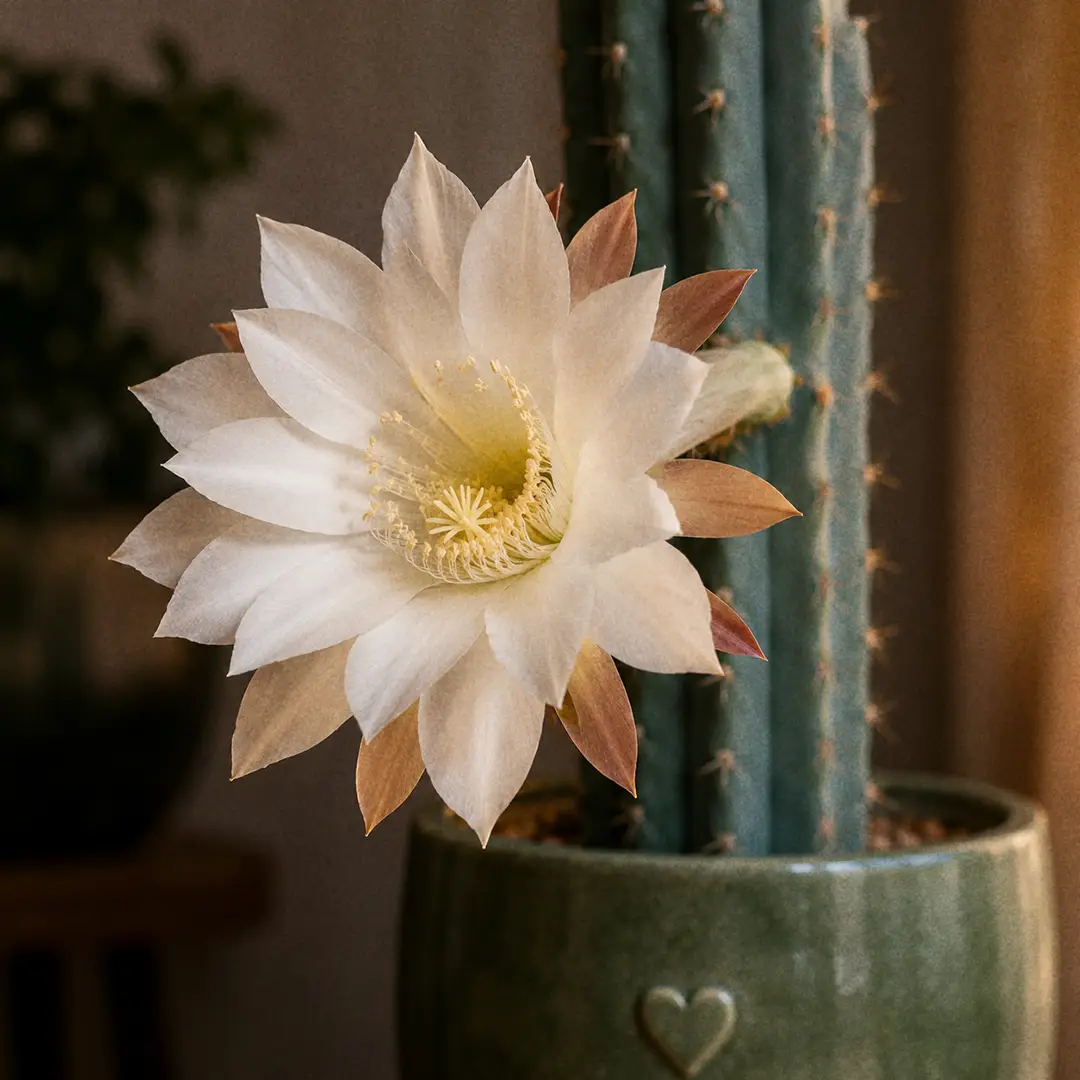
The flowers are huge by indoor standards, six to nine inches across, with creamy white inner petals, reddish-brown outer petals, and a long pale tube. They emerge along the upper ribs of a mature column, open at dusk, stay open through the night, and close again by mid-morning. The scent is light and slightly sweet.
The Fruit (Peruvian Apple)
After a successful bloom, a small green fruit swells along the rib and ripens over six to eight weeks into a pink or red sphere about the size of a small apple. The skin is smooth, the flesh inside is white, slightly translucent, and dotted with tiny black seeds. The flavor is mild, sweet, and refreshing, somewhere between a kiwi and a dragon fruit. The fruit is genuinely edible and is the source of the common name. If a cactus you can harvest from appeals, the Prickly Pear is the other easy option, grown for both its magenta tuna fruit and its edible pads.
How to Trigger Bloom
Three things have to line up. The plant has to be mature, usually at least three feet tall and four or five years old. It has to have spent the previous winter cool and almost dry, ideally at 50 to 60°F (10 to 15°C) for six weeks or more. And it has to be getting strong direct sun from spring through summer. Plants kept warm and watered year-round will grow happily for decades without ever flowering.
If It Won't Bloom
If the plant is healthy and tall enough but never flowers, the missing ingredient is almost always the cool dry winter rest. The second most common reason is simply not enough direct sun in summer. A grow light is not always strong enough to push a column into flowering, though some collectors manage it with high-output LED setups.
🏷️ Peruvian Apple Cactus Types and Varieties
The species is variable in cultivation, and a handful of named forms are widely sold under both Cereus repandus and the older, technically invalid name Cereus peruvianus. Most are kept as houseplants for the silhouette rather than the fruit.
Cereus repandus (Wild Form)
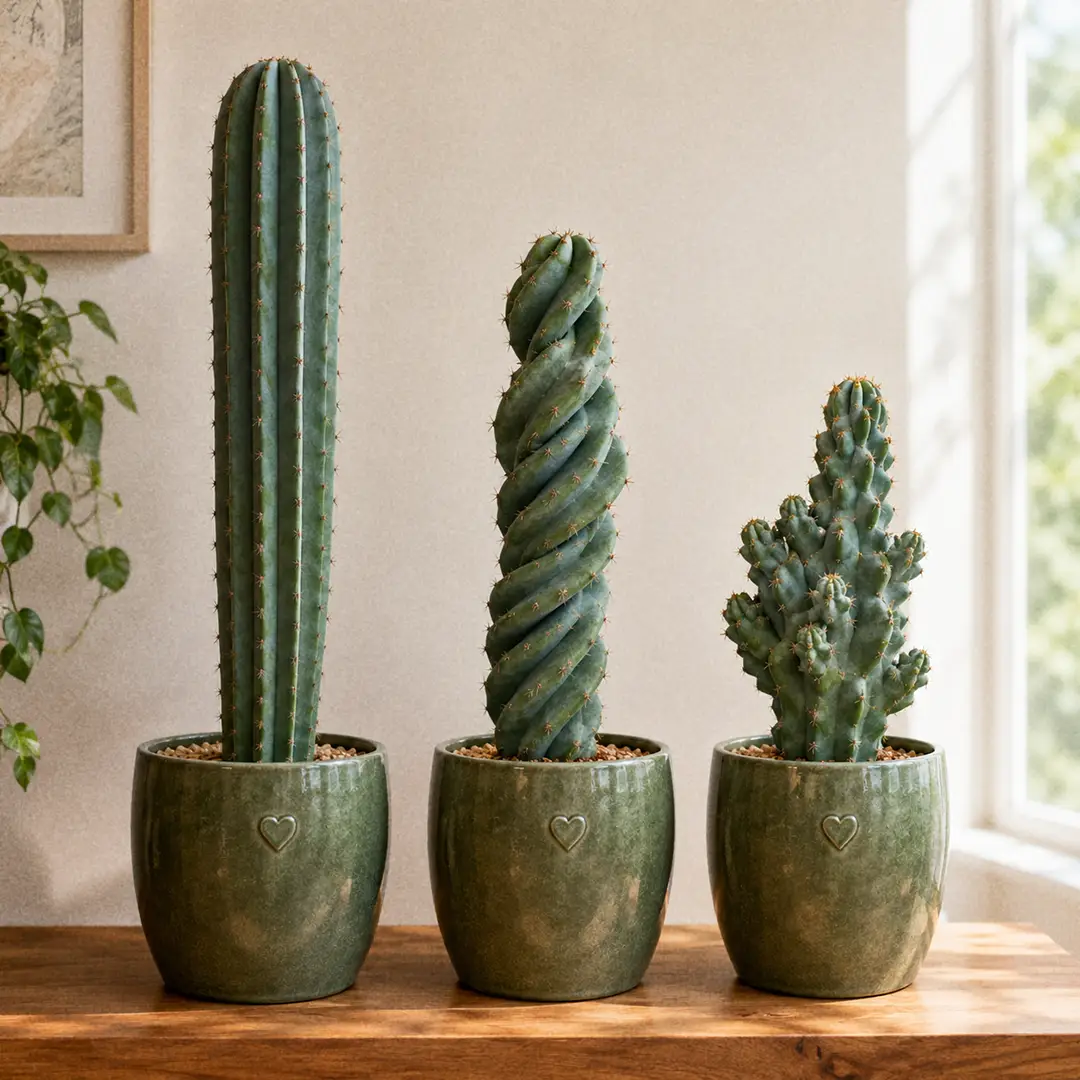
The classic. Six to nine clean ribs, blue-green to grey-green column, evenly spaced yellowish-brown spines along the rib edges. Fast-growing and freely branching once it reaches a few feet tall. Reliable bloomer on mature plants. This is the form most often sold at garden centers and big-box stores.
'Spiralis' (Spiral Cactus)
The collector's pick. A stable cultivar whose ribs twist around the column in a tight helix, giving the whole plant the look of a slowly turning corkscrew. The spiral is a fasciation mutation that breeds true from cuttings of the spiraled portion. Care is identical to the species, though growth is a touch slower. The twist is far better known on a close relative, Cereus forbesii f. spiralis, sold as the Spiral Cactus: it is bluer, slower, and more sparsely spined than a Peruvian Apple, and the two are shelved side by side and mislabelled constantly.
'Monstrose' (Monstrose Apple Cactus)
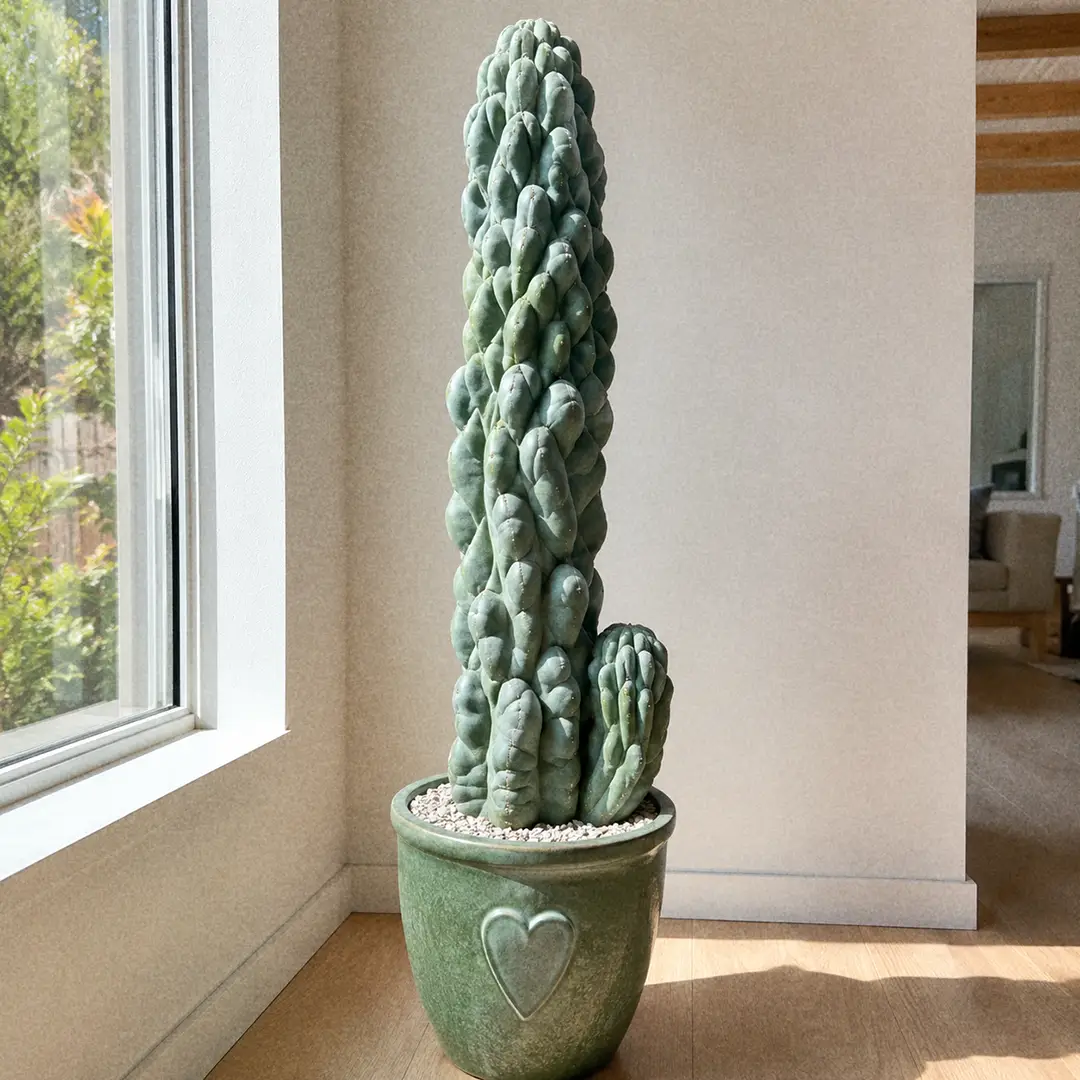
A genetically unstable form where growth points proliferate randomly along the column, producing irregular knobby bumps and unpredictable branching. Each plant is one of a kind. Slower-growing than the wild form. Sometimes sold as 'Monstrosus' or under specific named clones. Shoppers confuse this one with the Totem Pole Cactus, a different species whose monstrose form drops its spines entirely; if the knobby column in front of you still has spines, it is a Cereus. The other regular mix-up is the Fairy Castle Cactus, which branches into a cluster of short five-ribbed towers at uneven heights instead of building one tall column.
'Florida' (Florida Cereus)
A wide-ribbed, vigorous form widely planted in the Florida Keys and South Florida landscapes. Slightly bluer in color than the standard species, with deeper rib valleys. The fruit on 'Florida' is among the sweetest of the named forms.
Good Shelf Companions
The closest plants to a Peruvian Apple are the other tall columnar cacti. The white-hair-covered Old Man Cactus is the perfect textural opposite, the dense-fleece-wrapped Peruvian Old Man Cactus is its fellow Andean countryman and makes a natural pairing if you want two Peruvian columns side by side, and the ghostly chalky stem of a White Ghost Cactus makes a striking fourth silhouette. At the base of the columns, a perfect green sphere like a Golden Barrel Cactus, the spineless star outline of a Bishop's Cap Cactus, and the flat-globed Star Cactus build out the full desert-corner scene. Add a candy-bright grafted Moon Cactus for color and the polka-dot pads of a Bunny Ear Cactus for shape contrast.
🪴 Potting and Repotting Peruvian Apple Cactus
When to Repot
This is a fast grower by cactus standards and a tall plant that gets top-heavy quickly. Repot every two to three years, or whenever the column is more than three times the height of the pot. Spring or early summer is the best window. Avoid repotting in autumn or winter unless you are rescuing a plant from rotted soil.
Choosing a Pot
A heavy terracotta pot one to two inches wider than the current one is the right choice for a column this tall. Clay wicks moisture out of the mix and the weight keeps the pot from tipping when the column eventually leans toward the window. Glazed ceramic in a wider, low profile works too, especially if you weight the bottom with a layer of pebbles before adding mix. Make sure there is at least one large drainage hole. Avoid plastic pots above about 8 inches in diameter, since a tall column in a light plastic pot tips at the first nudge.
Step-by-Step Repotting
- Wait until the soil is bone dry; a dry rootball pops out cleanly.
- Wrap the column in folded newspaper or a thick towel to protect your hands from the spines, then have a second person steady the top while you tip the pot.
- Slide the rootball out and shake off the old mix. A chopstick helps loosen compacted soil from between the larger roots.
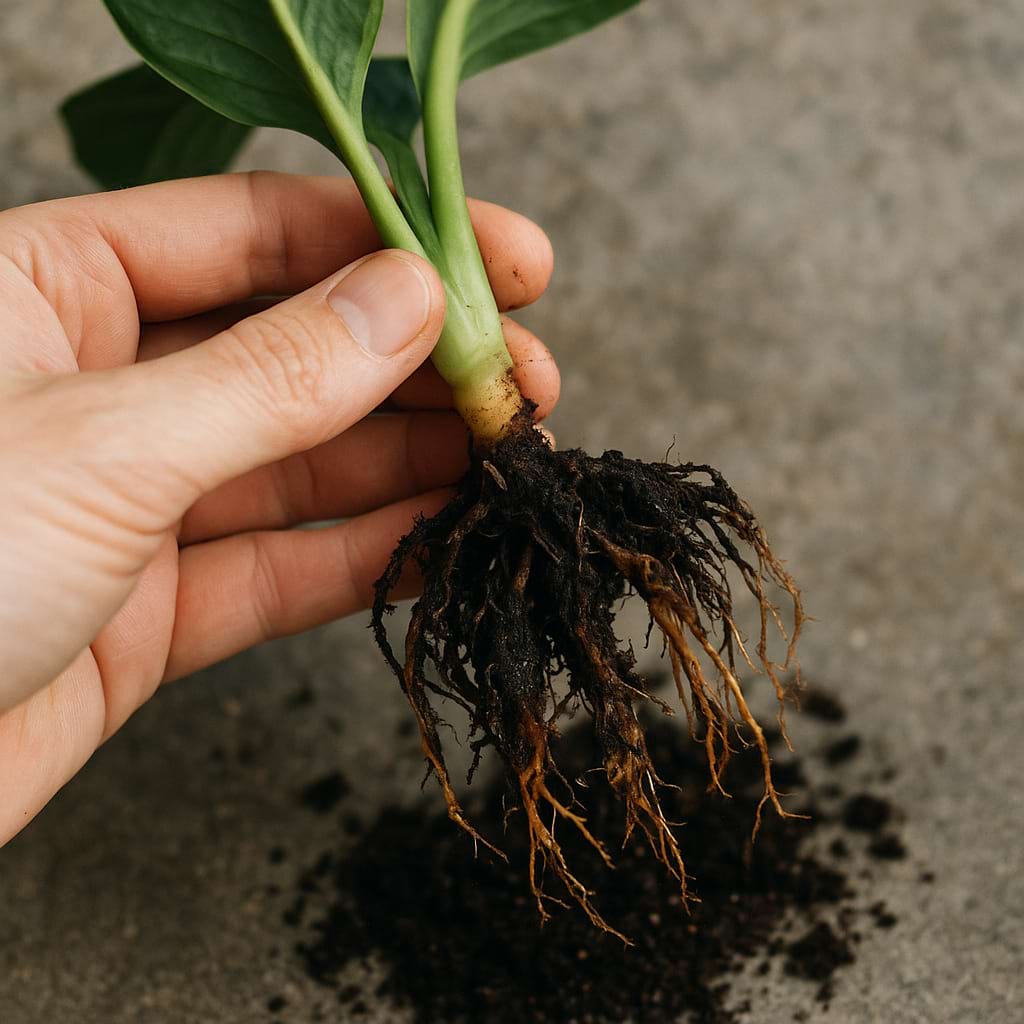
- Inspect the roots and trim any black, mushy, or hollow ones with sterile scissors. Healthy roots are firm and pale tan.
- Set fresh gritty mix in the new pot. Place the cactus at the same depth as before; burying the column above its original soil line is a fast route to rot.
- Backfill, tamp lightly with a chopstick, and top-dress with a thin layer of gravel to lock the column upright.
- Stake with two bamboo canes and soft ties if the column wobbles. Do not water for one full week so any nicked roots can callus.
✂️ Pruning Peruvian Apple Cactus
Why Pruning Is Rare
The Peruvian Apple does not need shaping the way a leafy plant does. Pruning is essentially a structural decision, not a care task, and most home plants go their entire lives without a single cut. The two reasons to actually pick up a knife are height management and rescue work after rot.
Beheading a Tall Plant
If a column outgrows the ceiling or leans badly, you can behead it. Slice cleanly across the column with a sterile knife at the height you want, dust the cut with sulfur powder, and rest the top piece in a dry shaded spot for two weeks until a hard callus forms. The cut top will root in dry grit, and the stump will push two or three new branches from the cut zone, which is also how you build a candelabra silhouette.
Cutting Out Rot
If the base has rotted, slice horizontally at least two inches above any visible discoloration, dust the cut with sulfur powder, and rest the top piece on dry grit for two weeks. Once a hard callus has formed, set it on fresh dry mix and water only after another two weeks. The rotted base is rarely worth saving.
🌱 How to Propagate Peruvian Apple Cactus
Best Method: Stem Cuttings
The Peruvian Apple roots almost embarrassingly easily from stem cuttings, which is why a single landscape plant can stock half a neighborhood. This is by far the most reliable home method.
Step-by-Step Cuttings
- In late spring or early summer, choose a healthy section of column at least six inches long. A branch tip works, as does a section taken from a beheading.
- Cut cleanly with a sterile knife straight across the column and dust the wound with sulfur powder.
- Set the cutting upright in a dry, shaded, well-ventilated spot for two weeks. A hard pale callus should form across the cut surface; skipping this step is the number one cause of rot in cactus cuttings.
- Set the callused end half an inch into a small pot of dry gritty cactus mix. Do not bury deep.
- Wait two more weeks before the first light watering. Roots form within four to six weeks; confirm with a very gentle tug.
- Treat as a rooted plant from then on, with soak-and-dry watering and bright light.
Tips for Success
Take cuttings in warm weather, never winter. Use a clean blade to prevent fungal infection. A wider cut needs more callus time; a column four inches across can rest three to four weeks before potting. See succulent propagation for the broader technique.
Propagation by Seed
Seed is reliable but slow. Sow on the surface of sterile gritty seed mix in spring, cover with a clear lid, and keep warm at 70 to 80°F (21 to 27°C). Seedlings appear in two to three weeks as tiny green pillars and take several years to look like the parent.
🐛 Peruvian Apple Cactus Pests and Treatment
Peruvian Apples are not pest magnets, but the rib valleys give insects perfect hiding places, especially on plants kept indoors year-round in dry air.
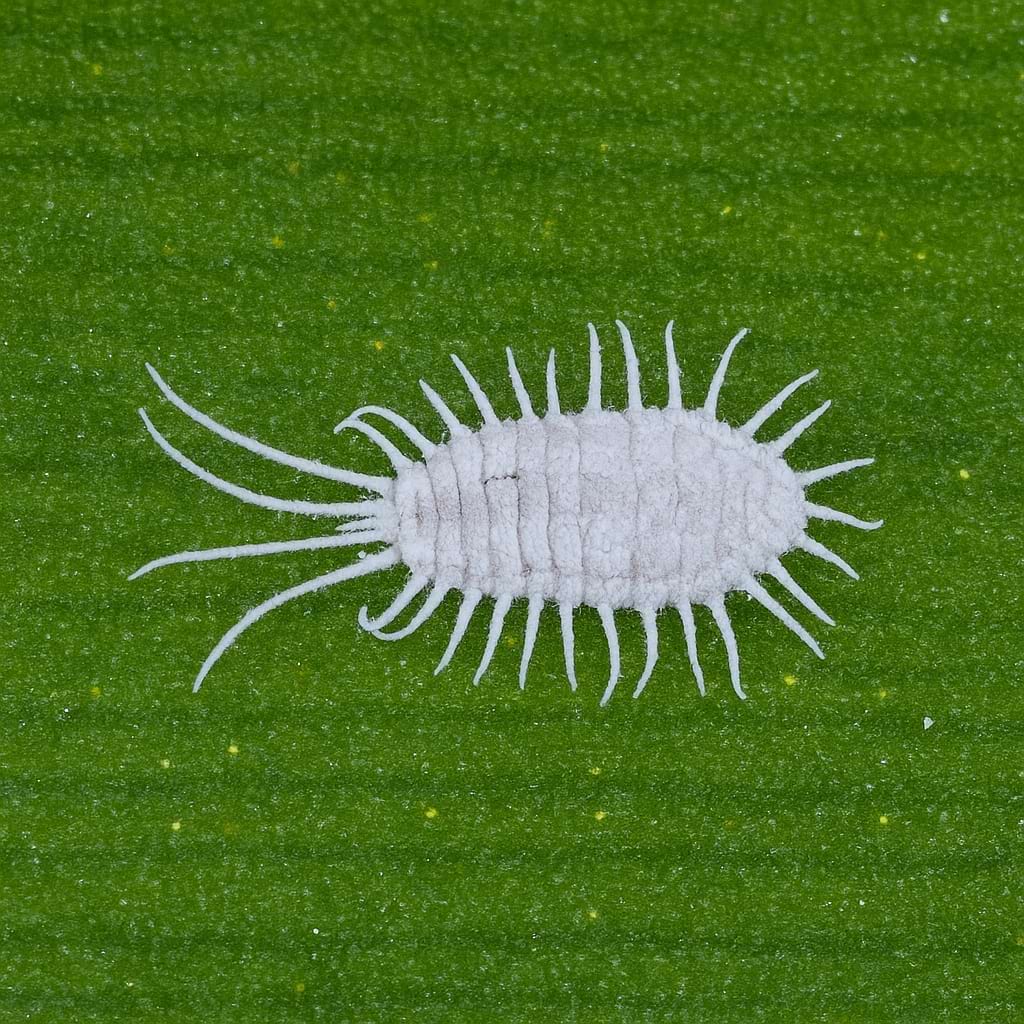
- Mealybugs: Cottony white tufts tucked deep into the ribs. Dab each one with isopropyl alcohol on a cotton swab every five to seven days for three weeks; heavy infestations call for a systemic soil drench.
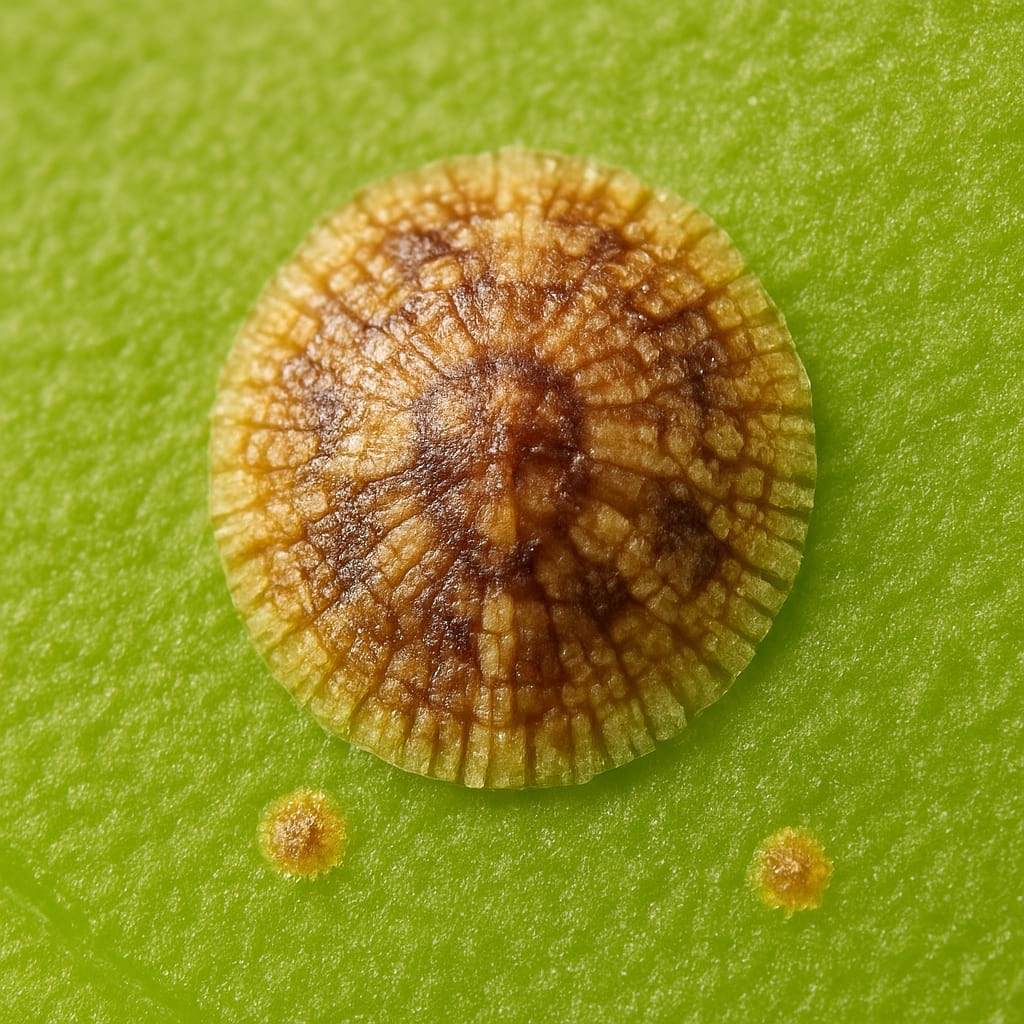
- Scale Insects: Small flat brown or tan shells stuck along the rib edges where they blend with the spines. Scrape off with a wooden toothpick and follow up with neem oil.
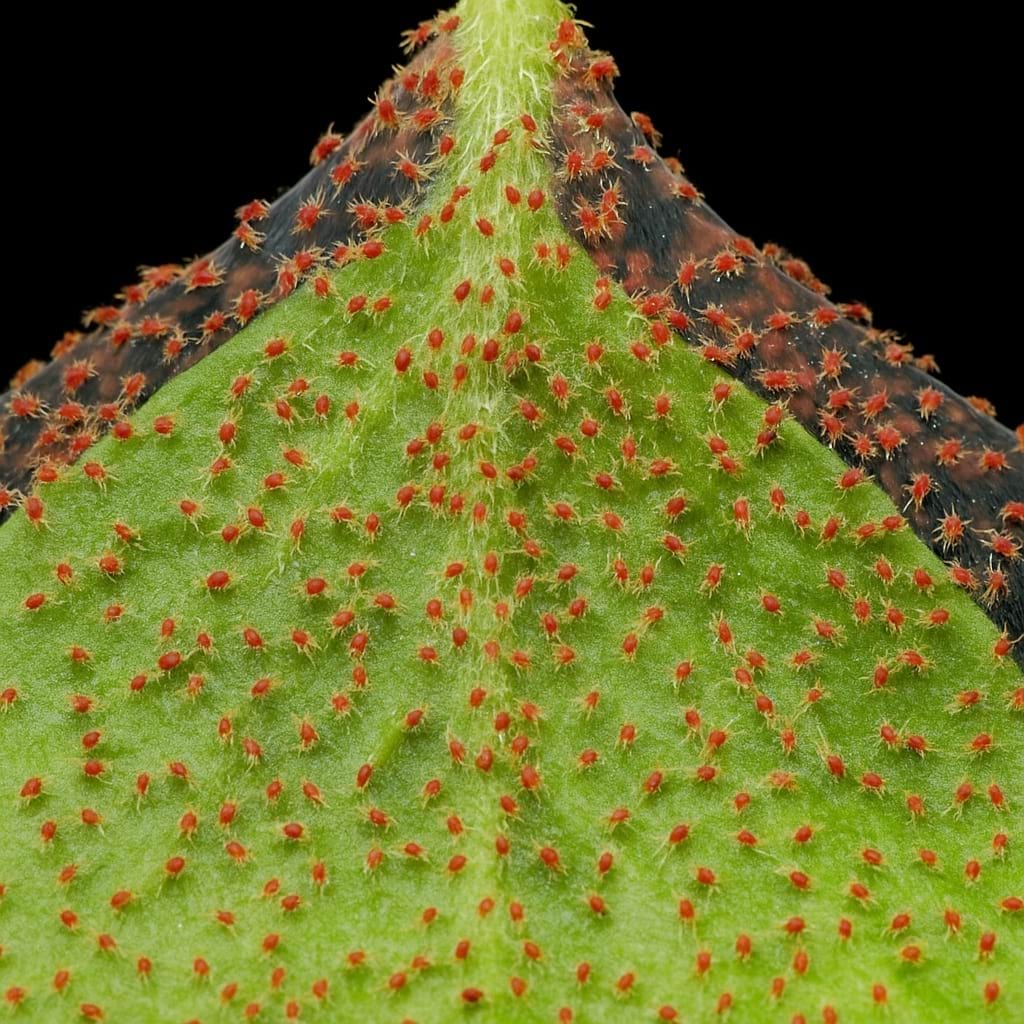
- Spider Mites: Fine webbing in the rib valleys, especially in warm dry indoor air through winter. Wipe gently with a soft cloth and treat with a mild horticultural soap.
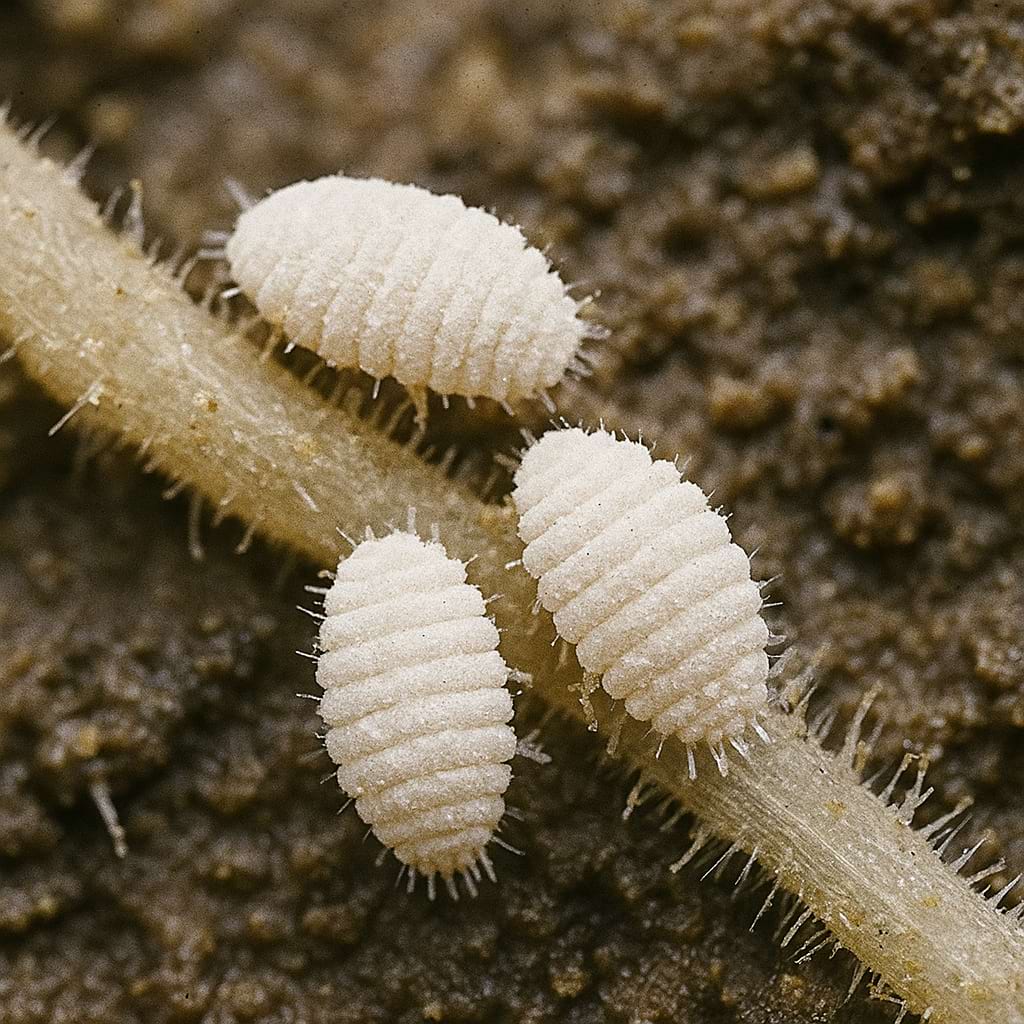
- Root Mealybugs: White powdery clusters on the roots, invisible until you unpot. Wash the roots clean, repot in fresh dry mix, and skip watering for two weeks.
Never let liquid sprays pool in the rib valleys at the top of the plant. Trapped wet there causes the black fungal spots described in the next section.
🩺 Common Peruvian Apple Cactus Problems
Almost every Peruvian Apple problem traces back to wet soil, cold damp air, or strong sun on an unhardened plant.
- Root rot and mushy base: The biggest killer. The base discolors brown then black and the column softens at the soil line. Once advanced, slice well above the rot and re-root the clean top in dry grit.
- Brown-black spots along the ribs: Cool damp air plus water trapped in the rib valleys. Improve airflow, water at the soil only, and dust spots with sulfur powder.
- Sunburn / bleaching: Tan or coppery patches on the sun-facing side after a sudden move into strong light. Harden in over two weeks next time; damage does not heal.
- Yellowing column: A whole-column yellow cast with softening is overwatering. A flat yellow flush from the top in summer is often sun stress on an unhardened plant.
- Mushy stems at the soil line: Same cause as root rot. Act fast; only the clean top above the damage is worth saving.
- Wilting or shrivelling with lengthwise creases: Almost always thirst, especially after a long winter dry. Confirm the soil is fully dry, then water deeply.
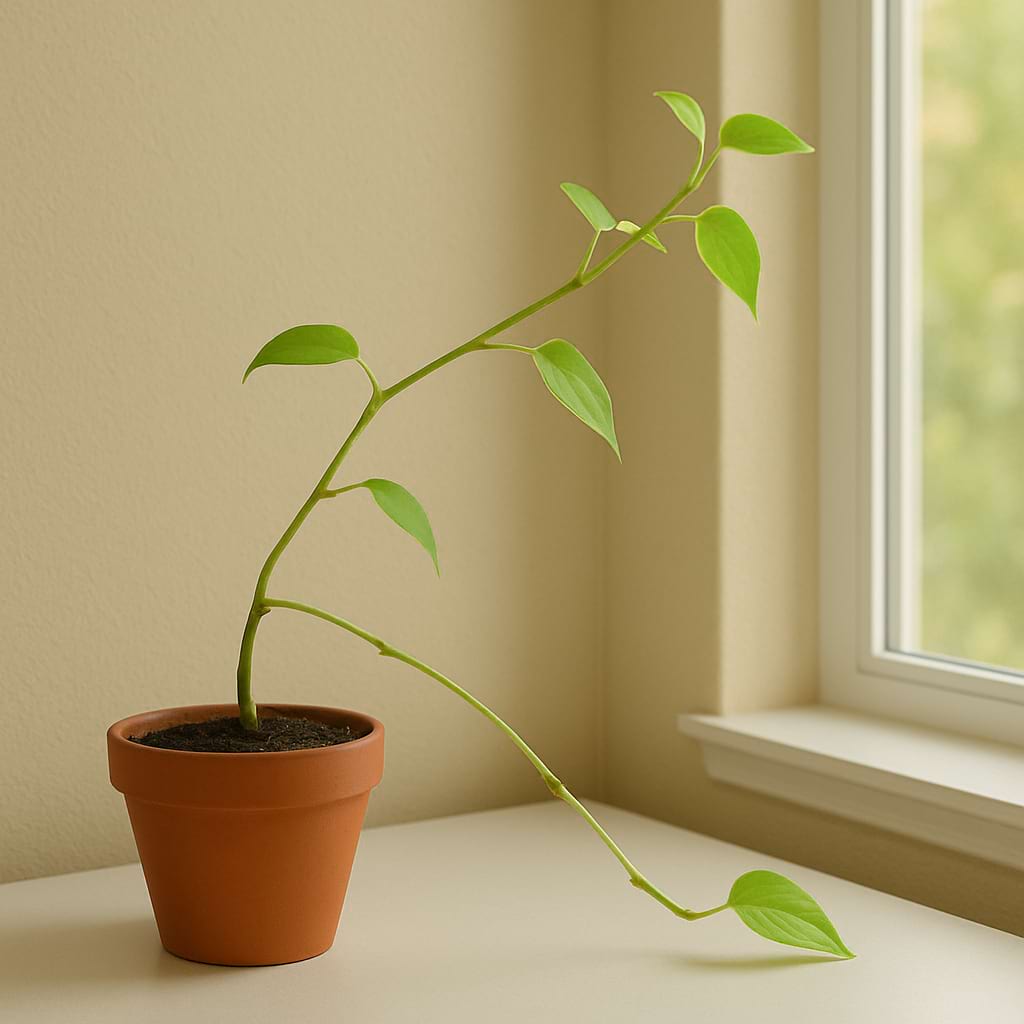
- Leggy growth at the crown: Pale, narrow, lighter-green new growth means insufficient light. Move closer to the brightest window or add a grow light.
- Stunted growth: Old exhausted soil or an undersized pot. Repot in spring and bump the plant into more direct sun.
- Failure to bloom: No cool winter rest, not enough sun, or the plant is still too small.


🖼️ Peruvian Apple Cactus Display and Styling Ideas
This is a statement plant. Most homes only need one Peruvian Apple to anchor a sunny corner, and that one column does a lot of visual heavy lifting.
Solo Setups
My favorite single setup is one tall column in a heavy unglazed terracotta pot, top-dressed with pale river pebbles, in a sunny corner. The pale grit bounces light back up the column so the blue-green color reads cleanly against a warm wood floor. A matte black pot reads modern; a soft cream pot reads more rustic.
Grouped Arrangements
A trio of matched columns at three different heights makes a small forest: a classic wild form, a twisted 'Spiralis', and a knobby 'Monstrose' in identical pots. Let the silhouettes carry the visual difference.
Desert Corner
For a fuller desert corner, set the Peruvian Apple as the vertical anchor and surround the base with smaller cacti: a Golden Barrel Cactus, a low Aloe Vera, a Bishop's Cap Cactus, and one textural column like an Old Man Cactus, a Silver Torch Cactus for a slim white-spined contrast against the blue-green body, or a White Ghost Cactus. Mulch with bare grit and skip moss and bark.
Where Not to Put It
Skip closed terrariums and steamy bathrooms; the body rots fast in wet air. Skip dim bedrooms and hallways; a Peruvian Apple etiolates within a season in low light. A sunny living-room corner, a south-facing kitchen, or a sunroom are the natural homes for this plant.
🌟 Peruvian Apple Cactus Pro Care Tips
✅ Treat the cool dry winter as the secret to flowering. Six to eight weeks at 50 to 60°F (10 to 15°C) with almost no water is what turns a healthy plant into a blooming one, and a blooming plant into a fruiting one.
☀️ Harden into strong sun gradually. Move from a low-light shop to a south window over two weeks, not two days, or you will scorch the column.
💧 Lift the pot to test for water. A bone-dry pot is shockingly light. That weight check is more reliable than any moisture meter for a deep cactus pot.
🪴 Pick a heavy pot. A tall column gets top-heavy fast, and a light pot will tip the first time someone brushes past it. Terracotta or weighted ceramic both work.
🧰 Stake new repots. Two bamboo canes and a soft tie keep a freshly repotted column upright while the roots reattach to the new mix.
🪶 Brush, never wipe. A soft dry paintbrush dusts the rib valleys without trapping moisture or pulling at the spines.
🐾 Pet-safe, but spiky. The plant is non-toxic if a curious pet takes a nibble, but the spines are sharp. Keep the plant out of reach of paws and tails, or pick the spineless Bishop's Cap Cactus instead.
✂️ Behead to branch. Cutting the top off a healthy column forces two or three new branches from the cut zone, which is how you build the classic candelabra silhouette.
🥝 Eat the fruit. If a mature plant flowers and sets fruit, let the apple ripen on the column until the skin is fully pink or red and slips off cleanly. The white flesh inside is sweet, mild, and pleasant raw.
❓ Frequently Asked Questions
Why is my Peruvian Apple Cactus turning brown at the base?
A brown softening base is almost always the start of root rot from wet soil. Unpot the plant, slice cleanly above any mushy tissue, dust the cut with sulfur powder, and re-root the clean top in dry gritty mix after two weeks of callusing.
How often should I water a Peruvian Apple Cactus?
In spring and summer, every 14 to 21 days for a 10 inch terracotta pot in a sunny window, but only once the soil is bone dry. In winter, almost not at all in a cool room, or a small drink every five to six weeks in a heated room.
Is the Peruvian Apple Cactus toxic to pets?
The flesh is non-toxic and the fruit is genuinely edible. The spines, however, are sharp enough to hurt a paw or a nose, so place a tall column where pets cannot brush against it.
Why isn't my Peruvian Apple Cactus flowering?
The most common reason is a warm wet winter. Cereus repandus needs a cool dry rest at 50 to 60°F (10 to 15°C) for at least six weeks to set buds. The second reason is age; plants under three feet tall rarely bloom.
How fast does a Peruvian Apple Cactus grow?
Fast, for a cactus. In good light a healthy plant adds 6 to 12 inches of column per year. Expect a 12 inch starter to reach 4 feet within four or five years.
Can I really eat the fruit?
Yes. The pink or red fruit has white flesh dotted with small black seeds and tastes mild and sweet, somewhere between a kiwi and a dragon fruit. Let it color up fully on the plant before harvest, then chill it before eating.
What is the difference between Cereus repandus and Cereus peruvianus?
They are the same plant. Cereus peruvianus is an older name that turned out to be invalid under modern botanical rules; the accepted scientific name is now Cereus repandus. Care is identical.
How big does a Peruvian Apple Cactus get?
Outdoors in zones 9 to 11, mature plants reach 20 to 30 feet and branch into a candelabra. Indoors, expect a slow climb to 4 to 8 feet over many years, depending on light and pot size.
Why is my Peruvian Apple Cactus leaning?
Either the plant is reaching for light from one direction, or the column has out-balanced the pot. Rotate a quarter turn every two weeks to keep growth even, and repot into a heavier, wider pot if the silhouette has gone top-heavy.
Can I keep a Peruvian Apple Cactus outside in summer?
Yes, and it loves the move. Acclimate to outdoor sun over a week, set it in full sun once nights stay above 55°F (13°C), and bring it back inside before night temperatures dip below 45°F (7°C). A summer outside is one of the surest ways to push a young plant toward flowering.
ℹ️ Peruvian Apple Cactus Info
Care and Maintenance
🪴 Soil Type and pH: Gritty, fast-draining cactus mix with added pumice, perlite, or coarse sand; slightly alkaline pH preferred.
💧 Humidity and Misting: Comfortable in low household humidity around 30 to 45 percent.
✂️ Pruning: Effectively none, except to remove damaged sections or to behead a plant that has outgrown the ceiling.
🧼 Cleaning: Dust the body gently with a soft, dry brush; never wipe with a wet cloth between the ribs.
🌱 Repotting: Bump up one pot size only when the body is clearly top-heavy or the roots circle the drainage hole, usually every 2 to 3 years.
🔄 Repotting Frequency: Every 2-3 years
❄️ Seasonal Changes in Care: Active growth in spring and summer; needs a cool, dry winter rest with minimal water to trigger flowering.
Growing Characteristics
💥 Growth Speed: Fast (for a cactus); 6-12 inches per year in good light
🔄 Life Cycle: Long-lived perennial
💥 Bloom Time: Late spring through summer on mature plants; flowers open for a single night
🌡️ Hardiness Zones: 9-11 outdoors; grown as a houseplant in all other zones
🗺️ Native Area: Northern South America, including Venezuela, Colombia, Brazil, and the Caribbean coastlines; widely naturalized in the Caribbean and parts of Florida
🚘 Hibernation: Cool dry winter rest at 50 to 60°F (10 to 15°C) helps trigger flowering on mature plants
Propagation and Health
📍 Suitable Locations: Sunny south or west windows, sunrooms, conservatory corners, large patios in warm months
🪴 Propagation Methods: Stem cuttings root easily in dry grit; seed is reliable but slow.
🐛 Common Pests: Mealybugs, Scale Insects, Spider Mites, Root Mealybugs
🦠 Possible Diseases: Root rot, fungal stem spotting, corky scarring from cold damp air
Plant Details
🌿 Plant Type: Tree-like columnar desert cactus
🍃 Foliage Type: Erect ribbed columns, usually 6 to 9 prominent ribs, branching with age
🎨 Color of Leaves: Blue-green to grey-green stem with yellowish-brown to grey spines along the rib edges
🌸 Flower Color: Large creamy white blooms with reddish-brown outer petals
🌼 Blooming: Yes; reliable on mature plants over 3 to 4 feet tall after a cool dry winter; flowers open for a single night
🍽️ Edibility: The fruit is edible, sweet, and pleasant; sometimes called Peruvian Apple or pitaya
📏 Mature Size: 4-8 feet indoors over many years; up to 30 feet in habitat
Additional Info
🌻 General Benefits: Drought-tolerant, pet-safe, low-maintenance, fast-growing for a cactus, dramatic vertical accent, edible fruit on mature plants
💊 Medical Properties: None
🧿 Feng Shui: A bold protective accent for a sunny corner; the upright form reads as a steady vertical anchor in a room
⭐ Zodiac Sign Compatibility: Capricorn
🌈 Symbolism or Folklore: Endurance, vertical aspiration, quiet strength; an "anchor" plant in many South American gardens
📝 Interesting Facts: Despite the common name, the Peruvian Apple Cactus is not actually native to Peru; the species is widespread across Venezuela, Colombia, Brazil, and the Caribbean coastlines. The fruit is genuinely edible and tastes pleasantly sweet and mild, somewhere between a kiwi and a dragon fruit; Indigenous communities have eaten it for centuries. The famous spiraling "Spiralis" form is a stable cultivar whose ribs twist around the column in a tight helix, a feature thought to arise from a fasciation mutation. The genus name Cereus comes from the Latin for "wax candle" or "torch", a nod to the tall upright form of the columns.
Buying and Usage
🛒 What to Look for When Buying: Choose a plant where the column is firm and evenly blue-green or grey-green, the spines along the rib edges are intact, and the base sits clean and dry without any soft brown spots. A slight bend at the top usually straightens out in better light, but a true scar from old rot is permanent.
🪴 Other Uses: Statement floor plant, sunroom anchor, large patio container plant in summer, themed desert dish gardens, edible-fruit collector plant
Decoration and Styling
🖼️ Display Ideas: Solo as a floor-standing statement in a large terracotta pot, a trio of matched columns at three different heights, or a desert corner with low globular cacti at the base
🧵 Styling Tips: Top-dress the soil with pale grit or river stones so the blue-grey column reads clearly against a warm wood floor; choose a heavy pot, since a tall column gets top-heavy fast and a light pot will tip.
🪴 See also 🪴
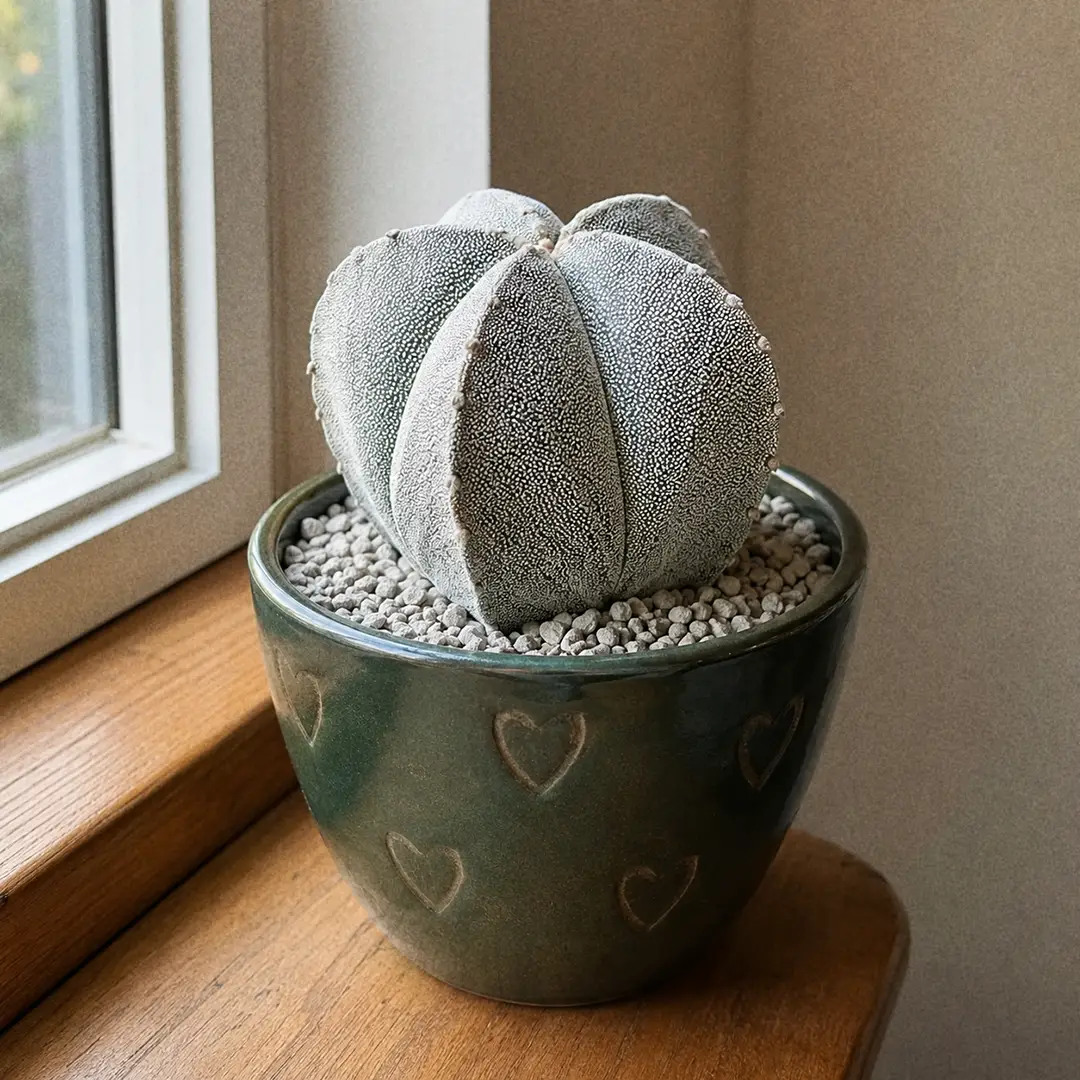
Complete Guide to Bishop's Cap Cactus Care and Growth
Complete Guide to Brain Cactus Care and Growth
Complete Guide to Christmas Cholla Care and Growth
Complete Guide to Eve's Needle Cactus Care and Growth
Complete Guide to Totem Pole Cactus Care and Growth
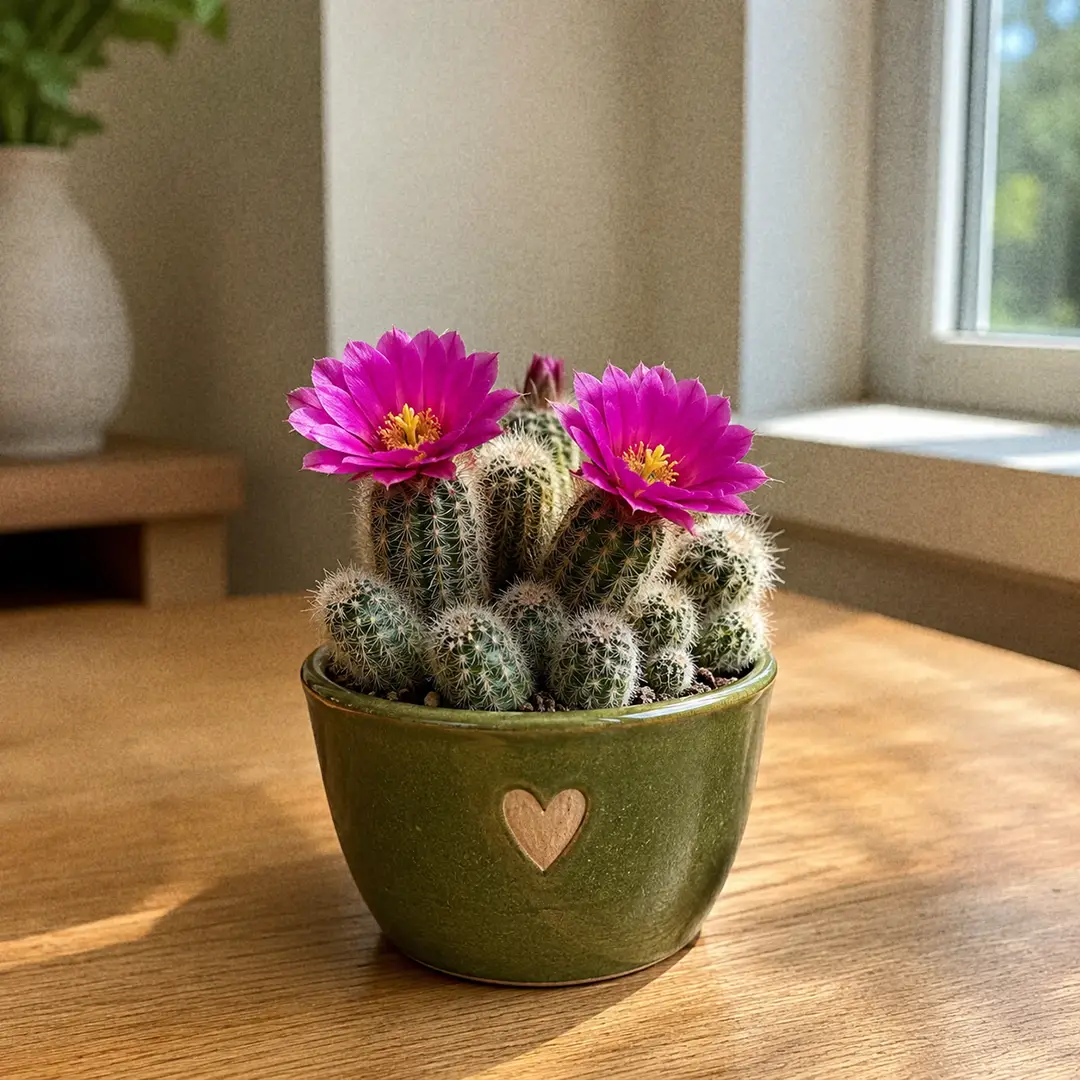
Complete Guide to Hedgehog Cactus Care and Growth
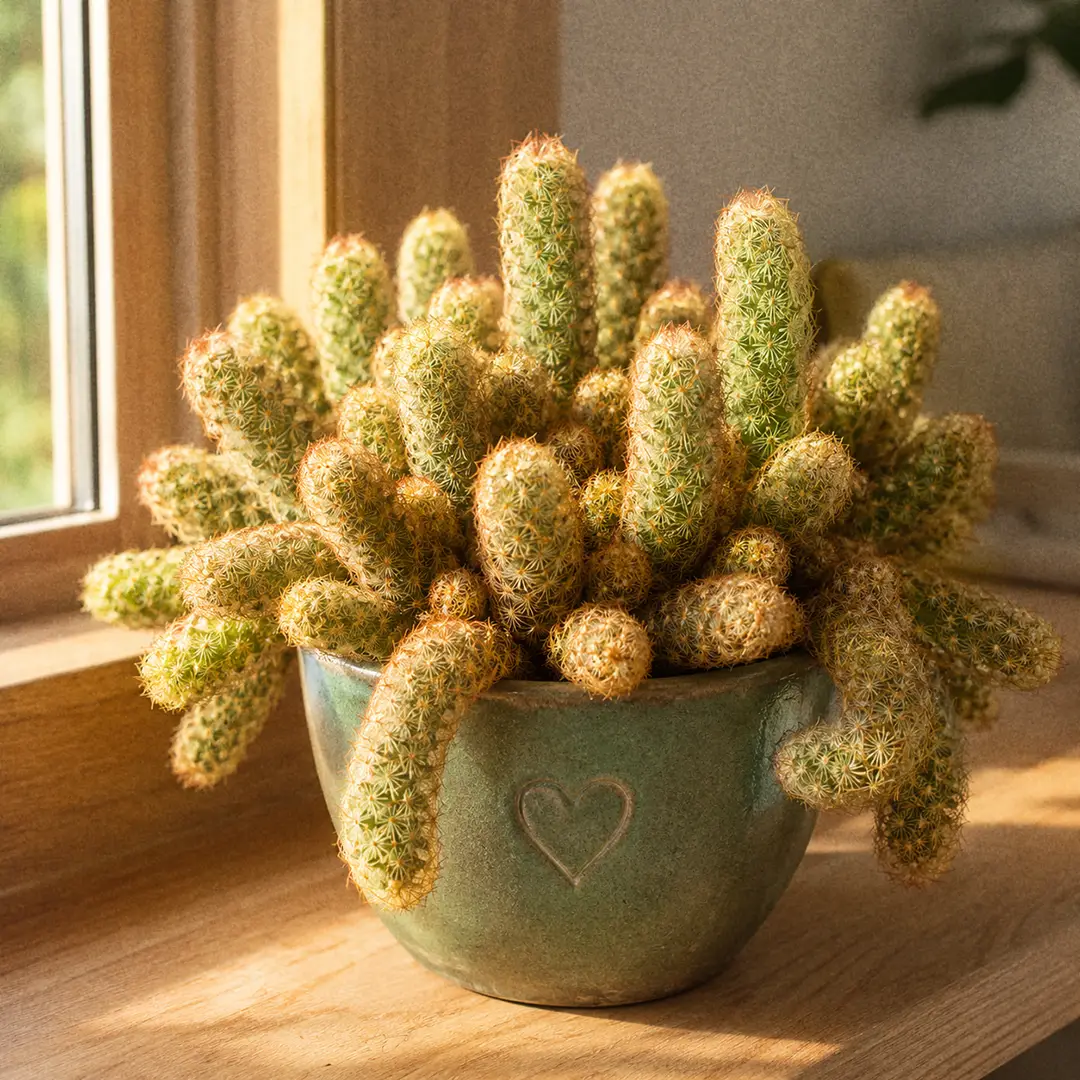
Complete Guide to Lady Finger Cactus Care and Growth
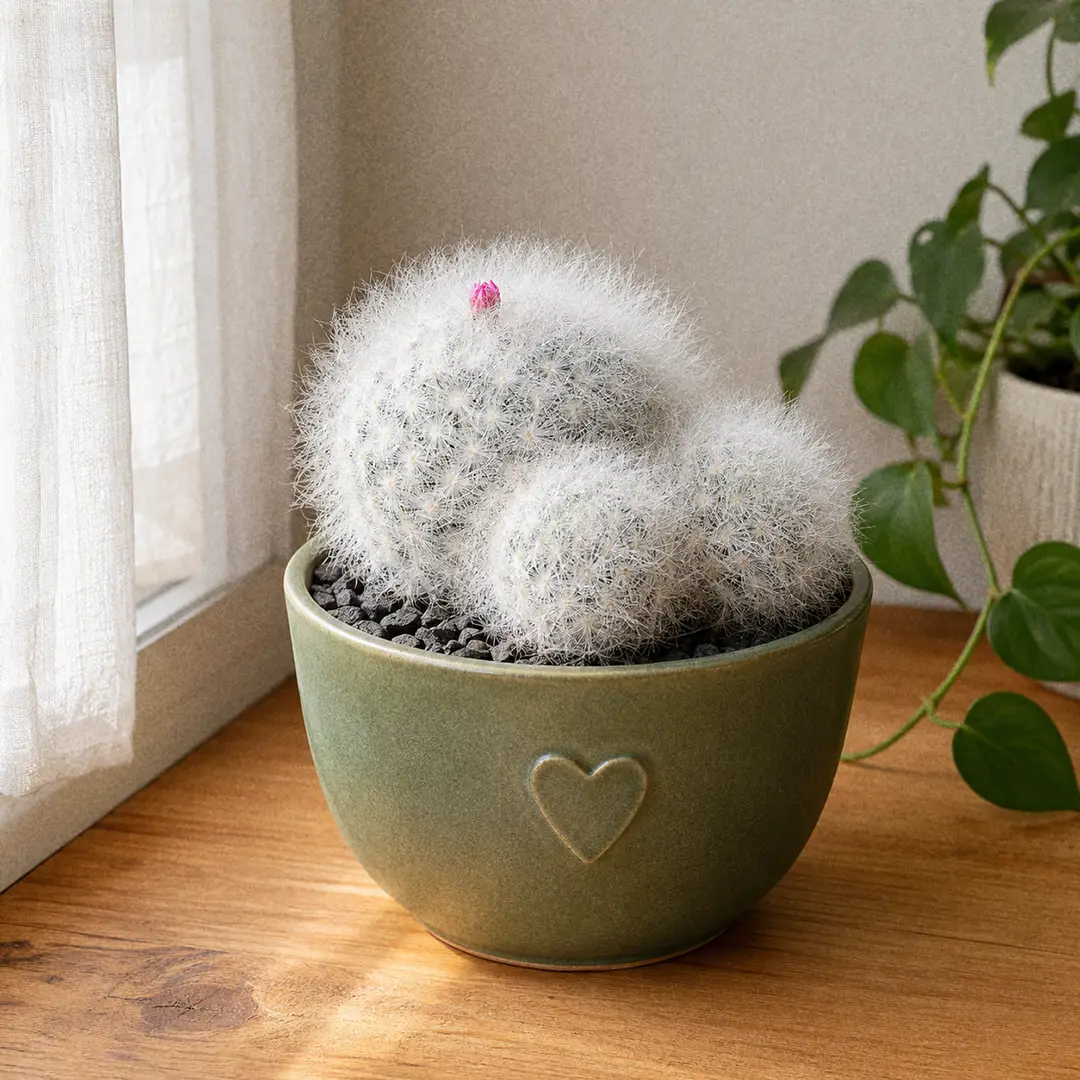
Complete Guide to Old Lady Cactus Care and Growth
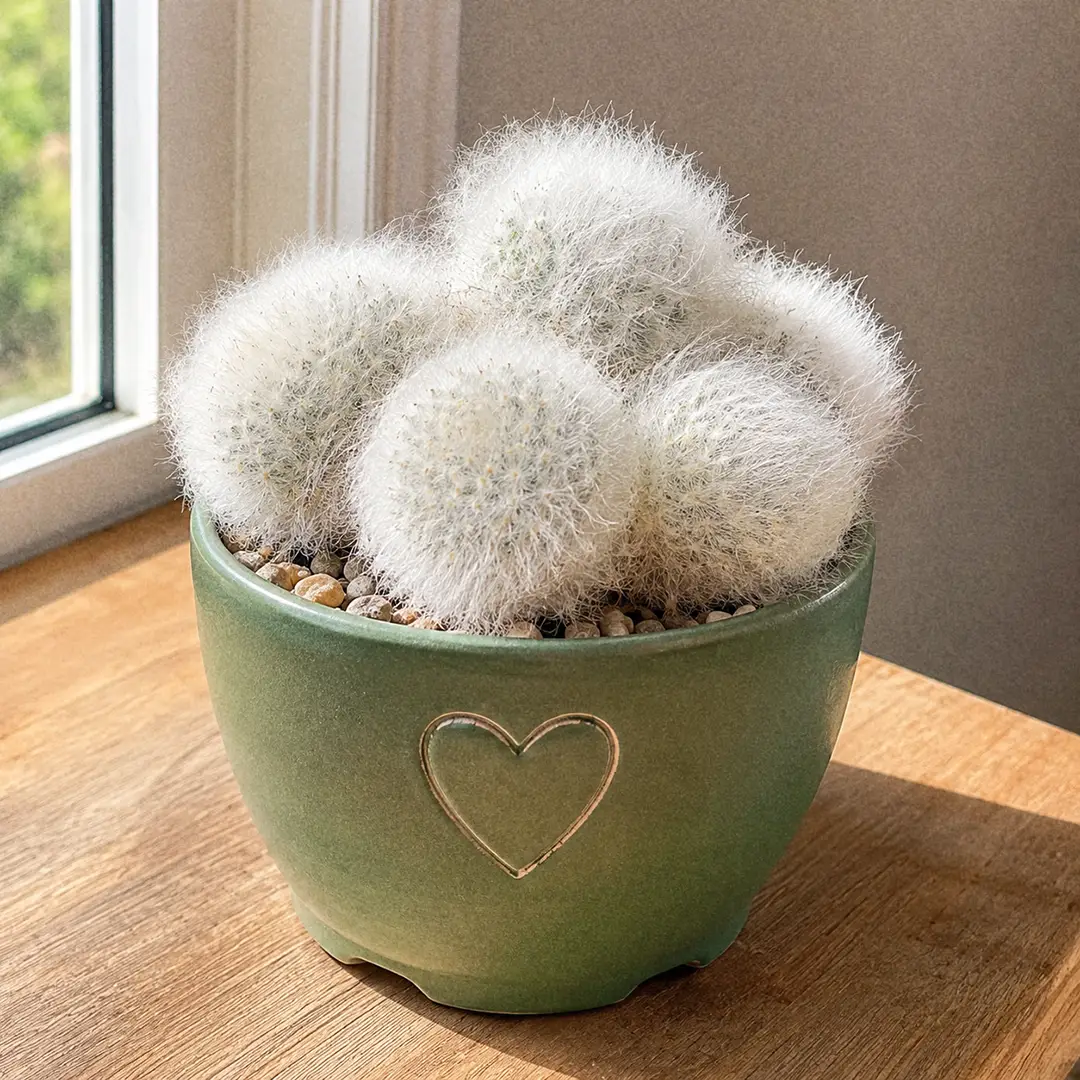
Complete Guide to Powder Puff Cactus Care and Growth
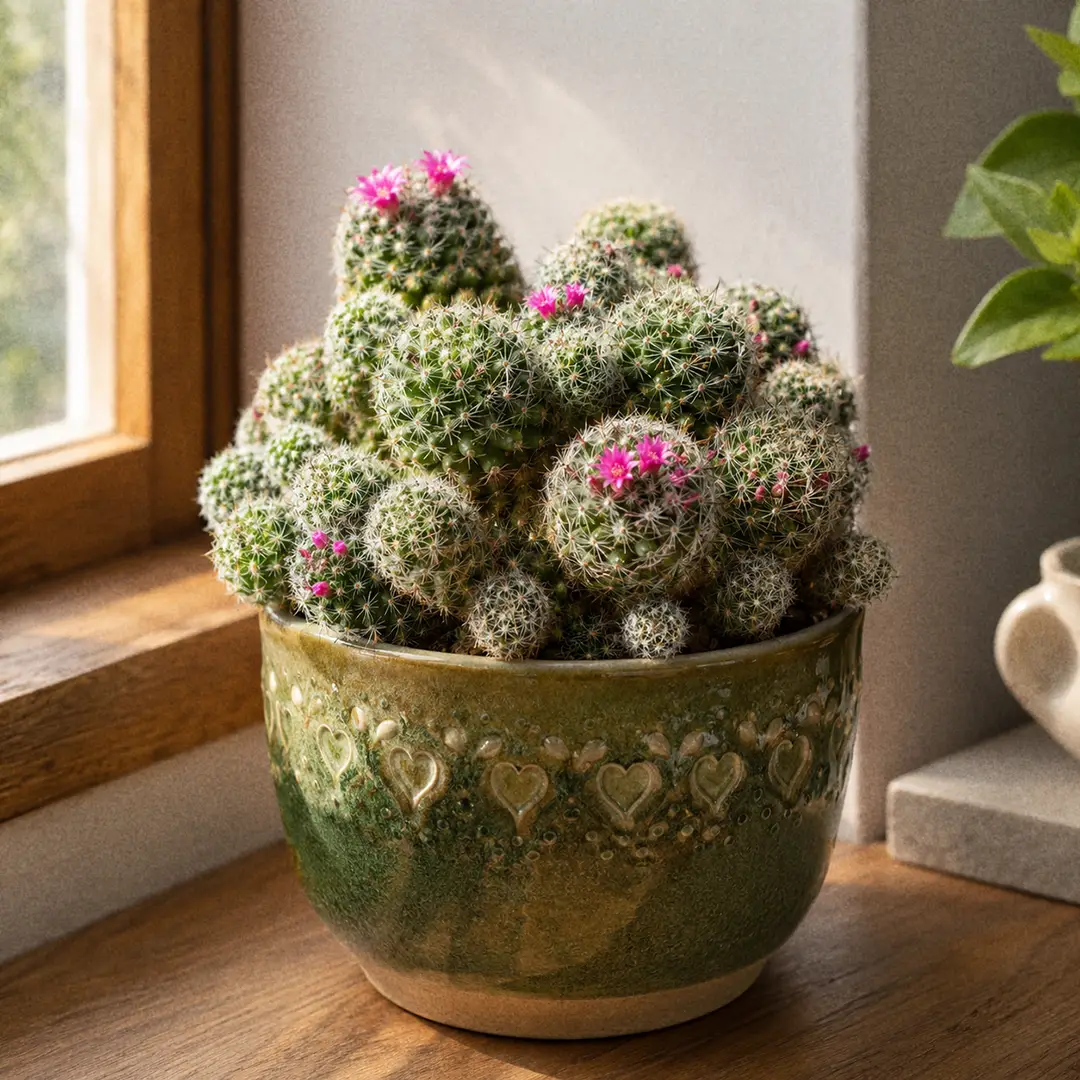
Complete Guide to Pincushion Cactus Care and Growth
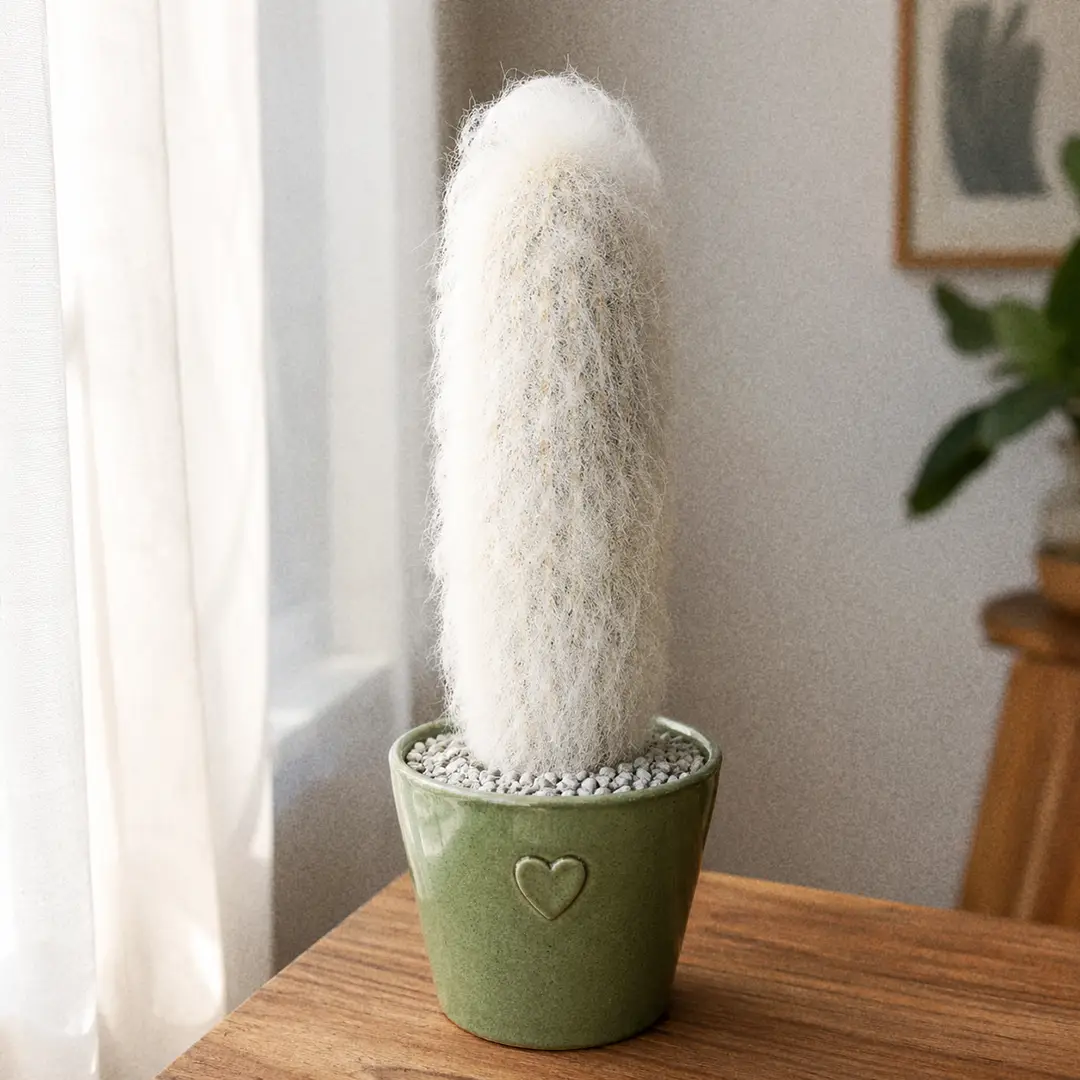
Complete Guide to Peruvian Old Man Cactus Care and Growth
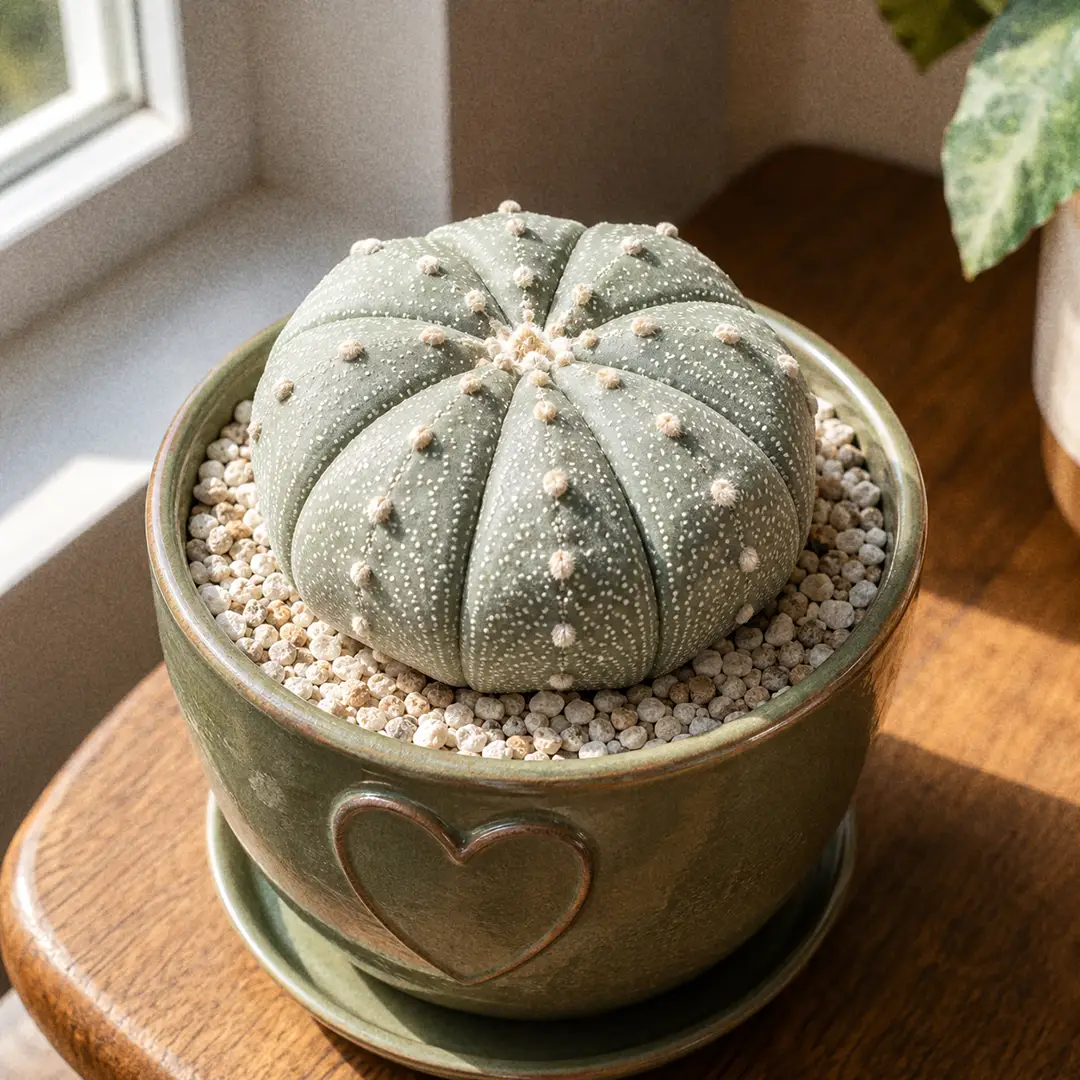
Complete Guide to Star Cactus Care and Growth
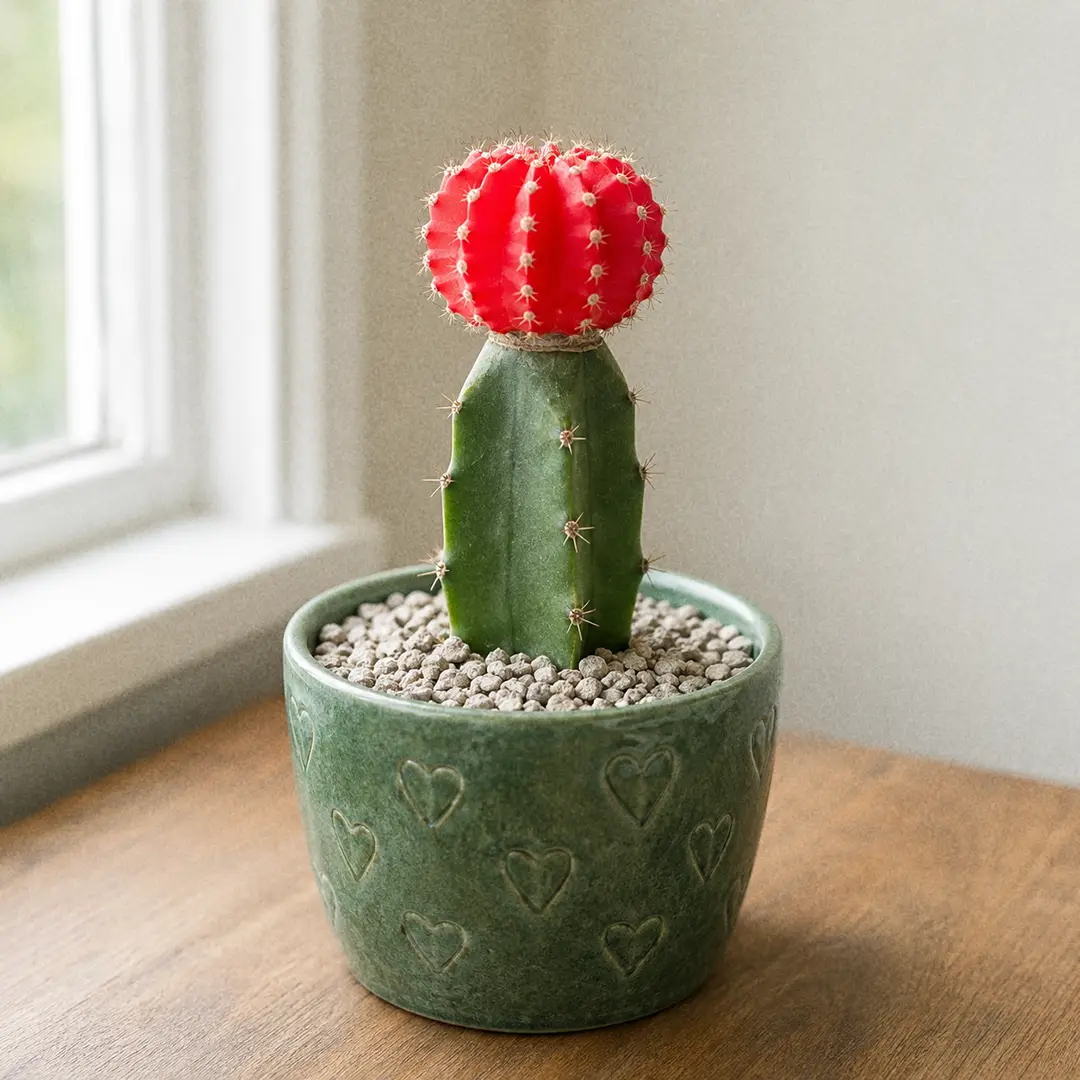
Complete Guide to Moon Cactus Care and Growth

Houseplant101 Forum
Questions & Comments
Ask a question, share your plant experience, or help other plant owners.
Comments are temporarily unavailable.
Open the Houseplant101 ForumNo comments yet
Be the first to ask a question or share your experience about this page.
Log in or create an account
Comments use your Houseplant101 Forum account, but you can stay on this page.
Create a new account