
Christmas Cholla
Cylindropuntia leptocaulis
Pencil Cholla, Desert Christmas Cactus, Tasajillo, Turkey Pear, Slender-Stemmed Cholla


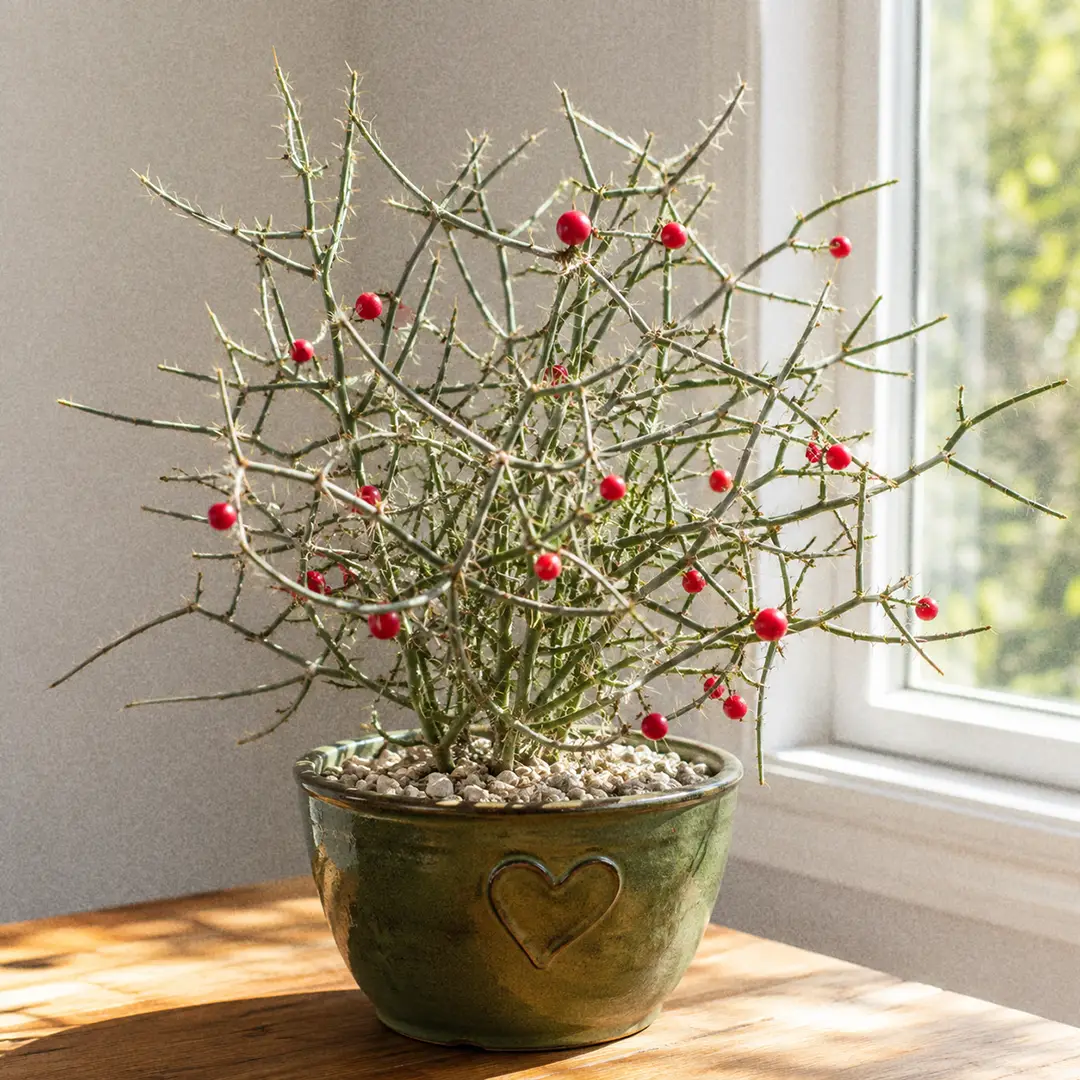
The Christmas Cholla (Cylindropuntia leptocaulis) is a wiry desert cactus with pencil-thin green stems that lights up in December with bright scarlet berries. It is tough, cold-hardy, and nearly indestructible in full sun, as long as you respect its barbed spines and keep its roots bone-dry.
📝 Christmas Cholla Care Notes
🌿 Care Instructions
⚠️ Common Pests
📊 Growth Information
🪴 In This Guide 🪴

📺 Christmas Cholla Video Guide

☀️ Christmas Cholla Light Requirements (Full Direct Sun)
There is no such thing as too much sun for a Christmas Cholla. This is a desert plant that grows in open scrub with nothing overhead, and it wants every photon it can get. Skimp on light and it grows weak, thin, and refuses to fruit.
The Sweet Spot
Indoors, that means directly in front of your brightest south or west window, right against the glass, with six or more hours of direct sun a day. A sunroom, glassed porch, or greenhouse is even better. In a warm climate, the best home for this plant is simply outdoors in the open, in full sun year-round.
Too Little Light
Weak light shows up as pale, thin new joints that stretch and flop instead of standing firm. The plant leans toward the window and stops producing flowers and fruit entirely. Cholla grown in shade also never develops the dense, tough spine cover that gives it character. If your brightest window still is not enough, add a strong grow light for 12 hours a day.
Too Much Light
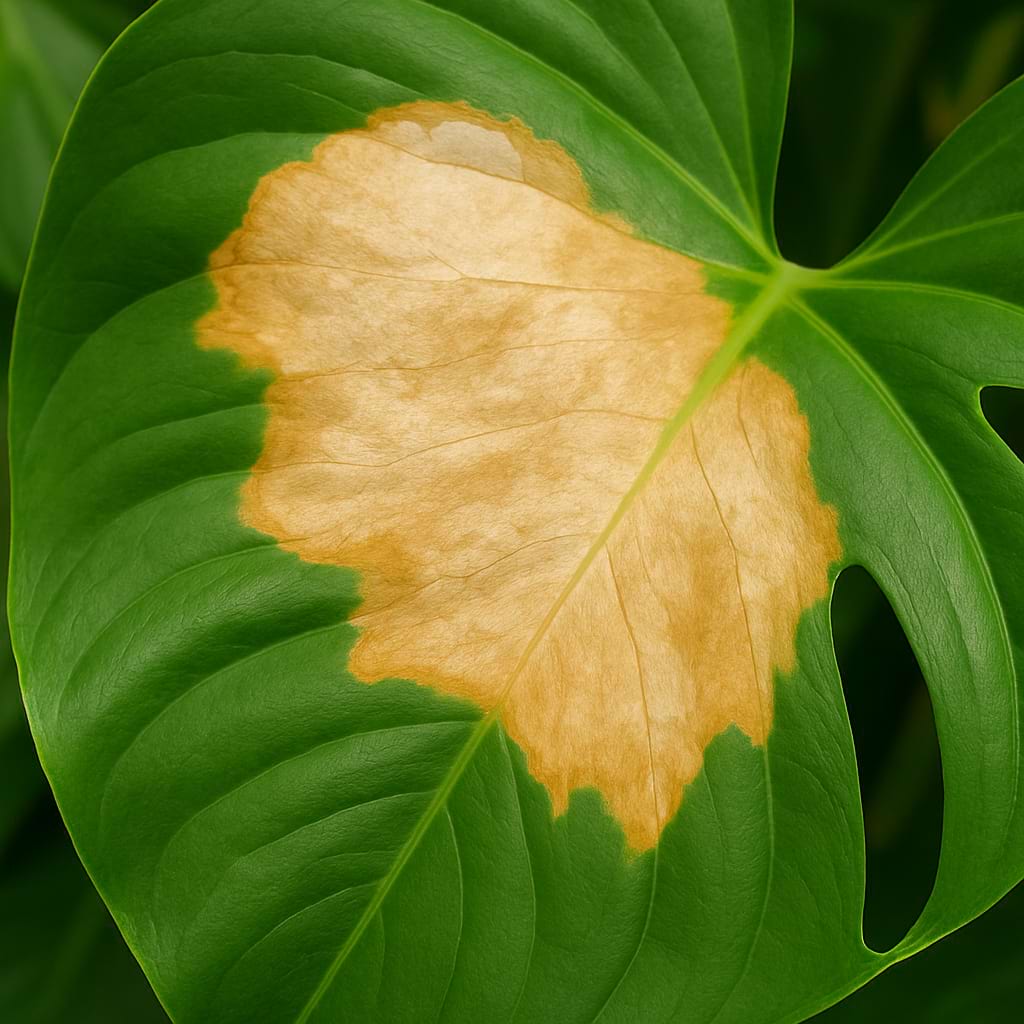
Genuinely rare for this species, but a plant moved suddenly from a dim indoor spot to blazing outdoor sun can scorch. You will see bleached tan or yellow patches on the stems that faced the sun. The fix is not less light, it is slower acclimation: give it a week of gradually increasing exposure before it lives in full sun.
💧 Christmas Cholla Watering Guide (Only When Bone-Dry)
If you remember one thing, remember this: a Christmas Cholla dies from water, not from thirst. It stores moisture in those fleshy stems and can coast for weeks without a drop. Overwatering is the single most common way people kill it.
Watering Frequency
During active growth, from late spring through early autumn, water deeply only when the soil is completely dry from top to bottom. For a small pot in a hot sunny window, that usually lands every two to three weeks. A larger pot or a cooler room can stretch much longer. When in doubt, wait another few days. Push a wooden skewer to the bottom of the pot; if it comes out with any dampness clinging to it, do not water yet. General watering basics apply here, just dialed way down.
Winter Watering
In the cool months the plant slows almost to a stop, and its water needs fall off a cliff. A cholla resting in a cold bright spot can go bone-dry for one to three months with no harm at all. In fact, a dry winter is what makes it frost-hardy, since water inside the stems is what freezes and ruptures cells. If your plant is somewhere cold, err heavily toward drought.
Signs of Trouble
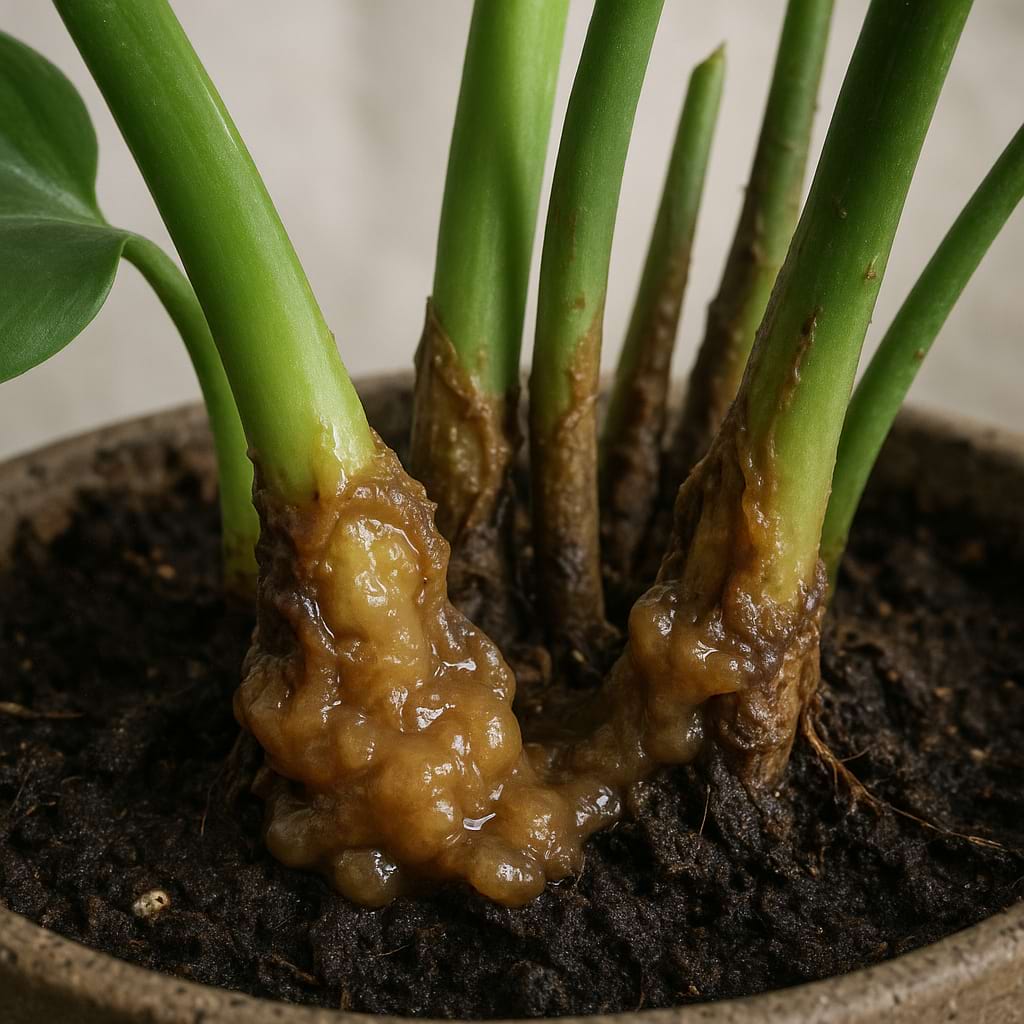
Thirst looks like slightly softening, wrinkling stems, and it corrects within days of a deep drink. That is the safe direction to fail. Overwatering looks worse and shows up later: joints yellowing and going translucent, soft mushy patches near the soil line, and a sour smell from the pot. By then root rot is usually well underway. Your only rescue is to unpot it, cut back to firm green tissue, let the cuts callus, and re-root a clean joint.
🪴 Best Soil for Christmas Cholla (Sharp and Gritty)
Soil is where you win or lose with any cactus. The stems and roots want to dry out fast and completely between waterings, and that only happens in a coarse, open mix that water races straight through. Ordinary potting soil holds far too much moisture and will rot the roots.
What the Soil Needs
Aim for a mix that is at least half grit. It should feel gravelly, drain in seconds, and never stay soggy. A little organic matter is fine to hold a trace of nutrients, but the bulk should be mineral: pumice, coarse sand, fine gravel, or crushed lava rock.
DIY Soil Mix
- 1 part standard cactus and succulent mix
- 1 part coarse pumice or perlite
- 1 part coarse horticultural sand or fine gravel
Squeeze a damp handful and it should fall apart the moment you open your hand. If it holds together in a clump, add more grit. A top dressing of gravel keeps the base of the stems dry and shows off those winter berries.
Pre-Made Options
A bagged cactus mix works as a starting point, but most are too peaty and hold water longer than a cholla likes. Cut any commercial mix with an extra 50 percent pumice or perlite before you plant. See repotting for timing.
🍼 Fertilizing Christmas Cholla (Barely Any)
This is a plant of poor desert ground, and it genuinely prefers to be underfed. Heavy feeding produces soft, weak, floppy growth that is prone to rot and less able to handle cold. Treat fertilizer as an occasional, gentle nudge.
When and How Often
Feed no more than once or twice across the whole growing season, and only from late spring into midsummer. One feeding in late May and, if you like, a second in early July is plenty. Never fertilize in autumn or winter, and never feed a freshly repotted plant; wait at least two months.
What to Use
Use a low-nitrogen cactus fertilizer, something like a 2-7-7 or 5-10-10, diluted to half the label strength. Water with plain water first so the roots are not dry when the feed goes in. See fertilizing houseplants for the general approach. Slow-release cactus granules scratched into the topsoil in spring are an even lower-effort option.
Over-Fertilizing Signs
A white crust on the soil surface or around the pot rim means salts are building up. Flush the pot with several volumes of plain water, skip the next couple of feedings, and dilute more heavily next time.
🌡️ Christmas Cholla Temperature Range
Here is where the Christmas Cholla pulls ahead of most cacti. It is genuinely cold-hardy, surviving hard frost that would turn a tropical cactus to mush, and it uses that seasonal swing to trigger its best fruiting.
Ideal Range
In active growth it loves real desert heat: 70 to 100°F (21 to 38°C) with warm days and cooler nights suits it perfectly. It handles indoor summer temperatures with ease as long as the air is not stuffy and damp.
Cold Tolerance and Winter Rest
Kept dry, an established plant tolerates temperatures down to around 0 to 10°F (-18 to -12°C), which puts it in USDA zones 7 through 11 outdoors. That cold hardiness is why it can live outside in much of the American Southwest. The key word is dry: a cholla that is bone-dry laughs off frost, while a wet, cold cholla rots fast. Give it a cool, bright, nearly waterless winter rest and it stays tough and fruits better the following year.
Drafts and Heat Sources
Cool air is not the enemy, but cold plus damp is. Keep it off the top of a radiator or a heating vent, where dry blasting heat can dehydrate it unevenly, and away from any spot where cold air and condensation collect together.
💦 Christmas Cholla Humidity Requirements
Humidity is one thing you never have to manage with this plant. It comes from dry open desert and actively dislikes moisture in the air. The drier your home, the happier it is.
Ideal Humidity
Low humidity, roughly 20 to 40 percent, is perfect, and that covers most homes without any effort on your part. The same dry indoor air that leaves a fern crisping keeps a Christmas Cholla thriving. Never mist it and never run a humidifier near it.
When Humidity Bites
The one real risk is high humidity paired with cool, still air, which tends to happen in a closed room in late autumn. That combination invites fungal spots on the stems and soft rot at the joints. A little air movement fixes it: crack a window on mild days or run a small fan a few hours at a time. Keep this plant out of bathrooms, humid kitchens, and closed terrariums.
🌸 Christmas Cholla Flowers and Berries (The Real Show)
Most cacti are grown for their flowers. The Christmas Cholla is the opposite: its blooms are small and easy to miss, and the fruit is the whole reason to grow it.
What the Flowers Look Like
In late spring through midsummer the plant produces tiny flowers, only about half an inch across, in a muted pale greenish-yellow to bronze. They open in the late afternoon rather than the morning, so they are easy to walk past without noticing. Do not expect a bold cactus bloom; think of them as a quiet promise of what comes later.
The Winter Berries
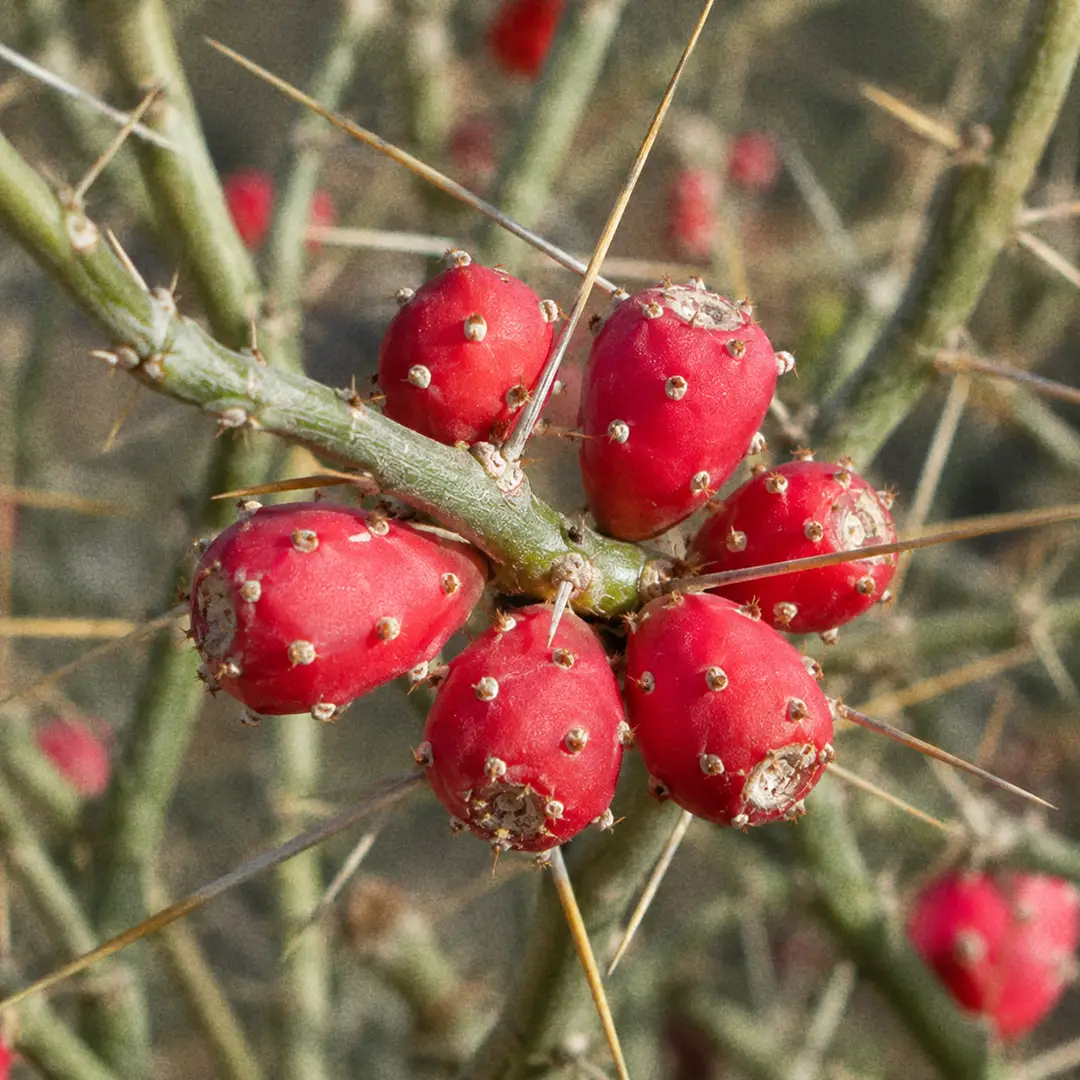
Once those flowers fade, small green fruits form and slowly ripen to a glowing scarlet red. They cling to the bare, wiry stems through autumn and deep into winter, often still hanging in December and January. Against the plain gray-green of the plant they look exactly like strung berries or tiny ornaments, which is the entire origin of the Christmas name. This is the payoff, and it is worth every week of patient neglect.
How to Get Fruit
Three things bring on a good berry set: a mature plant several years old, a full season of strong direct sun, and a cool, dry winter rest the previous year. Young or shade-grown plants may flower sparsely and fruit little or not at all. Give it desert conditions and time, and the berries follow on their own.
🏷️ Christmas Cholla Types and Varieties
The Christmas Cholla is grown almost entirely as the wild species, so you will not find a shelf of fancy cultivars. What matters more is telling it apart from the plants it gets confused with.
The Species Itself
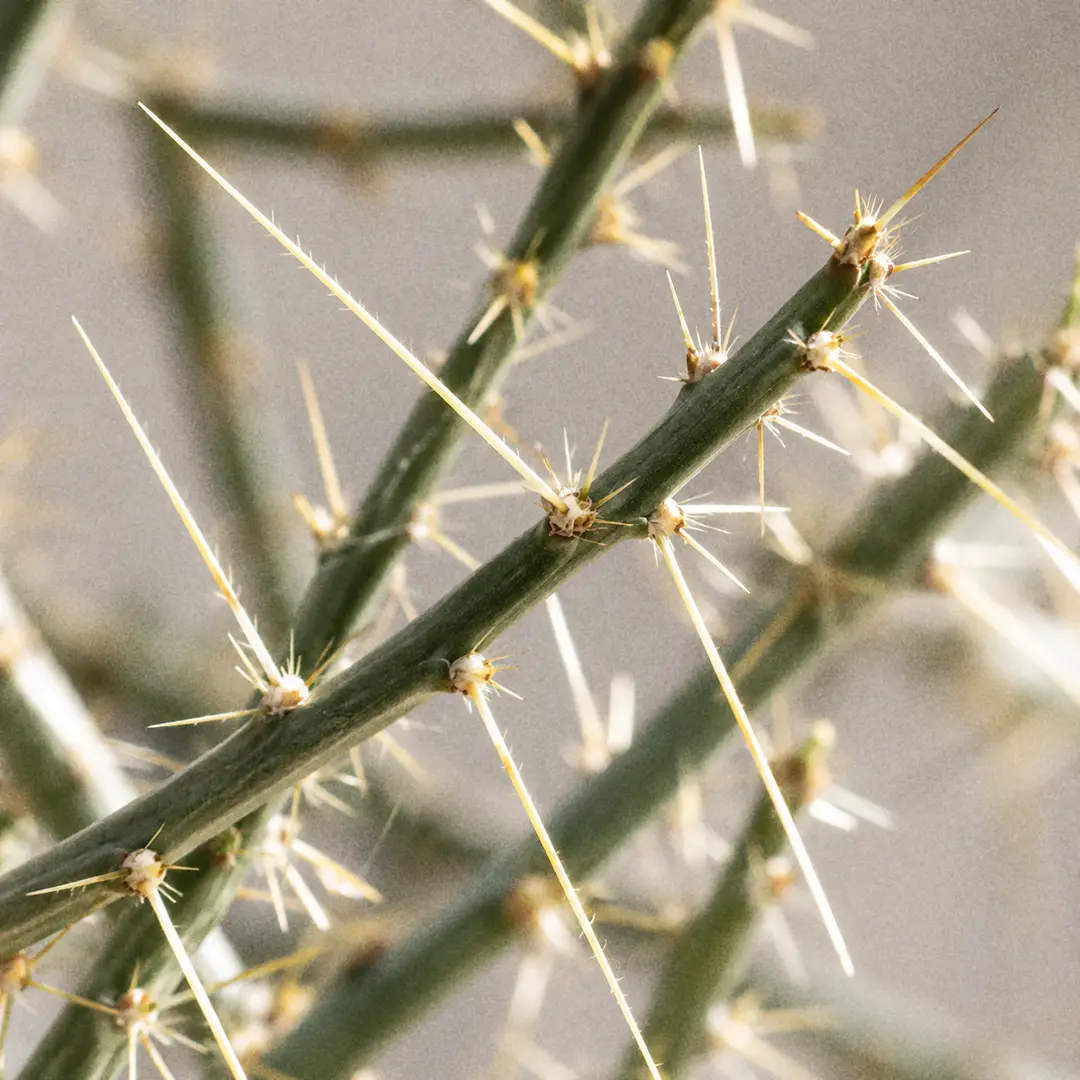
Cylindropuntia leptocaulis is a variable plant across its wide range, differing mostly in how thick the stems are, how long the spines grow, and how densely it branches. Desert forms from hotter regions tend to be wispier and more sprawling, while some populations are stouter and more upright. All share the pencil-thin joints, single long spines, and scarlet winter fruit.
Not the Christmas Cactus
This is the big one. The Christmas Cactus (Schlumbergera) is a completely different plant: a soft, spineless tropical from Brazilian rainforests, grown as a houseplant for its pink or red winter blooms. Search results constantly blur the two because both peak around the holidays, but one is a frost-hardy desert cholla covered in barbed spines and the other is a humidity-loving epiphyte with no spines at all. Their care could hardly be more opposite.
Not the Pencil Cactus
The Pencil Cholla nickname also collides with the Pencil Cactus (Euphorbia tirucalli), an African euphorbia with smooth green pencil-like stems and a toxic milky sap. That plant has no spines and no red berries. If a "pencil" plant bleeds white latex when cut, it is the euphorbia, not the cholla.
Not Eve's Needle
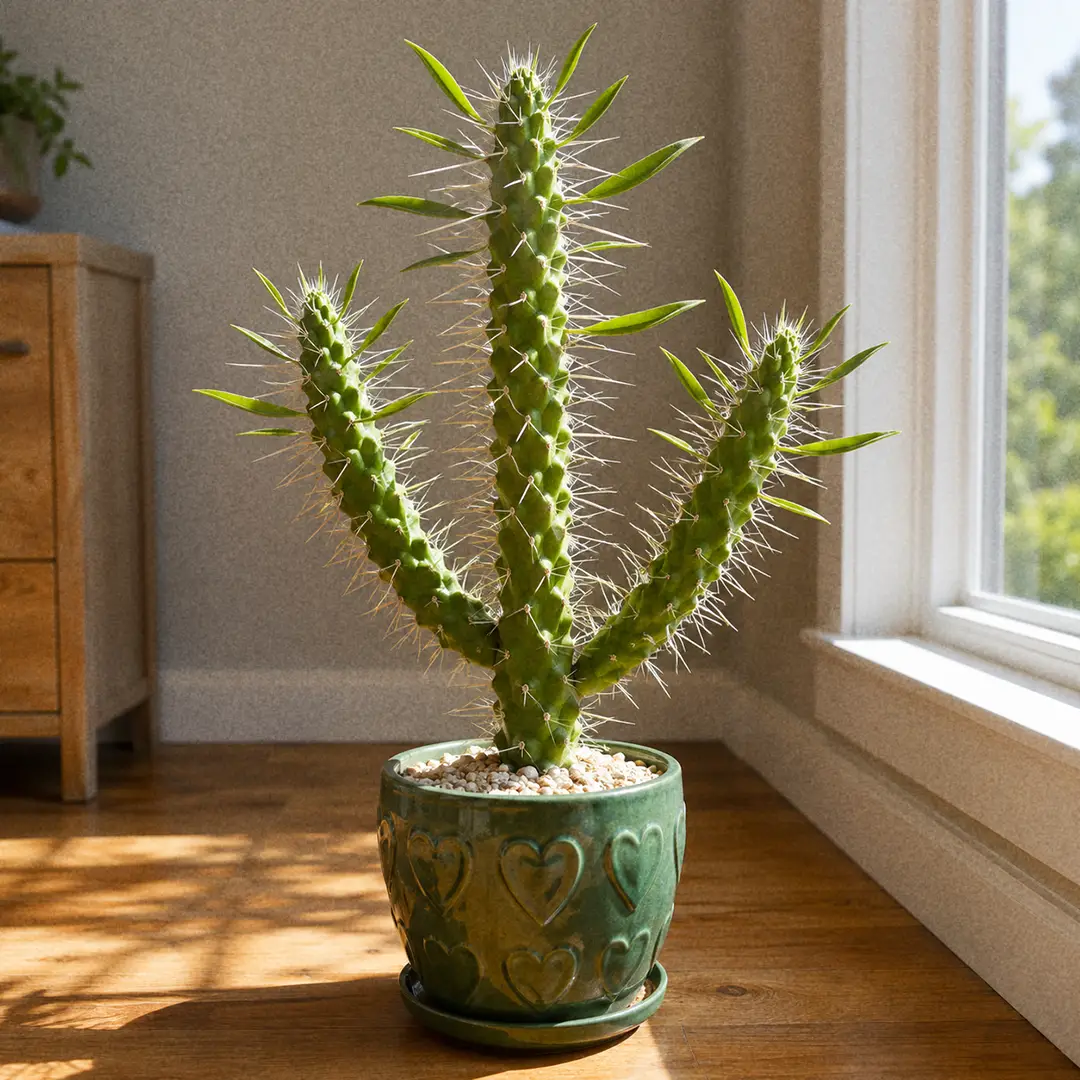
The Eve's Needle Cactus (Austrocylindropuntia subulata) is the cholla's nearest relative in the trade and shares the jointed opuntioid build, but it is thicker-stemmed, faster growing, and carries long straight white spines rather than fine barbed ones. The giveaway is the foliage: Eve's Needle keeps long green awl-shaped leaves on its stems for months, and a cholla has none at all. The Prickly Pear is the third opuntioid worth knowing, and the easiest to tell apart, since it swaps the cholla's pencil-thin joints for broad flat blue-green paddles.
🪴 Potting and Repotting Christmas Cholla
A Christmas Cholla is slow-growing and perfectly content in a snug pot, so repotting is an occasional chore, not an annual one. The whole job is really about handling those spines without incident.
When to Repot
Repot only every three to four years, or when roots crowd the drainage holes and the plant grows top-heavy enough to tip its pot. Early spring, just as growth resumes, is the ideal window. A plant that is happy and firm can be left alone longer.
Choosing a Pot
Reach for a heavy, breathable pot: unglazed terracotta, stone, or concrete. The weight matters because a tangled cholla is top-heavy and tips easily, and the porous clay pulls moisture out of the soil, which is exactly what you want. Size up just one inch wider than the current rootball; an oversized pot holds a reservoir of wet soil that invites rot.
Step-by-Step Repotting
- Wait until the soil is bone-dry so it falls away cleanly and the plant is lighter.
- Wrap the stems in several folds of newspaper or grip them with kitchen tongs; never handle bare-handed.
- Tip the pot sideways and ease the rootball out, shaking off the old soil.
- Trim any dead or blackened roots with sterile shears.
- Set the plant at its old depth in fresh gritty mix and firm it gently with a chopstick.
- Do not water for a full week so any nicked roots can callus over.
✂️ Pruning Christmas Cholla
This plant keeps its own wild, tangled shape and needs very little from you. You prune only to remove damage, control size, or harvest joints for propagation.
When to Prune
Cut when a joint has shrivelled beyond recovery, when the plant outgrows its space, or when a stem has grown awkwardly across the plant's silhouette. Otherwise leave it be; the tangled form is the charm, not a flaw to correct.
How to Prune
Always wear thick gloves or use long tongs, and work with a sharp sterile blade. Cut at the natural narrow joint where one segment meets the next, never straight across the middle of a stem. Let every cut dry and callus in open air for a week or two. Any healthy joint you remove is a ready-made cutting, so save the good ones.
🌱 How to Propagate Christmas Cholla
Propagation could not be easier, because in the wild this cactus already does it constantly. Joints break off at a touch, drop to the ground, and root where they land. You are just doing that on purpose. See succulent propagation for the general method.
Best Method
Joint cuttings are the way. Seed is slow and unnecessary. A single detached segment will root and grow into a new plant, and you can take several at once to build up a fuller specimen faster.
Step-by-Step
- Using tongs or thick gloves, detach a healthy, firm joint at its natural connection point.
- Set the cutting aside in a dry, shaded spot for one to two weeks until the cut end forms a dry callus. Skipping this step is the main reason cuttings rot.
- Push the callused end about an inch into dry, gritty mix, just deep enough to stand upright.
- Leave it completely dry and out of blazing sun for two to three weeks.
- After roots take hold, begin very light watering, letting the mix dry fully each time.
Tips for Success
Propagate in late spring or summer, when warmth speeds rooting. Resist tugging the cutting to check progress, and keep it on the dry side the whole time; a rooting cholla rots far more easily than it dries out.
🐛 Christmas Cholla Pests and Treatment
A healthy cholla in good light and gritty soil rarely has pest trouble, and its spines deter most nibblers. When bugs do appear, they hide in the joints and spine clusters where they are easy to miss.
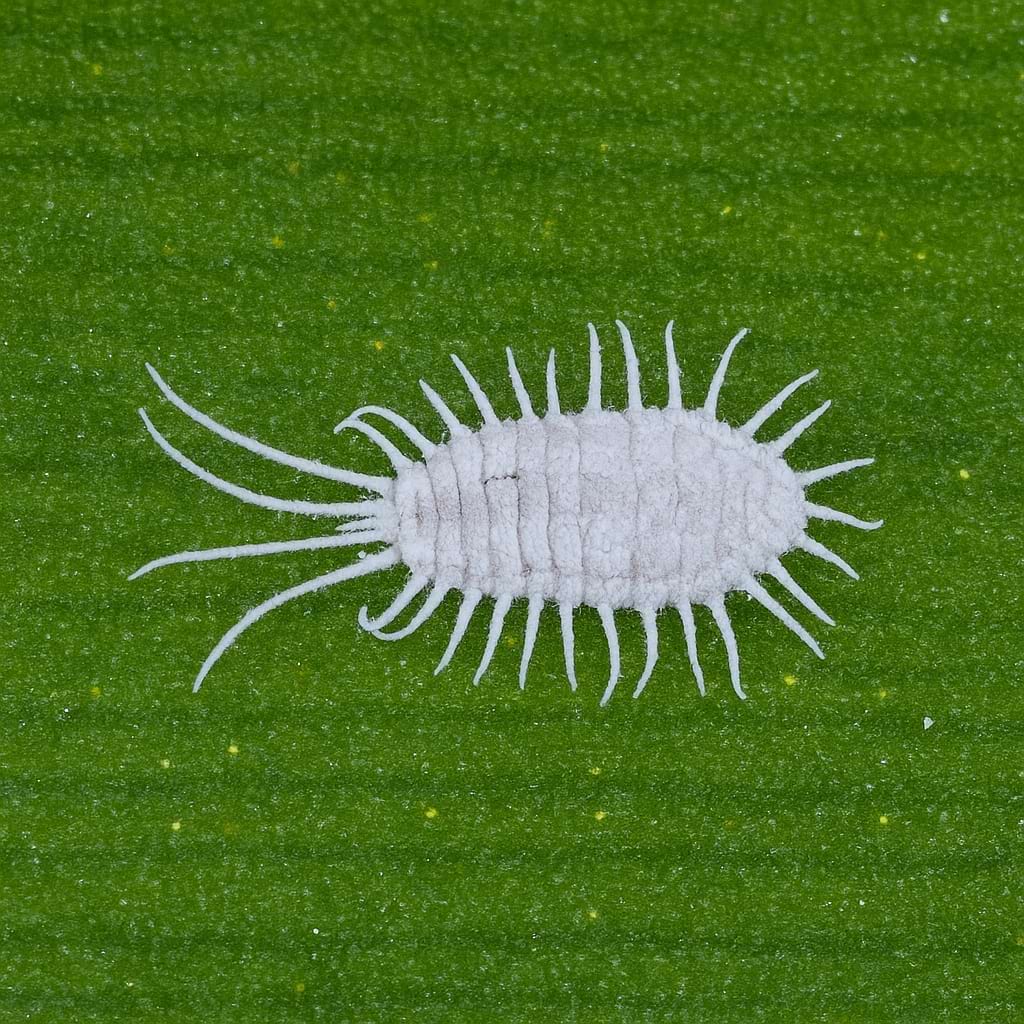
- Mealybugs: The most likely culprit. Look for small white cottony specks tucked into the joints. Dab them with isopropyl alcohol on a cotton swab every five to seven days, or use a soil-drench insecticide for a heavy case.
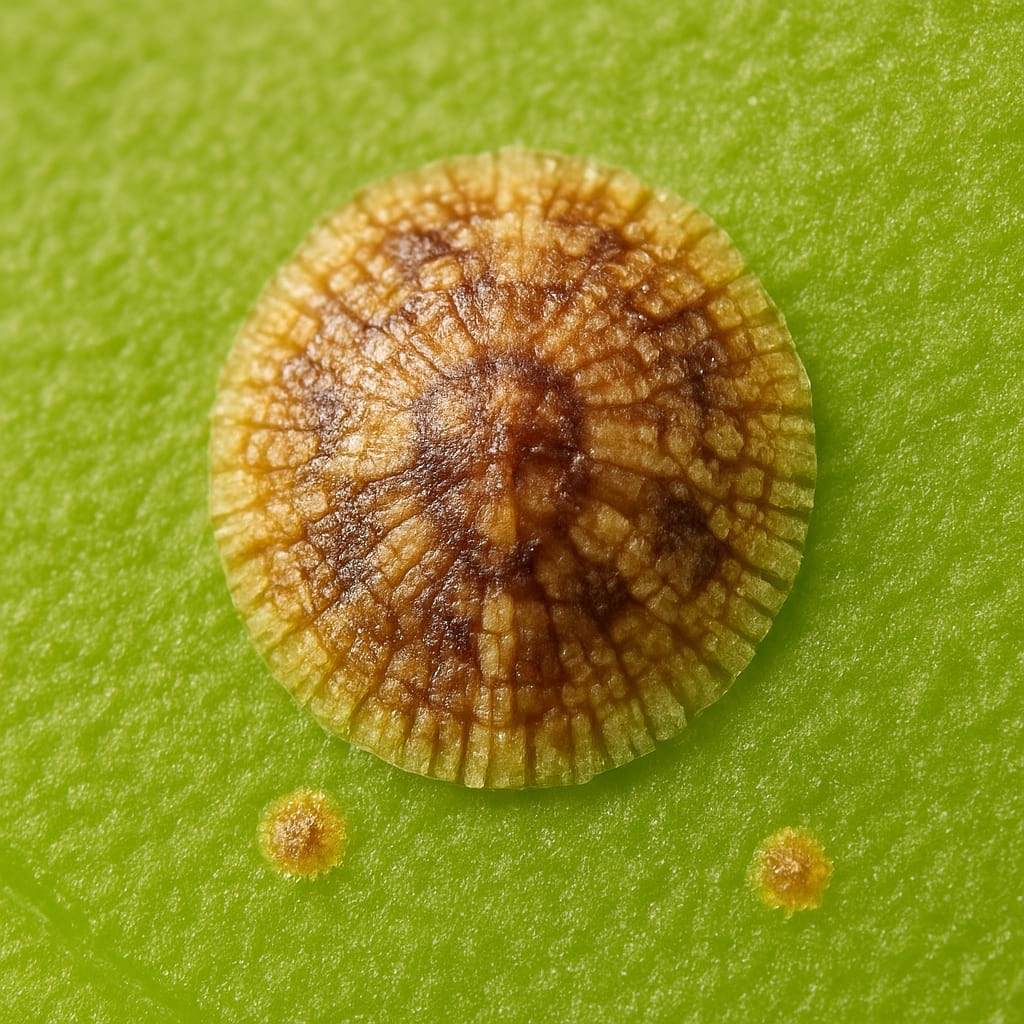
- Scale Insects: Small flat brown bumps stuck to the stems. Scrape them off carefully with a fingernail or an old toothbrush, minding the spines.
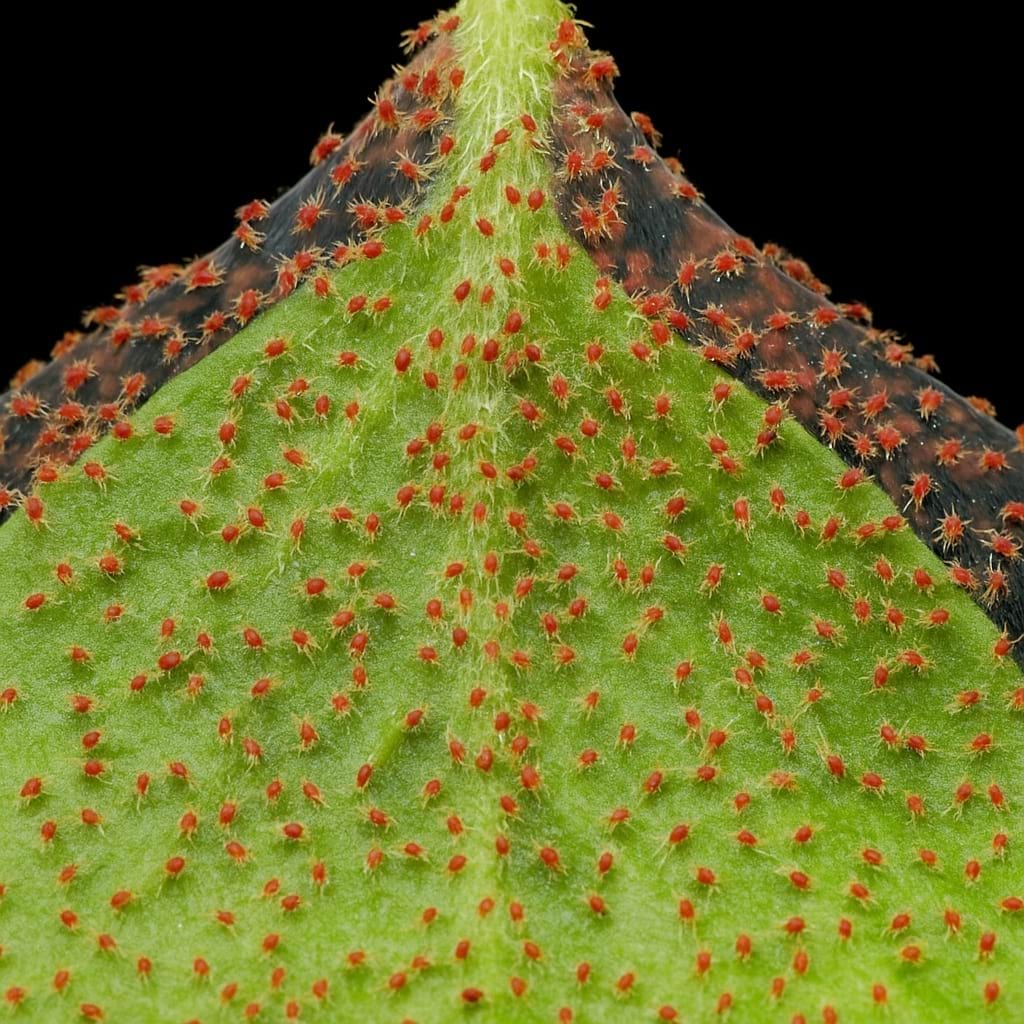
- Spider Mites: Fine webbing between stems in hot, dry, stagnant air. Rinse gently or treat with a mild horticultural soap.
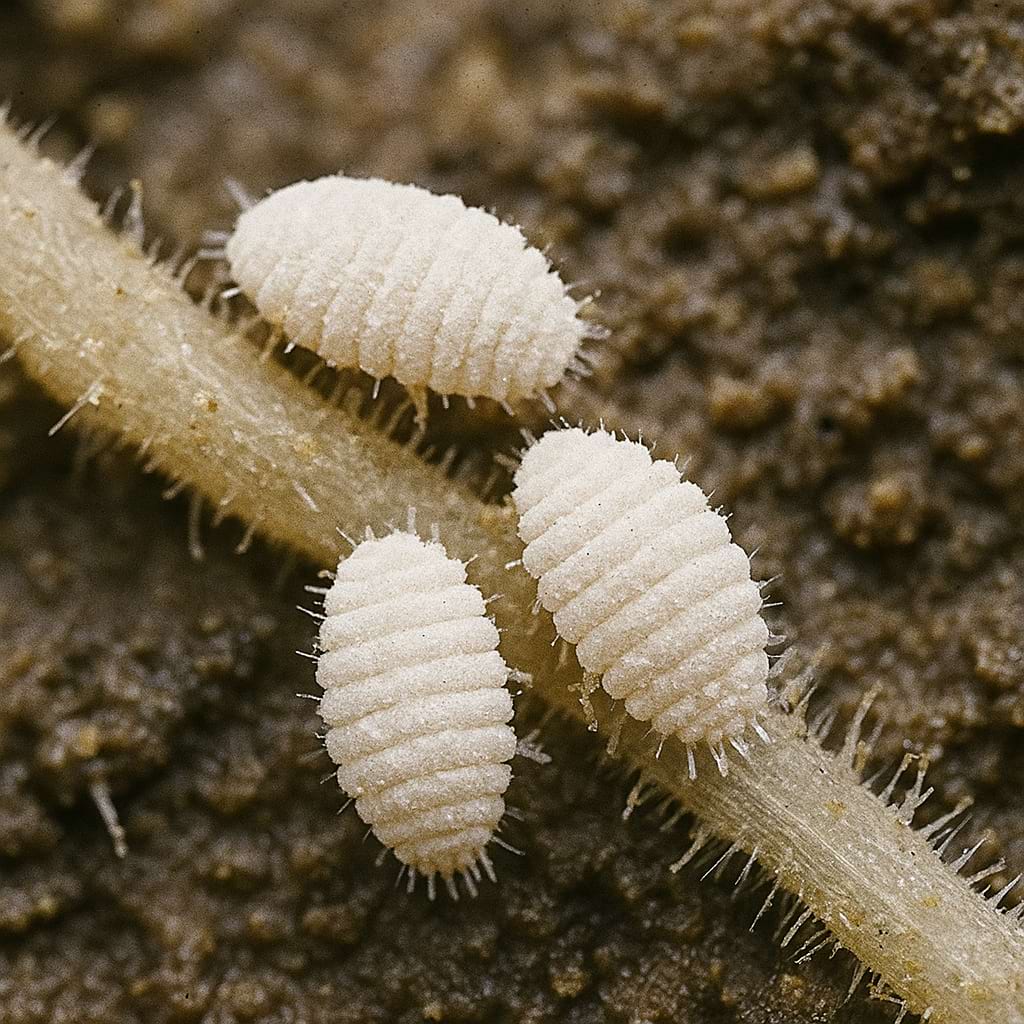
- Root Mealybugs: White powdery clusters on the roots, invisible until you unpot. Wash the roots clean, repot in fresh dry mix, and hold off water for two weeks.
Whatever you use, throw away the swab or brush afterward so stray glochids do not end up back on your hands.
🩺 Common Christmas Cholla Problems
Nearly every problem with this plant comes back to one of three things: too much water, not enough light, or rough handling. Get those right and it rarely goes wrong.
- Root rot and mushy stems: The number-one killer. Soft, yellowing, translucent joints and a sour-smelling pot mean the roots are drowning. Cut back to firm green tissue, callus the cuts, and restart from a clean joint in dry mix.
- Brown-black spots: Usually fungal, from damp cool air or water sitting in the joints. Improve airflow and water only at the soil.
- Sunburn and scorch: Bleached tan patches on stems moved too fast into strong sun. Acclimate gradually rather than cutting back light long-term.
- Wrinkled, wilting stems: Thirst, if the soil is bone-dry; a deep drink fixes it in days. If the soil is wet and the stems still wrinkle, suspect rot, not thirst.
- Stunted growth: Almost always too little light, sometimes paired with tired soil. Move it brighter and refresh the mix in spring.

🖼️ Christmas Cholla Display and Styling Ideas
The Christmas Cholla is all silhouette and seasonal drama, so the styling job is to let its wiry form and red berries stand out rather than dressing it up.
Solo Setups
A single plant in a plain, heavy pot against a blank pale wall is the strongest look. The tangled stems throw sculptural shadows, and in winter the scarlet fruit reads like scattered beads. Top the soil with pale gravel to keep the base dry and make the berries pop.
Outdoor and Xeriscape
In zones 7 and warmer this cactus belongs outside, tucked among boulders and gravel in a xeriscape or rock garden. It works as a living barrier plant too, since few animals push through those barbed stems, and desert birds will happily shelter and feed in it. Pair it with other tough desert plants like a Golden Barrel Cactus or a sprawling Bunny Ear Cactus for a full sun-baked scene.
Where Not to Put It
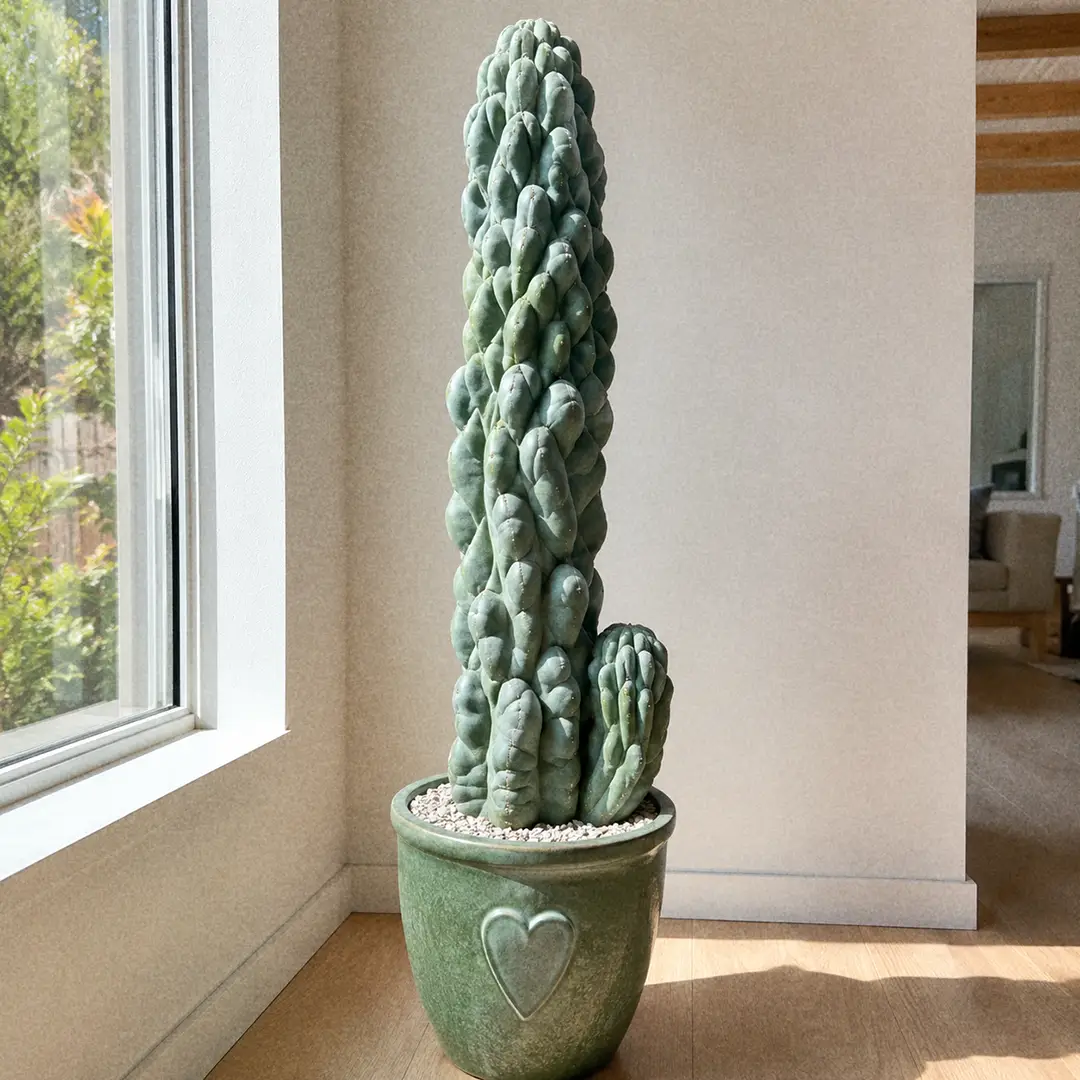
Keep it well away from walkways, seating, doorways, and anywhere people or pets brush past, because the joints detach and the spines catch skin instantly. Skip low tables and busy hallways. This is a look-don't-touch plant, and it should live where nobody blunders into it. If you want a desert column for a hallway or a house with kids, grow a Totem Pole Cactus instead, since it has no spines on it at all.
🌟 Christmas Cholla Pro Care Tips
☀️ Give it your brightest spot, no compromise. Full direct sun is what keeps it firm and fruiting.
💧 When in doubt, don't water. This plant forgives drought and punishes wet feet.
🥶 Keep it dry going into winter. A bone-dry cholla shrugs off frost; a wet one rots.
🧤 Never handle bare-handed. Use tongs or thick gloves every single time, even for a quick move.
🩹 For spines in skin, pull the joint off with a comb or tongs first, then remove individual spines with pliers and lift glochids with tape.
🪴 Plant it heavy and gritty. A weighty terracotta pot and a sharp mineral mix do most of the work for you.
🍒 Be patient for berries. Fruit comes with maturity, sun, and a real winter rest, not with fussing.
🐦 Grow it outdoors if you can. In a warm climate it thrives as a wildlife plant with almost zero care.
❓ Frequently Asked Questions
Is the Christmas Cholla the same as a Christmas Cactus?
No, and this is the most common mix-up. The Christmas Cactus is a soft, spineless tropical (Schlumbergera) grown indoors for winter blooms. The Christmas Cholla is a frost-hardy desert cactus with barbed spines and red berries. They share only a season and part of a name.
Why is my Christmas Cholla turning yellow and soft?
That is almost always overwatering and the start of root rot. The stems go yellow, translucent, and mushy, usually from the base. Cut back to firm green tissue, let the cuts callus, and re-root a clean joint in dry gritty mix. Water far less afterward.
Is the Christmas Cholla dangerous?
It is not chemically toxic to people or pets, but it is mechanically hazardous. The spines are thin, barbed, and cling stubbornly to skin, and the whole joints detach and hitch a ride at the lightest brush. Keep it away from foot traffic, children, and pets, and handle it only with tongs or thick gloves.
How do I get the red berries to appear?
Berries follow flowers, and both need a mature plant, a full season of strong direct sun, and a cool, dry winter rest the year before. Young or shaded plants fruit little or not at all. Give it desert conditions and a few years, and the winter berries come on their own.
How cold can a Christmas Cholla tolerate?
Kept bone-dry, an established plant handles hard frost down to roughly 0 to 10°F (-18 to -12°C), which makes it hardy in USDA zones 7 through 11. The critical rule is that it must be dry going into the cold; a wet cholla rots at those temperatures instead of surviving them.
Can I grow a Christmas Cholla indoors?
Yes, if you can give it a genuinely bright, sunny window, ideally south-facing, plus very sparing water and a cool winter rest. It is more of a specimen for a sunroom or bright cold porch than a cozy living-room plant. In a warm climate, it is far happier outdoors in full sun.
How do I get cholla spines out of my skin?
If a whole joint is stuck, lift it off first with a wide-tooth comb or tongs, never with your bare fingers. Pull the larger spines out with pliers or tweezers, then press household tape or a thin layer of white glue over the fine glochids, let it set, and peel it off in the direction the barbs point.
How fast does a Christmas Cholla grow?
Slowly. It puts on a modest number of new joints each year and takes several years to reach a full, tangled two to five feet. That slow pace is part of why it stays manageable in a container for a long time.
Why is my Christmas Cholla not producing new stems?
The usual cause is too little light, sometimes combined with tired old soil. Move it to the brightest spot you have, refresh the gritty mix in spring, and make sure it gets a warm growing season. Overwatering can also stall growth by quietly damaging the roots.
ℹ️ Christmas Cholla Info
Care and Maintenance
🪴 Soil Type and pH: Sandy, gravelly, sharply draining cactus mix; neutral to slightly alkaline pH.
💧 Humidity and Misting: Prefers dry desert air; low household humidity around 20 to 40 percent is ideal and damp air invites rot.
✂️ Pruning: Snip off whole joints at the connection point to shape the plant or remove damage; never cut across a stem.
🧼 Cleaning: Blow or brush dust off with a can of compressed air or a soft dry brush; never wipe by hand, since the glochids and barbed spines catch instantly.
🌱 Repotting: Move up one pot size only when roots fill the container or the plant grows top-heavy, usually every three to four years.
🔄 Repotting Frequency: Every 3-4 years
❄️ Seasonal Changes in Care: Active growth from late spring through early autumn; needs a cool, dry, bright winter rest to fruit well and stay tough.
Growing Characteristics
💥 Growth Speed: Slow
🔄 Life Cycle: Perennial
💥 Bloom Time: Late spring to midsummer, with small flowers opening in the late afternoon
🌡️ Hardiness Zones: 7-11 outdoors; one of the more cold-hardy cacti when kept dry
🗺️ Native Area: Southwestern United States and northern Mexico, in Chihuahuan and Sonoran desert scrub
🚘 Hibernation: Cool, nearly dry winter rest; tolerates hard frost when the soil is bone-dry
Propagation and Health
📍 Suitable Locations: South-facing windows, sunrooms, unheated bright porches, rock gardens and xeriscapes in warm climates
🪴 Propagation Methods: Detach a healthy joint, let it callus for a week or two, then set the dry end in gritty mix and wait.
🐛 Common Pests: Mealybugs, Scale Insects, Spider Mites, Root Mealybugs
🦠 Possible Diseases: Root rot, soft rot, fungal stem spot
Plant Details
🌿 Plant Type: Wiry, branching cane cactus in the Cylindropuntia (cholla) genus, Cactaceae
🍃 Foliage Type: Leafless; slender cylindrical green stems (joints) that photosynthesize in place of leaves
🎨 Color of Leaves: Grayish-green to bright green stems, no true leaves
🌸 Flower Color: Pale greenish-yellow to bronze, small and easy to miss
🌼 Blooming: Yes, but the flowers are tiny and inconspicuous; the real show is the fruit
🍽️ Edibility: The bright red berries are edible to birds and wildlife and were eaten in small amounts historically; not a food plant for the home grower
📏 Mature Size: 2-5 feet, occasionally to 6 feet in age
Additional Info
🌻 General Benefits: Extremely drought tolerant, cold-hardy, sculptural winter interest, valuable desert wildlife plant
💊 Medical Properties: No significant medicinal use; some desert peoples used cholla parts in folk remedies
🧿 Feng Shui: Sharp, protective energy; traditionally placed outdoors or near entrances to deflect harsh chi, never in a bedroom
⭐ Zodiac Sign Compatibility: Capricorn
🌈 Symbolism or Folklore: Endurance, self-protection, the quiet resilience of desert life
📝 Interesting Facts: The species name leptocaulis means "slender-stemmed," a nod to the pencil-thin joints that give the plant its Pencil Cholla nickname. Those joints detach at the lightest brush and hitch a ride on animals and hikers, which is exactly how the plant spreads across the desert. The scarlet berries cling to the bare stems from late autumn all the way through winter, which is where the Christmas name comes from, and they feed quail, wrens, and other desert birds through the lean months.
Buying and Usage
🛒 What to Look for When Buying: Look for a plant with firm, plump green joints, no shrivelled or blackened segments, and ideally a few fruits or fruit scars that confirm it is a mature, flowering-age plant. Avoid specimens with soft brown patches at the base or loose joints ready to drop. Small plants in three to four inch pots establish fastest.
🪴 Other Uses: Xeriscape and rock-garden accent, desert wildlife habitat, barrier planting, sculptural container specimen for a bright cold porch
Decoration and Styling
🖼️ Display Ideas: Solo in a heavy gritty-topped pot where the wiry silhouette reads against a plain wall, or as a xeriscape accent among boulders and gravel in a warm-climate garden
🧵 Styling Tips: Keep the container plain and heavy (unglazed terracotta, stone, concrete) so the tangled stems and red berries are the focus; a pale gravel mulch makes the scarlet fruit pop and keeps the base dry.
🪴 See also 🪴
Complete Guide to Bishop's Cap Cactus Care and Growth
Complete Guide to Brain Cactus Care and Growth
Complete Guide to Eve's Needle Cactus Care and Growth
Complete Guide to Totem Pole Cactus Care and Growth
Complete Guide to Hedgehog Cactus Care and Growth
Complete Guide to Lady Finger Cactus Care and Growth
Complete Guide to Old Lady Cactus Care and Growth
Complete Guide to Powder Puff Cactus Care and Growth
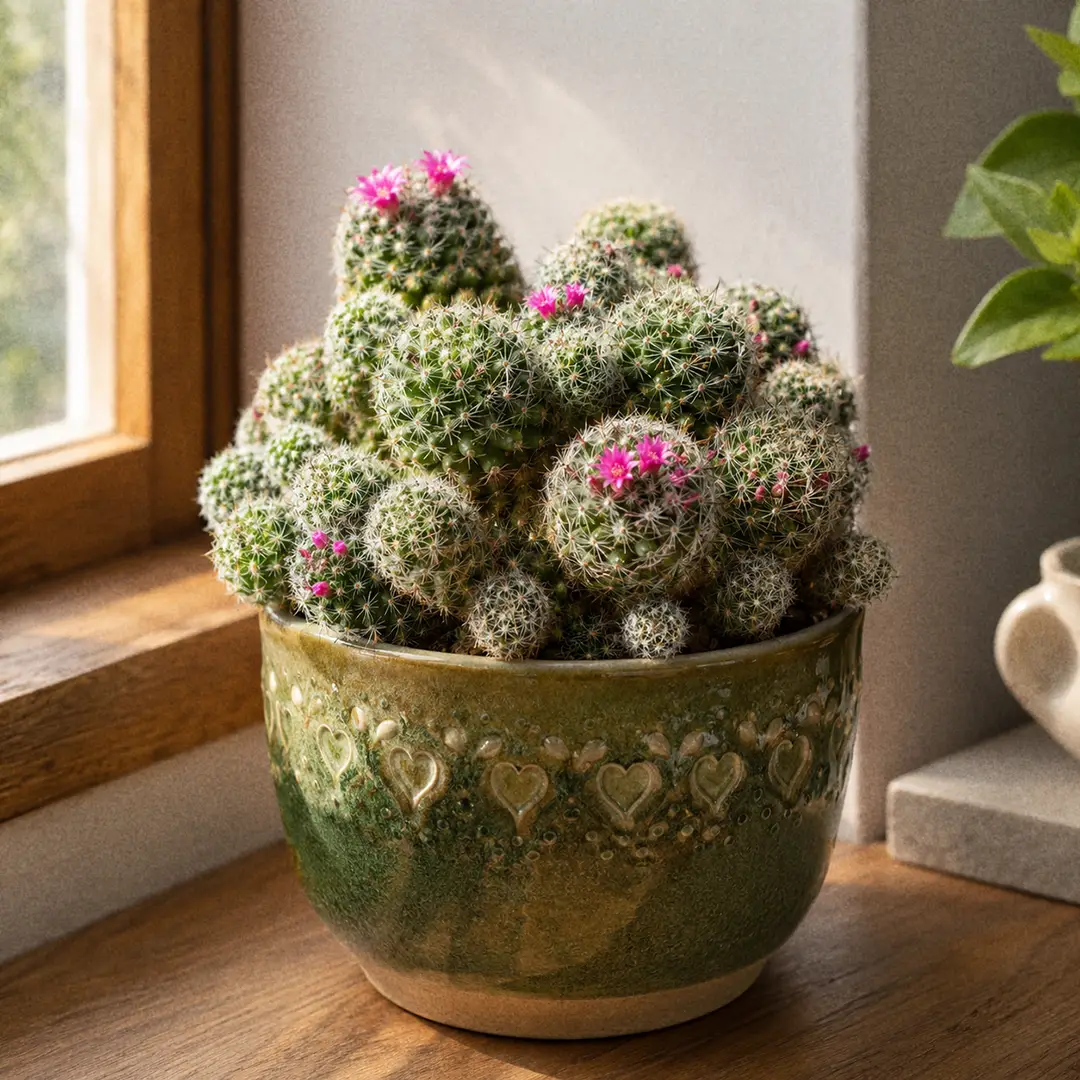
Complete Guide to Pincushion Cactus Care and Growth
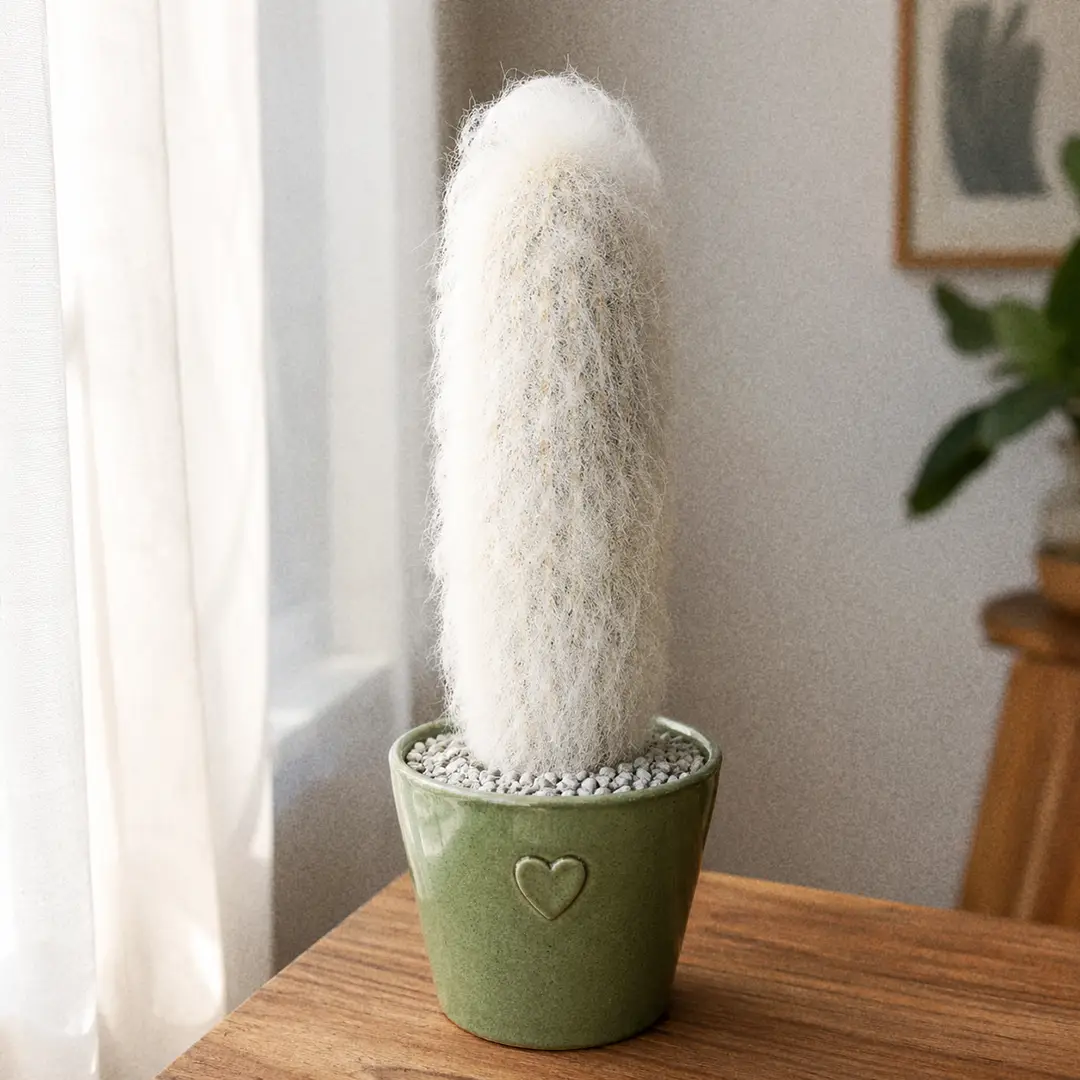
Complete Guide to Peruvian Old Man Cactus Care and Growth
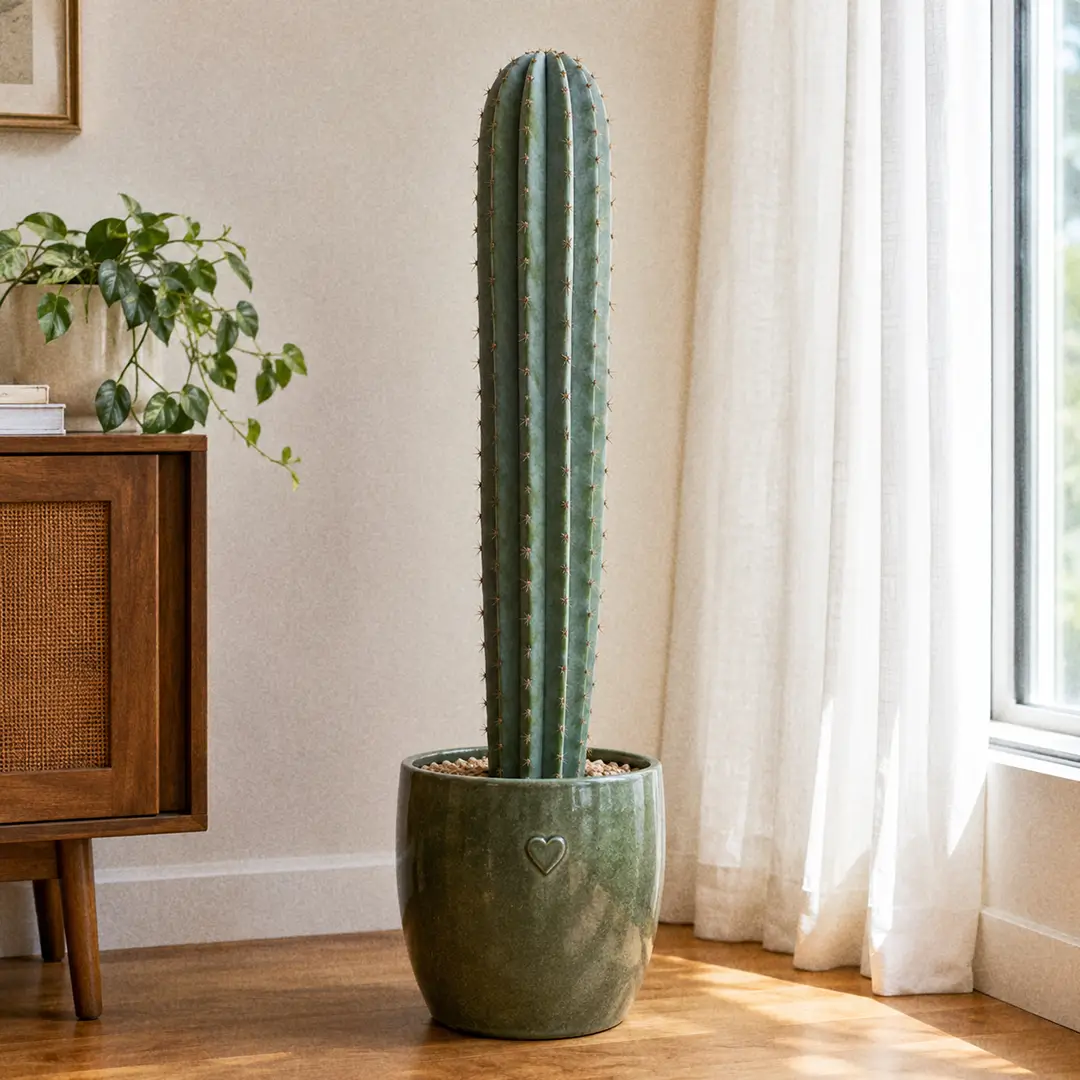
Complete Guide to Peruvian Apple Cactus Care and Growth
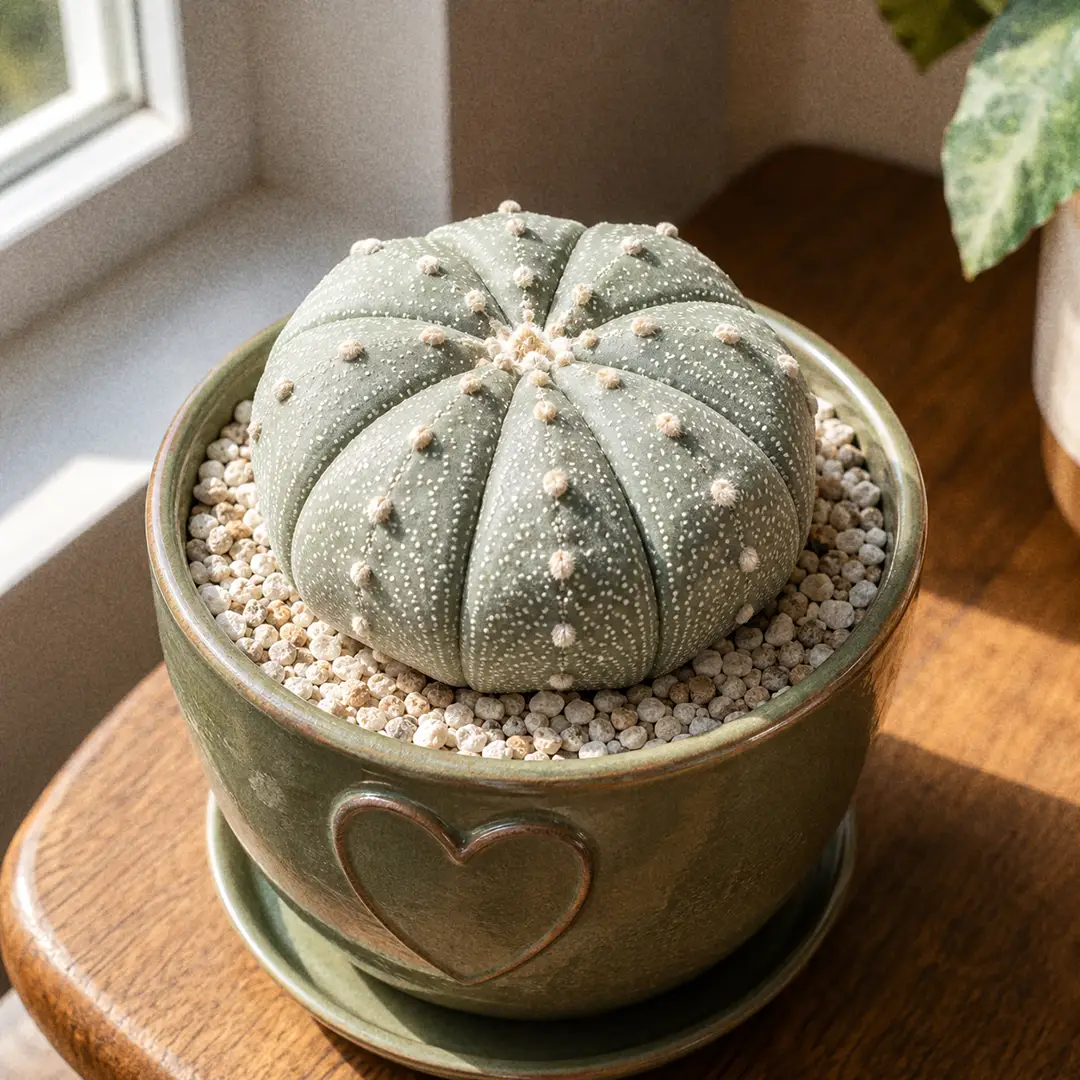
Complete Guide to Star Cactus Care and Growth
Complete Guide to Moon Cactus Care and Growth

Houseplant101 Forum
Questions & Comments
Ask a question, share your plant experience, or help other plant owners.
Comments are temporarily unavailable.
Open the Houseplant101 ForumNo comments yet
Be the first to ask a question or share your experience about this page.
Log in or create an account
Comments use your Houseplant101 Forum account, but you can stay on this page.
Create a new account