
Moon Cactus
Gymnocalycium mihanovichii
Ruby Ball Cactus, Red Cap Cactus, Hibotan Cactus, Star Cactus, Chin Cactus


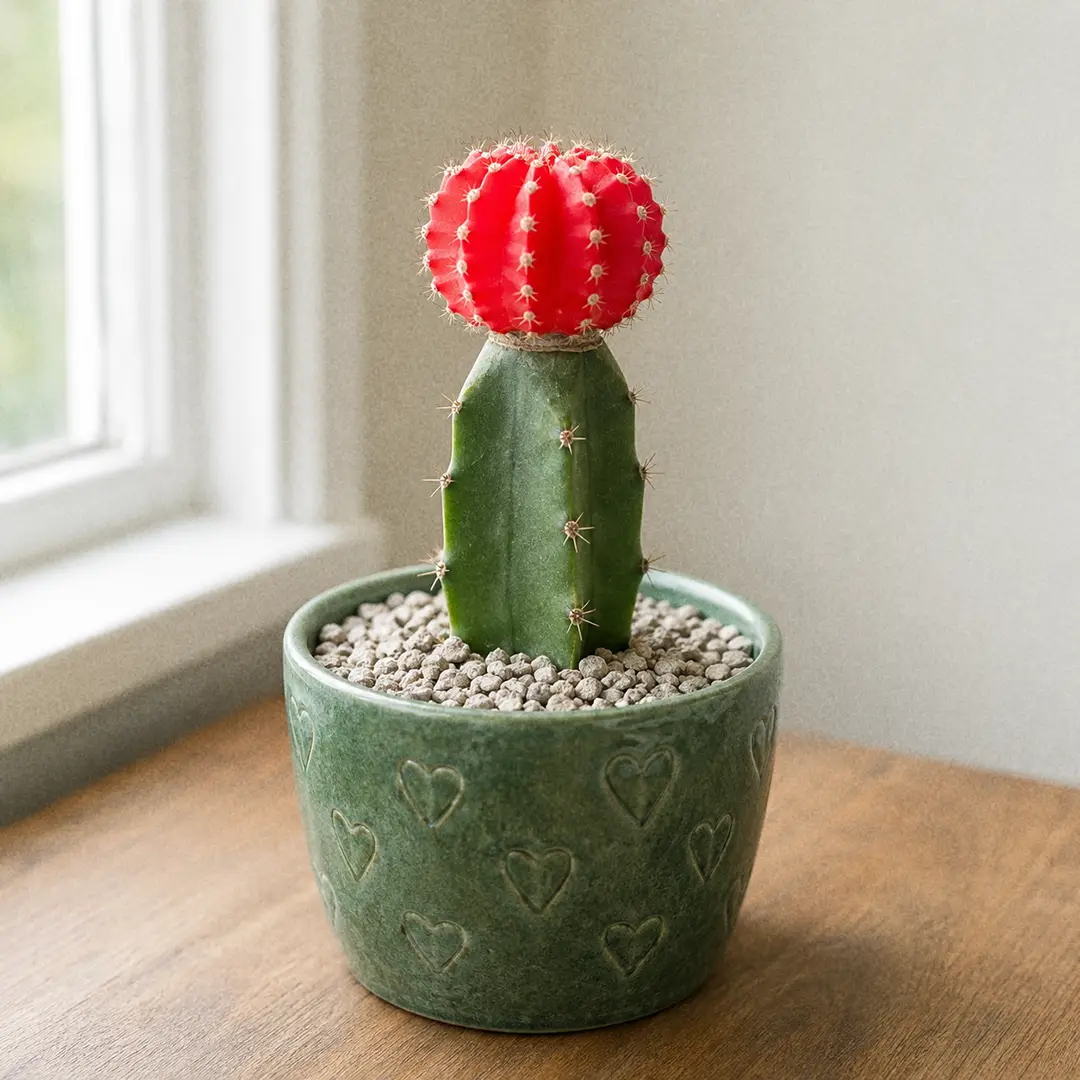
The Moon Cactus (Gymnocalycium mihanovichii) is the candy-colored grafted cactus you see in every garden center: a tiny red, pink, yellow, or orange ball perched on a green column. Because the colorful top cannot survive on its own, this is really two cacti in one pot, and treating it as such is the difference between two years and five-plus years on a windowsill.
📝 Moon Cactus Care Notes
🌿 Care Instructions
⚠️ Common Pests
📊 Growth Information
🪴 In This Guide 🪴

☀️ Moon Cactus Light Requirements (Bright Indirect, No Harsh Sun)
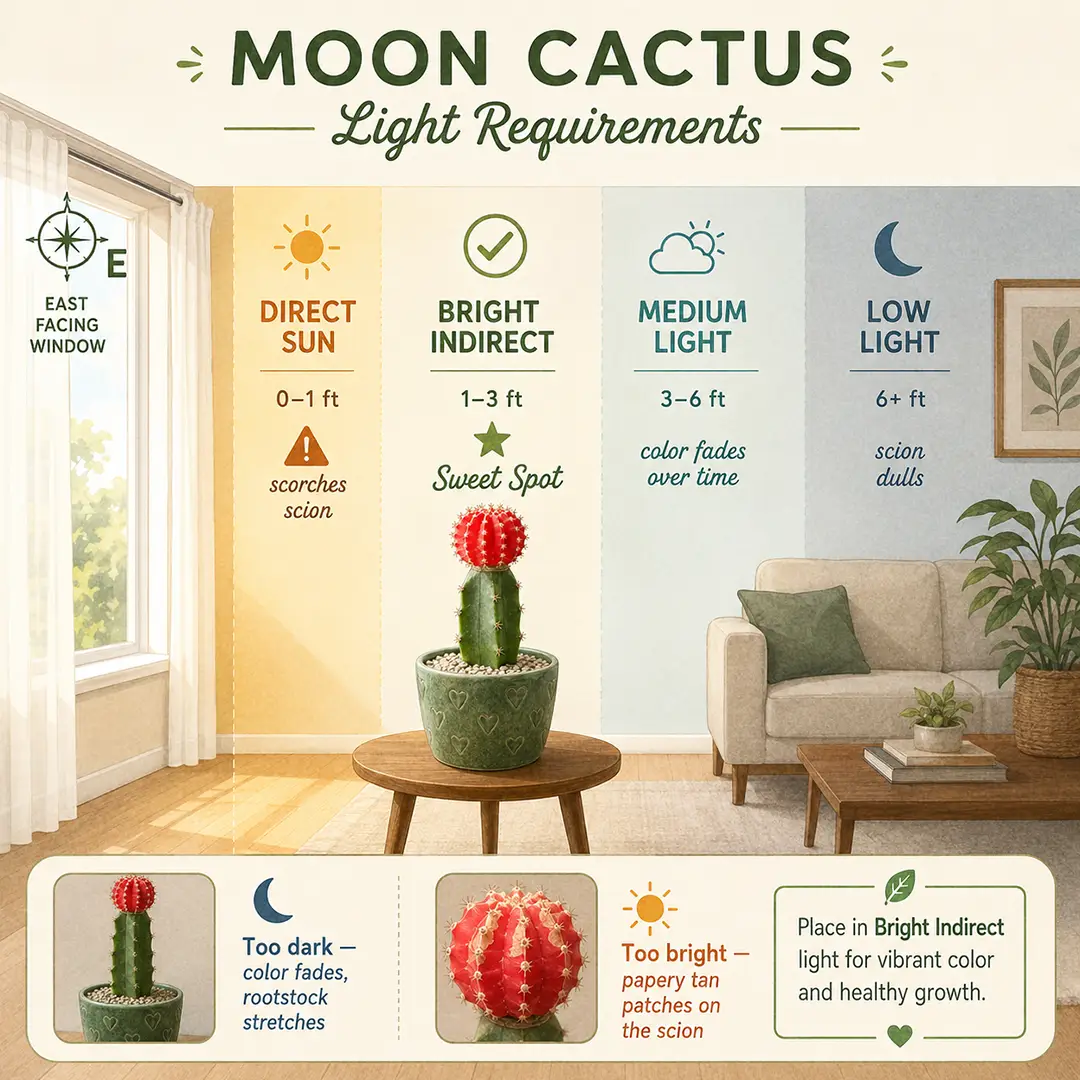
Light is the trickiest single variable, and the Moon Cactus breaks the usual "more sun is always better" cactus rule. The colorful top has no chlorophyll to protect itself, and the green rootstock underneath is a tropical jungle cactus that scorches in strong direct sun. The sweet spot is bright, indirect light all day.
The Sweet Spot
The best window is an unobstructed east-facing one, where the plant gets a couple of hours of gentle morning sun and bright ambient light the rest of the day. South and west windows work if you filter the strongest midday hours through a sheer curtain or pull the plant a foot or two back from the glass. A bright north window keeps the plant alive but slows growth and tends to fade the scion color over many months. A grow light on a 10 to 12 hour timer is a reliable fix for any low-light home.
Too Little Light
The green rootstock starts to etiolate, growing thin and pale just under the graft. The scion color dulls and the plant feels softer to the touch. Slide it closer to the window or add a grow light.
Too Much Light
The colored top bleaches first, going chalky or developing tan papery patches, especially on the side facing the window. Pull the plant back, add a sheer curtain, or move to an east window. Once a scion is sun-scorched the patch never repigments.
💧 Moon Cactus Watering Guide (Soak and Dry, Sparingly)
Watering kills more Moon Cacti than anything else. The rootstock and the scion both store water, and the soil they sit in needs to dry out fully between drinks. Wet feet for even a week can drop a plant.
Watering Frequency
In spring and summer, water deeply only when the soil is bone dry top to bottom. For a 3 to 4 inch pot in a bright room, that lands roughly every 10 to 14 days. Larger pots in cooler spots can stretch to three weeks. Test with a wooden skewer pushed to the bottom of the pot; if it comes out cool or dark, wait a few more days. See watering houseplants for general background.
In autumn and winter, cut watering way back. A plant in a cool 55 to 60°F (13 to 16°C) room can stay almost dry for two to three months and emerge happier in spring for it. A plant in a heated 70°F (21°C) living room needs a small drink roughly every four to six weeks to keep the rootstock plump.
How to Water
Pour room-temperature water around the base until it drains, wait ten minutes, then tip out the saucer. Never let the pot sit in standing water. Avoid pouring water directly onto the colored top or the graft line; trapped moisture there is the fastest way to lose the union. Bottom watering works well if your mix is properly gritty.
Signs of Trouble
Underwatering shows up as a wrinkling rootstock and a slightly softer scion; a single deep water rehydrates the plant in a day or two. Overwatering is much worse: the rootstock turns yellow then brown from the base, gets soft and mushy, and the scion topples or detaches at the graft. Once the scion has separated, the only rescue is regrafting onto a fresh rootstock.
🪴 Best Soil for Moon Cactus (Gritty and Fast-Draining)
Soil mix is the single best decision you can make for this plant. The right mix forgives the occasional watering mistake; the wrong one punishes a careful schedule. You want a mix that drains in seconds and dries fully in a week or less.
DIY Soil Mix
- 1 part standard cactus and succulent mix
- 1 part coarse pumice (or perlite)
- 1 part coarse horticultural sand or fine gravel
A small handful of horticultural charcoal is a nice optional addition to keep the mix sweet. Squeeze a damp handful of the finished mix; it should crumble apart the instant you open your fingers. If it holds together, add more pumice.
Pre-Made Options
Mass-market bagged "cactus mix" is usually too peaty for a Moon Cactus. Cut it 50/50 with pumice or perlite before potting. See repotting season for general timing.
Pot Choice
A small terracotta pot is the gold standard. Clay wicks moisture out of the mix and shortens the drying time, which protects both the rootstock and the graft. Glazed and plastic pots work but ask for a slower watering rhythm. The pot should be only an inch wider than the rootball; oversized pots hold wet soil at the edges that the small root system never touches.
🍼 Fertilizing Moon Cactus (A Light Touch)
The Moon Cactus is a slow-growing graft that does best on a thin diet. Overfeeding pushes the rootstock to grow faster than the union can support, which can split the graft.
When and How Often
Feed only in active growth, from mid spring to late summer. Two feedings a year is plenty: once in May, once in July. Skip the rest of the year entirely and never feed a freshly repotted plant for the first two months.
What to Use
Use a low-nitrogen cactus and succulent fertilizer (something around 2-7-7 or 5-10-10) at half the label strength. Always water with plain water first, then apply the diluted feed to damp soil so weak roots are not chemically burned. See fertilizing houseplants for the basics.
Over-Fertilizing Signs
A white crust on the soil surface or around the pot rim means salt build-up from feed or hard tap water. Flush the pot with a few pot volumes of plain water, skip the next planned feeding, and dilute further next time.
🌡️ Moon Cactus Temperature Range
The Moon Cactus is a warm-room plant for most of the year and a cool-room plant in winter. The rootstock is tropical, which sets the lower limit, and the scion is subtropical, which raises the upper limit a touch.
Ideal Range
Through spring, summer, and autumn, aim for 65 to 85°F (18 to 29°C). Normal indoor temperatures are perfect. The plant tolerates short spells into the low 90s indoors as long as the air is not stagnant.
Winter Rest
In winter, a slight cool down to 55 to 65°F (13 to 18°C) is ideal. The cooler rest period helps the rootstock conserve energy and improves the odds of flowering the following spring. Never let the plant drop below 50°F (10°C); the green rootstock is not cold hardy and will get cold damage that the colorful top cannot fix.
Drafts and Heat Sources
Avoid placing the plant directly above a radiator, beside a hot vent, or against a single-pane window in winter.
💦 Moon Cactus Humidity Requirements
Ideal Humidity
Easy. The Moon Cactus is comfortable in normal household humidity, anywhere from 30 to 45 percent. No misting, no humidifier, no pebble trays.
Watch for Damp Stagnant Air
The one humidity trap is a humid, cool, still room in late autumn before central heating kicks in. Stagnant damp air around the graft can encourage rot exactly where you do not want it. A small clip-on fan running a few hours a day solves it. Skip steamy bathrooms and closed terrariums, both of which are far too wet for this plant.
🌸 Moon Cactus Flowers (Small Bell-Shaped Blooms, on Mature Plants)
What the Flowers Look Like
Yes, healthy Moon Cacti do flower, though most never live long enough or get enough light to. The blooms are small, bell-shaped, in soft shades of pink, cream, or pale yellow, and they emerge from the top of the colored scion near the crown.
How to Trigger Blooms
To coax flowers, three things have to line up. The graft has to be at least a year or two old and clearly thriving (firm scion, plump green rootstock, no visible stress). The plant has to have spent the previous winter cool and almost dry, ideally at 55 to 60°F (13 to 16°C). And it has to be getting strong, bright indirect light all spring.
When Buds Appear
Buds appear in late spring and open over a few days into single small flowers. They last only a day or two each but often come in small waves. If your Moon Cactus has been in a warm heated room all winter, expect a beautiful round plant but no flowers.
🏷️ Moon Cactus Types and Varieties
The Moon Cactus you see in stores is always Gymnocalycium mihanovichii var. friedrichii in its chlorophyll-free mutant form. What changes between plants is the scion color, the scion shape, and what is underneath as the rootstock.
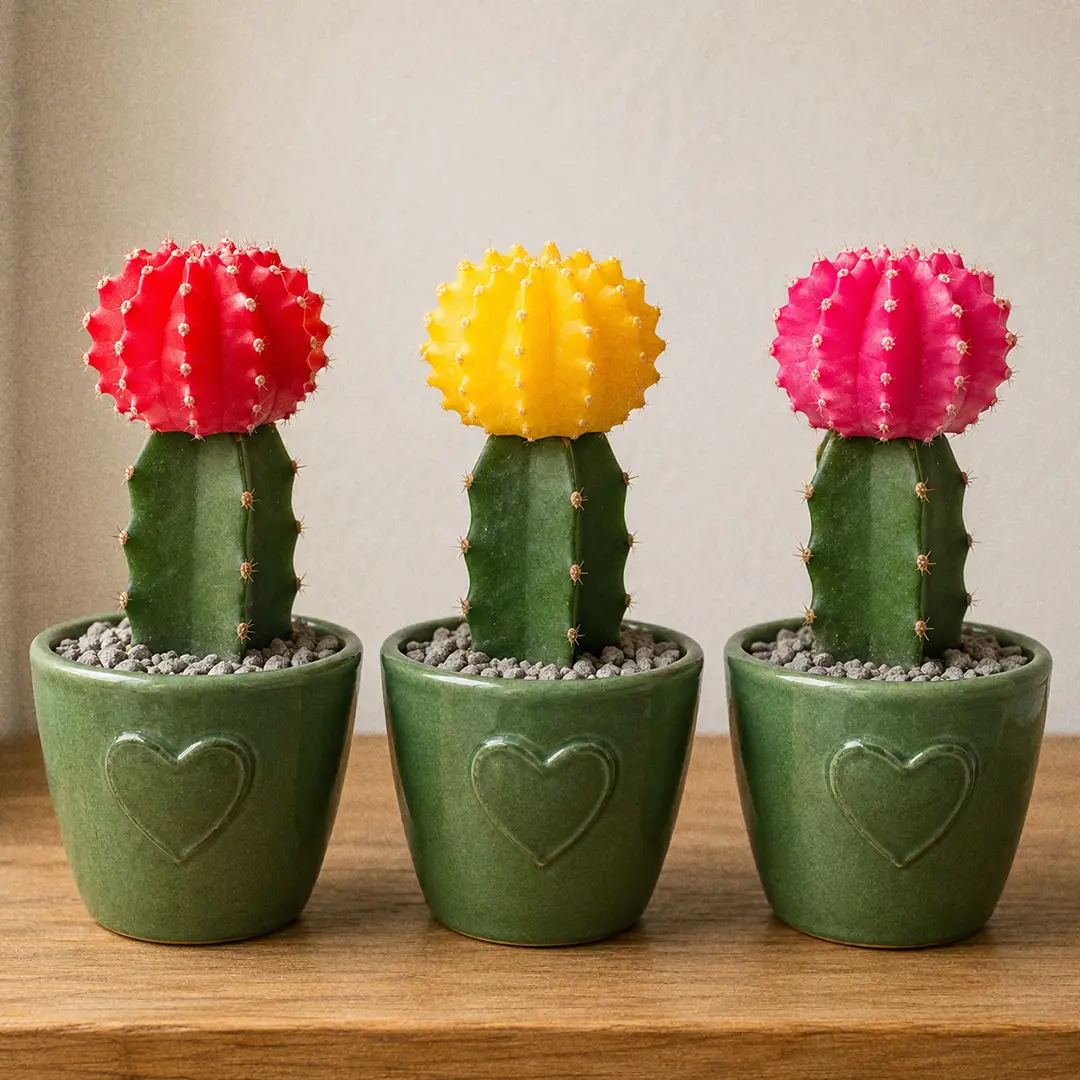
Red 'Hibotan' (Ruby Ball)
The classic. Vivid scarlet to crimson scion, perfectly round, the most widely sold form.
Yellow 'Hibotan'
Sunshine yellow scion, often paler over time. Slightly more sun-sensitive than the red.
Pink 'Hibotan'
Soft hot pink to coral. Tends to be the longest-lived color in indoor light.
Orange 'Hibotan'
Bright tangerine; less common, harder to find healthy.
'Hibotan Nishiki'
A two-tone form where the scion shows green chlorophyll patches alongside the red or pink. Because it has some chlorophyll, it can be grown on its own roots, and it is significantly longer-lived than fully chlorophyll-free forms.
Purple and Magenta Forms
Often sold as "Moon Cactus assortment" plants. Treat identically; they may be slightly more sensitive to bright sun.
The Rootstock Matters
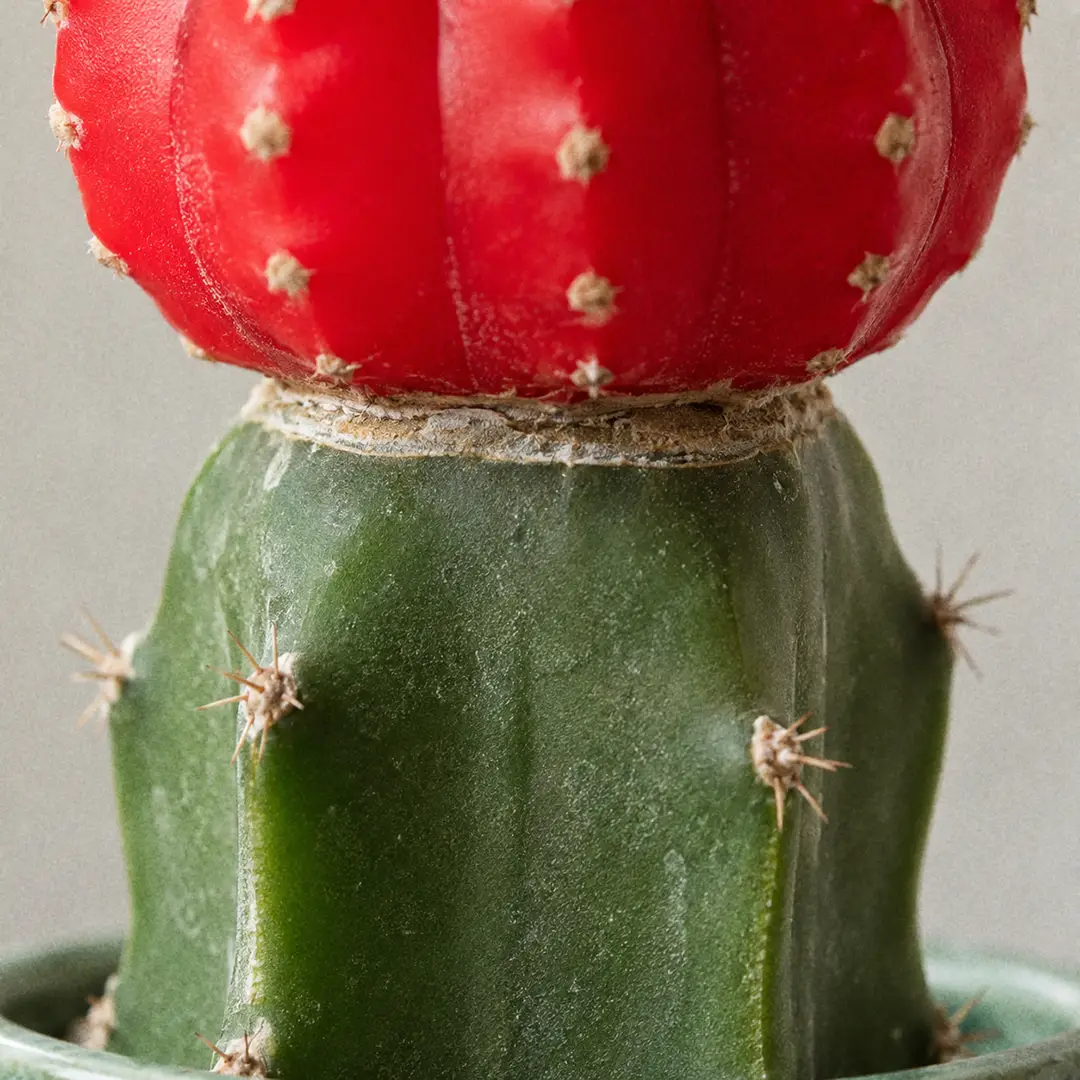
Then there is the rootstock to think about. Most Moon Cacti sit on a short Hylocereus undatus (dragon fruit cactus) stub, which grows fast but is short-lived as a graft partner. A few specialist growers graft onto Myrtillocactus geometrizans or Trichocereus, both of which last longer and tolerate cooler winters. If you have the choice, the Myrtillocactus graft is the one to bring home.
Good Shelf Companions
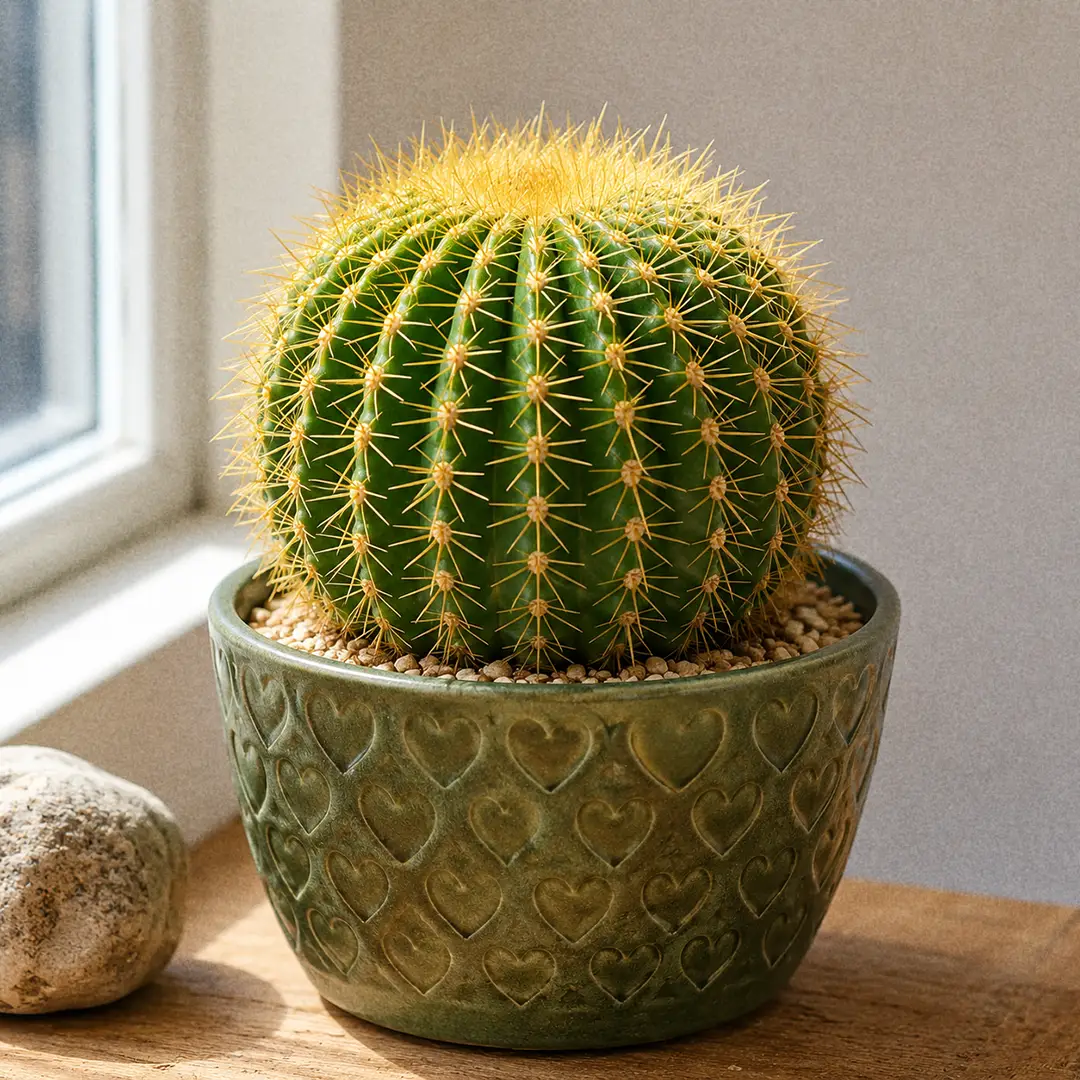
For a colorful mini-cactus shelf, the Moon pairs naturally with a tall textured cousin like the Old Man Cactus, a perfect sphere like the Golden Barrel Cactus, the spineless star outline of the Bishop's Cap Cactus, the flat eight-rayed Star Cactus (Astrophytum asterias, the original "Star Cactus" people confuse this plant with), the playful flat pads of the Bunny Ear Cactus, or another mutant oddity like the Crested Brain Cactus, whose golden folded fan brings the same novelty appeal without the graft to worry about.
🪴 Potting and Repotting Moon Cactus
When to Repot
The Moon Cactus is slow growing and happy snug. Repot every two to three years, or when the rootstock has clearly filled the pot and you can see roots at the drainage hole. Spring or early summer is the best repotting window. Avoid repotting in autumn or winter unless you are rescuing a plant from rotted soil.
Choosing a Pot
Use a terracotta pot one inch wider than the current one, with at least one drainage hole. The shallow root system does not need depth; a wider, shallower pot is often better than a tall, narrow one.
How to Repot Step by Step
- Wait until the soil is bone dry; a dry plant is lighter and the root ball pops out cleanly.
- Wrap the colored top loosely in a folded paper towel to protect both the scion and your fingers from the rootstock spines.
- Tip the pot sideways, gently slide the rootball out, and shake off the old soil.
- Inspect the roots. Trim any black, mushy, or hollow ones with sterile scissors. Healthy roots are firm and pale tan to white.
- Set fresh gritty mix in the new pot. Place the plant at the same depth as before, keeping the graft line well above soil. Burying the graft line is one of the fastest ways to lose the plant.
- Tamp the mix lightly with a chopstick. Top-dress with a thin layer of decorative gravel.
- Do not water for one full week so any nicked roots can callus over.
✂️ Pruning Moon Cactus
Never Prune the Scion
The colored scion does not get pruned. Ever. Cutting into it usually kills it.
Trimming Rootstock Pups
The one thing that occasionally needs trimming is a pup sprouting from the green rootstock below the graft. These steal energy from the union and let the scion fade faster. With a sterile blade, slice the rootstock pup off flush at its base, dust the wound with cinnamon or sulfur powder, and keep it dry for a few days.
Scion Offsets
Occasionally a small offset (a tiny new ball) will form on the colored scion itself. Leave it alone unless you intend to propagate; see the next section.
🌱 How to Propagate Moon Cactus
Why It Is Tricky
Honest answer first: most home growers do not propagate Moon Cactus, because true propagation requires grafting the chlorophyll-free top onto a fresh green rootstock. The colorful scion will not root on its own. If you put a detached scion in soil, it will starve within weeks.
Grafting Step by Step
- Wait until a small offset (a tiny ball) appears on the parent scion in summer.
- With a sterile, very sharp blade, slice the offset cleanly off at its base.
- Slice the top off a healthy young green columnar cactus (the rootstock), leaving a flat clean cut.
- Press the offset gently but firmly onto the cut surface of the rootstock so the inner ring of vascular tissue lines up between the two pieces. The match is the whole game.
- Hold the two together with a soft rubber band stretched over the top and under the pot, applying gentle even pressure. Leave it for two to three weeks in bright, dry conditions.
- After the union has fused, remove the band and treat as a normal Moon Cactus.
The 'Hibotan Nishiki' Exception
If the offset is the green-variegated 'Hibotan Nishiki' form, you can skip the graft and try rooting it on its own. Let the cut callus for a week in dry shade, then push it into dry gritty mix and water sparingly. See succulent propagation for the general technique.
When to Just Replace It
For everyone else, the realistic move is to enjoy the grafted plant you have and replace it when the union eventually fails.
🐛 Moon Cactus Pests and Treatment
Moon Cacti are not pest magnets, but the textured scion and the joint between the two plants give insects nice places to hide.
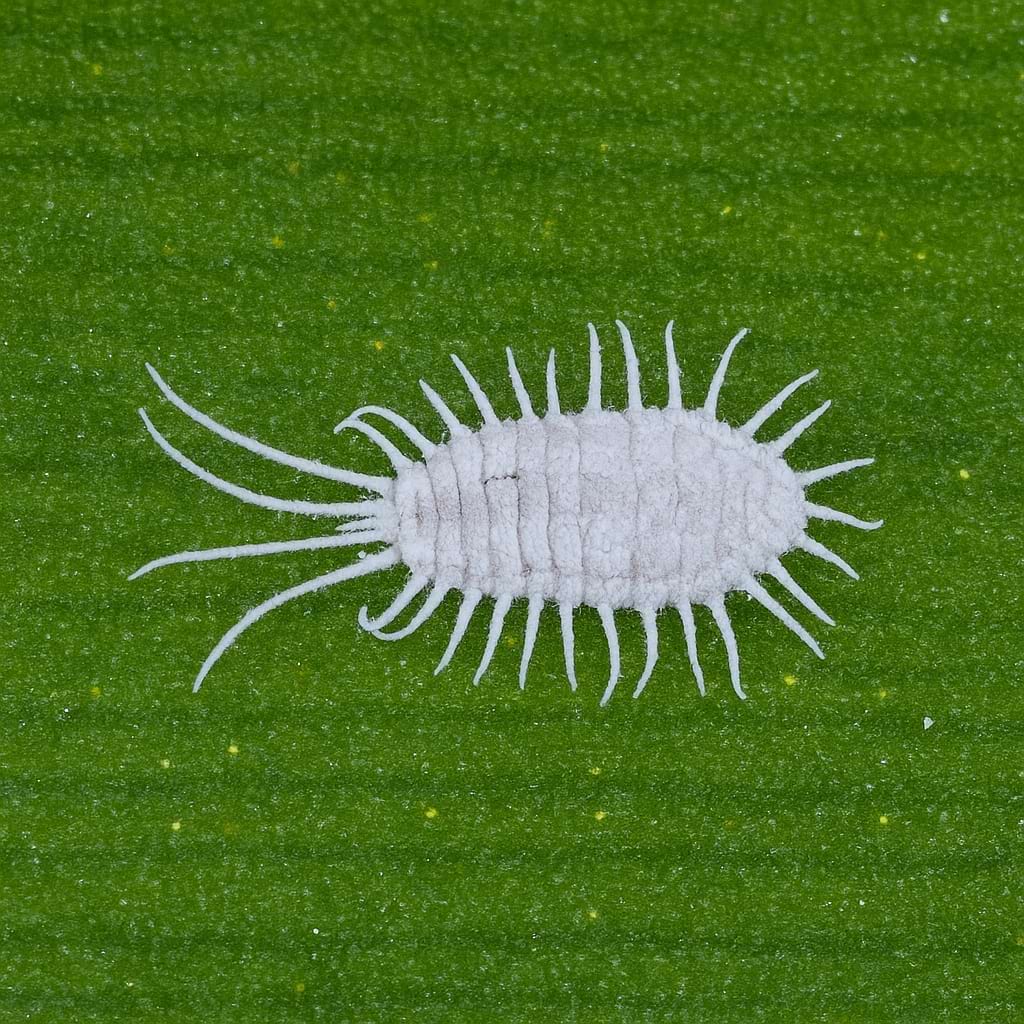
- Mealybugs: The most common pest. Cottony white tufts tucked into the ribs of the scion or at the graft line. Dab each one with isopropyl alcohol on a cotton swab every five to seven days for three weeks. For heavy infestations, a soil drench with a systemic insecticide works.
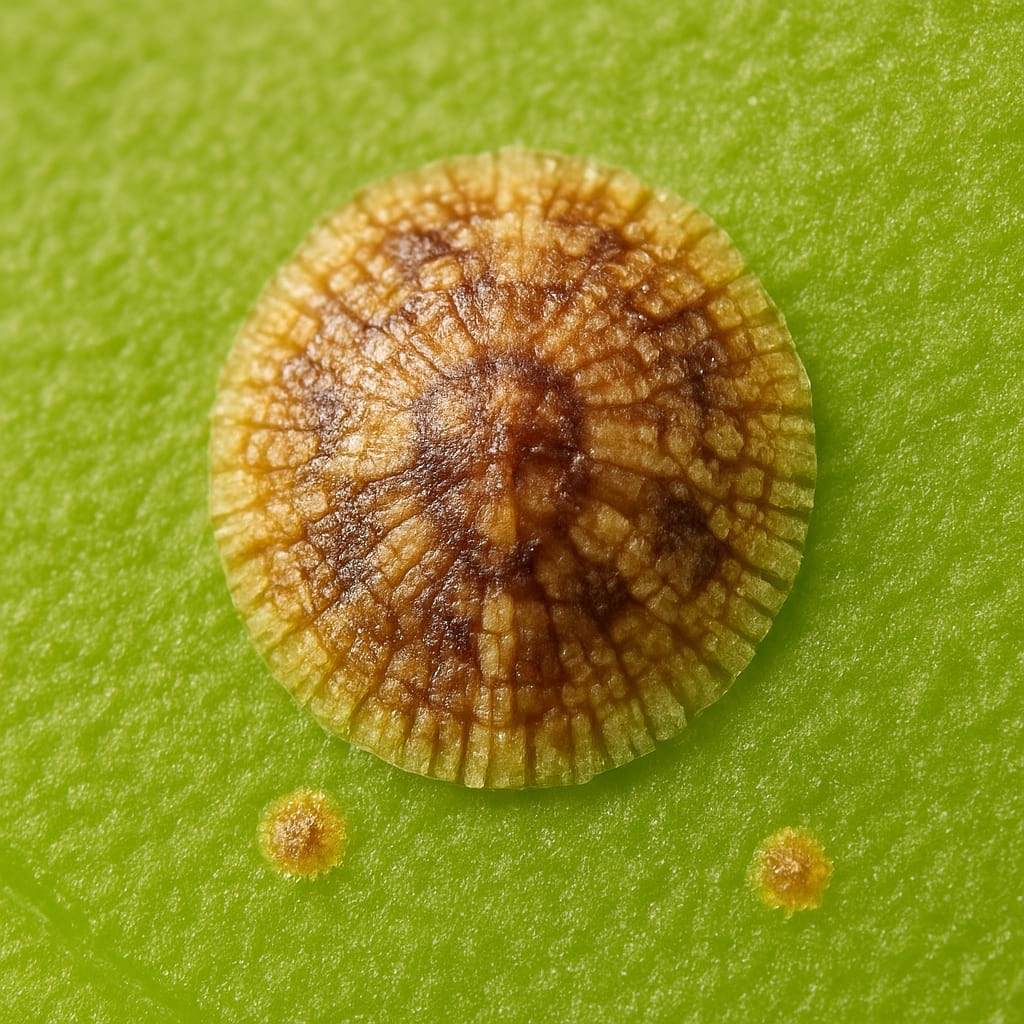
- Scale Insects: Small flat brown or tan shells stuck to the rootstock. Scrape off carefully with a fingernail or wooden toothpick and follow up with neem oil.
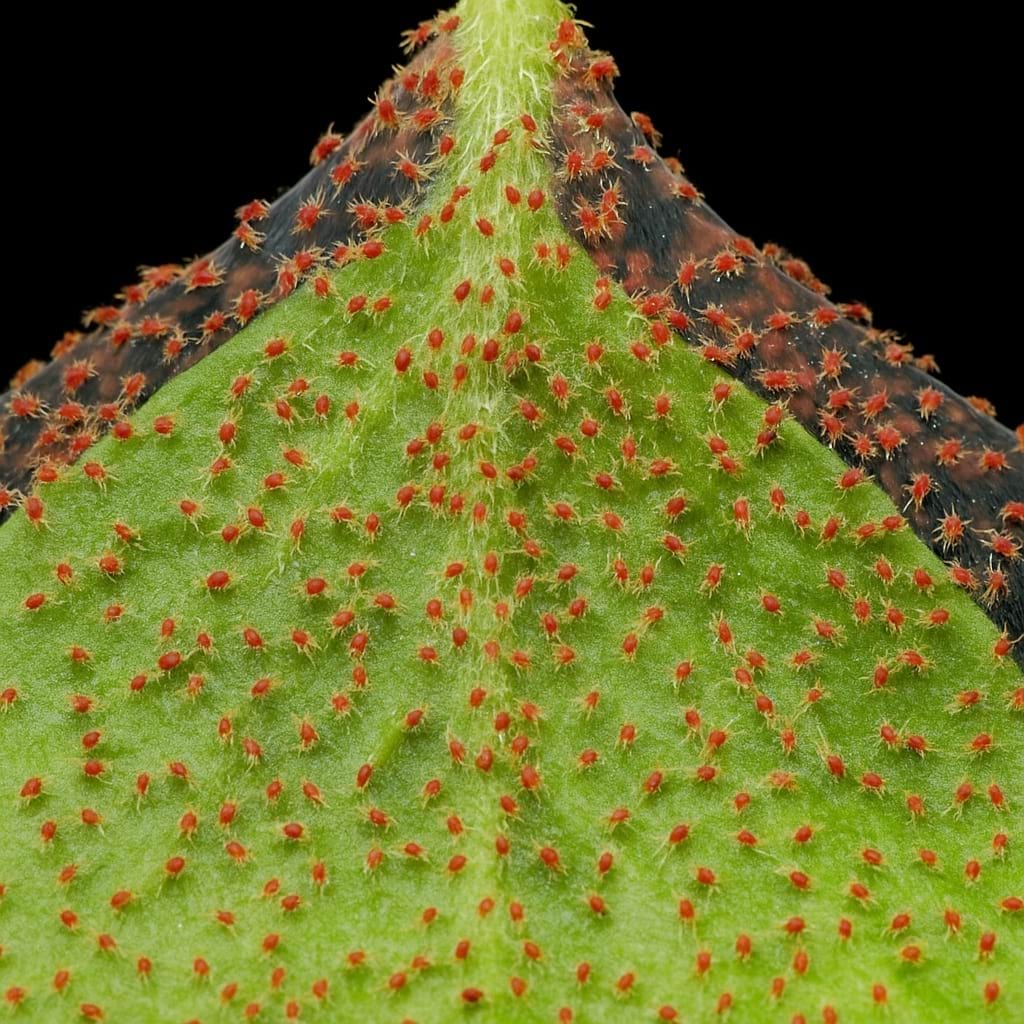
- Spider Mites: Fine webbing in the ribs of the scion in warm, dry indoor air. Wipe gently with a soft cloth and treat with a mild horticultural soap, keeping the spray well away from the graft line.
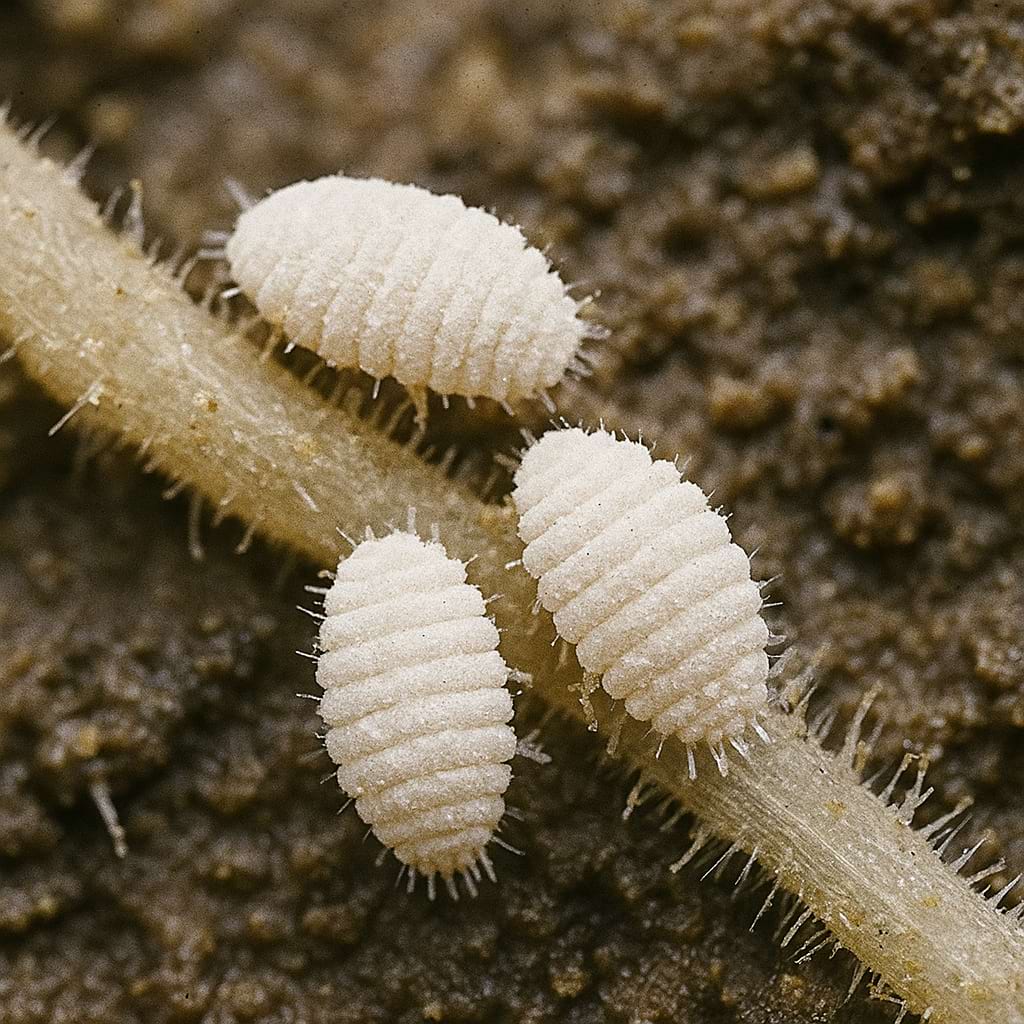
- Root Mealybugs: White powdery clusters on the roots, invisible until you unpot. Wash the roots clean under running water, repot in fresh dry mix, and skip watering for two weeks.
When treating, keep liquid sprays off the graft line itself. Standing moisture there will rot the union faster than any pest will damage it.
🩺 Common Moon Cactus Problems
Almost every Moon Cactus problem traces back to overwatering, wrong light, or graft failure.
- Root rot and mushy rootstock: The number one killer. The green base yellows then browns from the soil up, gets soft, and the scion topples. Once advanced, only regrafting saves the colored top. Prevent it with very gritty soil and patient watering.
- Scion falling off or detaching at the graft: The union has failed, usually from age, rot at the graft line, or freezing. Try to regraft the scion onto a fresh rootstock within a few days while it is still firm.
- Yellowing on the rootstock: Even yellowing from the soil up is overwatering; patchy yellow on the sunny side is sunburn.
- Sunburn / bleaching of the colored top: Tan papery patches on the side facing the window. Move the plant out of direct midday sun or add a sheer curtain. Damaged areas do not repigment.
- Brown-black spots at the graft line: Moisture trapped between scion and rootstock plus cool, stagnant air. Keep the union dry, improve airflow, and water only at the soil.
- Wilting or shrivelling scion: Almost always thirst, especially in summer. Confirm the soil is fully dry and water deeply.
- Fading scion color: Usually low light. The carotenoid pigments that make the scion red, pink, or yellow dim in shade. Move to brighter indirect light.
- Failure to bloom: No cool winter rest, or the plant is too young. Be patient and give a proper cool dry winter.
- Stunted growth: Old exhausted soil or a graft that has reached the end of its useful life. Repot, or accept that the union has done its time.

🖼️ Moon Cactus Display and Styling Ideas
The Moon Cactus is small, bright, and almost cartoonish, so it shines as a deliberate accent rather than a background plant.
Solo Setups
My favorite single setup is one mature Moon Cactus in a tiny matte-glazed pot, top-dressed with pale grey grit, on a small wooden tray with one smooth dark stone. The bowl-and-stone setup makes the candy color feel intentional instead of plasticky.
Grouped Arrangements
A trio of red, yellow, and pink Moon Cacti in matched small pots reads like a row of paint swatches on a sunny shelf. Keep the pots identical and let the scions do the talking.
Desert Dish Garden
For a small desert dish garden, set a Moon Cactus alongside one or two small green cacti (a young Golden Barrel Cactus is a perfect partner) and a low rosette like Aloe Vera. Mulch with bare grit, skip moss and bark, and keep the planting sparse. For a bigger desert corner, add a tall blue-green column like a Peruvian Apple Cactus behind the dish to give the whole scene vertical height. The bright candy scion of the Moon Cactus pops beautifully against a tall ribbed green column.
Best Rooms
A bright east-facing kitchen window, a sunlit office desk a foot or two back from the glass, or a sunroom with sheer curtains. Skip closed terrariums (far too wet) and dim bedrooms (the color will fade within months).
🌟 Moon Cactus Pro Care Tips
✅ Think of it as two plants. The colored top is a passenger; the green rootstock is the plant you are actually keeping alive.
☀️ Bright indirect, not direct. A scorched scion never repigments. An east window or sheer-filtered south window is ideal.
💧 Wait longer than you think between waterings. Bone dry top to bottom before the next drink. When in doubt, wait a few more days.
🪴 Use a small terracotta pot. The clay does half the work of keeping the rootstock alive.
🥶 Give it a cool winter rest. 55 to 65°F (13 to 18°C) and almost no water from November to February stretches the union's lifespan.
🧂 Keep water and feed off the graft line. Pour at the soil, never over the top.
🛒 Buy with the graft in mind. A clean tight union, a plump green rootstock, and no soft spots at the base. If you can find one grafted onto Myrtillocactus, it is worth twice the price.
🐾 Pet-safe. Non-toxic if chewed, which makes this a rare colorful cactus for households with cats and curious dogs. The spines on the rootstock are still spines.
🪞 Mind the seasons. A Moon Cactus that thrived all summer on a south window may scorch in early autumn when the sun angle drops; nudge it back from the glass in September.
🔁 Accept the lifespan. Even great care often tops out at four to five years for a Hylocereus graft. Enjoy the plant rather than fighting biology.
❓ Frequently Asked Questions
Why does the Moon Cactus need a rootstock?
The colorful top has no chlorophyll, the green pigment plants use to turn sunlight into food. Without chlorophyll it cannot photosynthesize and would starve within weeks. The green rootstock feeds the scion in exchange for support, in a kind of long-term plant transplant.
How long do Moon Cacti live?
Most last one to five years as a grafted plant. The shorter end of that range is typical for grafts on Hylocereus undatus (the most common rootstock); grafts on Myrtillocactus or Trichocereus can last a decade or more with good care.
Is the Moon Cactus toxic to cats and dogs?
No. The plant is non-toxic if a curious pet takes a nibble. The spines on the green rootstock are still mechanically sharp, so keep it out of paw and nose range anyway.
My Moon Cactus is leaning. What is wrong?
If the colored top is leaning, the graft union is failing, often from overwatering, age, or rot at the seam. Check the rootstock for softness. If the scion has fully detached, the only rescue is regrafting onto a fresh green rootstock; soil planting will not work.
Can I grow a Moon Cactus on its own roots?
Only if it is the rare 'Hibotan Nishiki' variegated form, which has enough green tissue to photosynthesize. The standard solid-color forms cannot survive without their rootstock.
Why is my Moon Cactus losing color?
Usually low light. The carotenoid pigments that give the scion its red, pink, or yellow dim noticeably in dim conditions. Move the plant to brighter indirect light over a week or two and the color often partly returns.
Can a Moon Cactus get sunburned?
Yes, easily. Direct midday sun bleaches the scion in days, leaving tan papery patches that never repigment. Sheer-curtain filter strong windows or pull the plant a foot back from the glass.
Do I need to fertilize a Moon Cactus?
Lightly. A half-strength low-nitrogen cactus fertilizer twice during spring and summer is plenty. Over-feeding pushes the rootstock to grow faster than the union can handle and can split the graft.
ℹ️ Moon Cactus Info
Care and Maintenance
🪴 Soil Type and pH: Gritty, fast-draining cactus mix with added pumice, perlite, or coarse sand; slightly acidic to neutral pH.
💧 Humidity and Misting: Comfortable in low household humidity around 30 to 45 percent.
✂️ Pruning: None on the colored top; trim any offsets or pups from the green rootstock if they appear below the graft.
🧼 Cleaning: Dust off the colored top gently with a soft, dry brush; never wipe with a wet cloth, since water trapped at the graft line invites rot.
🌱 Repotting: Slip up one pot size only when the rootstock has clearly outgrown the container, usually every 2 to 3 years; keep the graft well above soil.
🔄 Repotting Frequency: Every 2-3 years
❄️ Seasonal Changes in Care: Active growth in spring and summer; needs a cool, dry winter rest with minimal water to support the rootstock long term.
Growing Characteristics
💥 Growth Speed: Slow
🔄 Life Cycle: Perennial top scion, perennial rootstock; the union itself has a finite life of a few years.
💥 Bloom Time: Late spring to summer on healthy mature scions; small pink, white, or yellow flowers near the crown
🌡️ Hardiness Zones: 11-12 outdoors; grown as a houseplant in all other zones
🗺️ Native Area: Top scion from Paraguay, northeast Argentina, southern Bolivia, and Uruguay; the rootstock is usually a tropical Mexican or Central American column.
🚘 Hibernation: Light winter rest at cool temperatures with very little water
Propagation and Health
📍 Suitable Locations: Bright east windows, sheer-curtained south or west windows, sunrooms with diffused light, plant shelves under a grow light
🪴 Propagation Methods: Detach offsets that form on the top scion and graft onto a fresh rootstock; the colored top cannot root on its own.
🐛 Common Pests: Mealybugs, Scale Insects, Spider Mites, Root Mealybugs
🦠 Possible Diseases: Root rot, graft-line rot, fungal spotting, scion collapse from rootstock failure
Plant Details
🌿 Plant Type: Grafted ornamental cactus; chlorophyll-free Gymnocalycium scion fused onto a green columnar rootstock (most often Hylocereus undatus).
🍃 Foliage Type: Globular, ribbed, spineless scion; columnar, ribbed rootstock with short spines
🎨 Color of Leaves: Bright red, pink, hot orange, sunshine yellow, magenta, or rare deep purple scion above a soft green rootstock
🌸 Flower Color: Soft pink, pale yellow, cream, or white; small bell-shaped blooms near the top of the scion
🌼 Blooming: Yes, on mature healthy plants given enough bright indirect light and a cool, dry winter
🍽️ Edibility: Not edible; grown strictly as an ornamental
📏 Mature Size: 4-12 inches total, including rootstock
Additional Info
🌻 General Benefits: Compact, colorful, low-water, pet-safe, beginner-friendly if you understand the graft, ideal for small bright spaces
💊 Medical Properties: None
🧿 Feng Shui: A small color accent for a bright corner; the round shape is considered welcoming and the warm scion colors add fire-element energy without the spike of a tall columnar cactus
⭐ Zodiac Sign Compatibility: Aries (for red and orange scions); Leo (for yellow)
🌈 Symbolism or Folklore: Resilience through interdependence, since the bright top literally cannot live without its green partner
📝 Interesting Facts: The colorful Moon Cactus is a mutant Gymnocalycium mihanovichii that lacks chlorophyll, the pigment plants use to turn sunlight into food. That mutation is exactly why the reds, pinks, and yellows show through: nothing green is in the way. The catch is that a chlorophyll-free cactus cannot feed itself, so growers graft the mutant top onto a fast-growing green cactus that does the photosynthesis for both of them. The most common rootstock is Hylocereus undatus, the same plant that produces dragon fruit. The graft was first popularized in Japan in the 1940s, where the cultivar 'Hibotan' (literally "red peony") was selected and spread worldwide.
Buying and Usage
🛒 What to Look for When Buying: Choose a plant where the colored top is firm, evenly bright, and not shrivelled or dull, the rootstock is plump and green with no yellowing or soft spots, and the graft line is clean and tight with no gap, mold, or weeping. Avoid pots with rootstock pups already crowding the base; they often signal a stressed graft.
🪴 Other Uses: Mini desert dish gardens, color accents on bright office desks, gift cactus for kids and pet owners (it is non-toxic), themed succulent arrangements
Decoration and Styling
🖼️ Display Ideas: Solo in a small glazed pot that sets off the scion color, a trio of red, yellow, and pink Moon Cacti in matched pots, or a low desert bowl alongside small green cacti and gritty mulch
🧵 Styling Tips: Match or contrast the pot with the scion (a hot-pink Moon in a deep teal pot is striking, a yellow Moon in matte black even more so); top-dress with pale gravel to bounce light back up onto the colored top.
🪴 See also 🪴
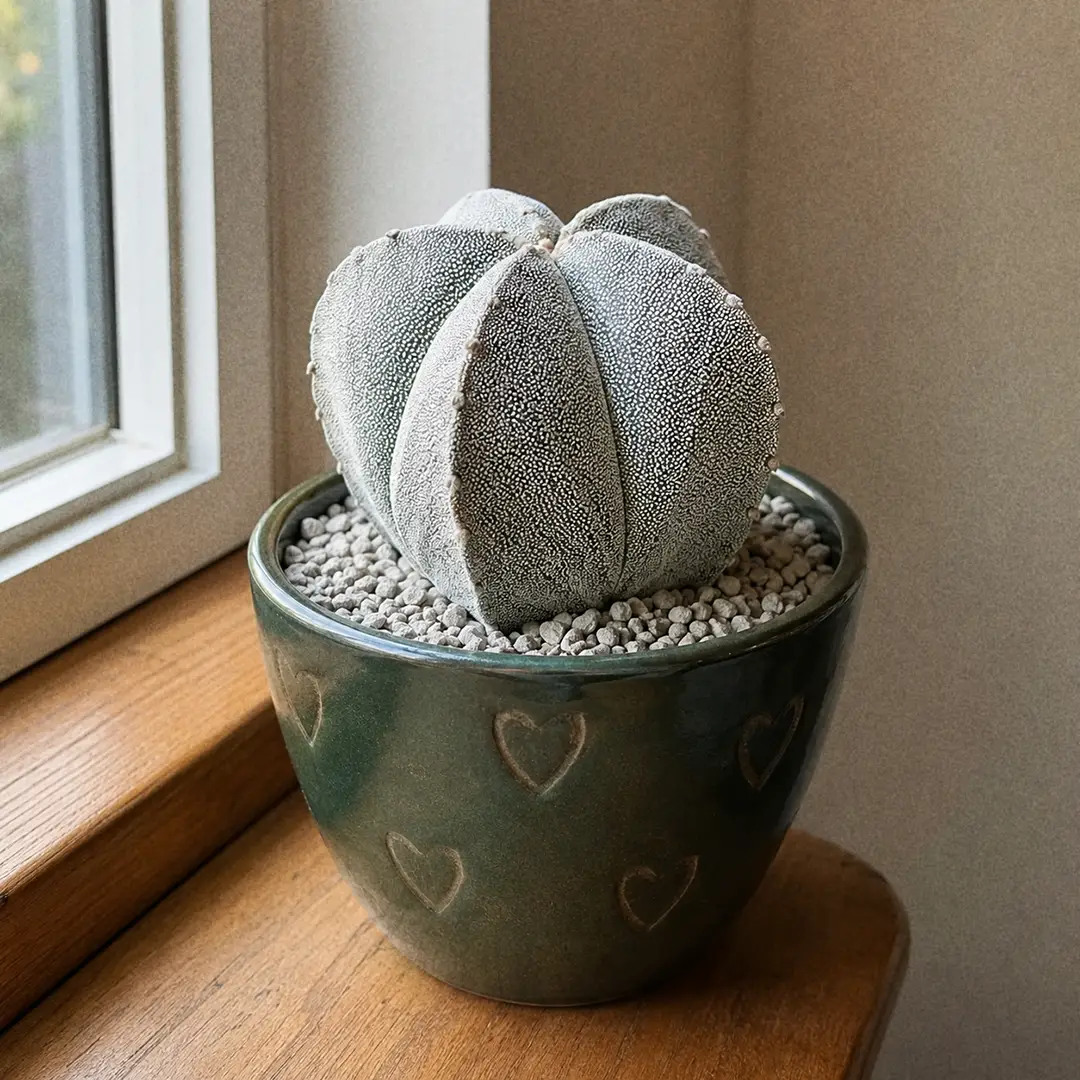
Complete Guide to Bishop's Cap Cactus Care and Growth
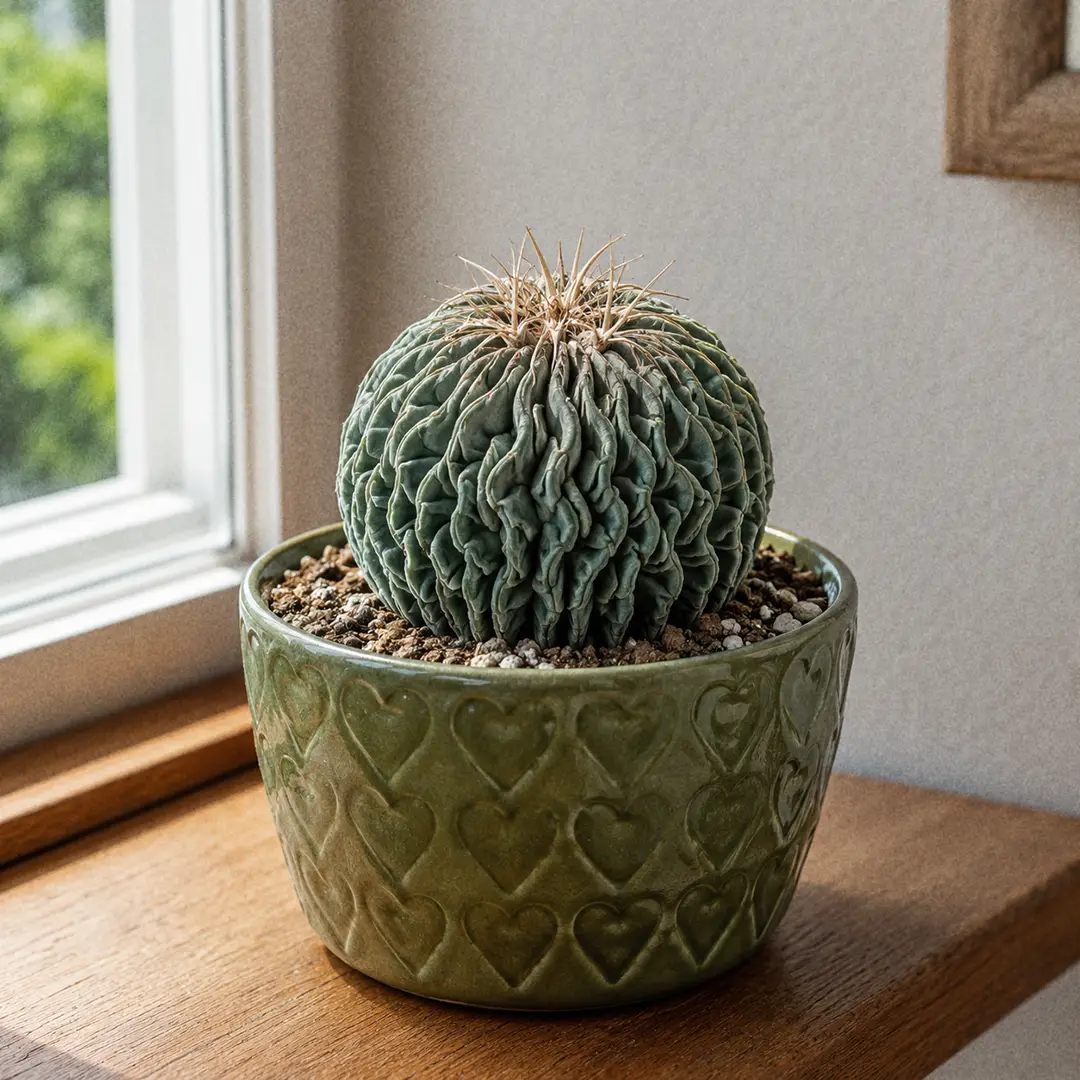
Complete Guide to Brain Cactus Care and Growth
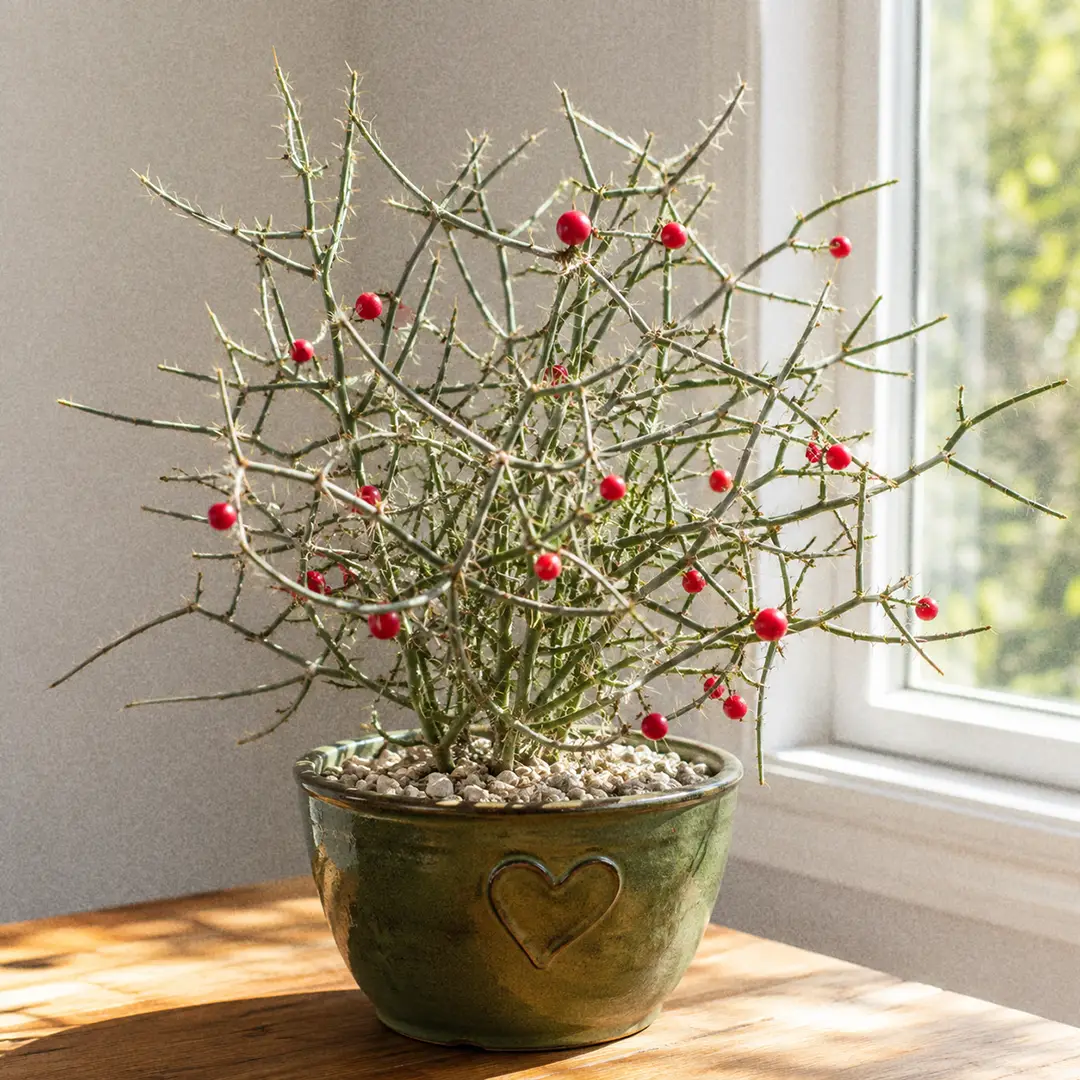
Complete Guide to Christmas Cholla Care and Growth
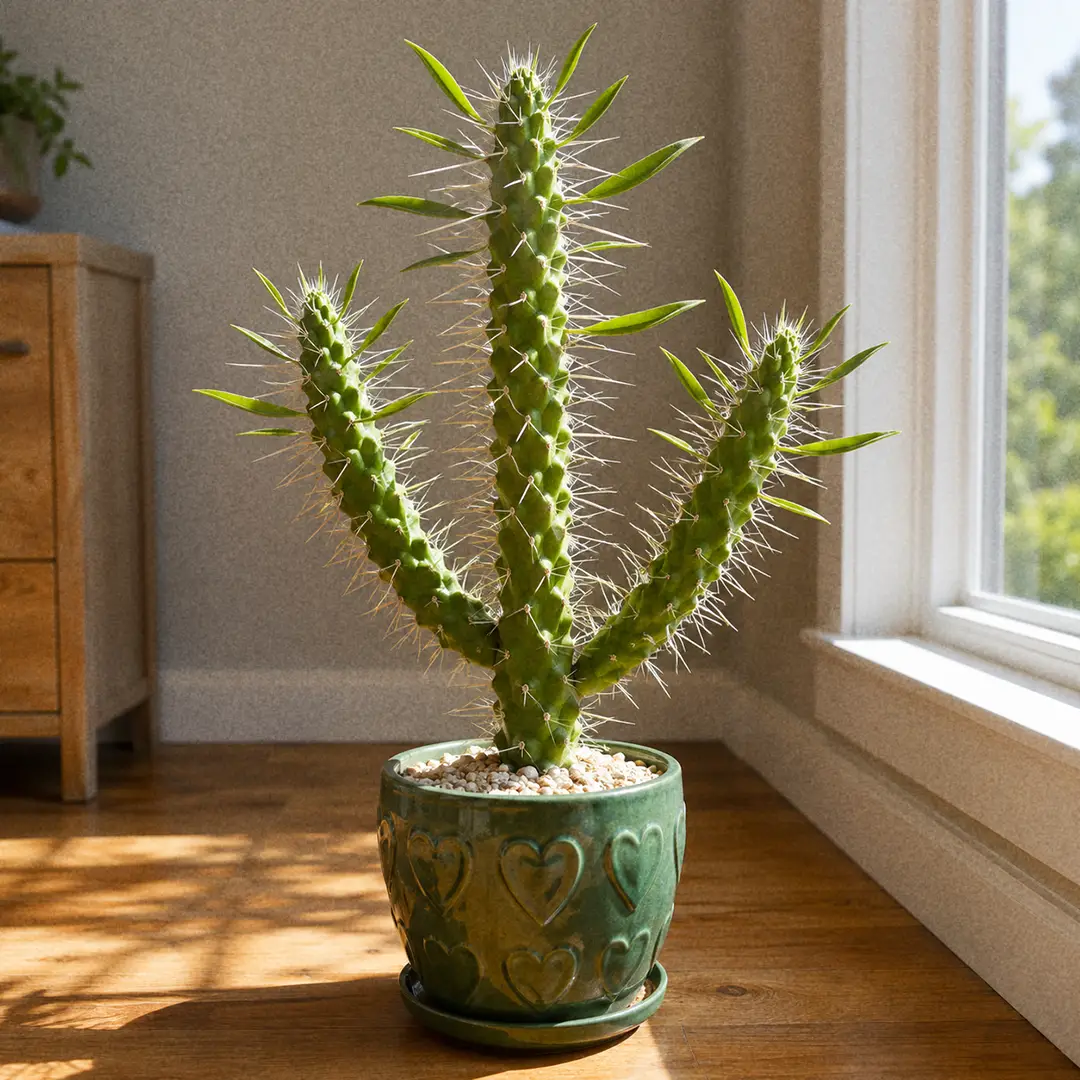
Complete Guide to Eve's Needle Cactus Care and Growth
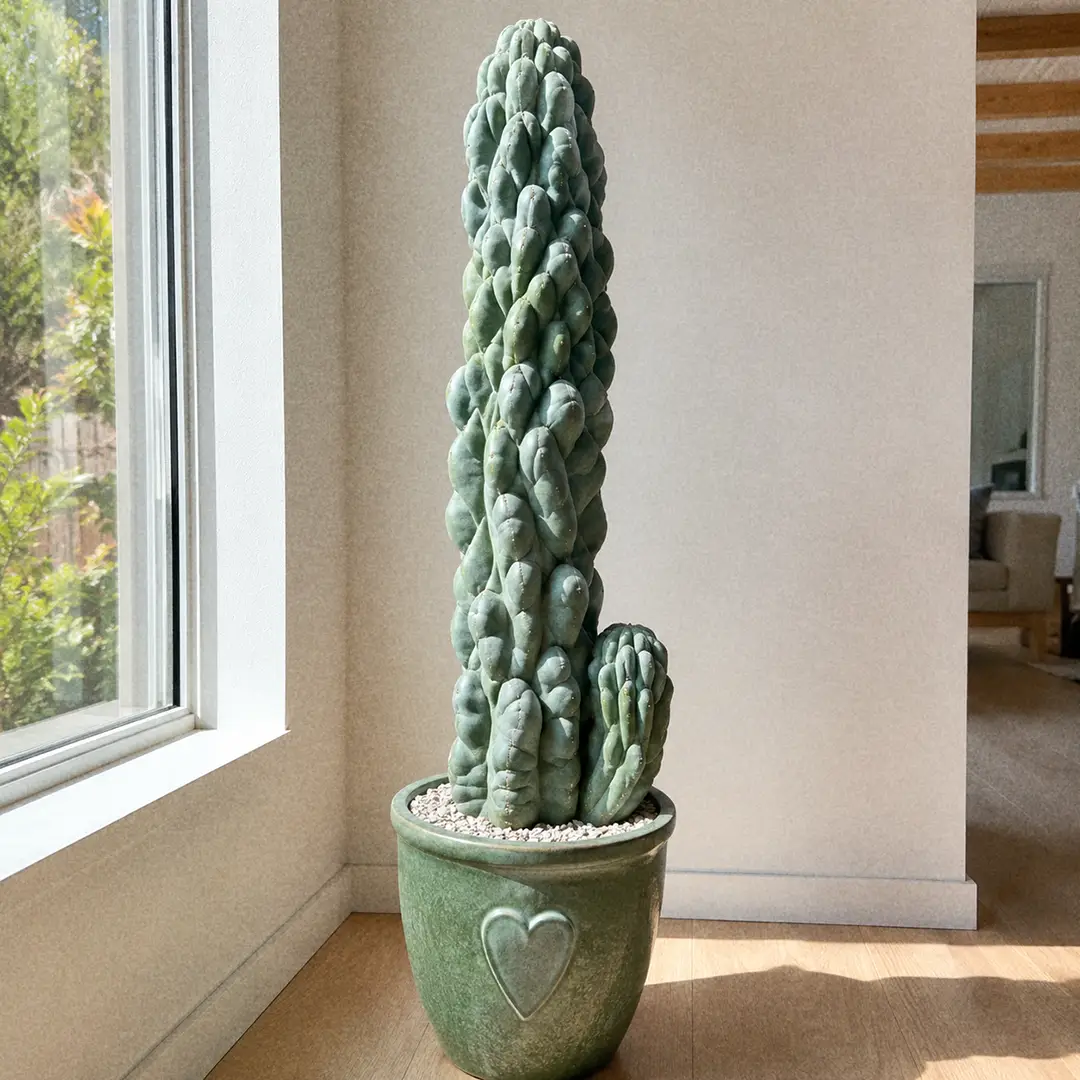
Complete Guide to Totem Pole Cactus Care and Growth
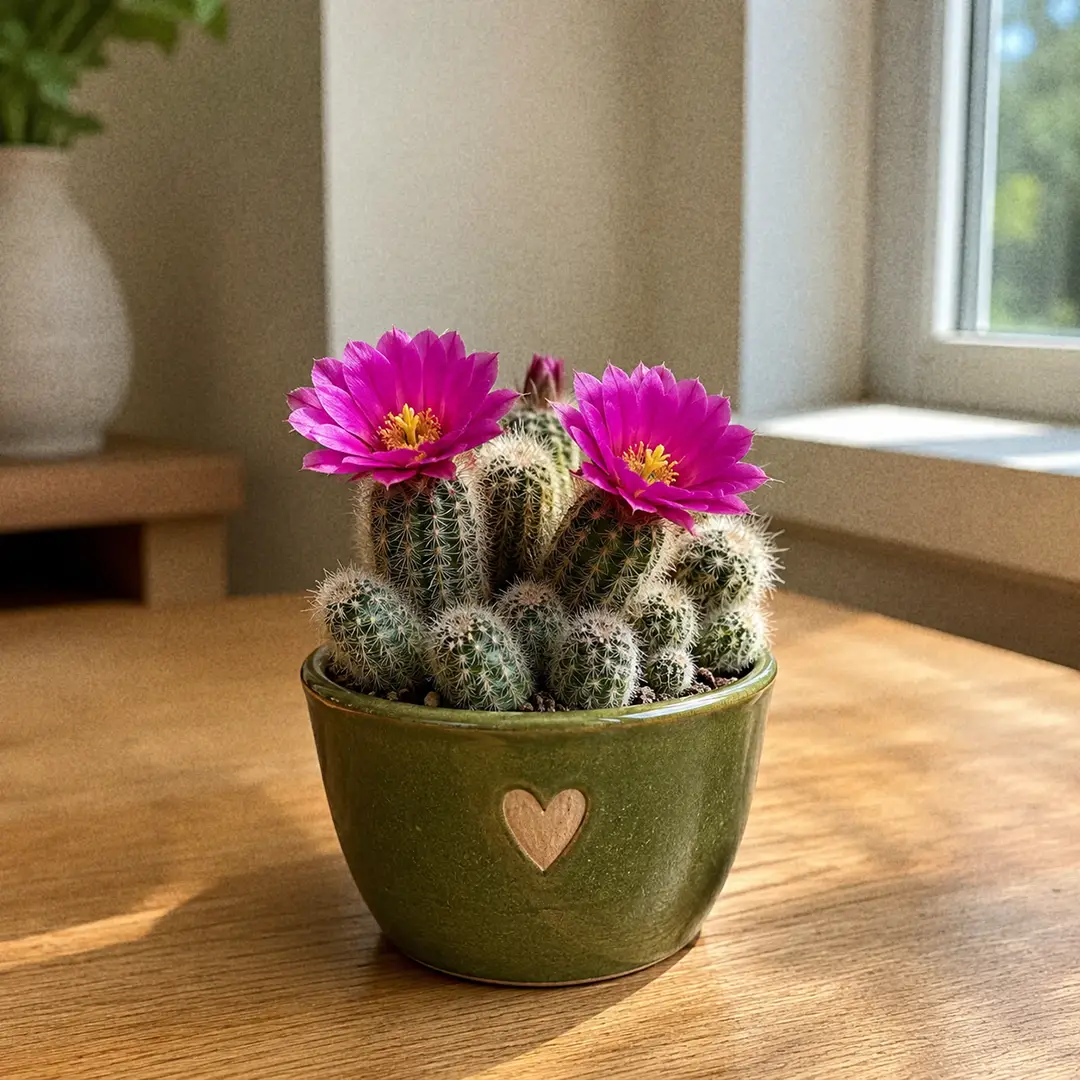
Complete Guide to Hedgehog Cactus Care and Growth
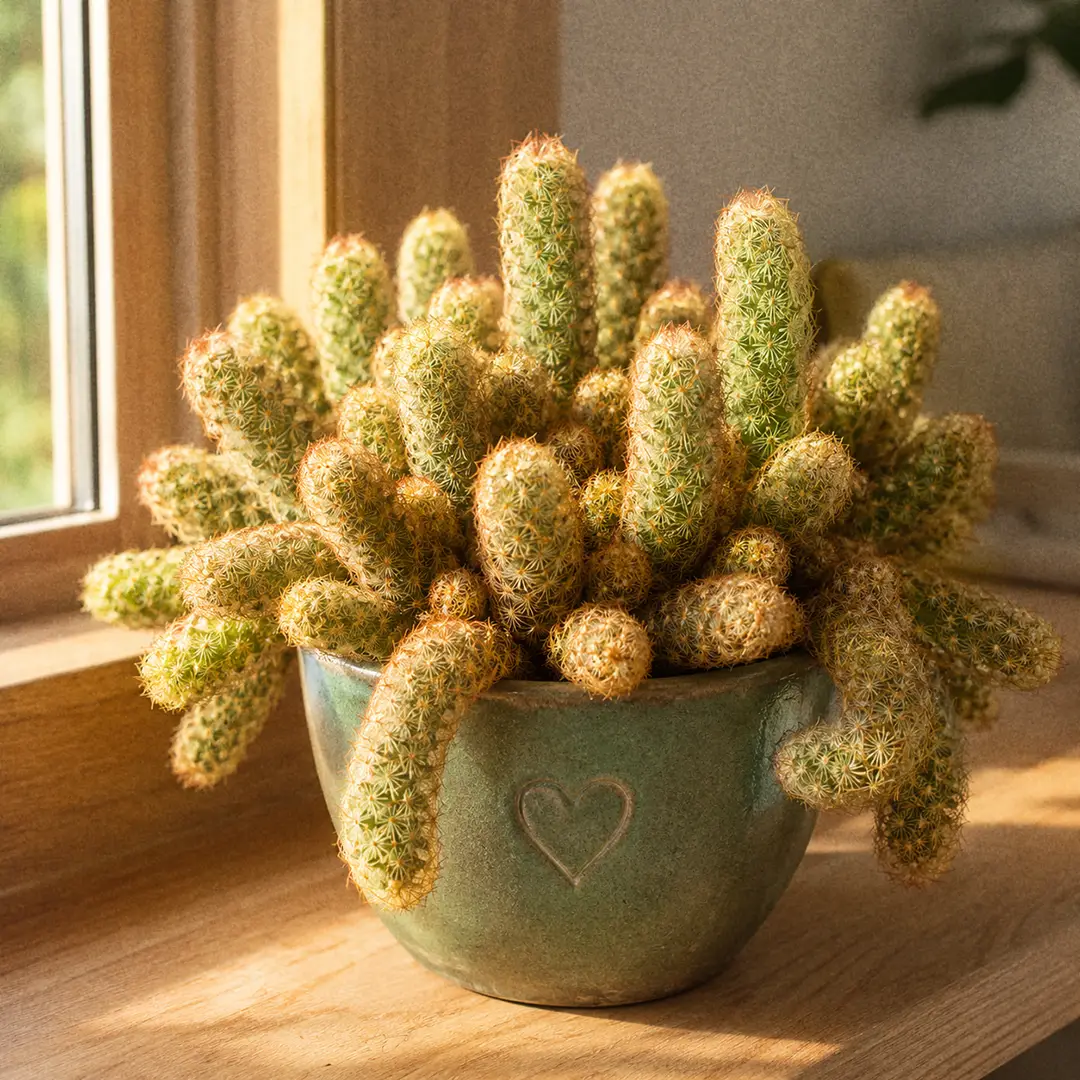
Complete Guide to Lady Finger Cactus Care and Growth
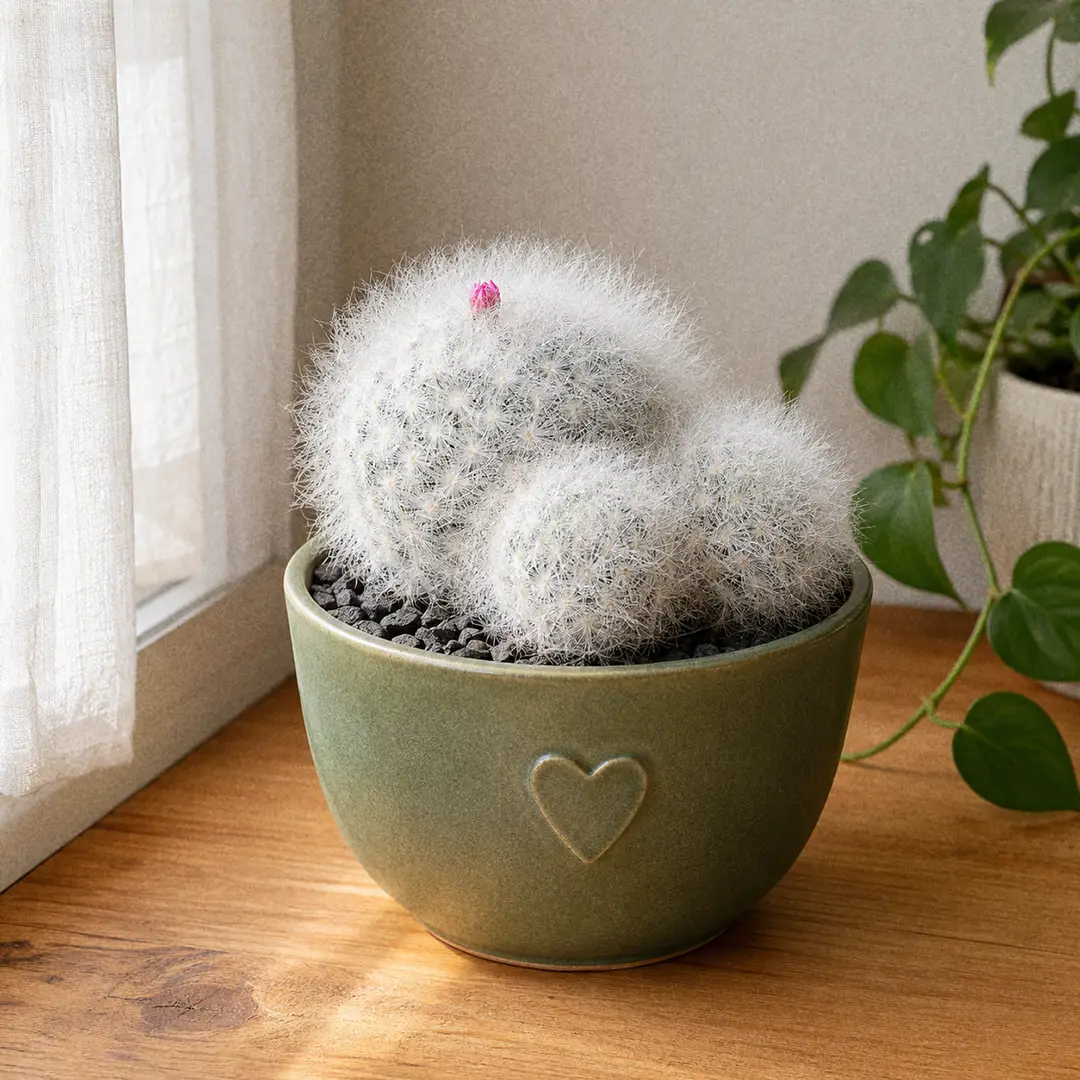
Complete Guide to Old Lady Cactus Care and Growth
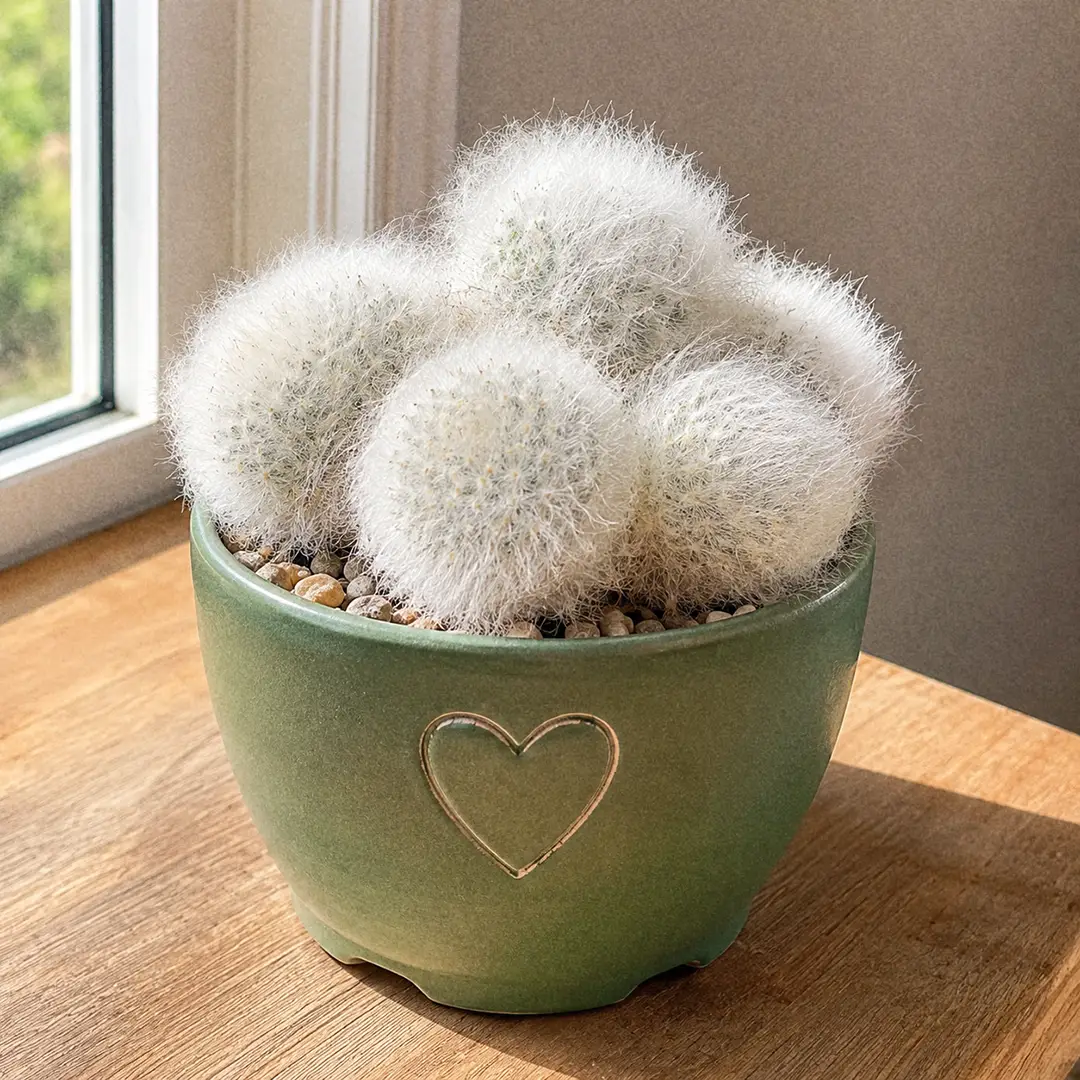
Complete Guide to Powder Puff Cactus Care and Growth
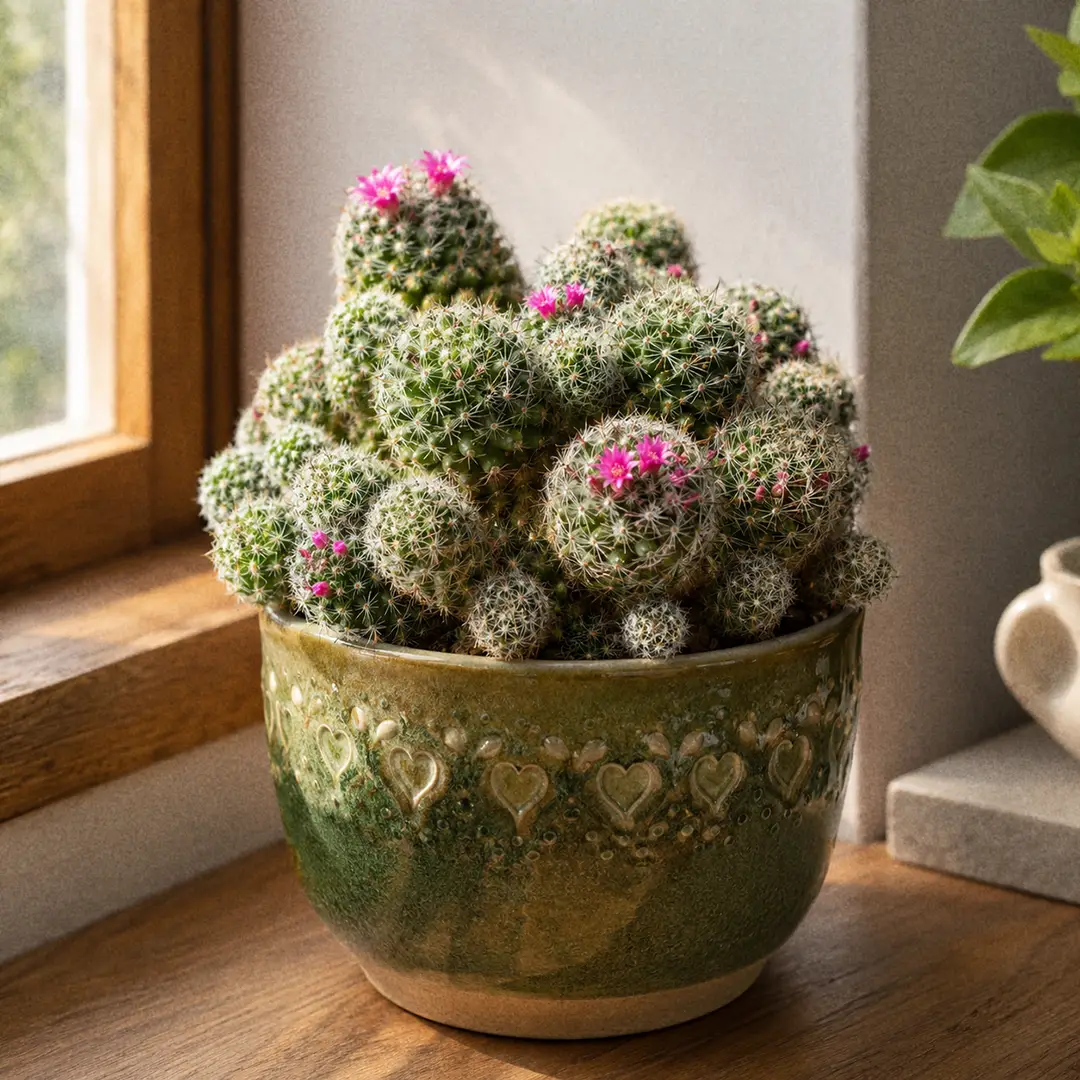
Complete Guide to Pincushion Cactus Care and Growth
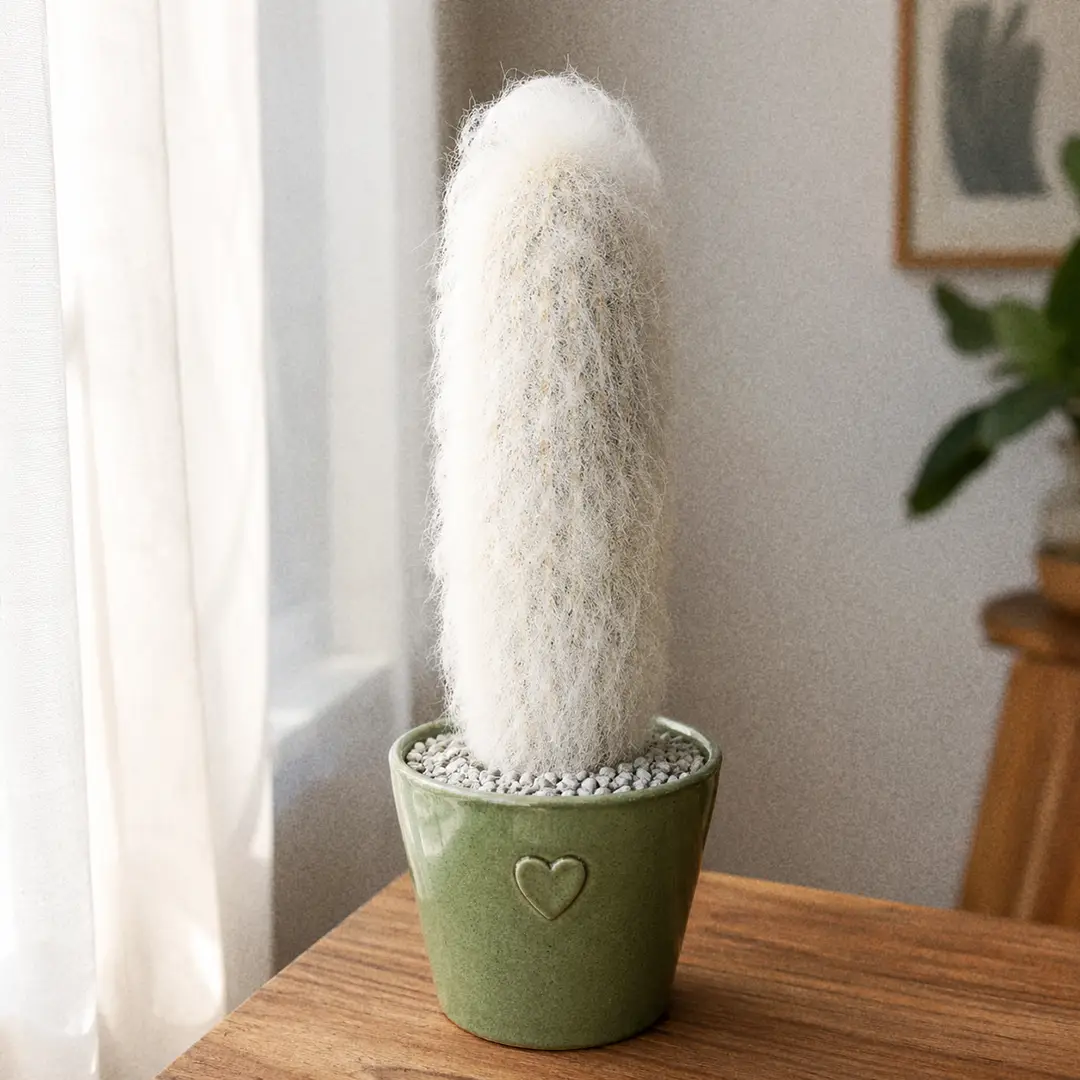
Complete Guide to Peruvian Old Man Cactus Care and Growth
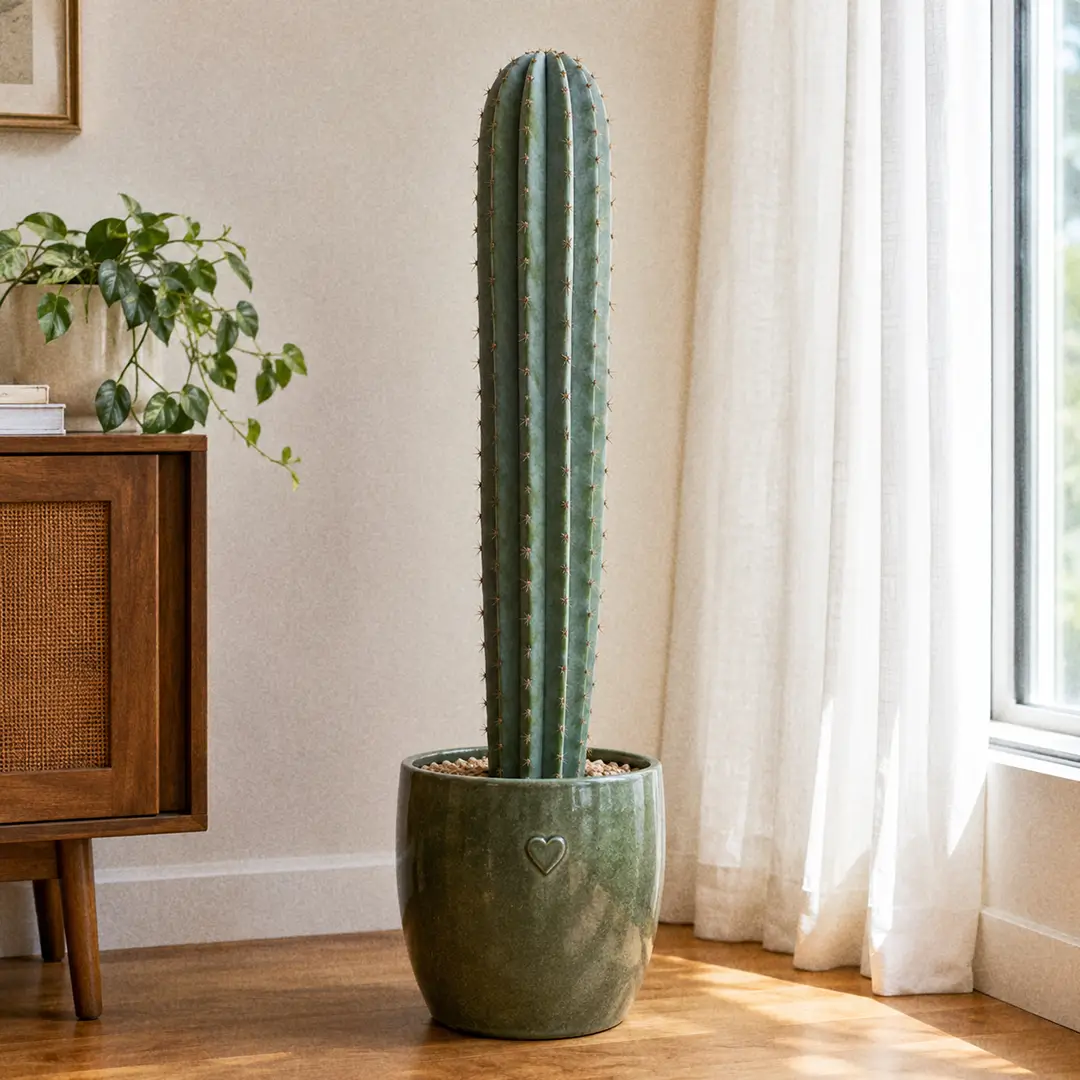
Complete Guide to Peruvian Apple Cactus Care and Growth
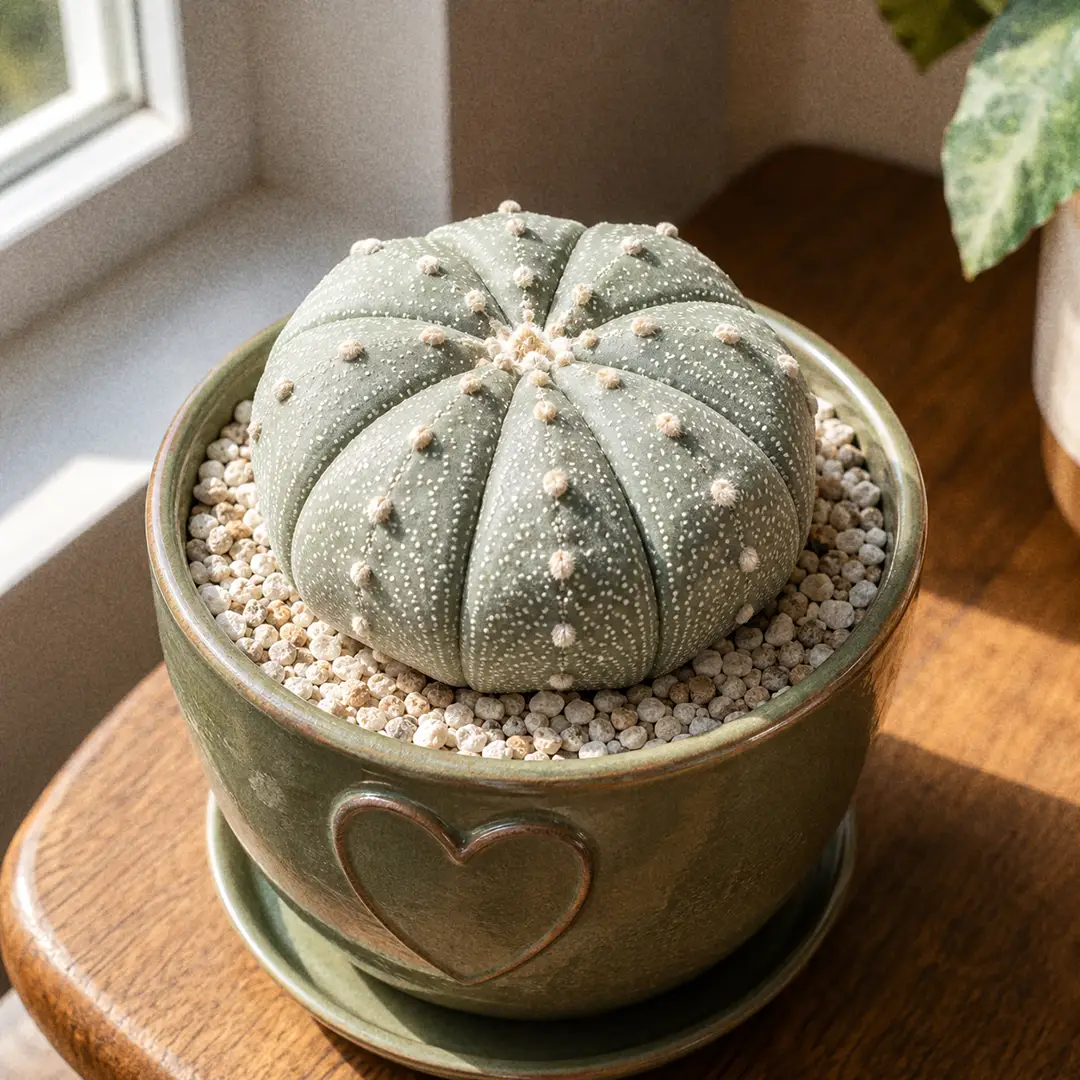
Complete Guide to Star Cactus Care and Growth

Houseplant101 Forum
Questions & Comments
Ask a question, share your plant experience, or help other plant owners.
Comments are temporarily unavailable.
Open the Houseplant101 ForumNo comments yet
Be the first to ask a question or share your experience about this page.
Log in or create an account
Comments use your Houseplant101 Forum account, but you can stay on this page.
Create a new account