
Spanish Moss
Tillandsia usneoides
Old Man's Beard, Grandpa's Beard, Graybeard, Tree Hair, Barba de Viejo


Spanish Moss is not a moss, and it is not a parasite either. It is a rootless bromeliad that drinks straight out of the air and hangs in silver curtains from anything you drape it over. Learn how to keep Tillandsia usneoides alive and silvery indoors, where most people rot it in the first month.
📝 Spanish Moss Care Notes
🌿 Care Instructions
⚠️ Common Pests
📊 Growth Information
🪴 In This Guide 🪴

☀️ Spanish Moss Light Requirements (Indoor Lighting Guide)
The Sweet Spot
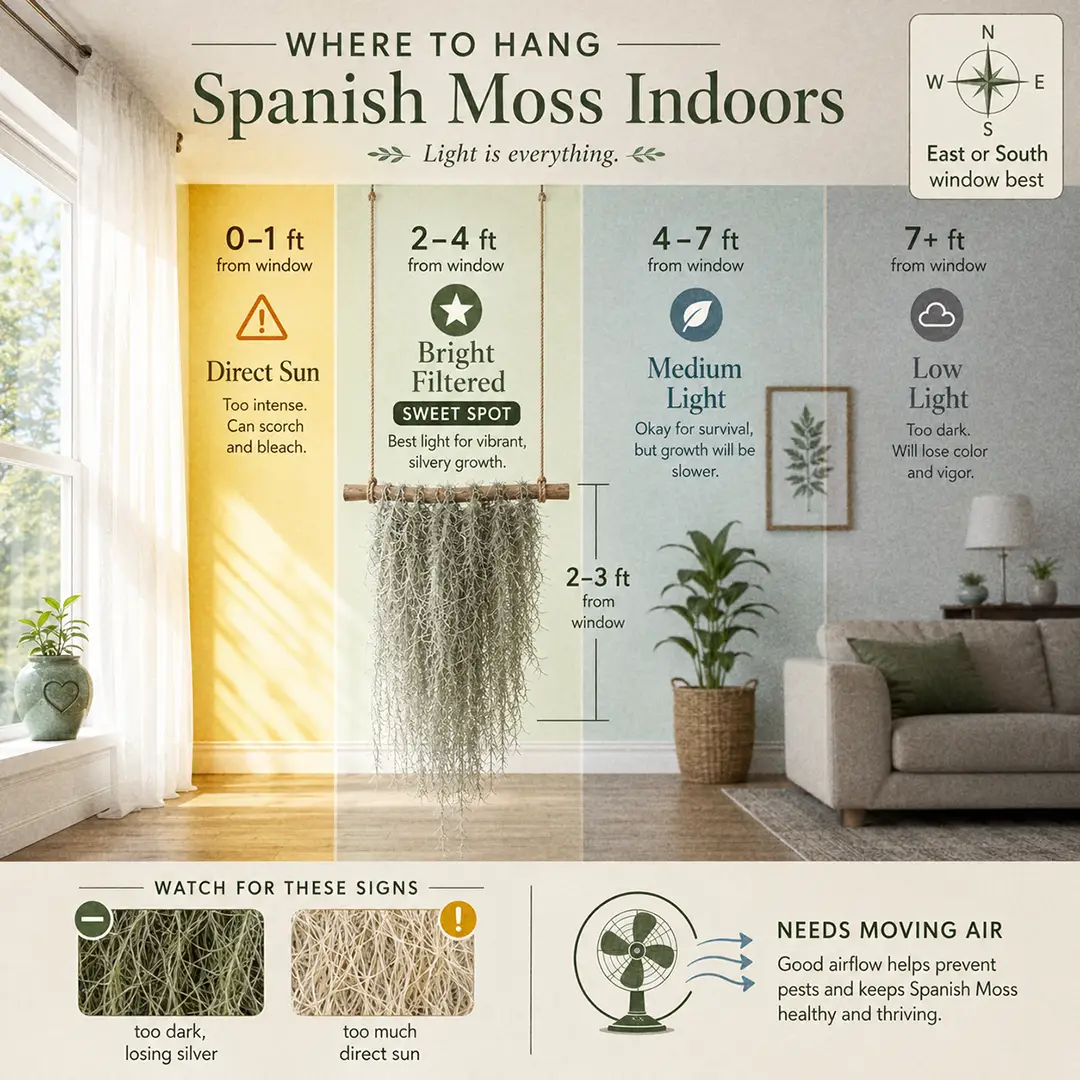
Spanish Moss wants bright, filtered light, the kind you get two to four feet back from an east or south window with a sheer curtain in the way. In the wild it hangs from live oak and cypress branches under a canopy, so it is used to strong light broken up by leaves rather than full unfiltered sun on glass.
A bathroom window is often the best spot in the whole house, because it pairs that filtered light with the humidity the plant wants anyway. Our Indoor Lighting Guide helps if you are still learning to read a room by eye.
Too Little Light
In a dim corner the strands lose their silver and go flat, dull green, then slowly thin out. The silver colour comes from trichomes, the tiny scales that pull moisture out of the air, and a light-starved plant makes fewer of them. Less silver means less water absorption, which is why a shaded bundle also starts drying unevenly.
Growth simply stops, which is stunted growth in its most literal form. A bundle in a dark hallway can sit unchanged for a year before it starts to fall apart. A modest grow light on a timer fixes it if your only humid room has no window.
Too Much Light
Direct summer sun through glass is the fastest way to ruin a good bundle. The exposed outer strands bleach to straw-white and go brittle, which is sunburn, and burnt strands do not recover. They just break off.
Morning sun is fine, and a couple of hours of it actually keeps the colour bright. Hot afternoon western sun is not. If your only bright window faces west, hang the moss to one side of the frame rather than dead centre, so it catches the light at an angle.
💧 Spanish Moss Watering Guide (How to Water Properly)
Watering Frequency
Because there are no roots and no soil, watering here means soaking the whole plant. In an average home, once or twice a week is right through spring and summer, dropping to about once a week in a cool, dim winter. In a genuinely humid bathroom that gets showered in daily, you may only need to soak it every ten days.
Judge by colour and feel rather than the calendar. A well-hydrated bundle is soft, slightly greenish, and flexible. A thirsty one is stiff, pale silver, and crunchy when you squeeze it. Crunchy means soak it today.
How to Soak It
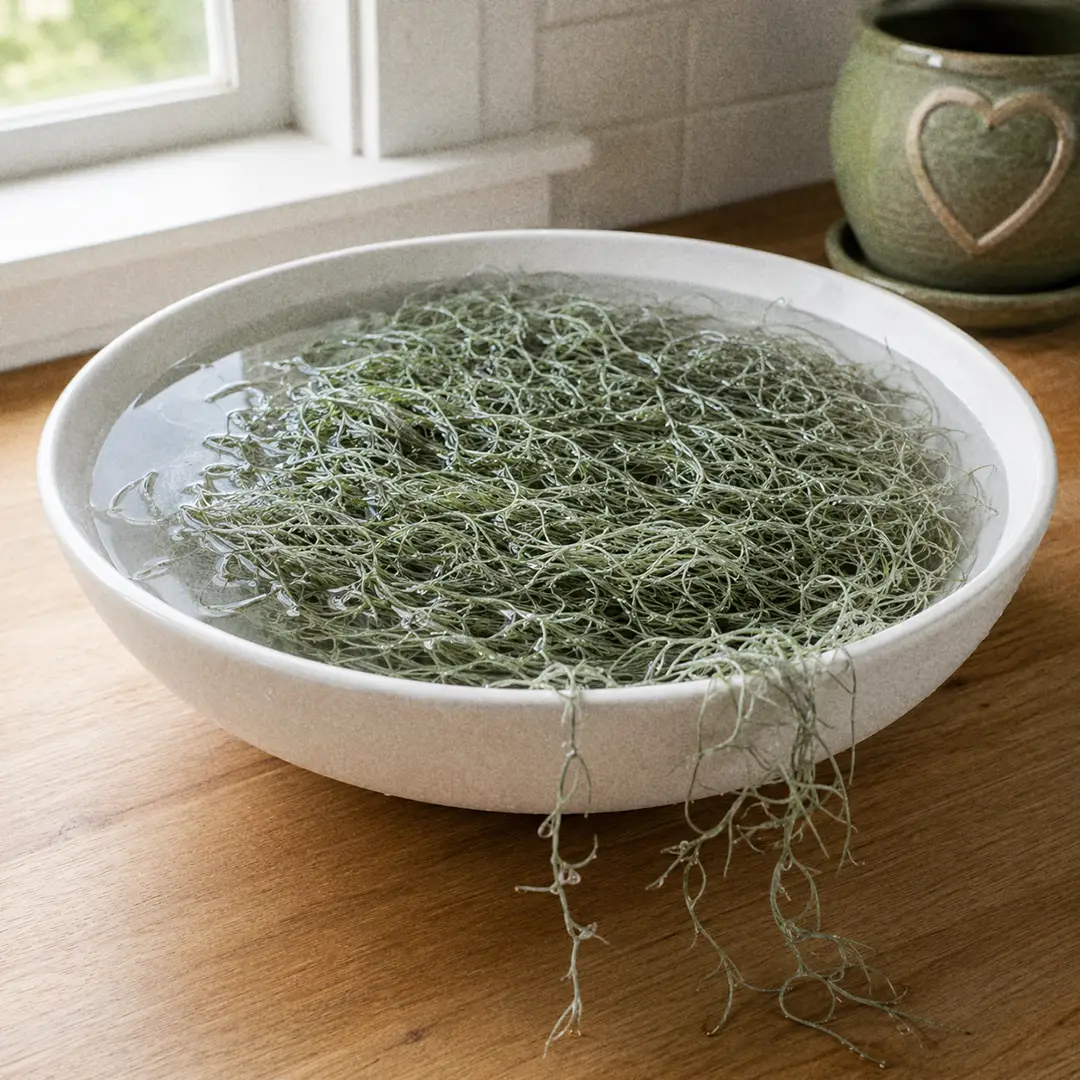
Take the whole bundle down and lay it in a sink or bowl of room-temperature water for 15 to 20 minutes. Rainwater or filtered water beats hard tap water, because the mineral salts in hard water build up on the trichomes and gradually stop them working. Swish it around once to knock the dust off.
Then comes the step that decides everything. Lift the bundle out, shake it hard to throw water out of the middle, and hang it back up somewhere with moving air. It must feel dry to the touch within four hours. If it is still damp in the core that evening, your spot has too little airflow and you need to fix that before you soak it again.
Signs of Trouble
Underwatering shows on the outside first: strands go brittle, snap when handled, and the tips brown off. That is fixable, and a couple of good soaks usually bring the bundle back.
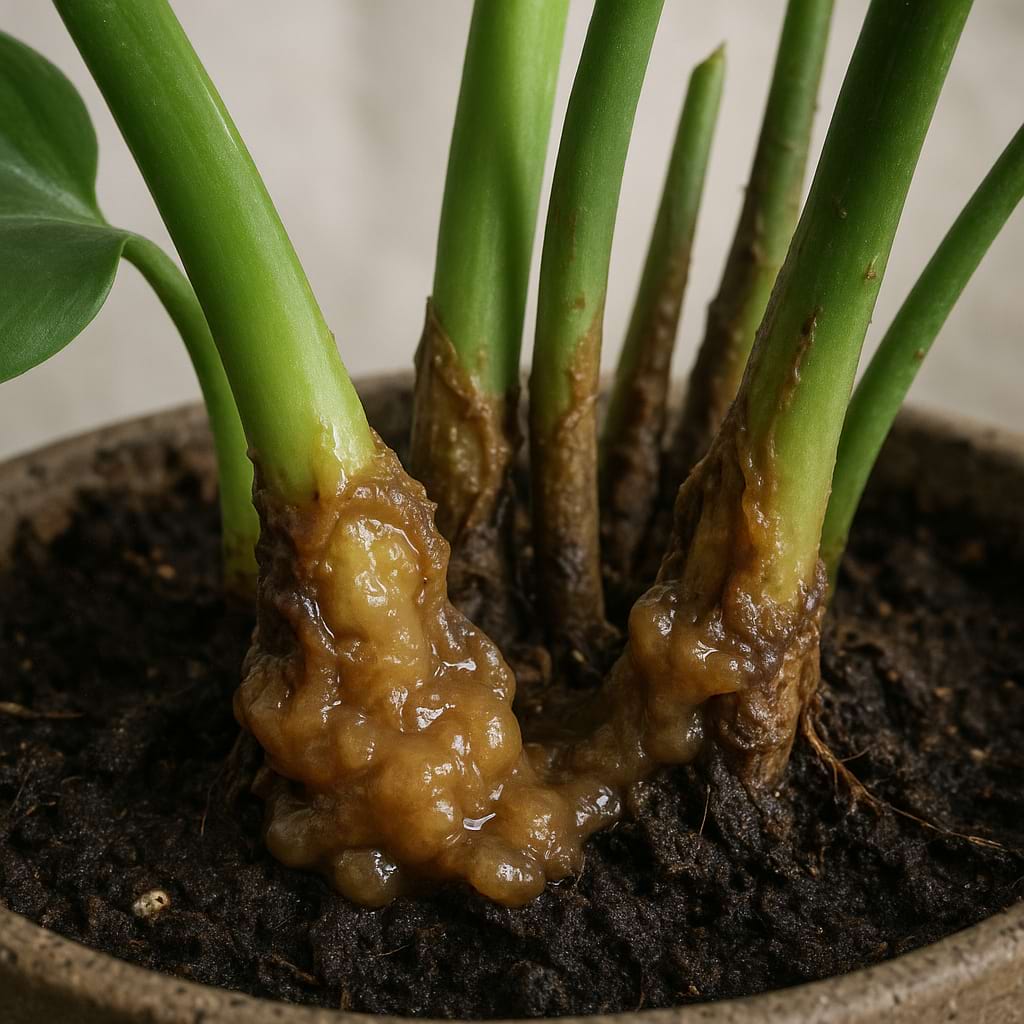
Overwatering shows on the inside, which is why it kills so many of these plants. Pull the bundle open at the middle. Black, slimy, or matted strands that smell sour are rot setting in, closer to mushy stems than anything a potted plant does. Cut the black part out, thin the bundle so air can pass through, and soak less often.
🪴 Spanish Moss Needs No Soil (What It Grows On Instead)
Why There Is No Potting Mix Here
Spanish Moss has no roots at all. Not reduced roots, not anchoring roots, none. Every drop of water and every mineral it uses comes in through the trichomes on the surface of the strands. Bury the base of a bundle in soil and that section rots within days.
This also settles the oldest myth about the plant. It is an epiphyte, not a parasite. It sits on a branch for support and takes nothing from the tree it hangs on, which is why a healthy live oak can carry a hundred pounds of it without any harm.
What to Hang It On Instead
Anything that lets air pass around and through the bundle works. Good choices are a wooden dowel or curtain rod, a length of driftwood, a bare branch mounted on the wall, coated wire, a shower rail, or the rim of a hanging basket. Our Soil Guide is worth a read only for the plants you keep beside this one.
Avoid copper wire, which reacts badly with Tillandsias over time, and avoid anything absorbent that stays wet against the strands, like untreated rope or packed sphagnum. Nothing needs to be tied tightly either. The strands hook onto each other and onto rough surfaces on their own.
Keeping the Bundle Open
The single most useful thing you can do is refuse to let the bundle get dense. A tight ball of moss dries on the outside and stays swampy in the middle. Every month or so, lift it down, tease it apart with your fingers, and re-drape it as a looser, longer curtain. Two thin bundles are always safer than one fat one.
🍼 Fertilizing Spanish Moss
When and How Often
Feed once a month from spring through early autumn, and not at all in winter. Spanish Moss grows slowly and lives on almost nothing in the wild, so a light hand beats generosity every time. Skipping fertilizer entirely will not kill it, it just means a slower, thinner plant.
What to Use
Use a bromeliad or air plant fertilizer at quarter strength, added straight to the soak water. Look for something low in nitrogen and free of urea, since Tillandsias cannot process urea nitrogen through their trichomes. Ordinary houseplant food diluted to a quarter also works if you check the label for that.
Rainwater and aquarium water both carry trace nutrients and count as a mild feed on their own. Our Fertilizing Guide covers the ratios, and the fertilizers guide compares what is on the shelf.
Over-Fertilizing Signs
Too much feed shows as a chalky white film on the strands and a bundle that starts browning at the tips despite regular soaks. That is salt residue coating the trichomes and blocking them. Soak the plant twice in plain filtered water, a couple of days apart, then leave fertilizer alone for two months.
🌡️ Spanish Moss Temperature Range
Ideal Range
Ordinary room temperature suits it well, roughly 50-85°F (10-29°C). Growth is fastest in the warm half of that band paired with good humidity. It handles brief dips near freezing outdoors when it is dry, which is how it survives winters in Georgia and the Carolinas, but a wet bundle in the cold will die.
Drafts and Heat Sources
Moving air is a friend here, so a draughty window is not the problem it would be for a fern. What you must avoid is dry heat: a radiator, a heating vent, or a wood stove directly under a hanging bundle will crisp it in a week. Air conditioning does the same thing more slowly.
Keep at least a few feet between the moss and any heat source, and expect to soak more often through the winter heating season even though the plant is growing less.
💦 Spanish Moss Humidity Requirements
Ideal Humidity
Aim for 50% or higher. This is the one care point that separates a bundle that thrives from one that quietly shortens every month. Below about 40% you can compensate with more frequent soaking, but the strands stay stiffer and the plant grows very little.
Humidity Plus Airflow, Together
Humidity alone is a trap. Damp still air is exactly what rots the core of a bundle, so the pairing you want is humid air that moves. A bathroom with an extractor fan, a kitchen window that gets opened, or a room with a ceiling fan on low all give you both at once.
A humidifier helps in a dry room, but point it near the moss rather than at it, and never leave a bundle sitting in a permanent fog. Our humidity guide covers the general approach.
🌸 Spanish Moss Flowers (What to Expect Indoors)
What the Flowers Look Like
They are tiny. Each flower is a three-petalled bloom about a quarter inch across, pale green to yellow-green, tucked into the joint where one strand segment meets the next. You will almost certainly smell them before you see them, because Spanish Moss flowers are strongly fragrant at night, a sweet, slightly honeyed scent that carries surprisingly far for such a small flower.
When It Blooms
Flowering runs through spring into early summer, roughly April to June in its native range, and an indoor plant follows a similar rhythm if it gets a real seasonal change in light. Nothing about the display is showy, so treat a bloom as confirmation you have got the conditions right rather than as the reason to grow the plant.
If It Won't Bloom
Most indoor bundles never flower, and that is normal rather than a failure. The usual missing ingredients are light and a genuine seasonal shift: a plant kept in flat, even conditions year-round has no cue to bloom. More filtered light through spring, a slightly cooler and drier winter, and steady monthly feeding in summer improve your odds more than anything else. If flowers matter to you, a blooming Tillandsia relative like the Pink Quill Plant delivers far more reliably.
🏷️ Spanish Moss Types and Varieties
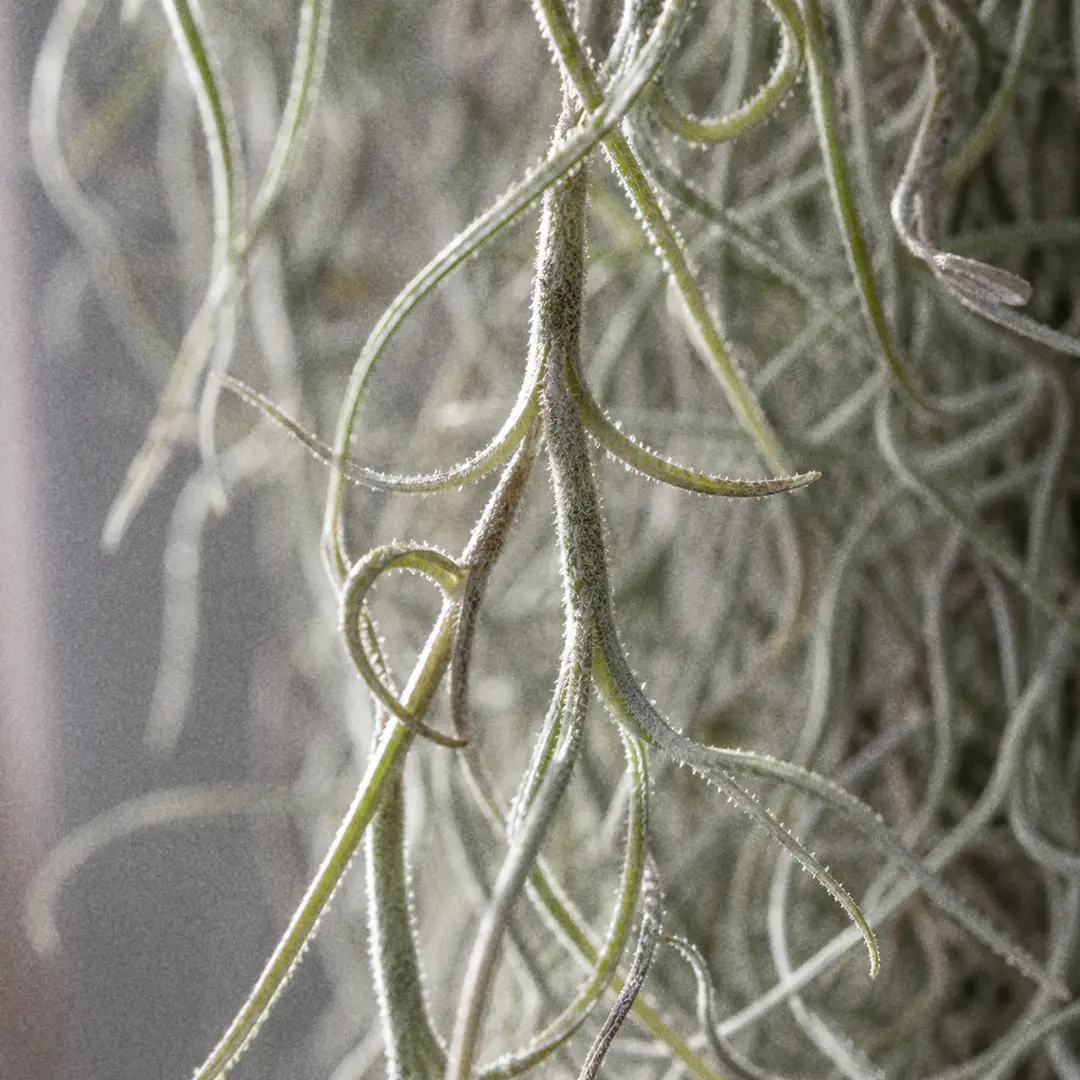
Spanish Moss is a single species, but it varies enormously across a range that runs from Virginia to Argentina. Nurseries sell several distinct forms, and the differences that matter to you are strand thickness and how fine the texture reads from across the room. Care is identical for all of them.
Standard Spanish Moss
The common form, sold by the bundle or by weight at nurseries and air plant specialists. Strands are fine, silver-grey, and link into chains that keep extending at the tips. This is what you get when a listing just says Tillandsia usneoides, and it is the right starting point.
'El Grande'
A recent, notably larger selection with long, thick, heavy strands and a pronounced silvery-white cast. It reads as a heavier curtain from a distance and holds its shape better in a big display. Because the strands are chunkier, they hold more water, so it wants slightly more attention to drying time than the standard form.
The Fine Forms
At the other end, several fine-textured natural varieties circulate in the trade, most often under names like 'Munro's Filiformis', a very fine green-leaved form from Paraguay also sold as El Finito or Silver Ghost. These look more like green smoke than silver rope. They dry faster, which makes them a little more forgiving indoors, and a little quicker to go crunchy if you forget a soak.
🪴 Mounting and Hanging Spanish Moss
Where to Hang It
Pick your spot for airflow first, light second, and looks third. A curtain rod across a bathroom window is close to perfect. Other good options are a bare branch mounted on a wall, a piece of driftwood suspended on fishing line, a shower rail, or a drape along the top of a bookshelf where a fan or an open door keeps air moving.
How to Attach It
You mostly do not. Lay the bundle over the rod or branch and let the strands hook onto themselves, which they do readily. If you need it secured, use a loose loop of fishing line, plastic-coated wire, or a strip of nylon stocking. Never wrap anything tightly around the bundle, because the compressed section will be the first part to rot.
Refreshing the Display
Every couple of months, take the whole thing down, soak it, then re-drape it. Pull the mass apart, shake the dead inner strands loose, and rehang it looser and longer than before. This is the closest thing to repotting that Spanish Moss ever needs, and it is what keeps a display looking full rather than clumped.
✂️ Pruning Spanish Moss
When to Prune
There is no seasonal pruning schedule. Trim whenever the bundle gets too long for the spot, or when you spot dead material inside. A quick clean-up after each soak, while the strands are still separated and pliable, takes about a minute.
How to Trim
Use clean, sharp scissors and cut the bundle to the length you want. Cut strands do not brown back at the cut end the way a cut leaf does, so you can shape the curtain freely. For dead material, pull it out by hand instead: browned or blackened strands come away with a gentle tug, and hand-pulling reaches into the core where scissors cannot.
Thinning the Core
The most valuable pruning you can do is thinning rather than shortening. Hold the bundle up to a light and look at the middle. If you cannot see daylight through it, take out a third of the mass and start a second bundle somewhere else. Dense means damp, and damp means rot.
🌱 How to Propagate Spanish Moss
Best Method: Division
Propagating Spanish Moss is the easiest job in houseplants. Grab a handful of healthy strands, pull them away from the main bundle, and hang them somewhere else. Each strand grows at its own tip, so any piece is already a complete, functioning plant. There is no rooting hormone, no water glass, no waiting.
Step-by-Step
- Soak the parent bundle first. Damp strands are flexible and pull apart cleanly. Dry ones snap.
- Separate a handful. Take a section about the width of two fingers, working from the outside of the bundle where growth is strongest and greenest.
- Check the piece. Discard any blackened or matted strands that came from the middle of the handful. You want silver-grey, springy material only.
- Drape it on its new support. Wire, wood, a rod, a hook. It does not need to be tied.
- Soak it on the same schedule as the parent and treat it as an established plant from day one.
Tips for Success
New divisions do best started at least six inches long. Very small clumps dry out too fast and lose water quicker than they can absorb it. Give a fresh division slightly brighter light than the parent for its first month to encourage new tip growth, and check it after each soak for the first few weeks to confirm it is drying properly in its new spot.
About Seeds
Spanish Moss does set seed, on tiny feathered parachutes like a dandelion, and it does come true from seed. It is also glacially slow: a seedling takes several years to become anything you would call a strand. Divide instead. Our propagation guide covers the wider principles.
🐛 Spanish Moss Pests and Treatment
Pests are uncommon on Spanish Moss, mostly because there is no soil for anything to breed in and the weekly soak physically washes small insects off. When trouble does appear, it is almost always on a bundle that has been left dry for months.
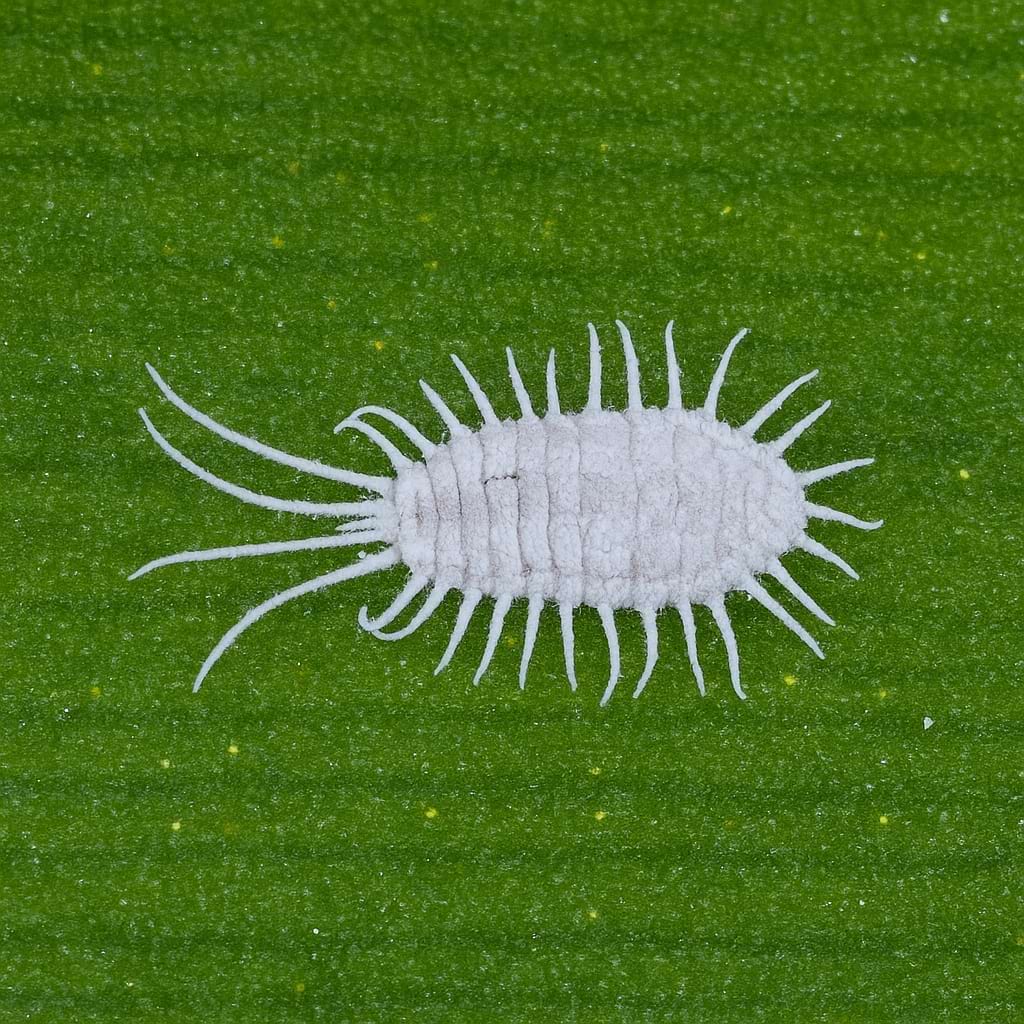
Mealybugs are the most likely visitor, showing up as small white cottony specks tucked where strand segments join. Pick them off with a cotton bud dipped in rubbing alcohol, then soak the whole bundle and check again a week later.
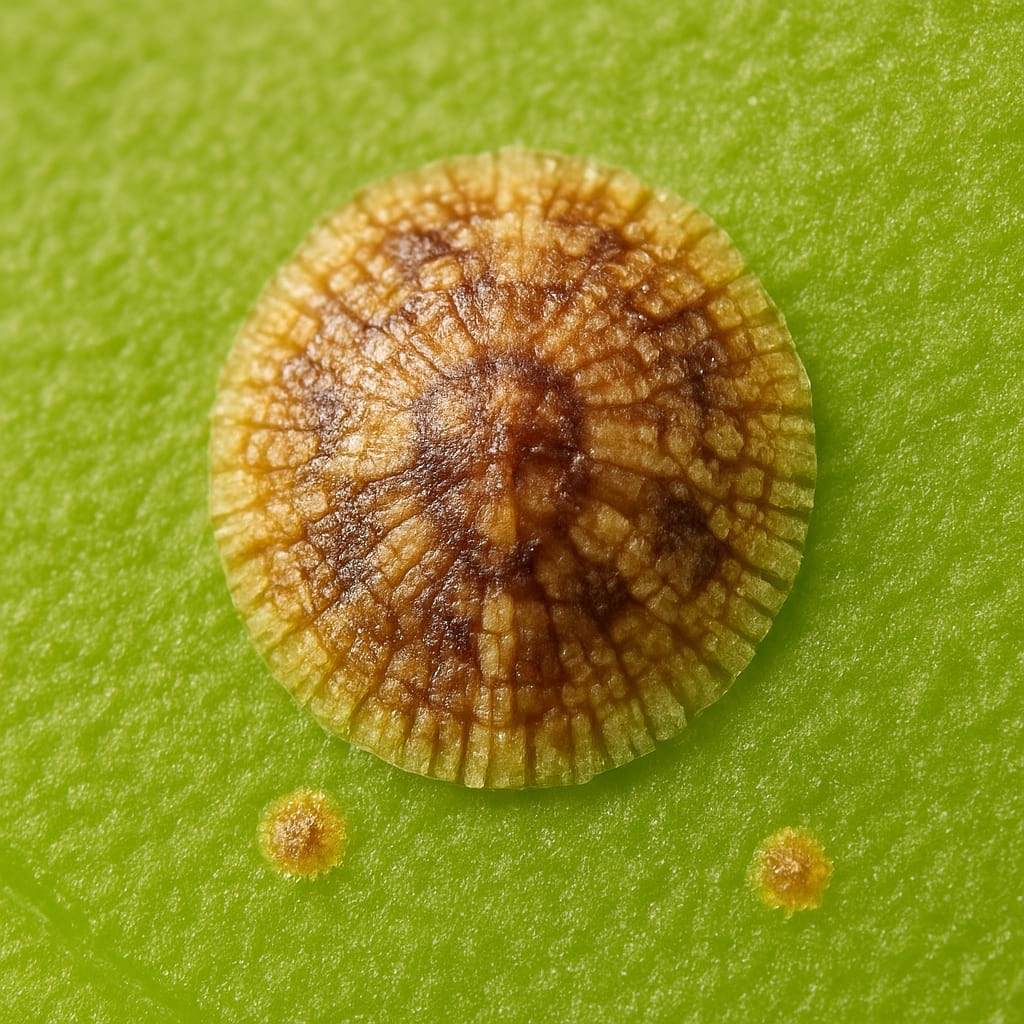
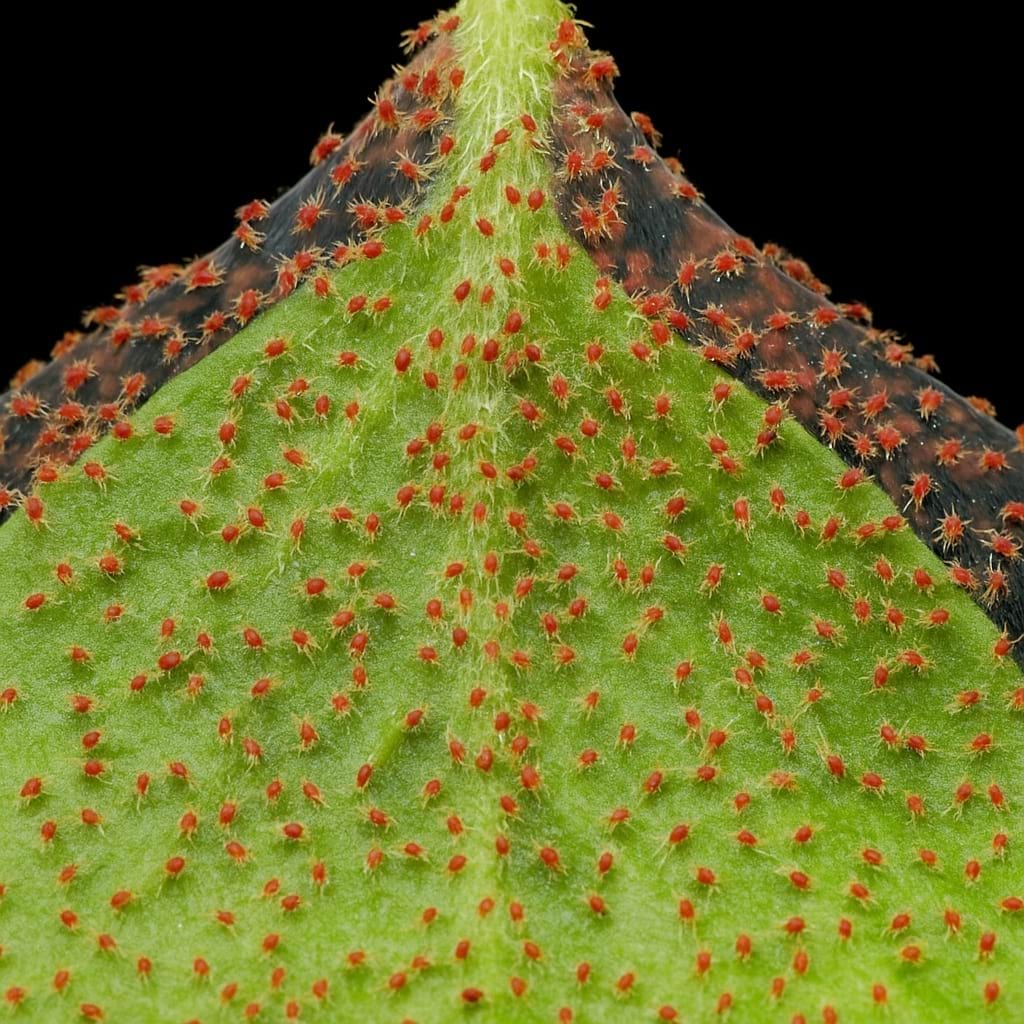
Scale insects appear as tiny hard brown bumps clinging to the strands and are easiest to scrape off with a fingernail during a soak. Spider mites only turn up in hot dry air, and fine webbing between strands is the giveaway. Raising the humidity and soaking twice a week for a fortnight usually ends the problem on its own.
Skip oil-based sprays and neem on this plant. Anything oily coats the trichomes and stops the plant absorbing water, which does more damage than the pest was doing.
🩺 Common Spanish Moss Problems
Blackening in the middle of the bundle is the big one, and it is a drying-time failure rather than a watering-amount failure. Wet strands packed together in still air go slimy and dark from the core outward, close to what mushy stems look like on a potted plant. Cut out the black material, thin the bundle by a third, and move it somewhere with better airflow.
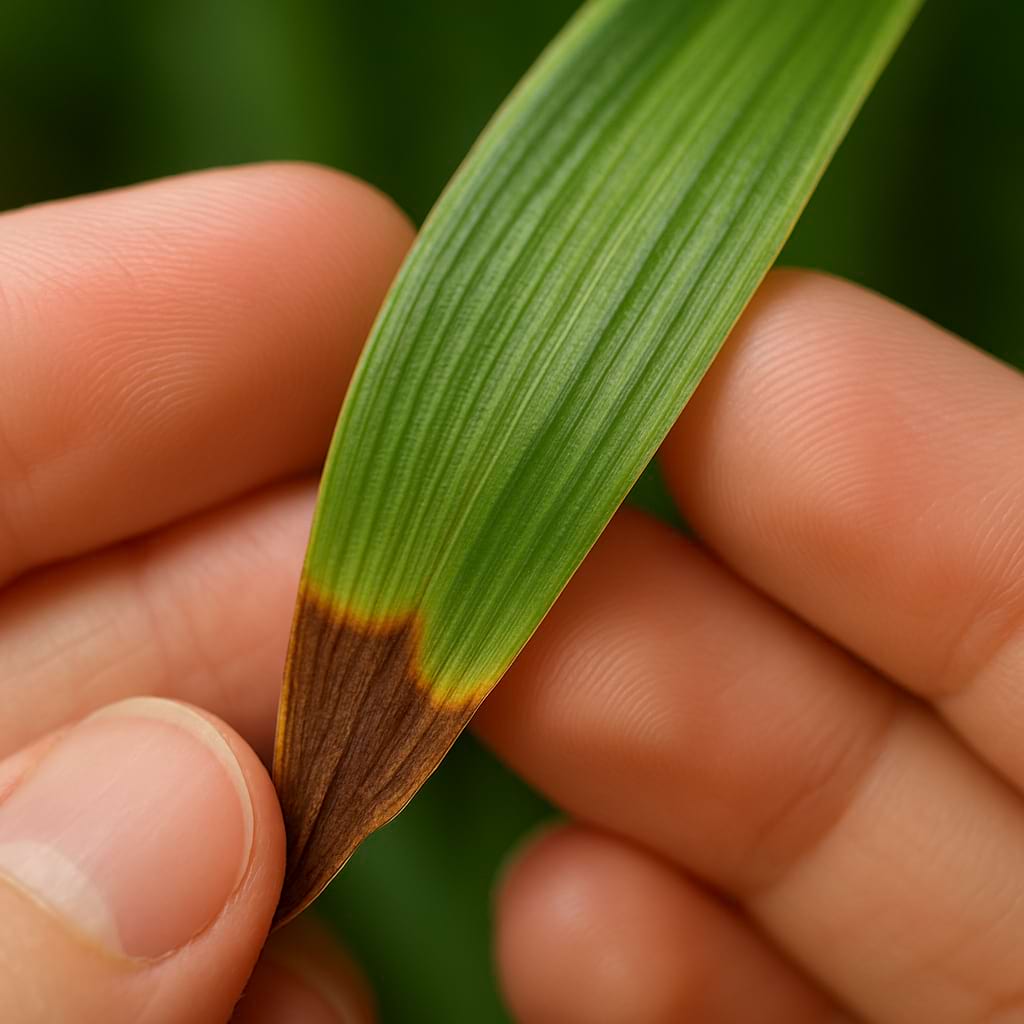
Brown, brittle, snapping strands point the other way, at underwatering or hard water. Check whether the browning sits at the tips (thirst) or blotchy along the strand (mineral buildup). Switch to rainwater or filtered water and soak more often. On most plants this reads as brown crispy edges, and here as whole-strand crumbling.
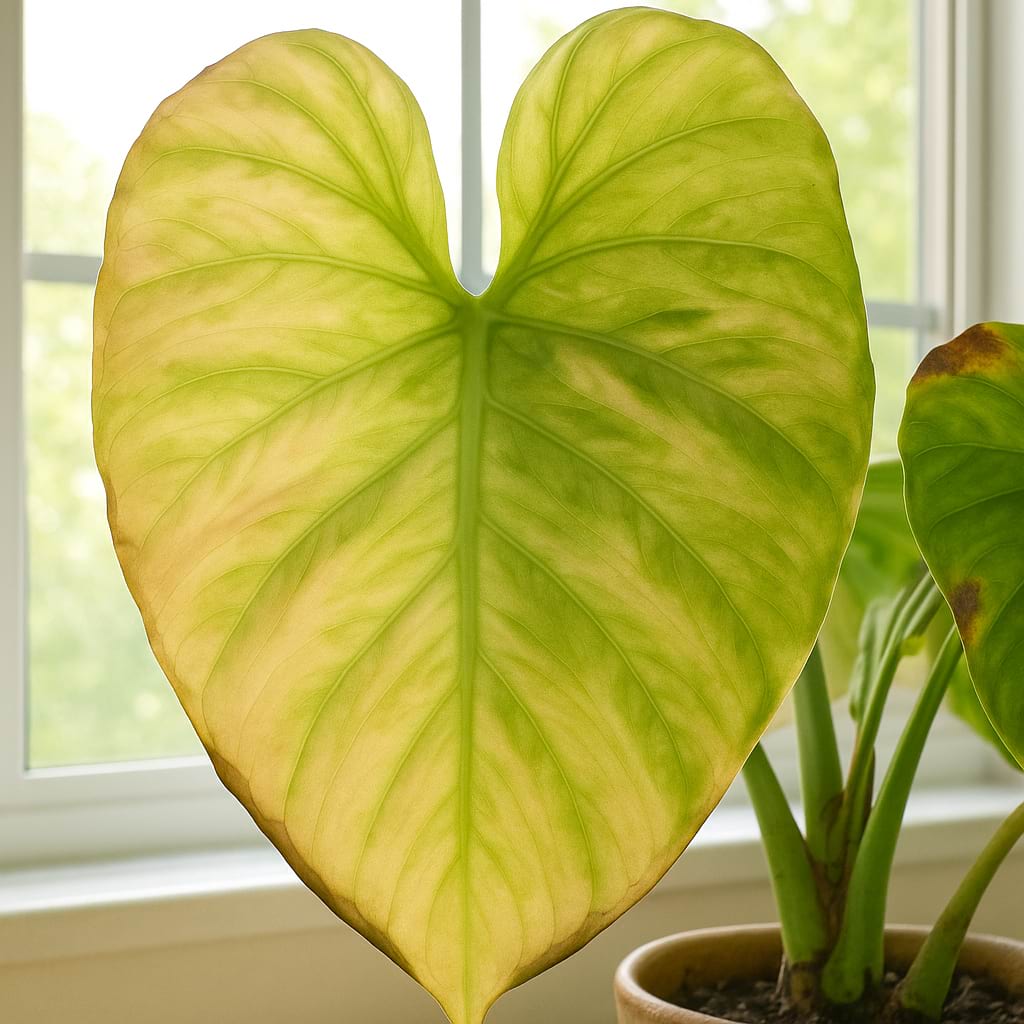
Loss of silver colour means too little light. The plant is making fewer trichomes, which shows first as pale faded leaves and eventually as poor water uptake too. Move it closer to a window, but do it gradually over two weeks.
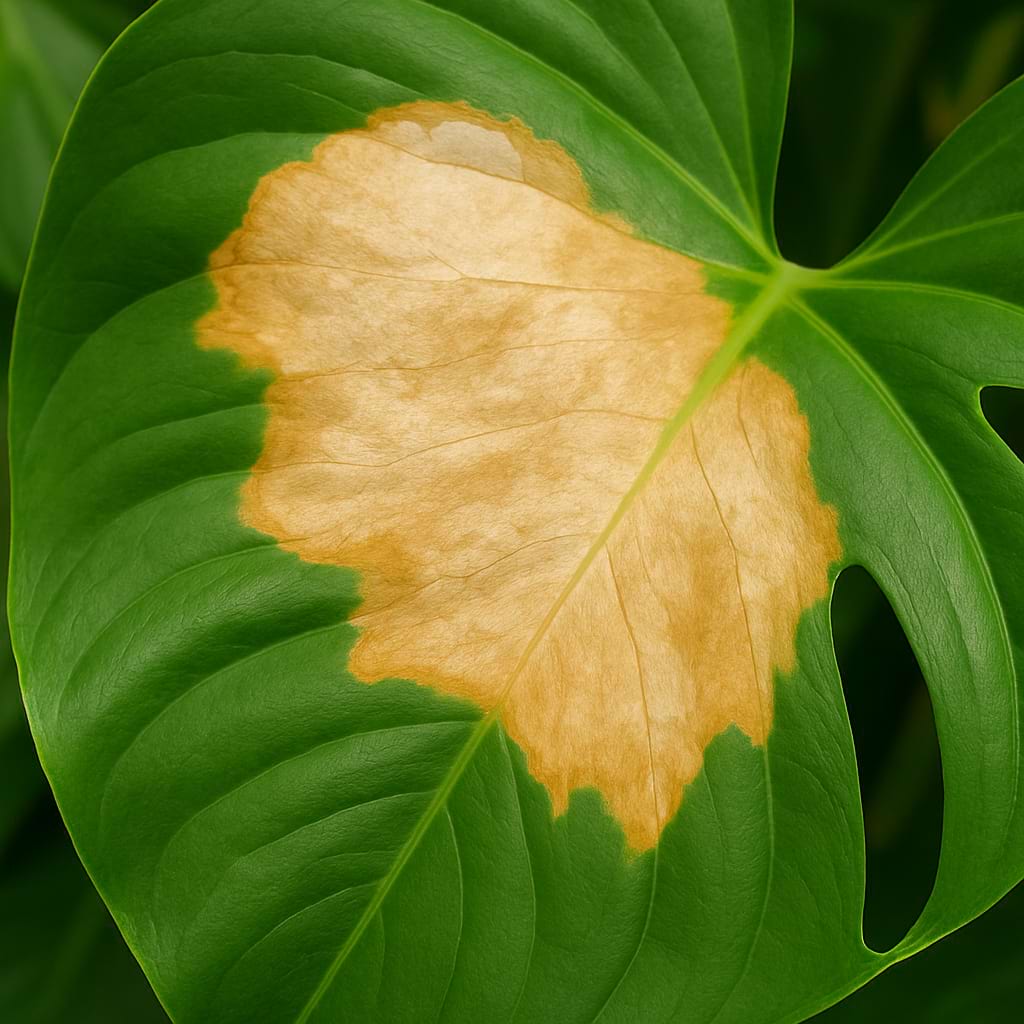
Straw-white bleached strands on the sunny side are sunburn from direct sun through glass. Add a sheer curtain and trim off the damage.
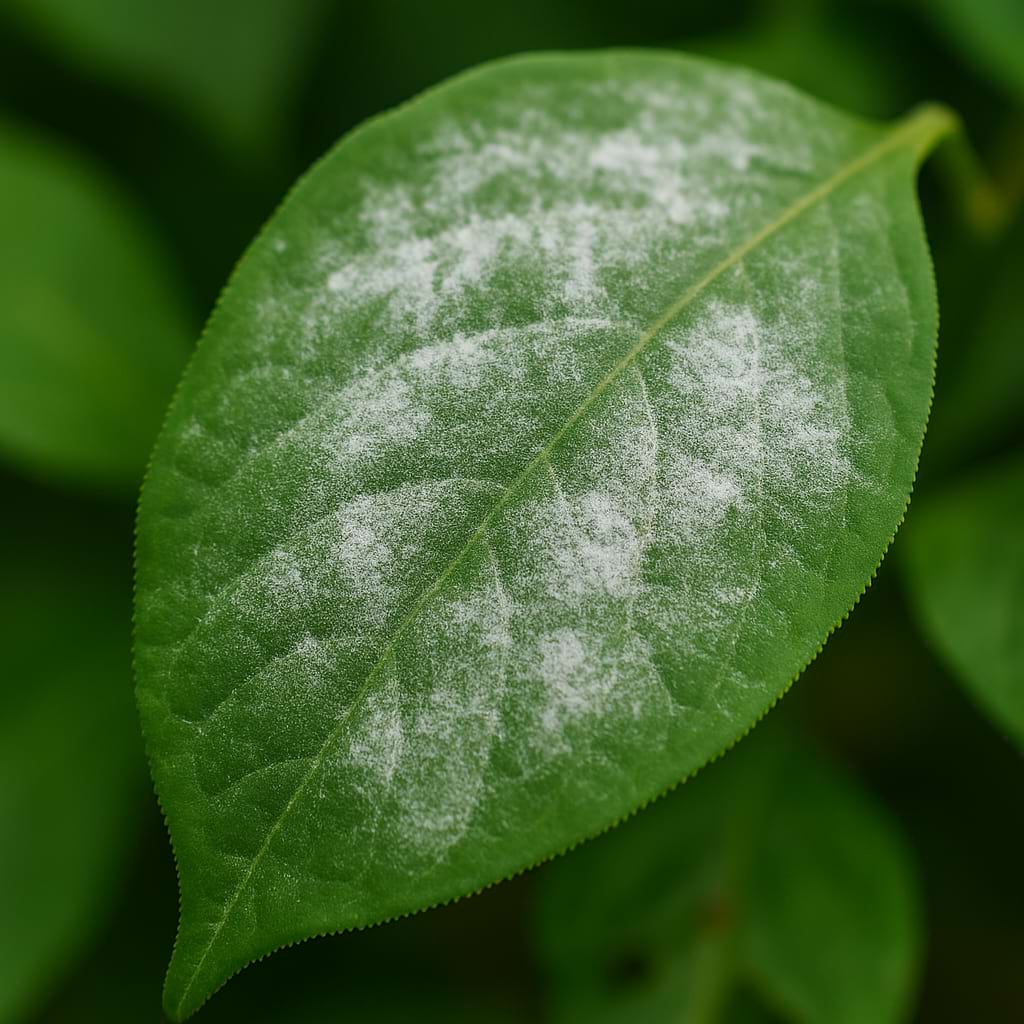
Grey or white fuzz on damp strands is a fungal problem taking hold in stagnant air, related to broader fungal and bacterial disease. Discard the affected section outright, dry the rest thoroughly, and increase air movement before you soak again.
🖼️ Spanish Moss Display and Styling Ideas
Hang It High
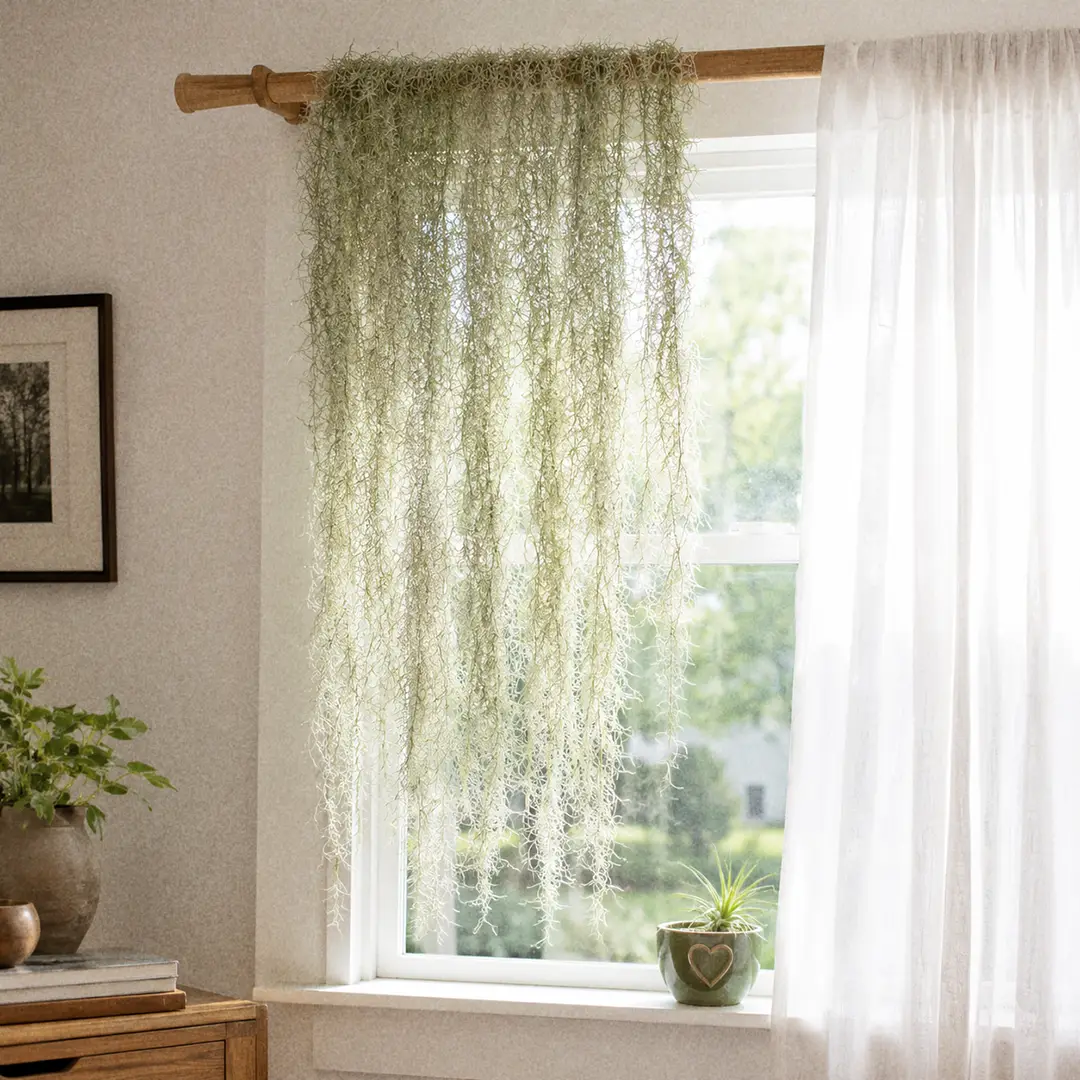
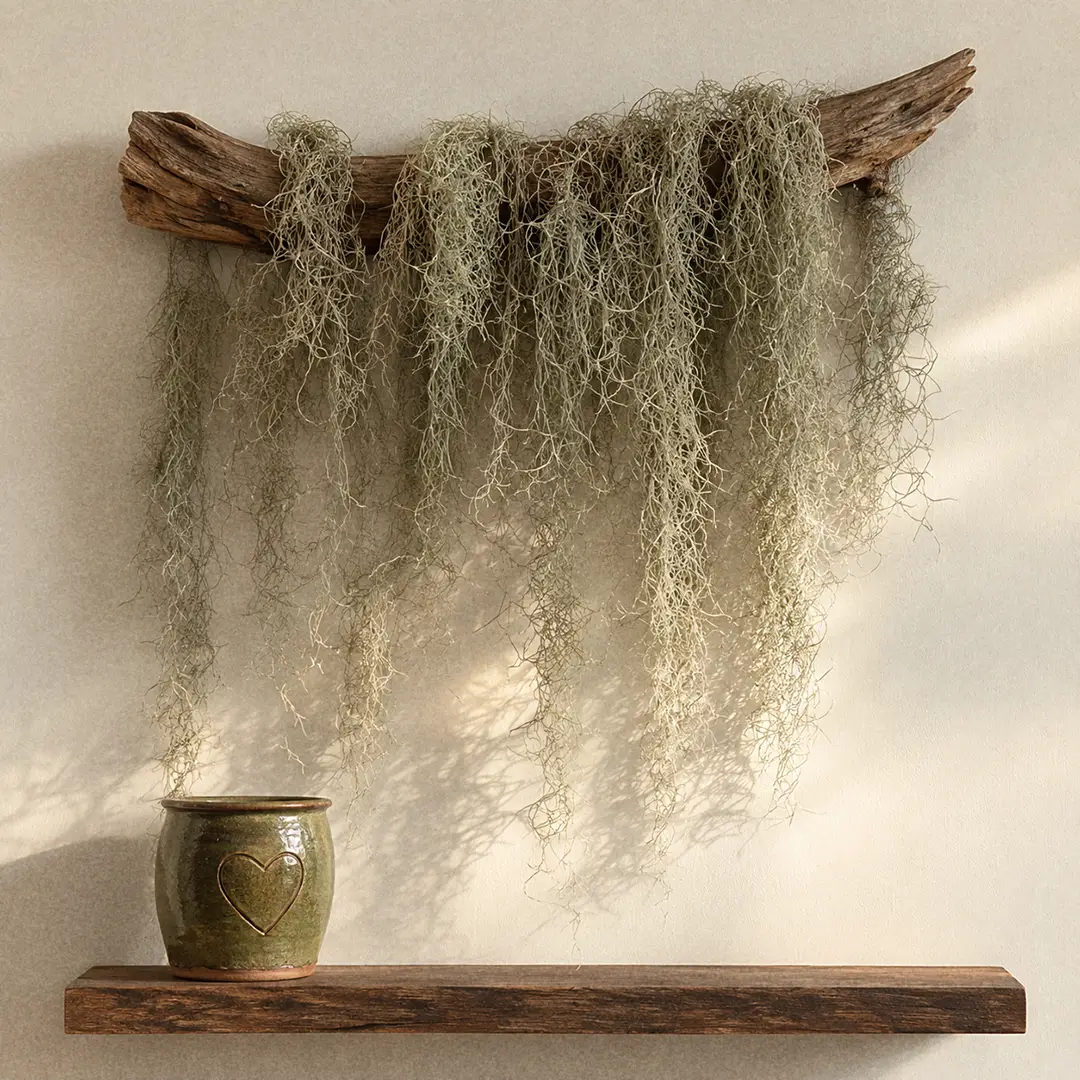
Spanish Moss is one of very few houseplants that looks better the higher you put it. Curtain rods, the top of a window frame, a beam, or a high shelf all give the strands room to fall and catch light from behind. Backlighting is the trick that makes a bundle look expensive: hung against a window, the trichomes catch the light and the whole thing glows silver.
Mounted and Layered Setups
Draped over driftwood or a mounted branch, it turns into wall art rather than a plant. It also works as a finishing layer on other displays: laid over the top of an orchid basket, tucked around the base of a mounted Staghorn Fern, or hung beside a trailing plant so the fine silver texture plays against solid leaves. A String of Hearts alongside it is a particularly good pairing, since both cascade but read completely differently.
Where Not to Put It
Not in a closed terrarium, not in a corner with no air movement, and not directly above a radiator or heating vent. Also avoid tucking it into a tight nook you cannot easily reach, because a bundle you cannot lift down is a bundle you will stop soaking.
🌟 Spanish Moss Pro Care Tips
- Set a four-hour timer after every soak. If it is not dry to the touch by then, you have an airflow problem, not a watering problem.
- Keep two smaller bundles instead of one big one. They dry faster, they look fuller spread across two spots, and losing one does not lose the display.
- Use rainwater if you can collect it. Hard tap water leaves a mineral film on the trichomes, and this plant absorbs everything through them.
- Squeeze test before you soak. Springy and soft means wait. Stiff and crunchy means soak now.
- Check the core once a month. Open the bundle at the middle and look for black. Everything that kills this plant starts there.
- Never seal it in plastic. Not for storage, not for shipping, not overnight. Bagged moss rots within days.
- Skip neem and horticultural oils. They block the trichomes and suffocate the plant more effectively than any pest would.
❓ Frequently Asked Questions
Is Spanish Moss really a moss?
No. It is a flowering plant in the bromeliad family, which makes it a relative of the pineapple and of every other air plant. It was named for its resemblance to a beard of moss hanging from a tree, and the name stuck for four hundred years.
Does Spanish Moss kill trees?
No. It is an epiphyte, so it perches on a branch and takes nothing from the tree. A heavy load can shade a weak branch or add weight in a storm, but the moss is not feeding on the tree in any way. Trees that die under it were usually already struggling, which is why the moss found enough light there in the first place.
Does Spanish Moss have chiggers in it?
Very rarely, and not the moss hanging in a tree. Chiggers turn up in moss that has fallen and lain on the ground, which is where the reputation comes from. Nursery-grown moss sold for indoor use is not a concern. If you ever collect it wild, dry it thoroughly or freeze it for a few days first.
Why is my Spanish Moss turning brown and falling apart?
Two different causes with opposite fixes. Brown, brittle, crumbling strands mean it is too dry or getting hard water, so soak more often and switch to rainwater. Brown-to-black, soft, matted strands in the middle mean it is staying wet too long, so thin the bundle and improve the airflow.
Is Spanish Moss safe for cats and dogs?
Yes. Tillandsia usneoides is not listed as toxic to cats, dogs, or horses, and livestock graze on it in its native range. The only practical caution is that long dangling strands are tempting to bat at and chew, and a mouthful of wiry fibre can upset a small stomach, so hang it out of reach of a determined kitten.
How fast does Spanish Moss grow?
Slowly. Each strand extends from its tip, and a bundle noticeably lengthens over a season rather than over a month. Indoors, expect around a foot of new length per year at best, and considerably less in low light. It makes up for it by never needing repotting.
Can I grow Spanish Moss in a terrarium?
Only an open one with real air movement. A sealed terrarium holds exactly the still, saturated air that rots this plant from the inside, and it will usually go black within a couple of weeks. Open vivariums with fans, common in reptile setups, suit it well.
Do I need to fertilize it at all?
Not strictly. It survives indefinitely on plain water, especially rainwater, which carries trace nutrients of its own. A monthly quarter-strength bromeliad feed through spring and summer simply gives you faster growth and better colour.
How much Spanish Moss should I buy to start?
Enough to look like something. A small handful disappears against a wall and dries out too fast to be forgiving. A bundle roughly the size of a loaf of bread gives you a display worth looking at and enough mass to survive a missed soak or two, and you can divide it in half within the first year anyway.
ℹ️ Spanish Moss Info
Care and Maintenance
🪴 Soil Type and pH: Grown without soil. Drape over wire, driftwood, a curtain rod, or a wooden frame.
💧 Humidity and Misting: Wants 50% or higher with steady air movement, which is the hard part indoors.
✂️ Pruning: Pull out browned inner strands by hand and trim the bundle to length with clean scissors.
🧼 Cleaning: Rinse dust off during the weekly soak. Never wipe individual strands, they snap.
🌱 Repotting: Never potted. Simply re-hang or re-drape when the bundle gets too dense in the middle.
🔄 Repotting Frequency: Not applicable
❄️ Seasonal Changes in Care: Water and feed from spring through early autumn, then cut watering back sharply through a cooler, darker winter.
Growing Characteristics
💥 Growth Speed: Slow
🔄 Life Cycle: Evergreen epiphytic perennial
💥 Bloom Time: Spring into early summer, with tiny pale green to yellow flowers that are strongly fragrant at night
🌡️ Hardiness Zones: 8-11
🗺️ Native Area: Southeastern United States through Central America, the Caribbean, and South America to northern Argentina and Chile
🚘 Hibernation: No true dormancy, but growth stalls in cool, dim winter conditions and watering should drop to roughly once a week.
Propagation and Health
📍 Suitable Locations: Bright bathrooms, kitchen windows, shower rooms, sunroom beams, curtain rods, open shelving, mounted driftwood
🪴 Propagation Methods: Pull a handful of strands off the main bundle and hang it somewhere else. That is the whole method.
🐛 Common Pests: Mealybugs, Scale Insects, Spider Mites
🦠 Possible Diseases: Rot from slow drying, fungal blackening of inner strands
Plant Details
🌿 Plant Type: Rootless epiphytic bromeliad
🍃 Foliage Type: Thread-like silver-grey scale leaves on wiry stems, linked end to end into chains
🎨 Color of Leaves: Silver-grey when dry, greener when freshly watered
🌸 Flower Color: Pale green to yellow-green
🌼 Blooming: Yes, though the flowers are tiny and easy to miss. The fragrance at night gives them away first.
🍽️ Edibility: Not an edible plant, though livestock and horses graze it.
📏 Mature Size: 1-6 feet of hanging length indoors
Additional Info
🌻 General Benefits: Pet-safe, soil-free, needs no pot, propagates by hand, and reads as a living curtain rather than another plant on a shelf
💊 Medical Properties: Traditionally used in folk remedies in its native range, with no established medicinal use today.
🧿 Feng Shui: Soft, downward-flowing lines that calm hard corners and hard edges, useful where a rigid upright plant would feel severe.
⭐ Zodiac Sign Compatibility: Pisces
🌈 Symbolism or Folklore: Memory, patience, quiet time, the American South
📝 Interesting Facts: Spanish Moss is neither Spanish nor a moss. It is a bromeliad, a close relative of the pineapple, and it has the widest natural range of any bromeliad on earth. The old story that every strand hides chiggers is mostly false: chiggers turn up in moss that has fallen to the ground, not in moss hanging in a tree. Louisiana once ran a commercial industry curing it into upholstery stuffing, and early Ford car seats were filled with it.
Buying and Usage
🛒 What to Look for When Buying: Buy a bundle that still shows silver-grey colour and springs back when squeezed. Skip anything dark, matted, damp inside, or sold sealed in a plastic bag, which is how most of it arrives already rotting.
🪴 Other Uses: Living curtain, mounted display, terrarium and vivarium backdrop, wreath and garland material, orchid basket topper
Decoration and Styling
🖼️ Display Ideas: Curtain rods, shower rails, driftwood, mounted branches, macrame hangers, the lip of a hanging basket, bathroom windows
🧵 Styling Tips: Hang it high and give it room to fall. Spanish Moss looks its best at eye level or above, backlit by a window so the strands glow silver.
🪴 See also 🪴
Complete Guide to Baileyi Air Plant Care and Growth
Complete Guide to Harris's Air Plant Care and Growth
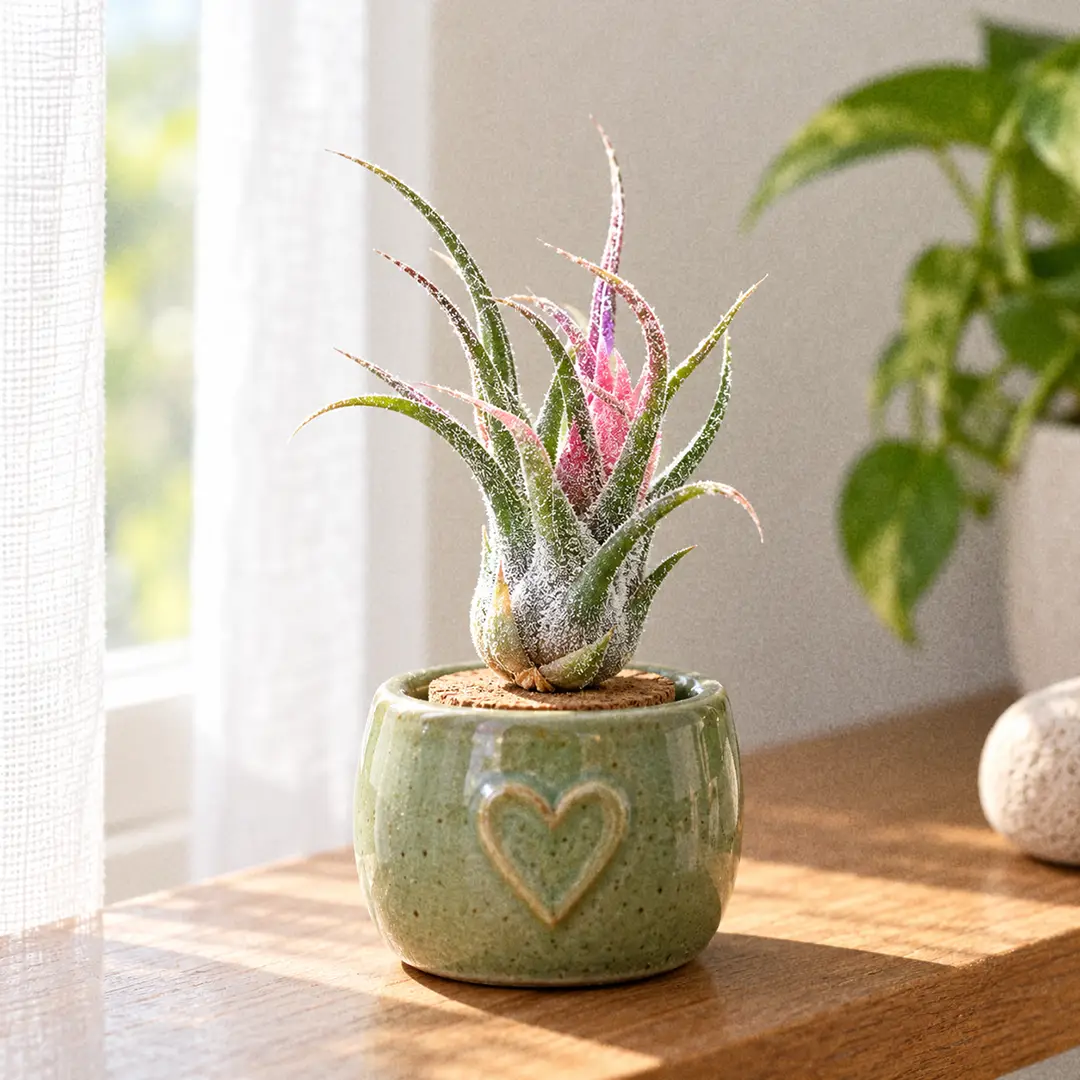
Complete Guide to Pruinosa Air Plant Care and Growth
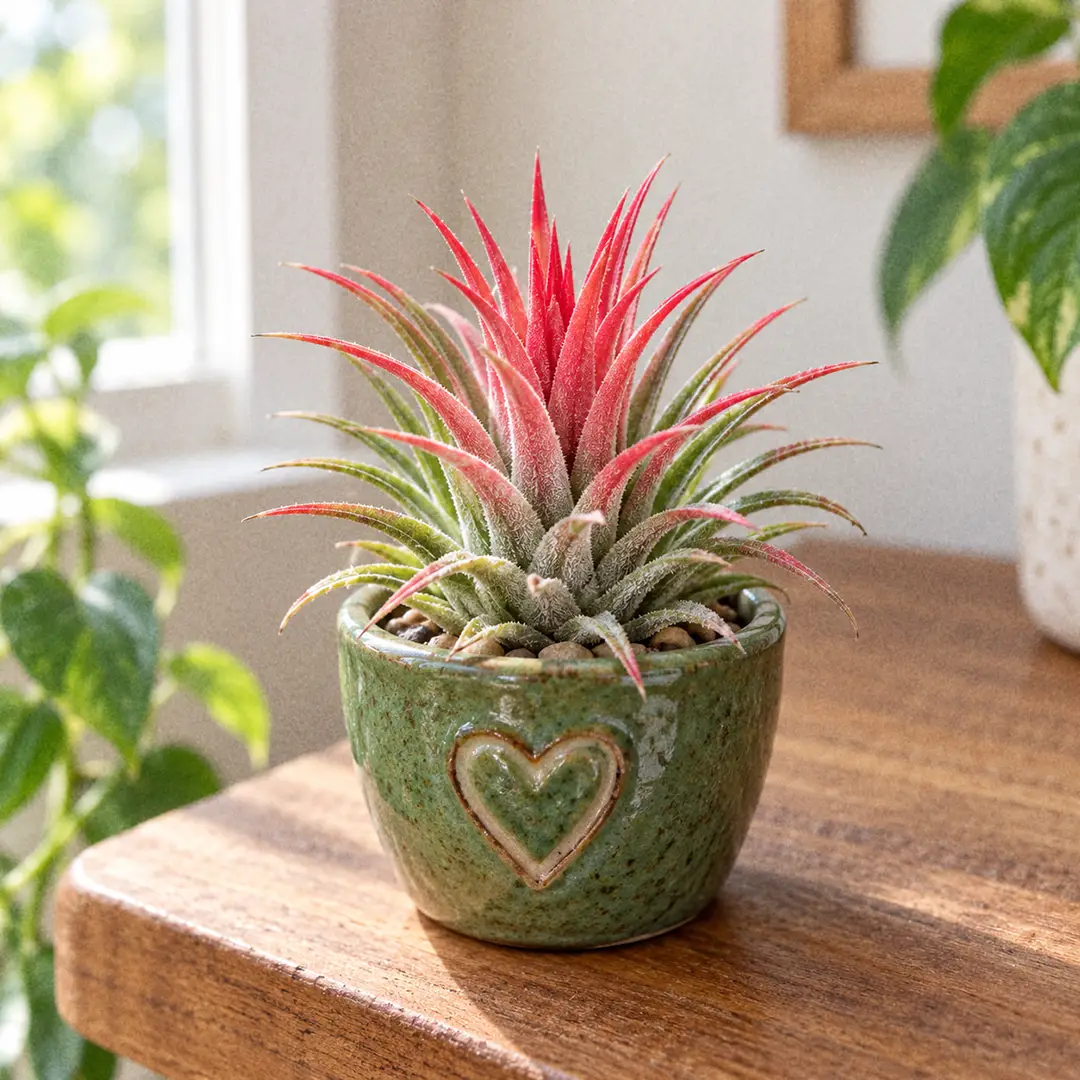
Complete Guide to Ionantha Air Plant Care and Growth
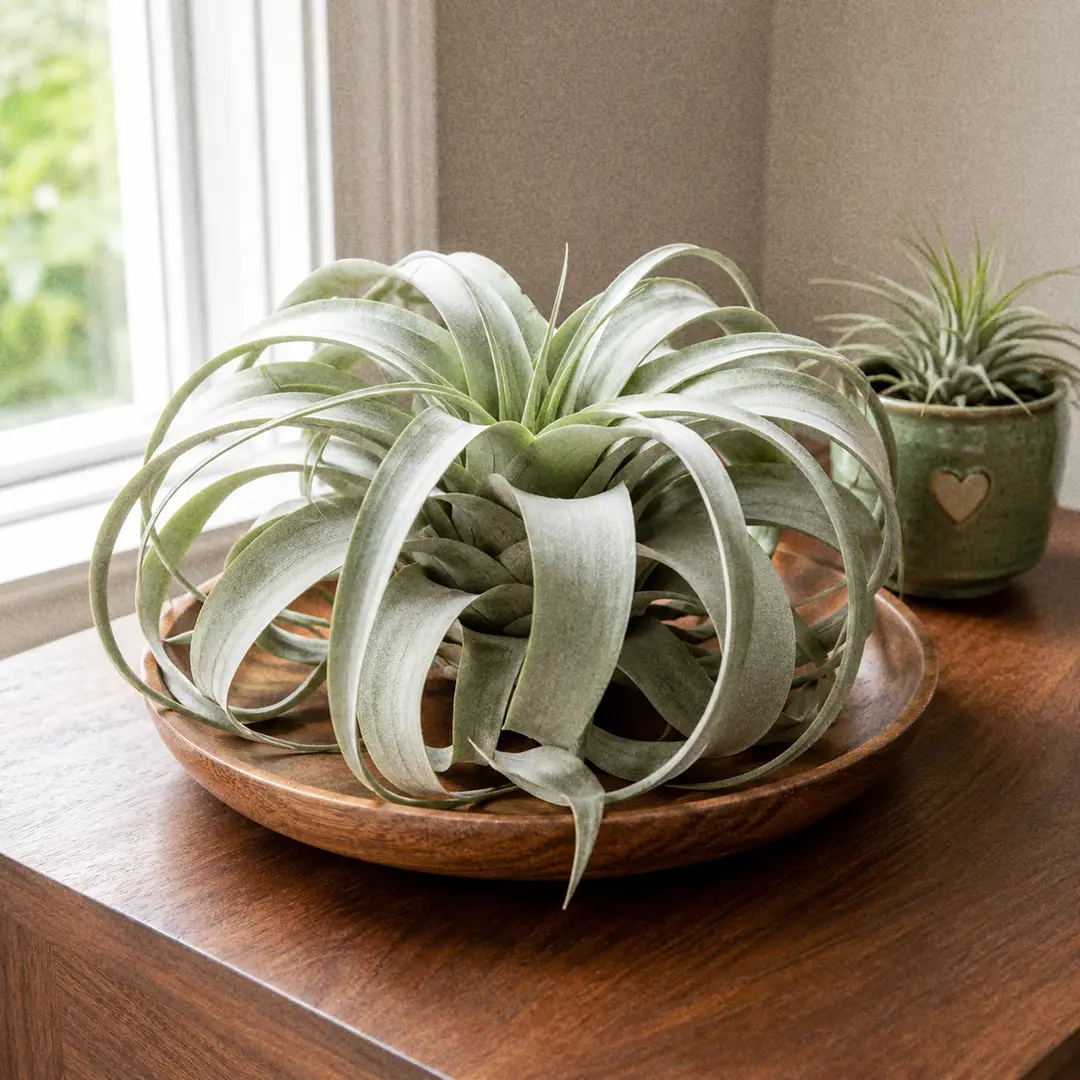
Complete Guide to Xerographica Air Plant Care and Growth
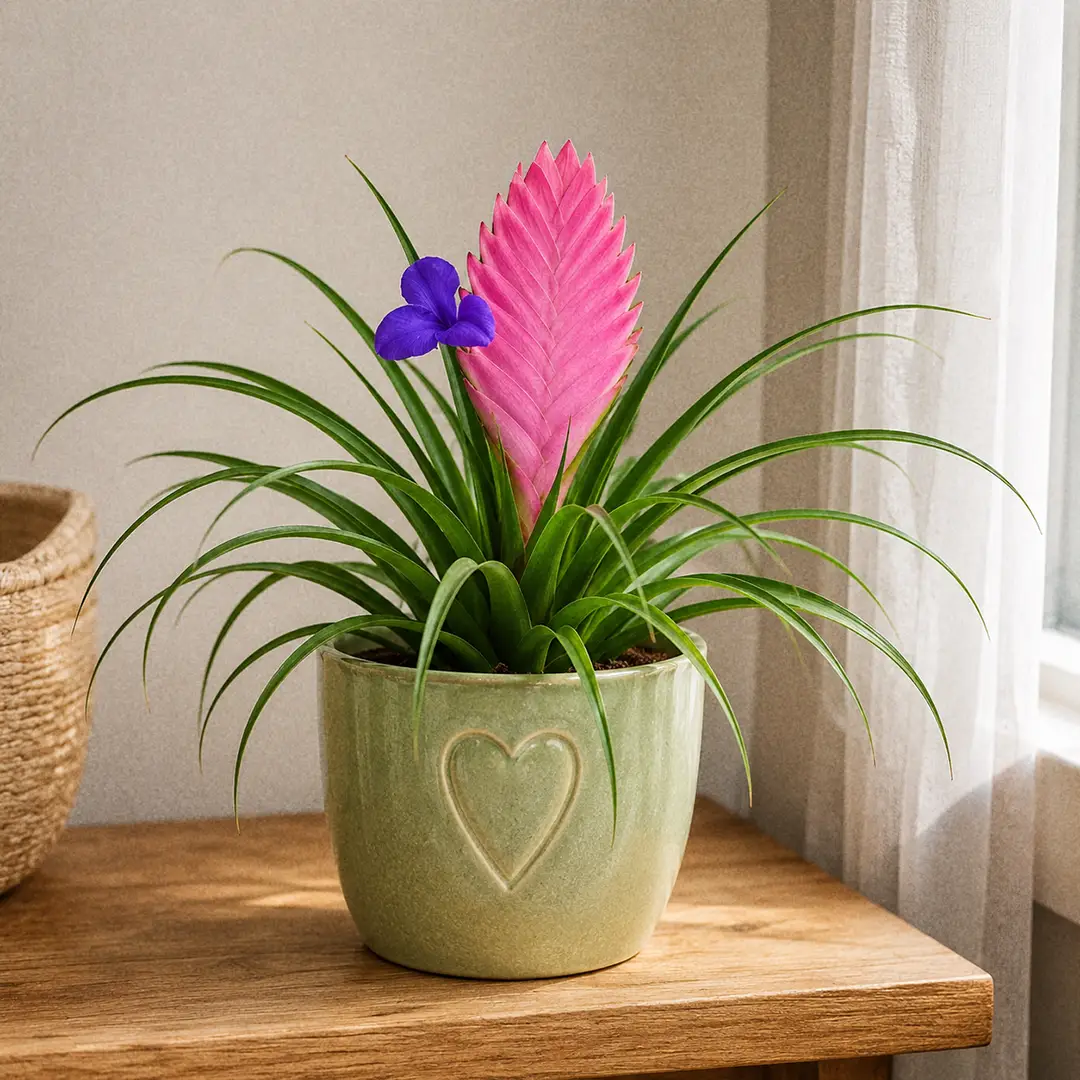
Complete Guide to Pink Quill Plant Care and Growth
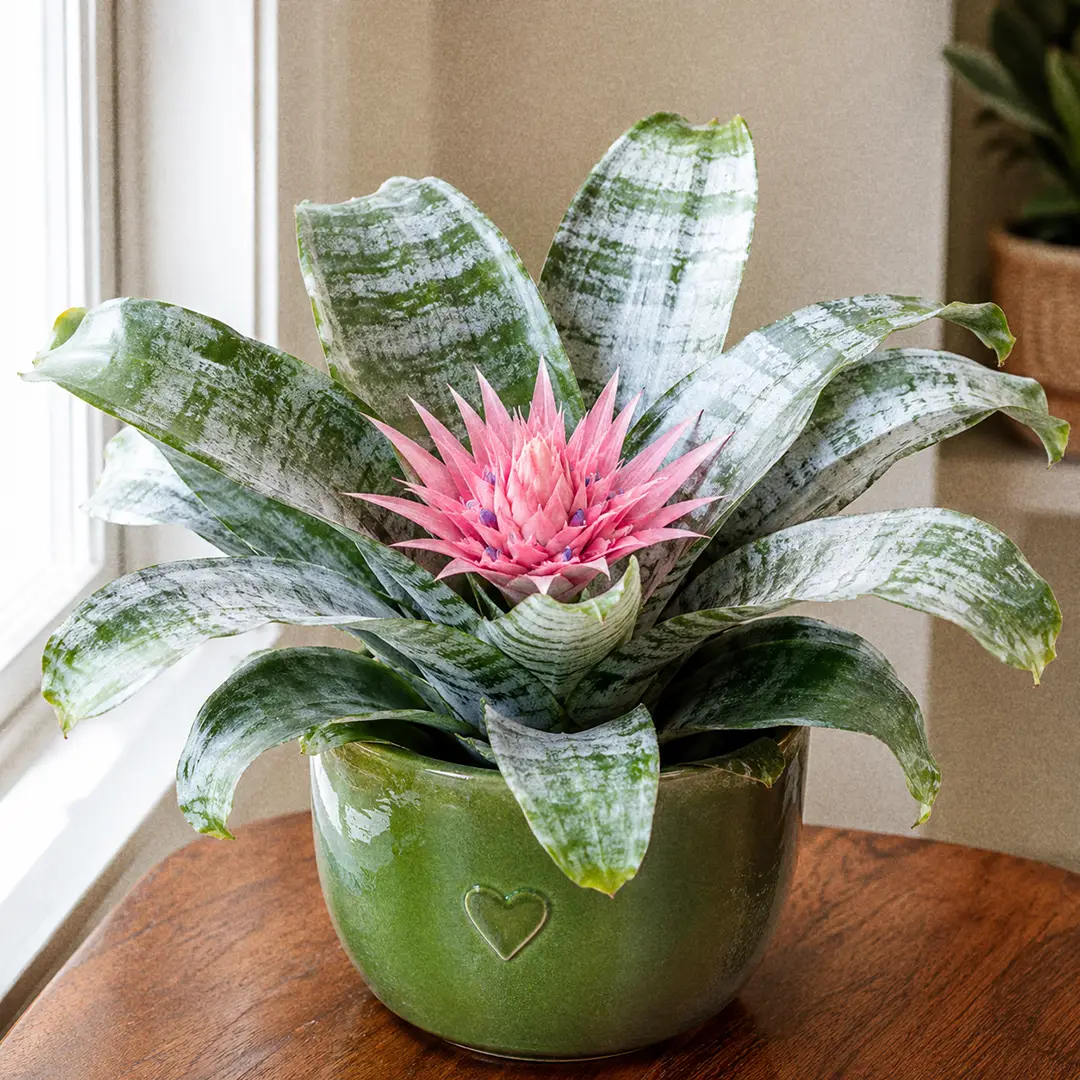
Complete Guide to Silver Vase Plant Care and Growth
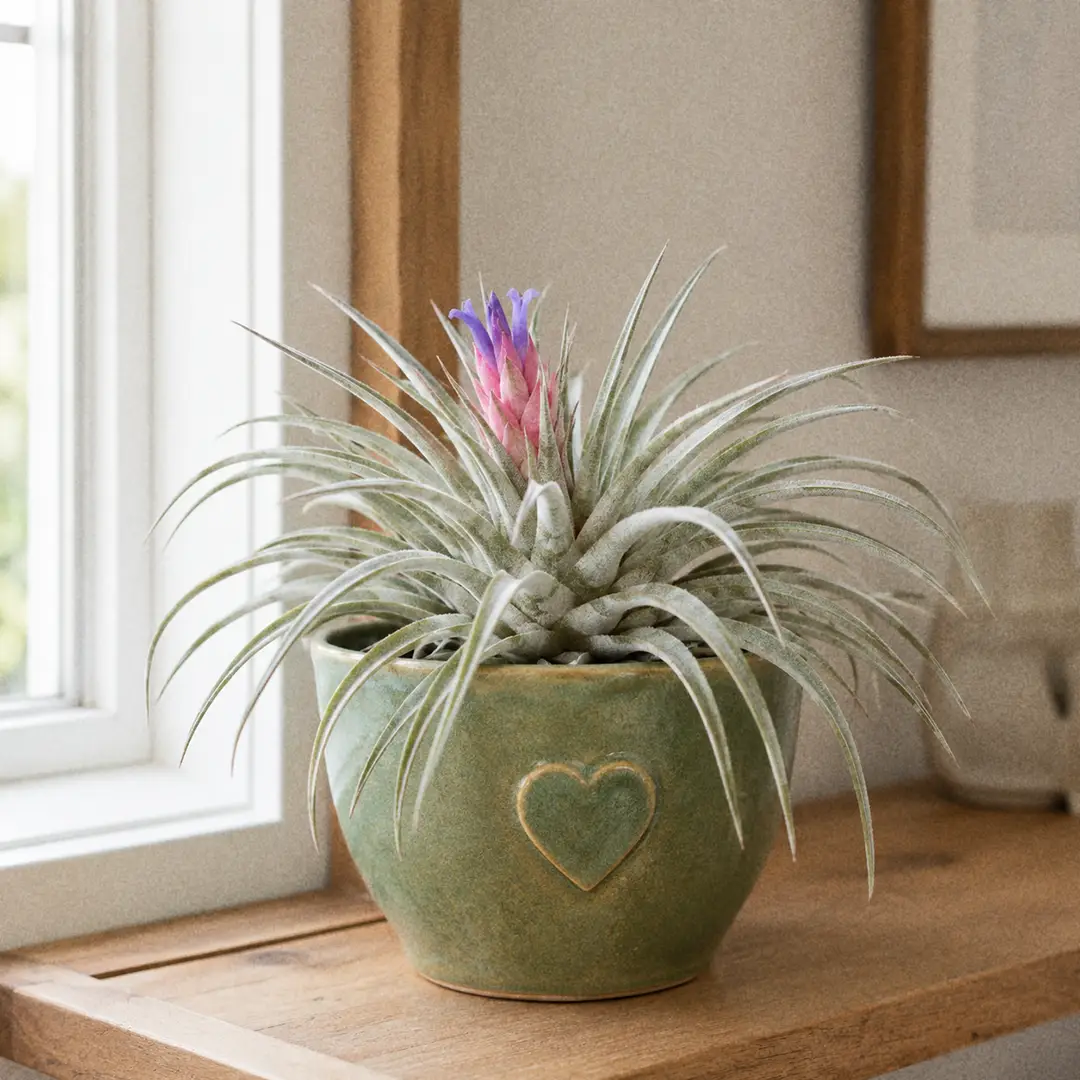
Complete Guide to Sky Plant Care and Growth
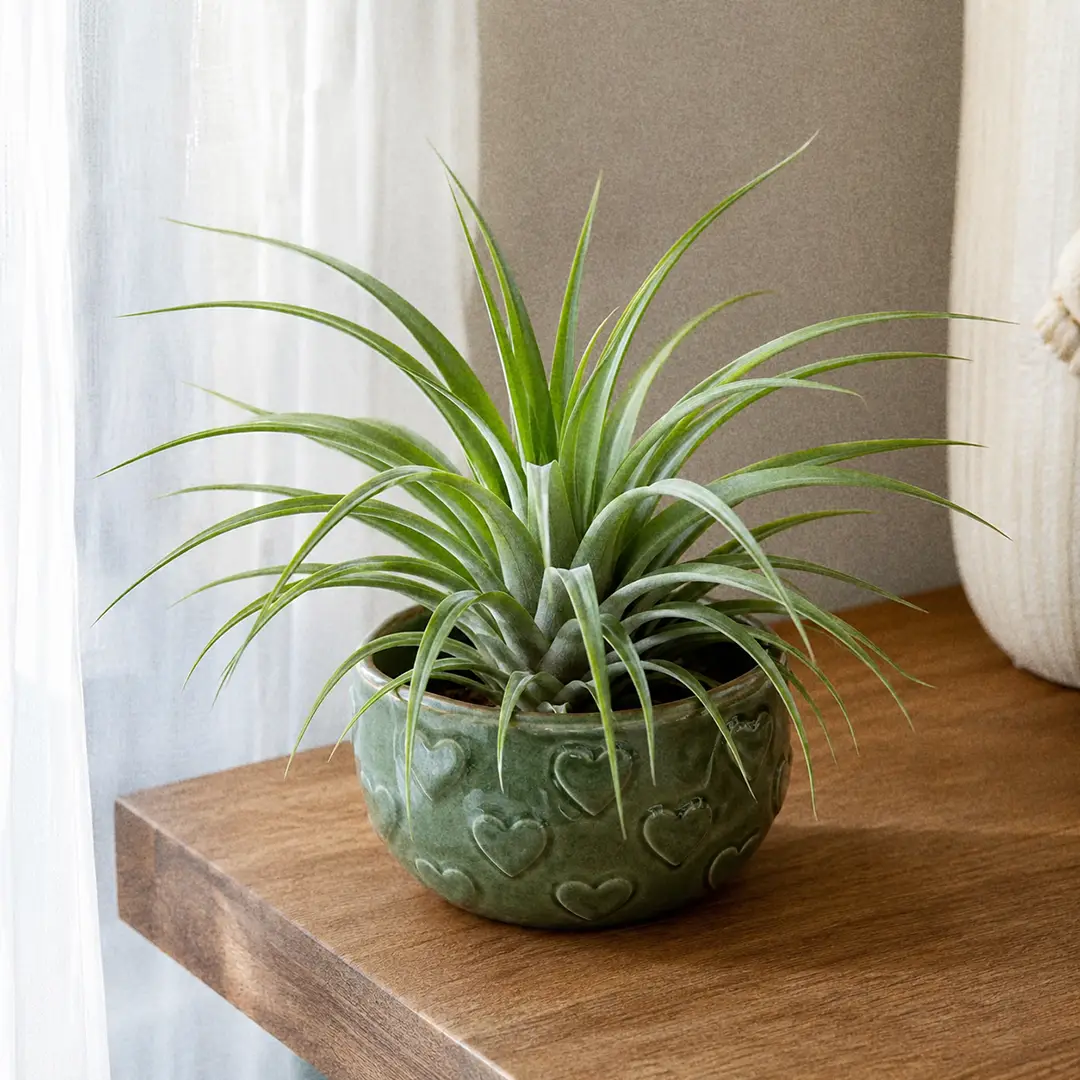
Complete Guide to Brachycaulos Air Plant Care and Growth

Houseplant101 Forum
Questions & Comments
Ask a question, share your plant experience, or help other plant owners.
Comments are temporarily unavailable.
Open the Houseplant101 ForumNo comments yet
Be the first to ask a question or share your experience about this page.
Log in or create an account
Comments use your Houseplant101 Forum account, but you can stay on this page.
Create a new account