
Pineapple Plant
Ananas comosus
Pineapple, Ananas, Variegated Pineapple, Ivory Pineapple, Dwarf Pineapple


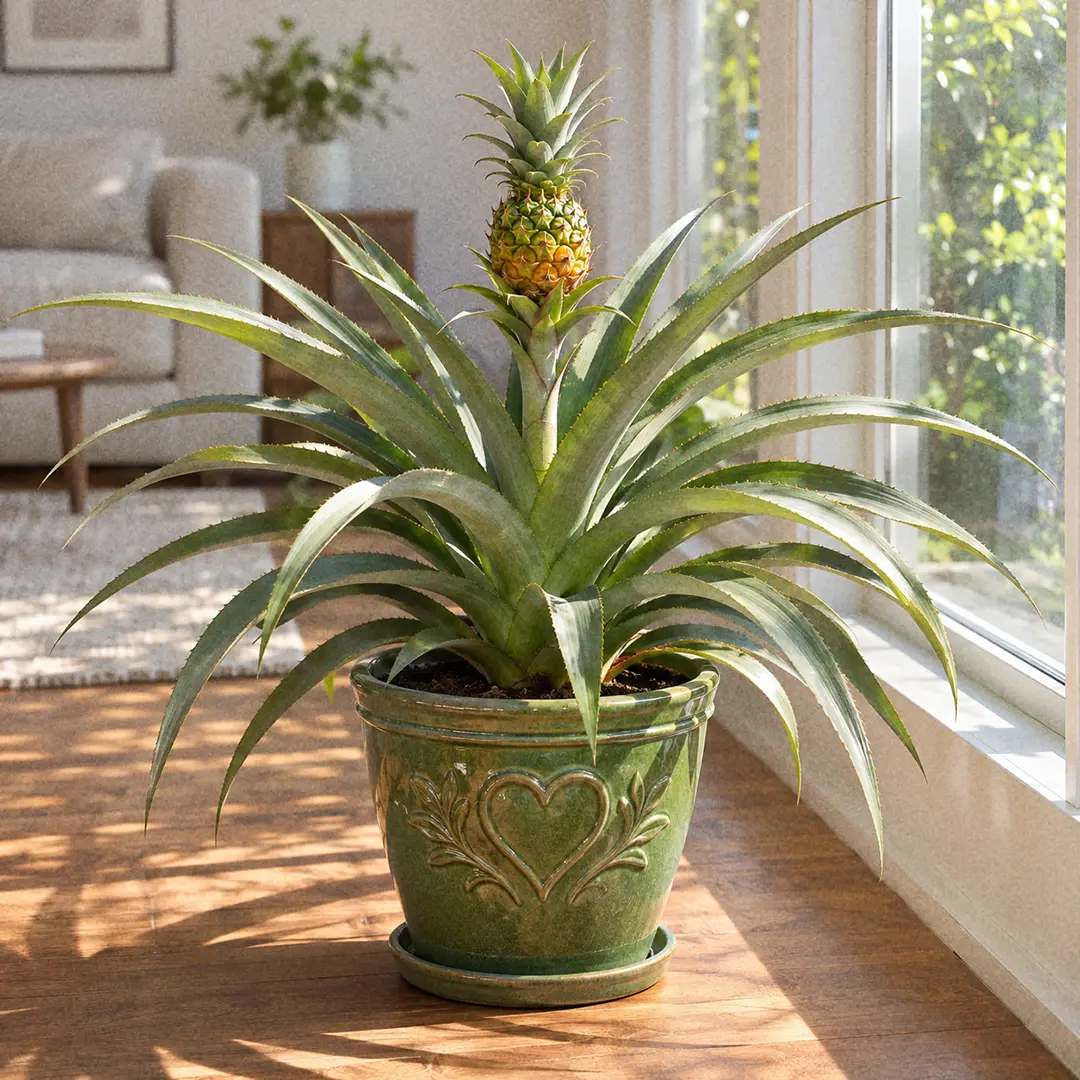
The pineapple plant (Ananas comosus) is a sun-loving bromeliad you can grow from the leafy top of a store-bought pineapple. Learn how to root the top, how much light and warmth it needs, how to trigger a flower with an apple, and what to expect from the single fruit it grows two to three years later.
📝 Pineapple Plant Care Notes
🌿 Care Instructions
⚠️ Common Pests
📊 Growth Information
🪴 In This Guide 🪴

☀️ Pineapple Plant Light Requirements (Full Sun)
Light decides everything with a pineapple. It is a terrestrial bromeliad from open, sunny ground, not a tree-dwelling epiphyte like the bromeliads usually sold as houseplants, and it grows and fruits in proportion to the sun it gets.
The Sweet Spot
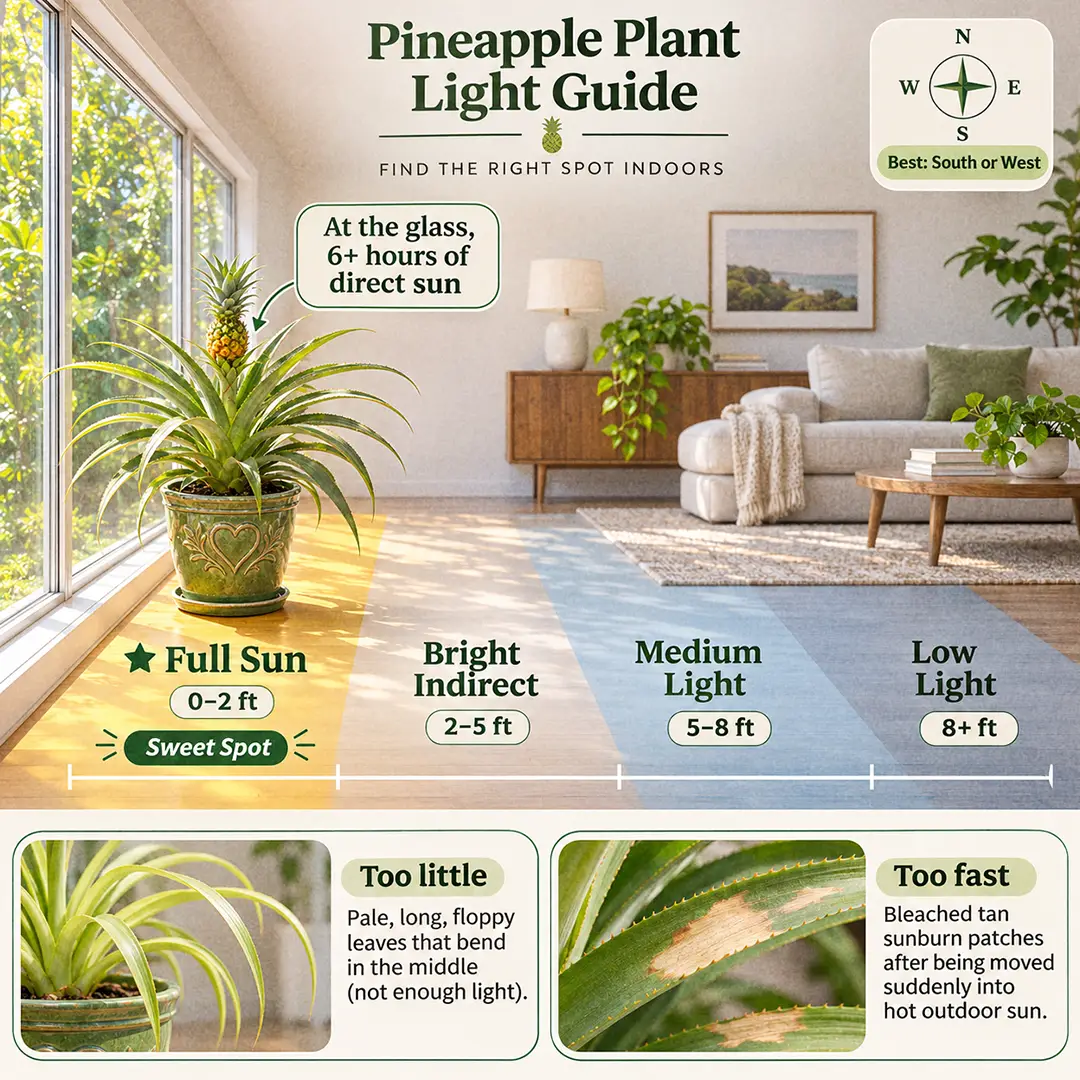
Give it the sunniest window in the house: south-facing first, west-facing second. Aim for six hours or more of direct sun, with the pot right at the glass rather than a few feet back. An east window can keep a plant alive, but growth is slower and fruit takes longer. North windows are not enough on their own.
Too Little Light
A pineapple in weak light grows long, floppy, pale leaves that bend at the middle instead of standing stiff. New leaves come slowly and the plant may never reach flowering size. In winter, when sun is short, a grow light a foot or so above the rosette on a 12-hour timer keeps it growing. The tips in providing enough light during short winter days apply well here.
Too Much Sun Too Fast
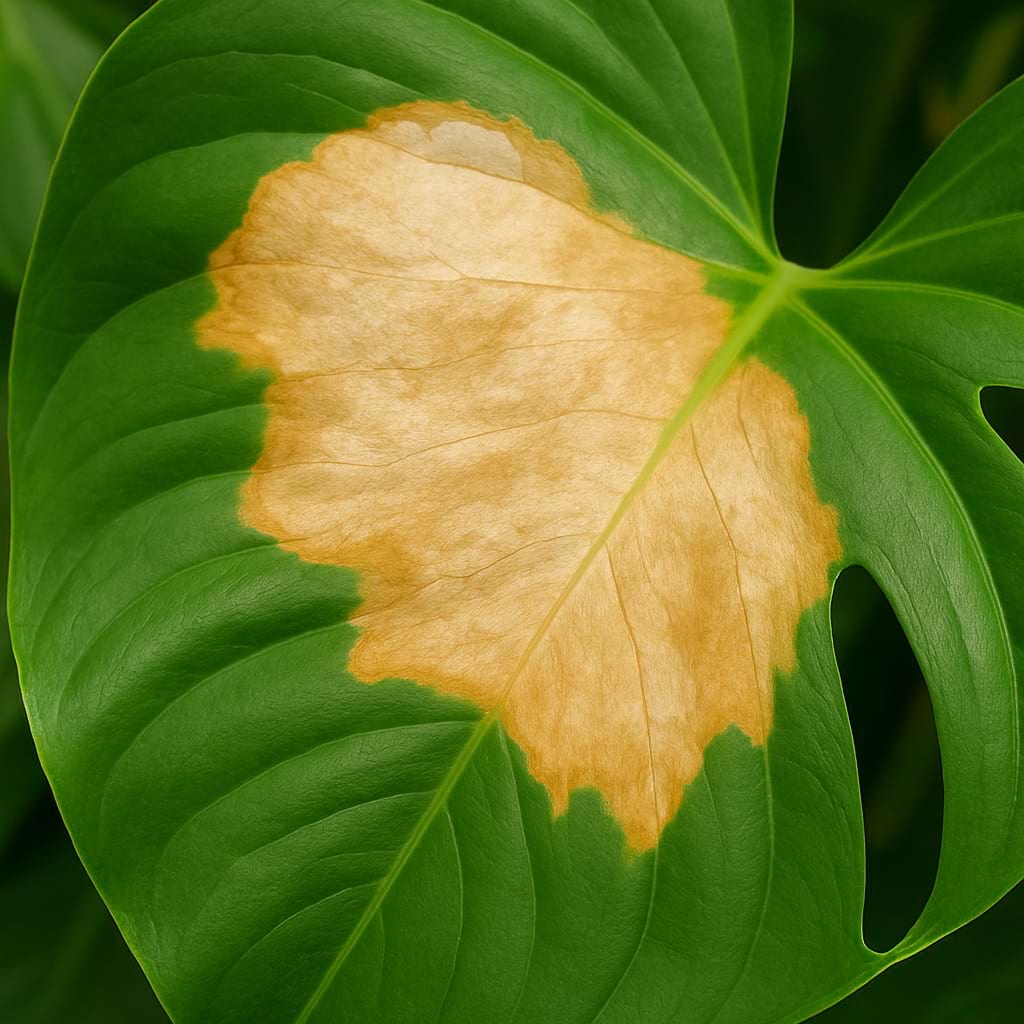
The plant loves sun, but leaves grown indoors are not used to it. Move one straight from a shaded room to a hot patio and you can get bleached, tan sunburn patches within a day. Move it in steps over a week or two. A reddish or pink flush on the leaves in strong light is common and usually harmless.
💧 Pineapple Plant Watering Guide (Soil, Not the Cup)
Watering Frequency
Water when the top inch of soil is dry. In a sunny summer window that is often once a week; in winter it may stretch to every two or three weeks. Pineapples store water in their thick leaves and handle a short dry spell much better than soggy soil. A plant that misses a watering looks dull for a day. A plant that sits wet in cold soil can rot at the base.
How to Water
Pour water evenly over the soil until it runs from the drainage holes, then empty the saucer. The leaves are shaped like gutters and steer rain down to the base, so some water will collect between the leaf bases. That is fine in warm weather. Unlike a tank bromeliad such as a Silver Vase Plant, though, you do not need to keep the center filled, and in a cool room it is better to tip out any standing water. Room-temperature tap water is fine for most homes. See the general guide to watering houseplants if you are new to the soak-and-dry method.
Winter Watering
In winter the plant uses far less water, and cold, wet soil is where most rot starts. Check the soil with a finger before every watering instead of sticking to a schedule, and water in the morning so any water caught between the leaves dries during the day. If your room drops below 60°F at night, keep the soil on the dry side until spring.
Signs of Trouble
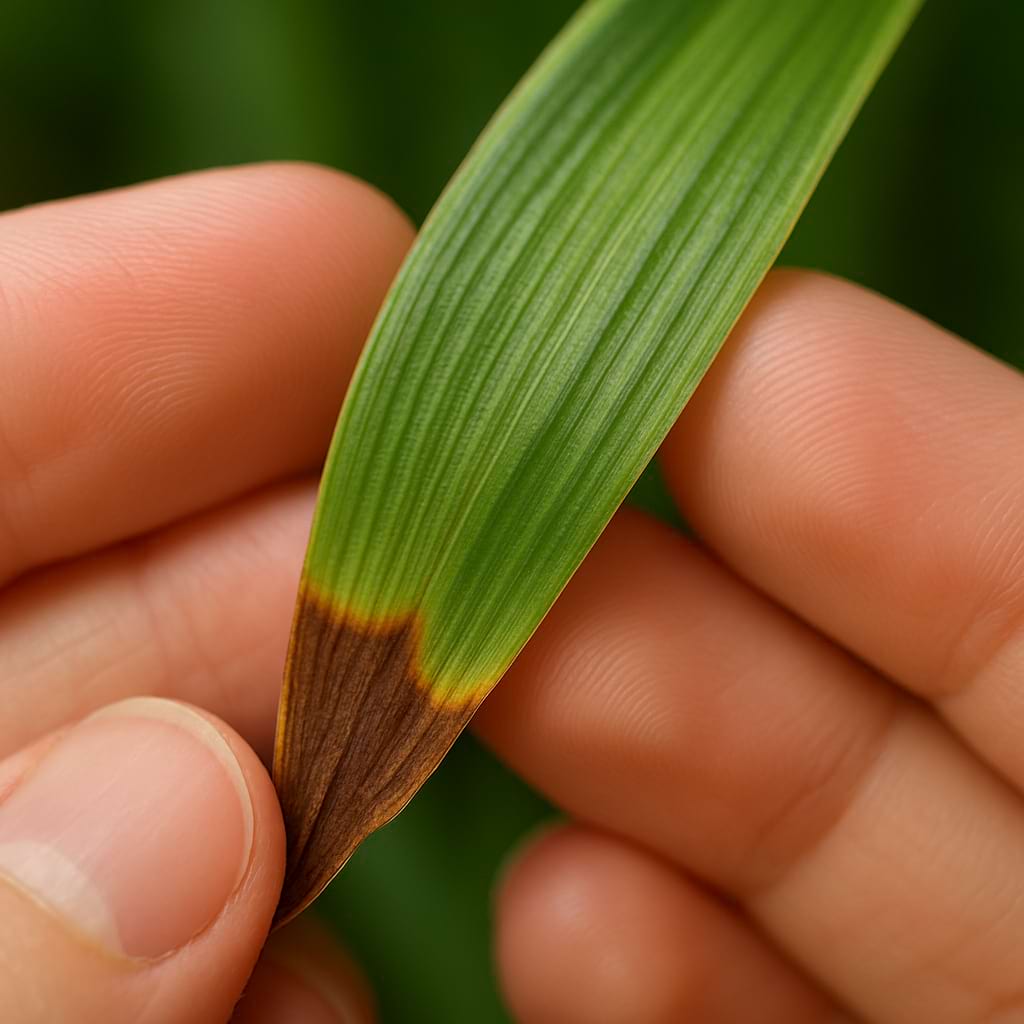
Too dry: leaves curl inward along their length, tips go brown and crisp, and the pot feels very light.
Too wet: lower leaves yellow, the soil smells sour, and the base of the rosette feels soft. If the center leaves pull out with a gentle tug, that is heart rot, covered in the problems section below.
🪴 Best Soil for Pineapple Plant (Fast-Draining and Slightly Acidic)
What the Soil Needs
Pineapple roots are shallow and fine, and they rot quickly in dense, wet soil. The mix needs to drain in seconds, hold a little moisture, and lean slightly acidic. In the ground it grows in sandy, well-drained soil, and a pot should copy that.
DIY Soil Mix
- 2 parts cactus and succulent mix
- 1 part fine orchid bark
- 1 part perlite or pumice
Squeeze a handful when damp. It should crumble apart when you open your hand. A plain peat-based potting mix with a third perlite added also works if you water carefully.
Pre-Made Options
A bagged terrestrial bromeliad mix or a cactus mix lightened with bark are both close to right. Avoid "moisture control" mixes and heavy garden soil. The potting soil guide has more on reading bag labels, and the soil basics page explains why drainage matters so much.
🍼 Fertilizing Pineapple Plant (Light but Steady)
When and How Often
Feed once a month from spring through late summer while the plant is putting out new leaves. Stop in winter, when growth slows. Once a fruit starts to form, you can feed every two weeks to support it, then go back to monthly after harvest.
What to Use
A balanced liquid houseplant fertilizer at half strength is enough. Water it into the soil after a normal watering, never onto dry roots. A rooted top needs nothing for its first two months, until it shows new growth from the center. The fertilizing guide covers strength and timing in more detail.
Over-Fertilizing Signs
Brown, burned leaf tips and a white crust on the soil surface mean salts are building up. Flush the pot with plain water and skip the next two feedings. More fertilizer does not speed up fruiting; more sun does.
🌡️ Pineapple Plant Temperature Range
Ideal Range
Pineapples grow best between about 68 and 86°F (20 to 30°C). Growth slows below 60°F (15°C), and that is roughly the minimum to keep through winter if you want steady progress toward fruit. Below 50°F (10°C) leaves can be damaged, and frost kills the plant.
Summer Outdoors, Winter Indoors
A summer on a sunny patio is the single best thing you can do for a slow pineapple. Move it out once nights stay above 60°F, harden it off to the sun gradually, and bring it back in before autumn nights cool down. Indoors, keep it away from cold glass at night and from the direct blast of heating vents.
💦 Pineapple Plant Humidity Requirements
Ideal Humidity
Pineapples are not fussy. Average indoor humidity of 40 to 60 percent suits them, and the thick, waxy leaves hold up in drier air better than most tropical plants. Misting is not needed and wet leaves in a cool room invite rot.
When to Help
In a very dry winter home, brown leaf tips are the first sign. Grouping it with other plants or running a small humidifier nearby is plenty. Dry, hot air also brings spider mites, so check under the leaves.
🌸 Pineapple Plant Flowers and Fruit (One Pineapple per Rosette)
What the Flowers Look Like
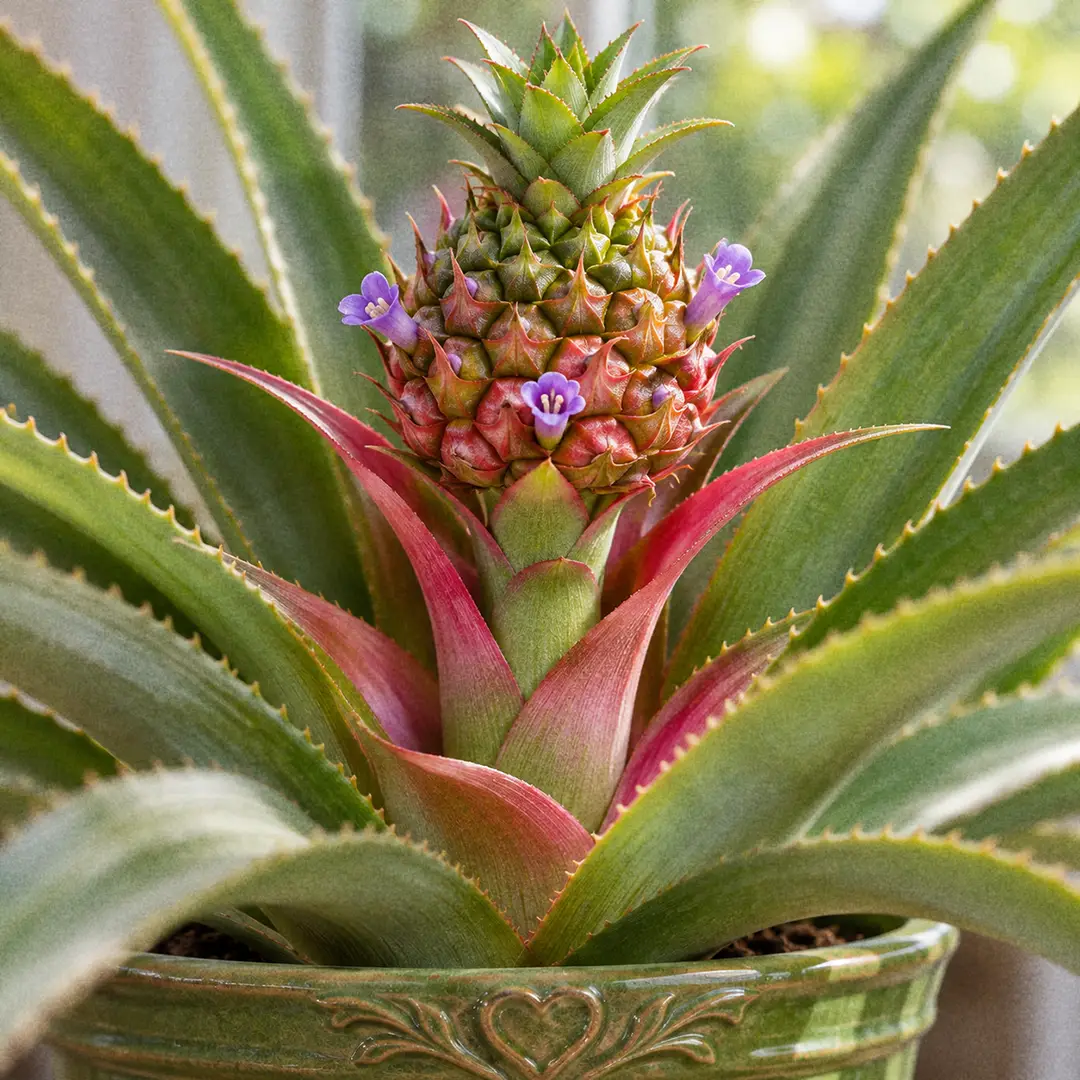
When a pineapple is ready, the center of the rosette turns red or pink and a stalk pushes up a small cone. Over the next few weeks, violet-purple tubular flowers open on the cone a few at a time, starting from the bottom. Each flower becomes a fruitlet, and the fruitlets fuse into one pineapple with a new leafy crown on top.
How Long Until Fruit
From a rooted top, expect at least two years and often three before the plant flowers, and longer in a dim home. The plant needs to be large: a rosette of roughly 25 to 30 full-size leaves is the usual sign that it is old enough. After flowering, the fruit takes about five to seven months to ripen. A pot-grown fruit is usually smaller than a shop one.
How to Trigger Flowering With an Apple
Pineapples flower in response to ethylene, the gas ripe fruit gives off. Commercial growers use it to time their crops, and you can do a small version at home. Once the plant is big enough, put the whole plant, pot and all, in a large clear plastic bag with a couple of ripe apples, tie it loosely, and keep it out of direct hot sun so it does not cook. Leave it bagged for about a week, replacing the apples when they go soft. Advice on timing varies, and some growers keep the bag going for several weeks with fresh apples. A red center and flower stalk often appear within two to three months. It does not always work on the first try, and it never works on a plant that is too young.
Ripe Fruit and What Comes After
The fruit is ready when the skin turns from green to golden yellow, starting at the base, and smells sweet. Cut it off with a few inches of stalk. That rosette will not fruit again, but it will grow pups that can.
🏷️ Pineapple Plant Types and Varieties
Store-Bought Pineapple Tops
Most home pineapple plants start as a top from the supermarket. You will not know the exact commercial variety, and it does not matter much: all of them need the same sun, warmth and patience. These plants get the biggest, with leaves that can reach two to three feet long.
Variegated Pineapple (Ivory Pineapple)
Ananas comosus var. variegatus, sold as Variegated or Ivory Pineapple, has grey-green leaves edged with creamy yellow-white stripes that often flush pink in strong light. It is mostly grown for the foliage, stays around two to three feet tall, and its fruit is usually described as ornamental rather than worth eating. The leaf edges are sharply toothed, so handle it with gloves.
'Champaca'
A compact ornamental pineapple often sold already in fruit as a houseplant, particularly in the UK and Europe. It has deep green, spiny leaves, purple flowers and a small fruit, and it holds the RHS Award of Garden Merit for conservatory growing. Treat the fruit as decoration first. Since the rosette has already fruited, the plant you buy is mainly a source of pups.
Dwarf Pineapple (Ananas nanus)
The mini pineapple sold in small pots with an egg-sized pink fruit is usually labeled Ananas nanus. Botanists now often place it under Ananas ananassoides or A. comosus var. microstachys, so labels vary. The rosette is open and narrow-leaved, around one to two feet tall, and the fruit is edible when ripe but small and much more tart than a shop pineapple. The fruit changes from pink to pale yellow as it ripens. It needs the same bright light as the big one and fits on a windowsill, which makes it the easiest pick for a small home.
Which One Should You Grow?
If you want the fun of growing a pineapple from scratch and eating the result, root a top. If you want a striking sun plant now, buy a Variegated Pineapple. If you have a small sunny sill and want a plant that already carries a fruit, a dwarf pineapple or 'Champaca' is the quickest route, with the understanding that the fruiting rosette is near the end of its life and the pups are your long-term plant.
🪴 Potting and Repotting Pineapple Plant
When to Repot
A rooted top starts in a 6-inch pot. Once new leaves are growing strongly from the center, usually after six months to a year, move it up to its final pot. After that, leave it alone. Pineapple roots are shallow, and the plant only needs repotting again if the mix has broken down or you are separating pups.
Choosing a Pot
For a full-size plant, a 3- to 7-gallon pot is enough, wider rather than deep. Terracotta helps the soil dry evenly, and a heavy pot keeps the top-heavy rosette from tipping. Drainage holes are not optional. The plant pots guide compares materials.
Step-by-Step Repotting
- Put on gloves and long sleeves. The leaves are sharp.
- Water lightly the day before.
- Wrap the rosette loosely in an old towel and slide the plant out.
- Set it in the new pot at the same depth, with the leaf bases above the soil line.
- Backfill, firm gently, and water once. Wait a week before watering again.
The repotting guide has more general tips.
✂️ Pruning Pineapple Plant
Removing Old Leaves
Pineapples need almost no pruning. The lowest leaves slowly yellow and dry with age, which is normal. Cut them off close to the stem with clean scissors, or pull them away once they are fully dry.
Brown Tips
Trim brown tips with sharp scissors, following the natural point of the leaf. Do not cut healthy green leaves back; each one feeds the plant toward flowering.
Removing the Mother Plant
After harvest, the mother keeps feeding her pups for months. Once the pups are a third to half her size, either separate them or cut the old rosette away at soil level and let the pups grow on in the same pot. Wear gloves for every job here.
🌱 How to Propagate a Pineapple Plant (Grow One From the Top)
Choosing and Removing the Top
Pick a fresh pineapple with a firm, green crown and no brown or mushy center. Grip the fruit in one hand and the leaves in the other, and twist hard. The crown should come away with a short stem. If it will not twist, slice the top off and carefully cut away all the yellow flesh, because any fruit left on rots.
Preparing and Drying the Top
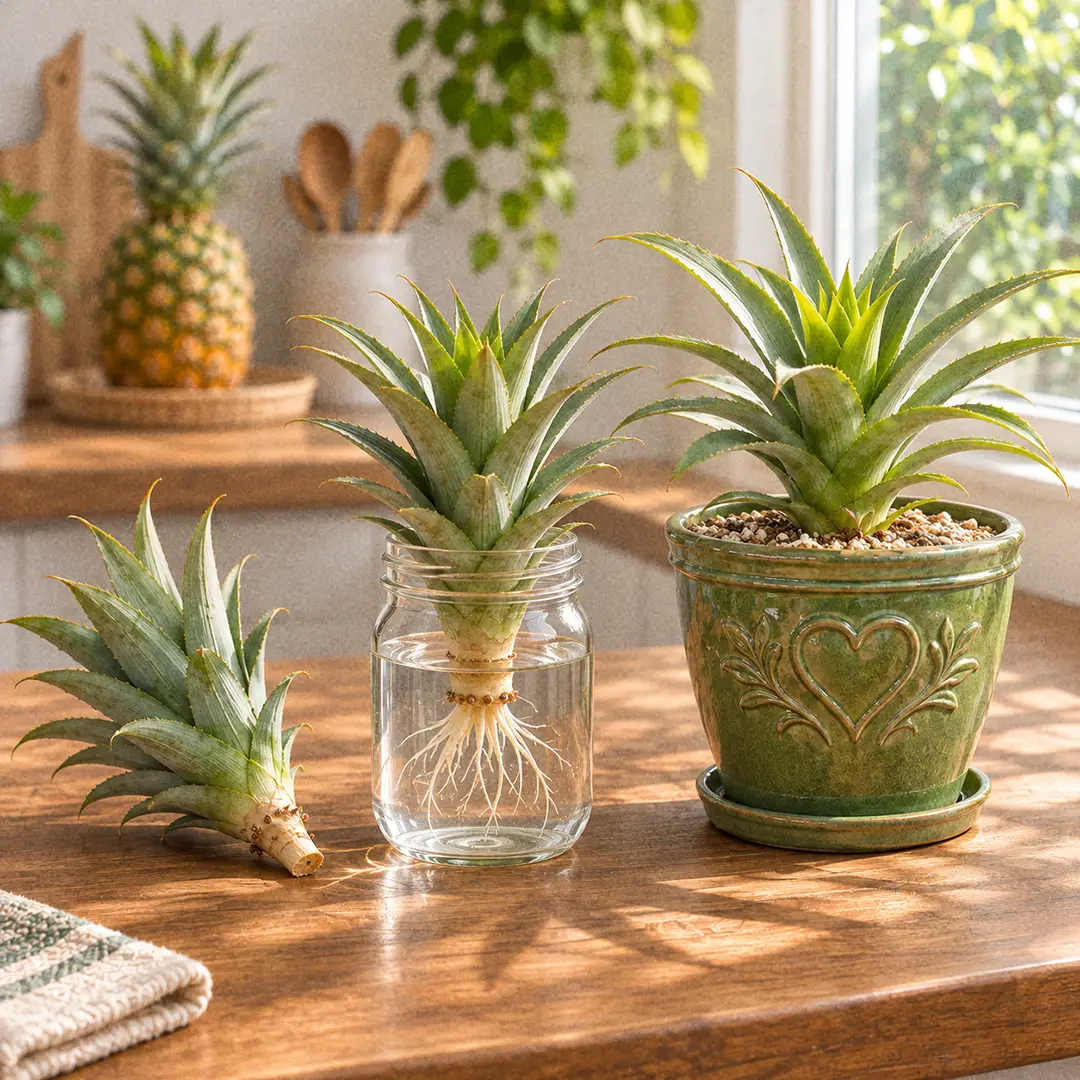
Pull off the lowest small leaves until you have about an inch of bare stem. You will often see small brown bumps there; those are root buds. Leave the top somewhere dry and shaded for two days to a week so the cut end seals over. Skipping this step is the most common reason tops rot.
Rooting in Water or Soil
Both methods work. For water rooting, stand the stem in a glass so only the bare stem is underwater, keeping the leaves dry, and change the water every few days. Roots usually show within a few weeks; pot it up once they are an inch or two long.
To root in soil, push the stem into a barely moist mix of potting soil and sand or perlite, up to the base of the leaves. Keep it warm, around 70°F (21°C), in bright light without harsh sun, and water lightly. Rooting takes about two months. A gentle tug that meets resistance means roots have formed, and new leaves from the center confirm it.
Pups and Slips
After fruiting, a pineapple makes suckers between its leaves and at its base, and sometimes slips on the stalk under the fruit. Snap or cut them off once they are several inches long with firm leaves, dry them for a day or two, and pot them like a top. They usually fruit sooner than a top does. The crown on your homegrown fruit can be rooted too.
🐛 Pineapple Plant Pests and Treatment
Mealybugs
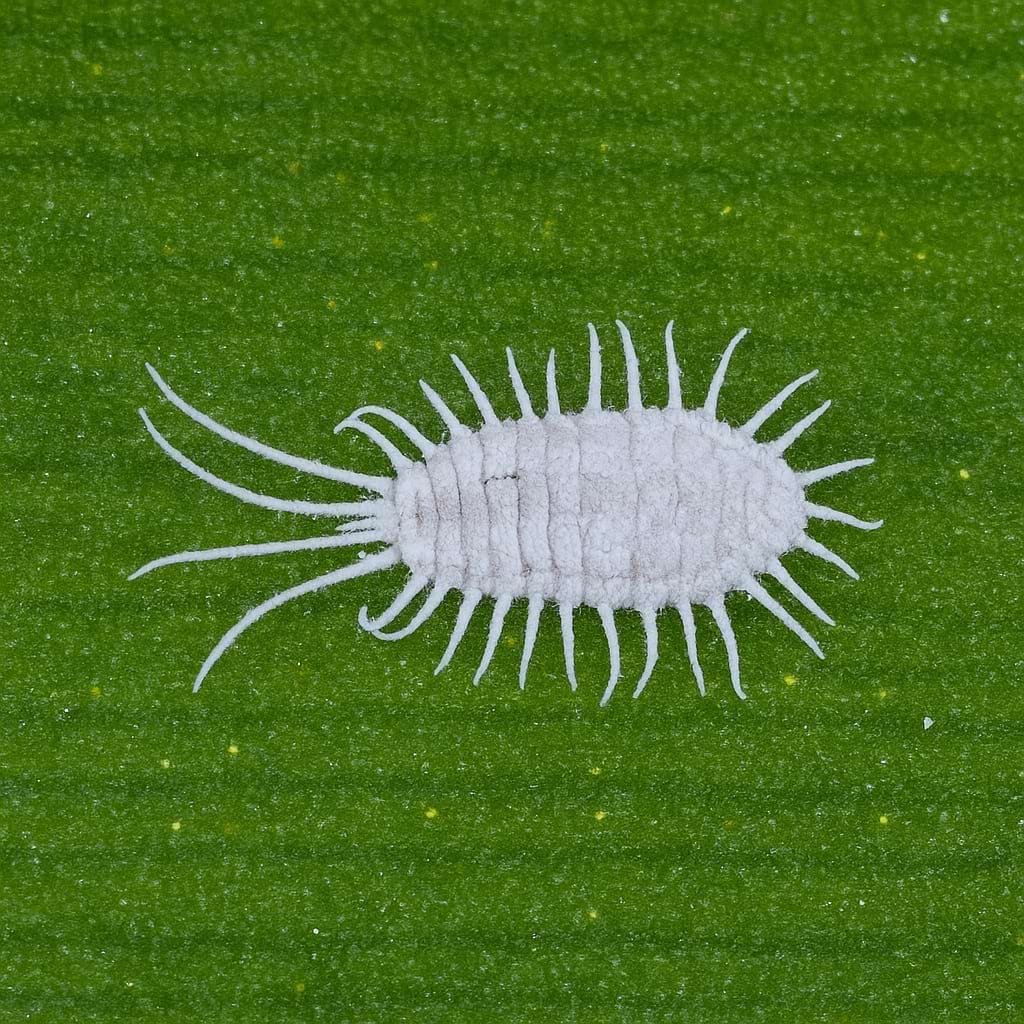
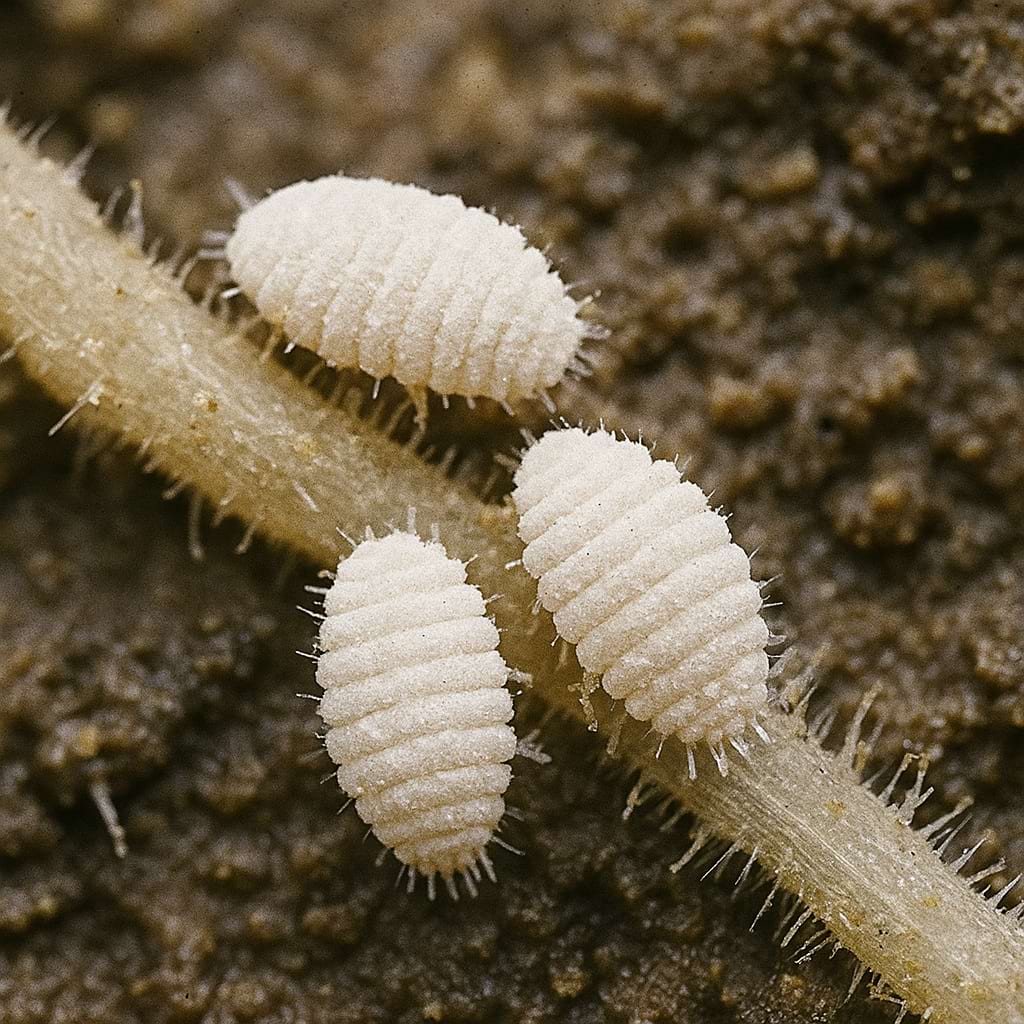
Mealybugs are the pineapple's main pest. They hide deep between the leaf bases as small white cottony clumps, and root mealybugs can live in the soil. Dab visible clusters with a cotton swab dipped in rubbing alcohol every few days for three weeks. A plant with heavy mealybugs can develop mealybug wilt, where leaves redden, curl back and collapse.
Scale and Thrips
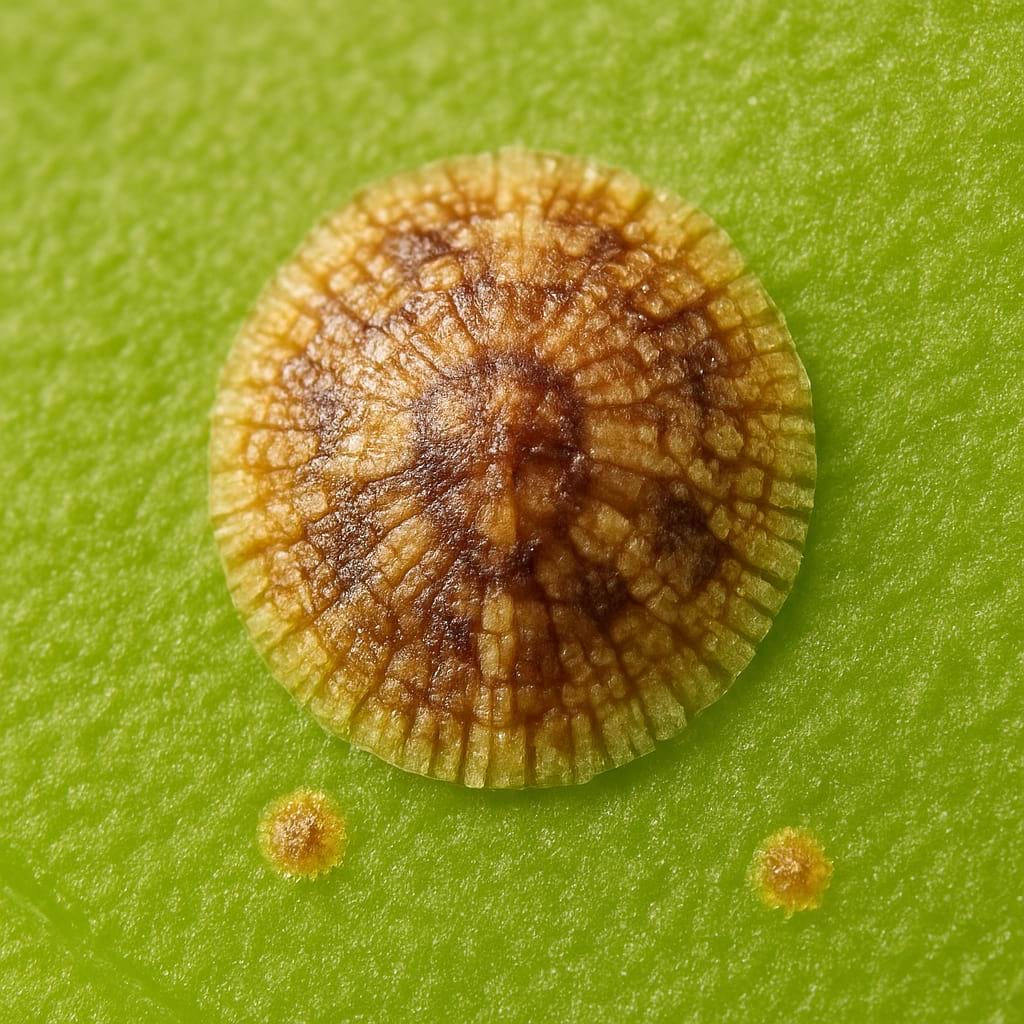
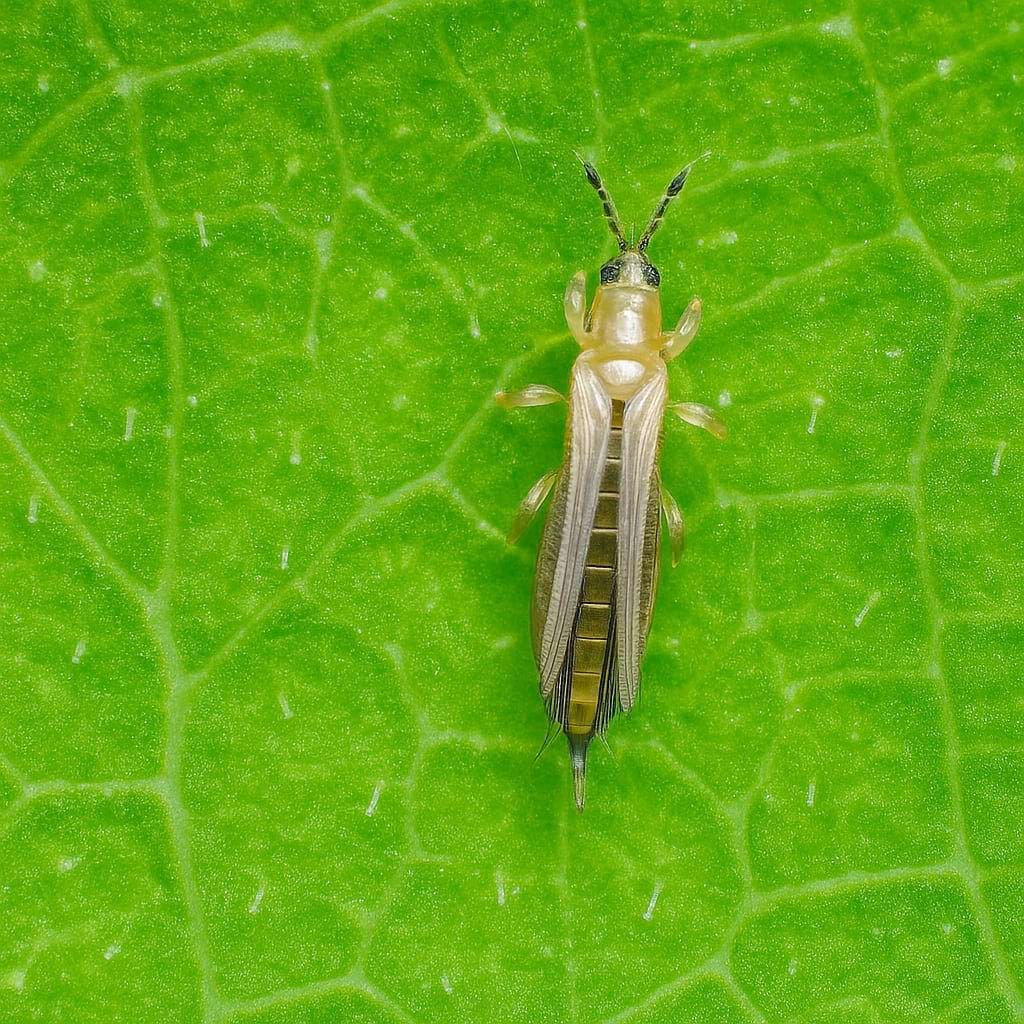
Scale insects look like small brown or grey bumps on the leaves. Scrape them off and wipe the leaves with insecticidal soap. Thrips leave silvery streaks and black specks; rinse the plant and treat weekly with insecticidal soap.
Spider Mites and Prevention
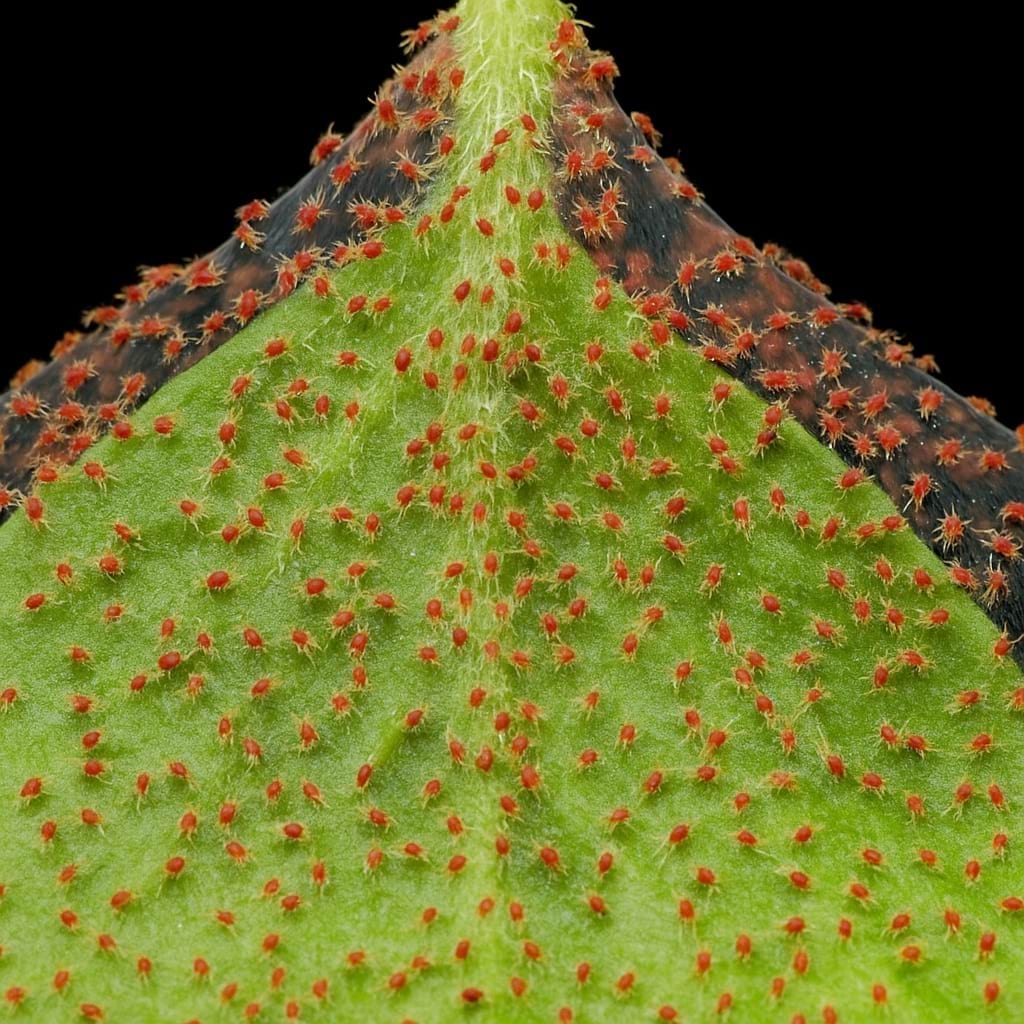
Spider mites arrive in warm, dry winter air and leave fine speckling and webbing under the leaves. Rinse the plant in the shower and repeat weekly. Check new plants and plants coming back in from the patio before they join the rest of your collection.
🩺 Common Pineapple Plant Problems
Rot at the Base or Center
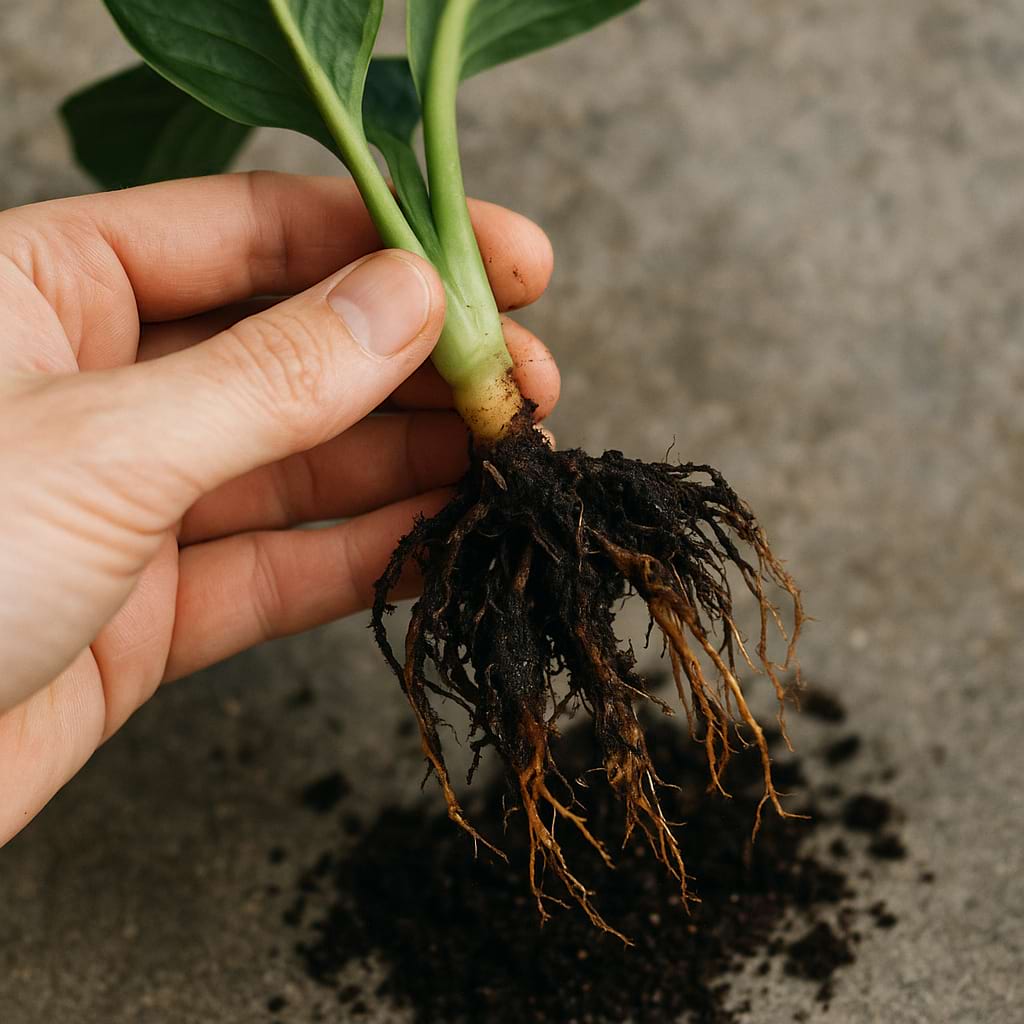
Root rot and heart rot are the usual killers, and both start with soil that stays wet in cool conditions. Signs are a soft base, yellowing leaves and center leaves that pull out easily. If the center is gone, the plant will not recover, but you can sometimes save a firm side pup. Next time, use a sharper mix and let the top dry out more between waterings. On a fresh top, rot almost always means it was not dried first or had fruit flesh left on.
No Flower or Fruit
Failure to bloom is the most common complaint, and the cause is nearly always age or light. A plant under two years old, or one with fewer than about 25 good leaves, is not ready. Give it more sun, a summer outdoors and steady feeding, then try the apple trick.
Brown Tips, Yellow Leaves and Pale Growth
Brown crispy edges come from dry air, uneven watering or salt buildup. One or two yellowing leaves at the very bottom are normal aging; many at once point to overwatering. Pale, floppy new leaves and stunted growth mean too little light.

🖼️ Pineapple Plant Display and Styling Ideas
Solo Setups
A pineapple is a floor or wide-sill plant, not a shelf plant. Give it its own spot at a sunny window with clear space around it, in a heavy pot that will not tip. A plant with fruit on it is a natural centerpiece in a bright kitchen or sunroom.
Sunny Companions
It shares the same hot, bright window with plants like Aloe Vera, Ponytail Palm and Bird of Paradise. For more ideas, the heat-loving houseplants roundup lists plants that cope with a south window. Avoid pairing it with shade lovers, which will scorch where the pineapple is happy.
Where Not to Put It
Keep it out of hallways, low corners where children play, and spots where pets brush past. The stiff, toothed leaves scratch, and a dark corner will stall it for years.
🌟 Pineapple Plant Pro Care Tips
Getting Started
- 🍍 Twist, do not cut, when you can. A twisted crown comes away clean, with no fruit flesh left to rot.
- ⏳ Dry the top first. Two days to a week of air-drying prevents most rotting.
- 🧤 Wear gloves. The leaf edges and tips are sharp on most forms.
Growing to Fruit
- ☀️ Sun is the speed dial. More direct light means faster growth and an earlier flower.
- 🌞 Summer outside. A few warm months on a sunny patio can cut months off the wait.
- 🍎 Wait for size before the apple trick. Count roughly 25 to 30 full leaves first.
After Harvest
- 🌱 Keep the pups. The mother will not fruit again, but each pup can.
- ♻️ Root the new crown. Your homegrown fruit hands you the next plant.
❓ Frequently Asked Questions
How long does it take to grow a pineapple from the top?
Rooting takes a few weeks in water or about two months in soil. After that, expect at least two years, often three, before the plant flowers indoors, and another five to seven months for the fruit to ripen. More sun and warmth shorten the wait.
Is a pineapple plant toxic to cats and dogs?
The ASPCA does not list the pineapple plant in its toxic and non-toxic plants database, so there is no official rating. The ripe fruit is a common food, and extension sources rate the plant as low risk: the sap and the enzyme bromelain can irritate the mouth and skin. The bigger danger is physical, since the leaves have sharp tips and toothed edges, so keep it away from curious pets.
Will my pineapple plant fruit more than once?
No. Each rosette flowers and fruits once. After harvest, the plant grows pups and slips, and those are your next fruiting plants.
Should I root a pineapple top in water or soil?
Either works. Water lets you watch the roots form, which is fun with kids, while soil skips the transplant step. Whichever you choose, strip the lower leaves and let the top dry for a few days first.
Why is my pineapple top rotting?
Usually because fruit flesh was left on, the cut end was not dried before planting, or the soil is kept too wet. Remove soft tissue, let it dry again, and try a sandier mix. If the center leaves pull out, start over with a new top.
Can I eat a pineapple grown indoors?
Yes, a ripe fruit from a store-bought top is edible, although it is often smaller than a shop pineapple. The fruit of ornamental forms like the dwarf pineapple is edible too, but small and tart, and most people grow it for looks.
How big does a pineapple plant get indoors?
A top-grown plant usually reaches two to three feet tall and wide in a pot, with leaves up to about three feet long. Ornamental dwarf types stay much smaller.
Can a pineapple plant grow under a grow light?
Yes. A strong full-spectrum grow light close to the rosette for about 12 hours a day can stand in for weak winter sun, or for a home without a south window. Fruiting under lights alone is slower.
Does a pineapple plant die after fruiting?
Not straight away. The mother rosette stops growing new leaves and slowly declines over the following months, but she feeds the pups at her base while she does. Once the pups are a good size, cut her away and let them take over.
Can I put my pineapple plant outside in summer?
Yes, and it usually grows faster for it. Wait until nights stay above 60°F, move it into full sun gradually over a week or two to avoid sunburn, and bring it back indoors before autumn nights cool off. Check the leaf bases for pests before it comes inside.
Why are my pineapple leaves turning red?
A pink or red flush in strong sun or after a cool spell is common and harmless. If red leaves also curl back and wilt, check the leaf bases and roots for mealybugs.
ℹ️ Pineapple Plant Info
Care and Maintenance
🪴 Soil Type and pH: Loose, sandy or bark-based mix with sharp drainage and a slightly acidic pH
💧 Humidity and Misting: Average household humidity is fine; no misting needed.
✂️ Pruning: Only remove dead lower leaves; cut the mother away once her pups are growing well.
🧼 Cleaning: Rinse dust off in the shower now and then; wear gloves, since the leaf edges and tips are sharp.
🌱 Repotting: Move a rooted top into a larger pot once, then leave it; the roots are shallow and a 3-7 gallon pot is enough for a full-size plant.
🔄 Repotting Frequency: Once or twice in the plant's life
❄️ Seasonal Changes in Care: Full sun and regular water from spring to autumn, outdoors in summer if nights stay above 60°F; a sunny window and lighter watering in winter.
Growing Characteristics
💥 Growth Speed: Slow to moderate
🔄 Life Cycle: Monocarpic perennial (each rosette flowers and fruits once, then pups take over)
💥 Bloom Time: Any time a mature plant is triggered; flowers open over a few weeks, and the fruit ripens about 5-7 months later
🌡️ Hardiness Zones: 10-12
🗺️ Native Area: Tropical South America
🚘 Hibernation: No true dormancy, but growth slows sharply below about 60°F
Propagation and Health
📍 Suitable Locations: South- or west-facing windowsills, sunrooms, conservatories, heated greenhouses, sunny patios in summer
🪴 Propagation Methods: Root the leafy top of a store-bought pineapple, or pot up the pups and slips the plant makes after fruiting.
🐛 Common Pests: Mealybugs, Root Mealybugs, Scale Insects, Spider Mites, Thrips
🦠 Possible Diseases: Root rot, heart rot (crown rot), mealybug wilt
Plant Details
🌿 Plant Type: Terrestrial bromeliad
🍃 Foliage Type: Evergreen, stiff, sword-shaped leaves in a rosette, often with spiny edges
🎨 Color of Leaves: Grey-green to deep green; cream-striped in variegated forms, often flushing pink or red in strong sun
🌸 Flower Color: Violet-purple tubular flowers on a red to pink cone
🌼 Blooming: Yes, once per rosette when mature, usually after 2-3 years from a top
🍽️ Edibility: The ripe fruit is edible; the leaves and the sap are not eaten and can irritate skin and mouth
📏 Mature Size: Usually 2-3 feet indoors; up to 3-4 feet in ideal conditions
Additional Info
🌻 General Benefits: Grows free from kitchen scraps, a fun long-term project for kids, a real fruit at the end, and a sculptural sun-loving plant for a hot window
💊 Medical Properties: The fruit and stem contain bromelain, an enzyme that breaks down protein, which is why fresh pineapple can make your mouth tingle.
🧿 Feng Shui: Associated with welcome and good luck; suits a sunny entrance or kitchen
⭐ Zodiac Sign Compatibility: Leo
🌈 Symbolism or Folklore: Hospitality and welcome
📝 Interesting Facts: A pineapple is not one fruit but many. Each of the small violet flowers on the cone develops into a fruitlet, and the fruitlets fuse into the single fruit you buy at the shop, which is why the skin is a pattern of hexagons. The leafy tuft on top is a new plant, ready to root.
Buying and Usage
🛒 What to Look for When Buying: For a top to root, pick a fresh pineapple with firm green leaves in the center and no soft or brown base. For an ornamental plant, look for firm leaves with no rot at the soil line, and check the leaf bases for white fluffy mealybugs before you buy.
🪴 Other Uses: Edible fruit, kitchen-scrap growing project, conservatory specimen, summer patio container
Decoration and Styling
🖼️ Display Ideas: Single plant on a sunny windowsill, focal point in a sunroom, summer patio pot, grouped with other sun-loving plants
🧵 Styling Tips: Give it a heavy, wide pot and room on all sides; the leaves are long, stiff and prickly, so keep it out of walkways.
🪴 See also 🪴

Air Plant Varieties: 31 Types of Tillandsia and How to Grow Each One
Complete Guide to Jonesii Air Plant Care and Growth
Complete Guide to Pink Quill Plant Care and Growth
Complete Guide to Kolbii Air Plant Care and Growth
Complete Guide to Capitata Peach Air Plant Care and Growth
Complete Guide to Baileyi Air Plant Care and Growth
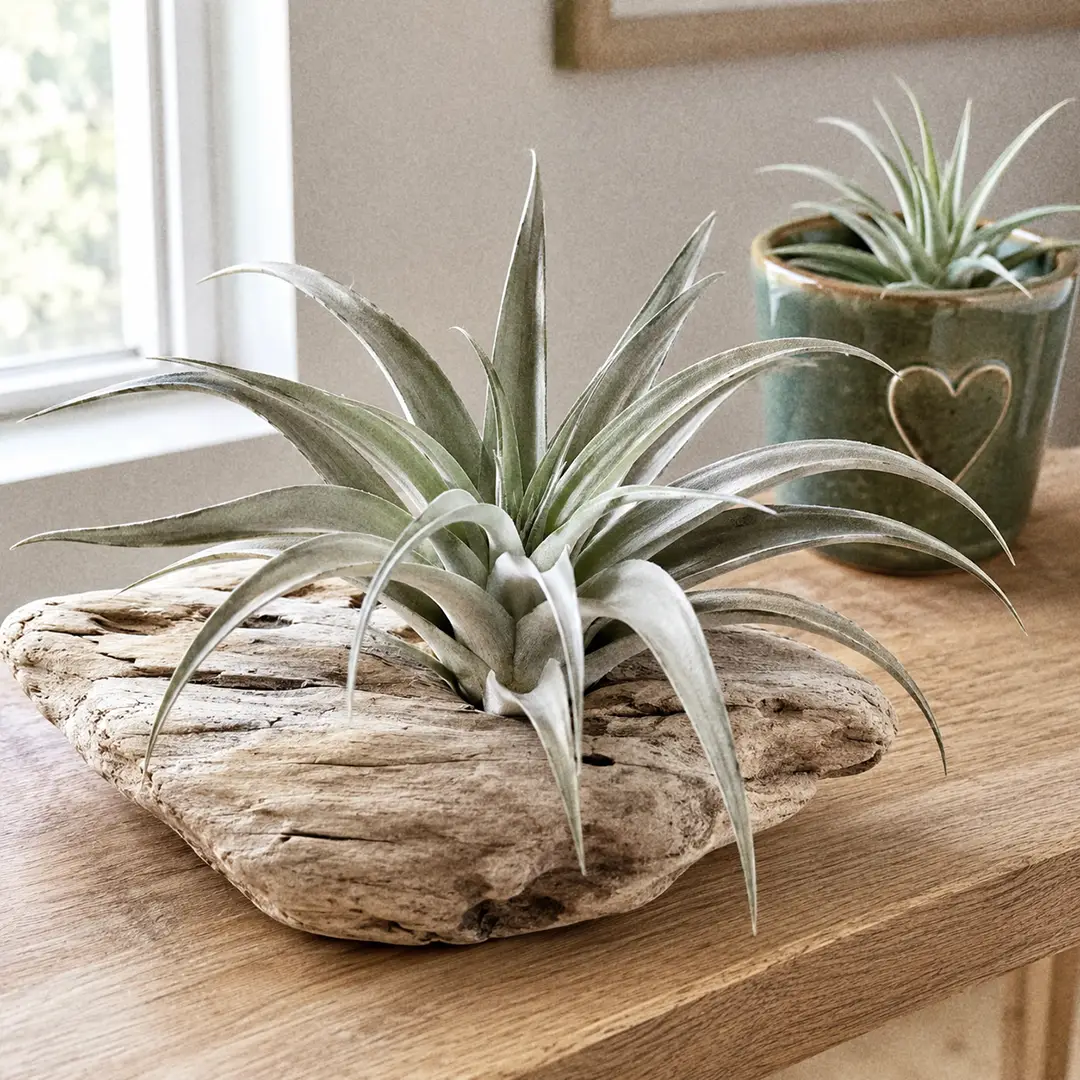
Complete Guide to Harris's Air Plant Care and Growth
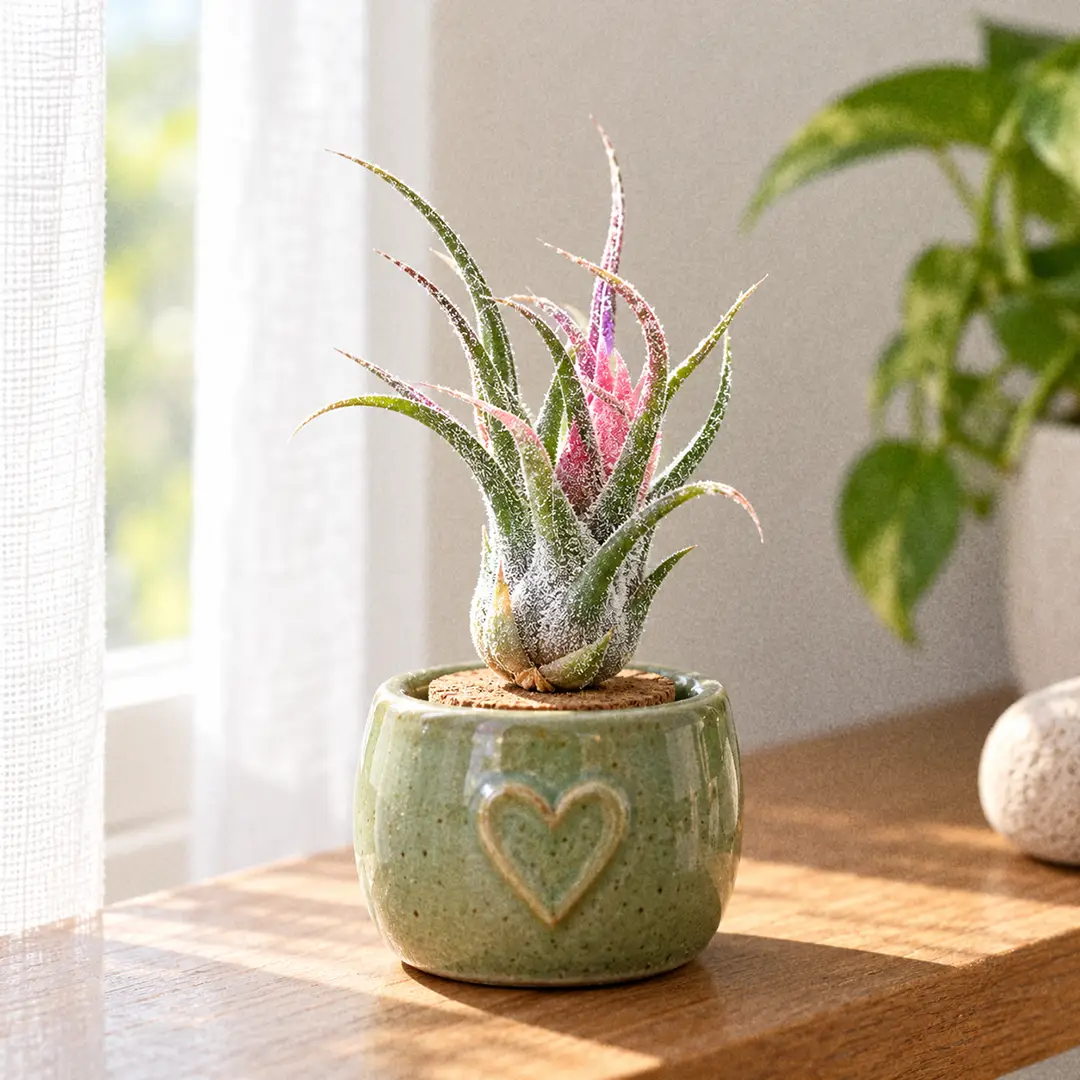
Complete Guide to Pruinosa Air Plant Care and Growth
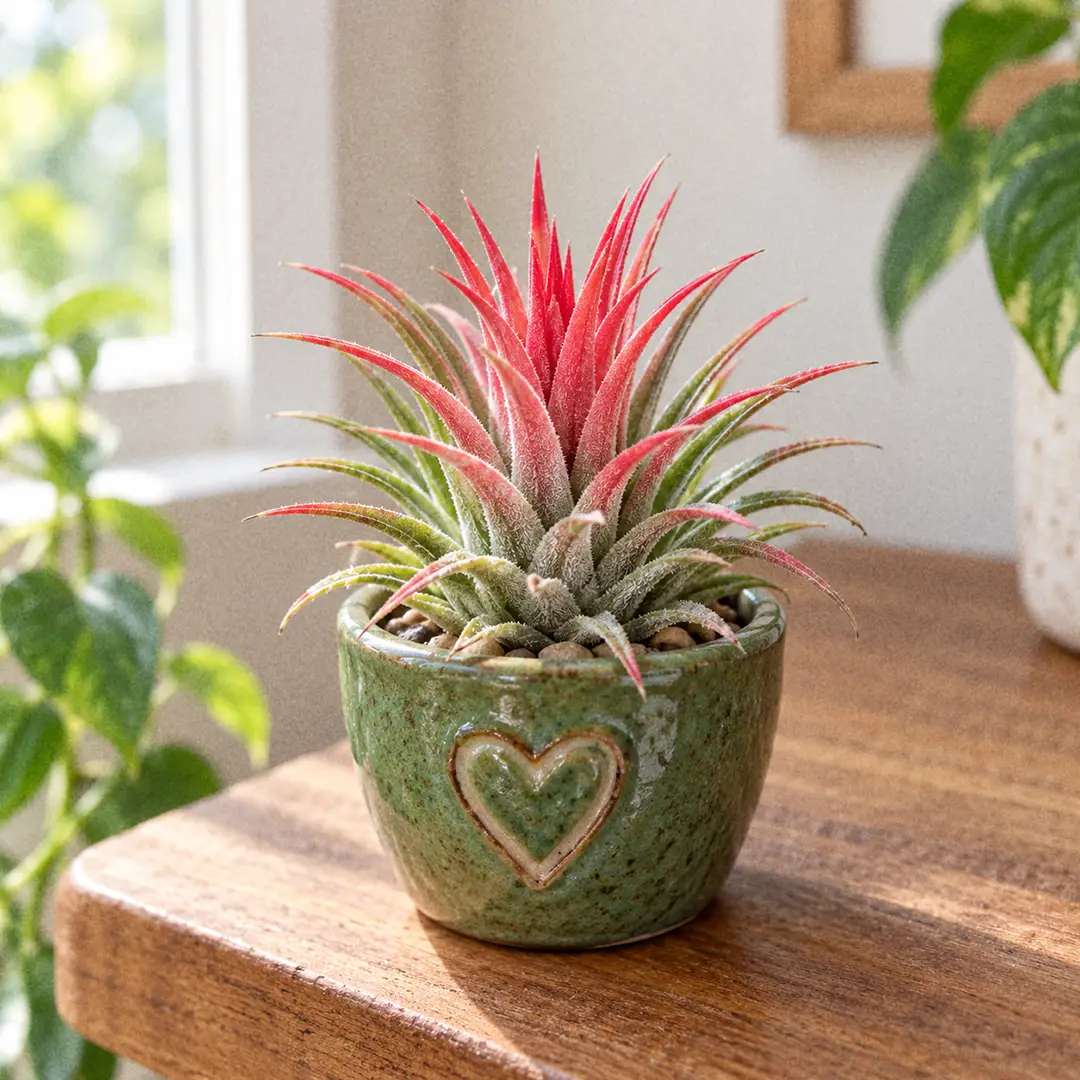
Complete Guide to Ionantha Air Plant Care and Growth
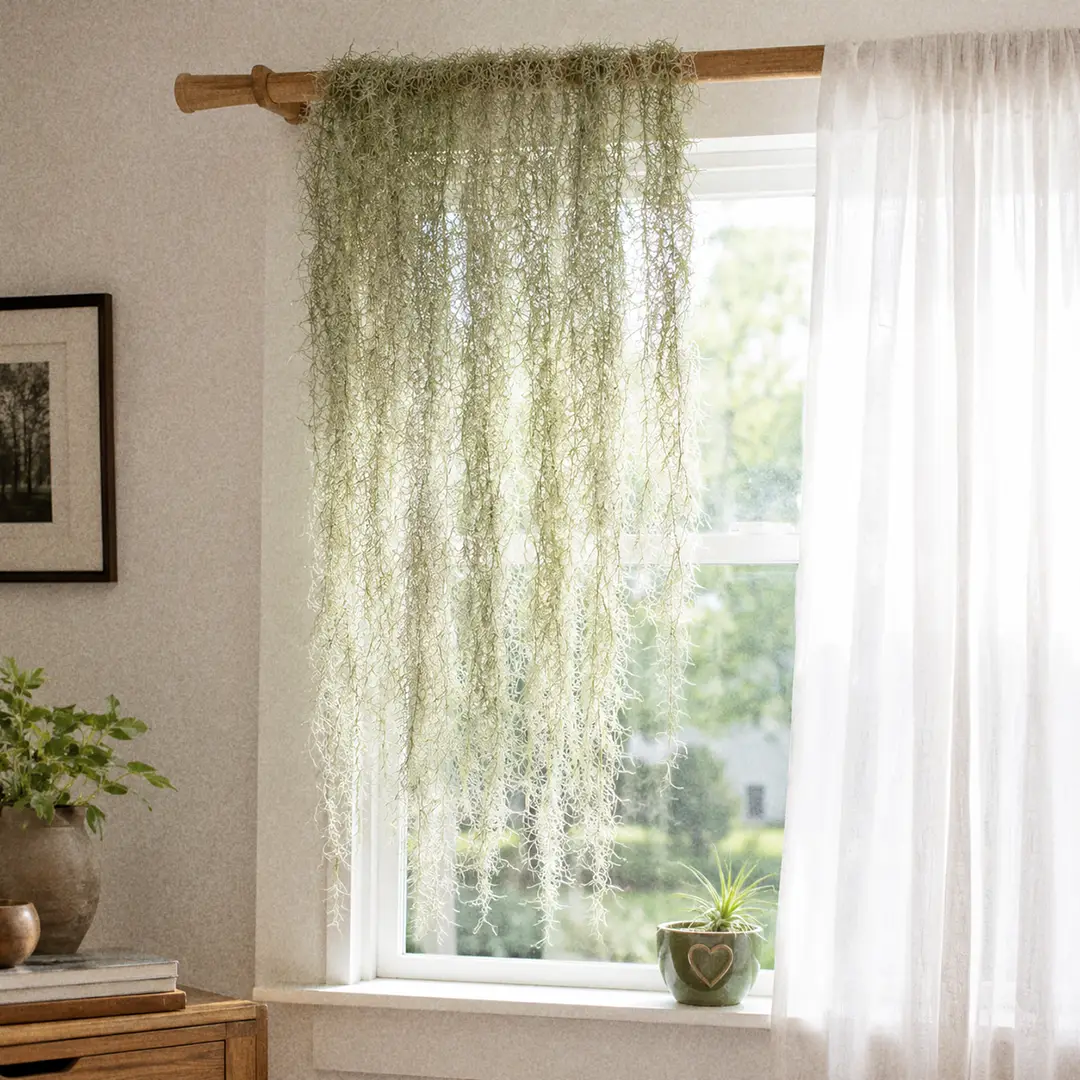
Complete Guide to Spanish Moss Care and Growth
Complete Guide to Xerographica Air Plant Care and Growth
Complete Guide to Silver Vase Plant Care and Growth
Complete Guide to Sky Plant Care and Growth
Complete Guide to Brachycaulos Air Plant Care and Growth

Houseplant101 Forum
Questions & Comments
Ask a question, share your plant experience, or help other plant owners.
Comments are temporarily unavailable.
Open the Houseplant101 ForumNo comments yet
Be the first to ask a question or share your experience about this page.
Log in or create an account
Comments use your Houseplant101 Forum account, but you can stay on this page.
Create a new account