
Silver Sword Philodendron
Philodendron hastatum
Silver Sword, Philodendron hastatum, Sword Philodendron, Spear-Head Philodendron


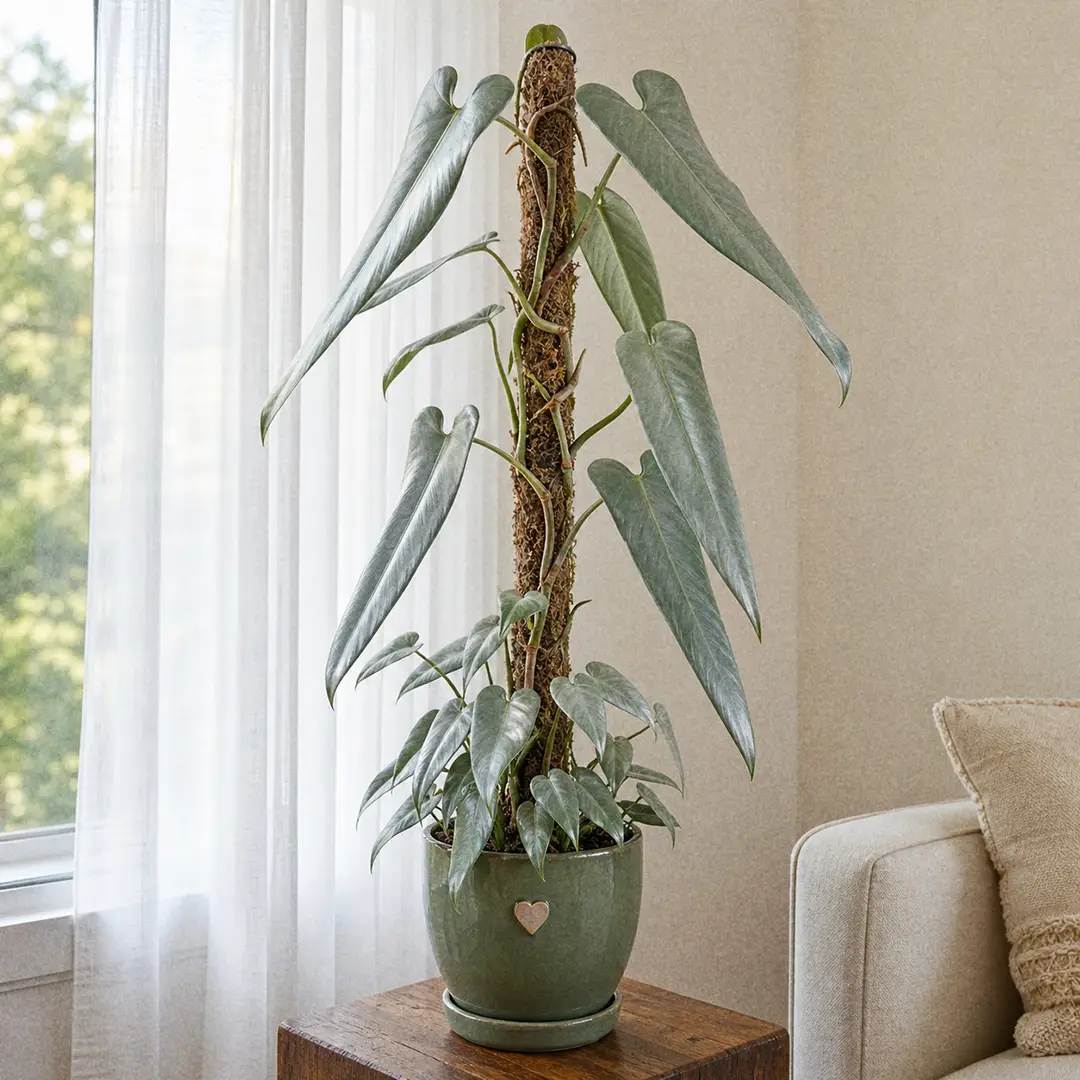
The Silver Sword Philodendron is a fast-growing climbing aroid prized for its metallic silvery-blue, sword-shaped leaves. Native to a small endangered patch of Brazilian rainforest, it thrives indoors on a moss pole and rewards the right light with leaves that look almost back-lit.
📝 Silver Sword Philodendron Care Notes
🌿 Care Instructions
⚠️ Common Pests
📊 Growth Information
🪴 In This Guide 🪴

☀️ Silver Sword Light Requirements
Light is the biggest lever on how silver those leaves come in. The plant is a hemiepiphyte, starting on the dark forest floor and climbing tree trunks toward the canopy. The long mature sword leaves you came here for only appear when the plant gets enough light to act like an adult.
The Sweet Spot
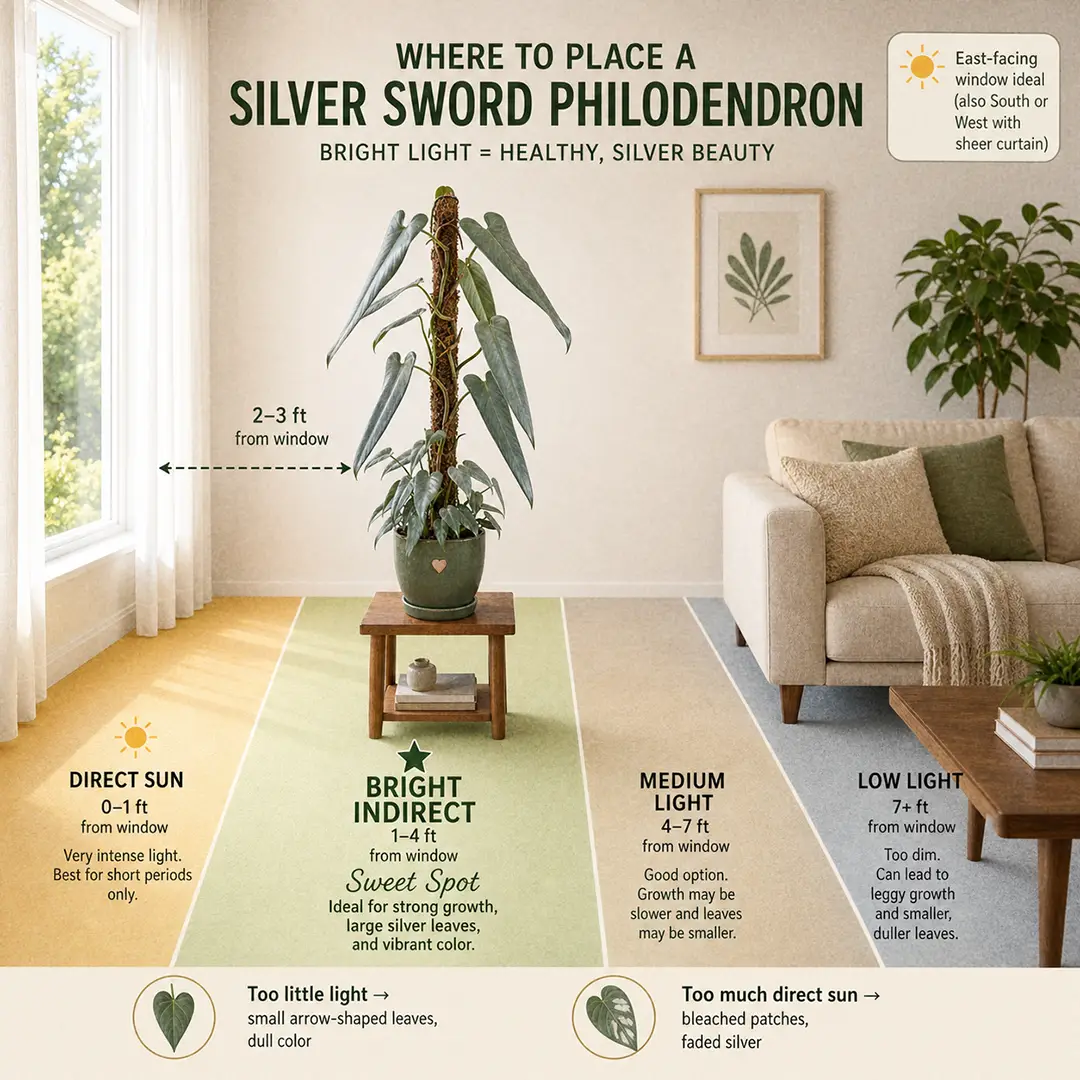
Bright indirect light for at least six to eight hours a day. Two to three feet back from an east-facing window is ideal, or a similar distance from a south or west window with a sheer curtain. A little direct morning sun is welcome and nudges the silver pigmentation. Direct afternoon sun is the line you don't want to cross.
Too Little Light
The plant keeps its juvenile look forever: small arrow-shaped leaves, dull green silver, long bare stems. If your plant pushes fewer than one new leaf every six weeks during spring and summer, low light is the cause. Move it closer to a window or add a small grow light.
Too Much Light
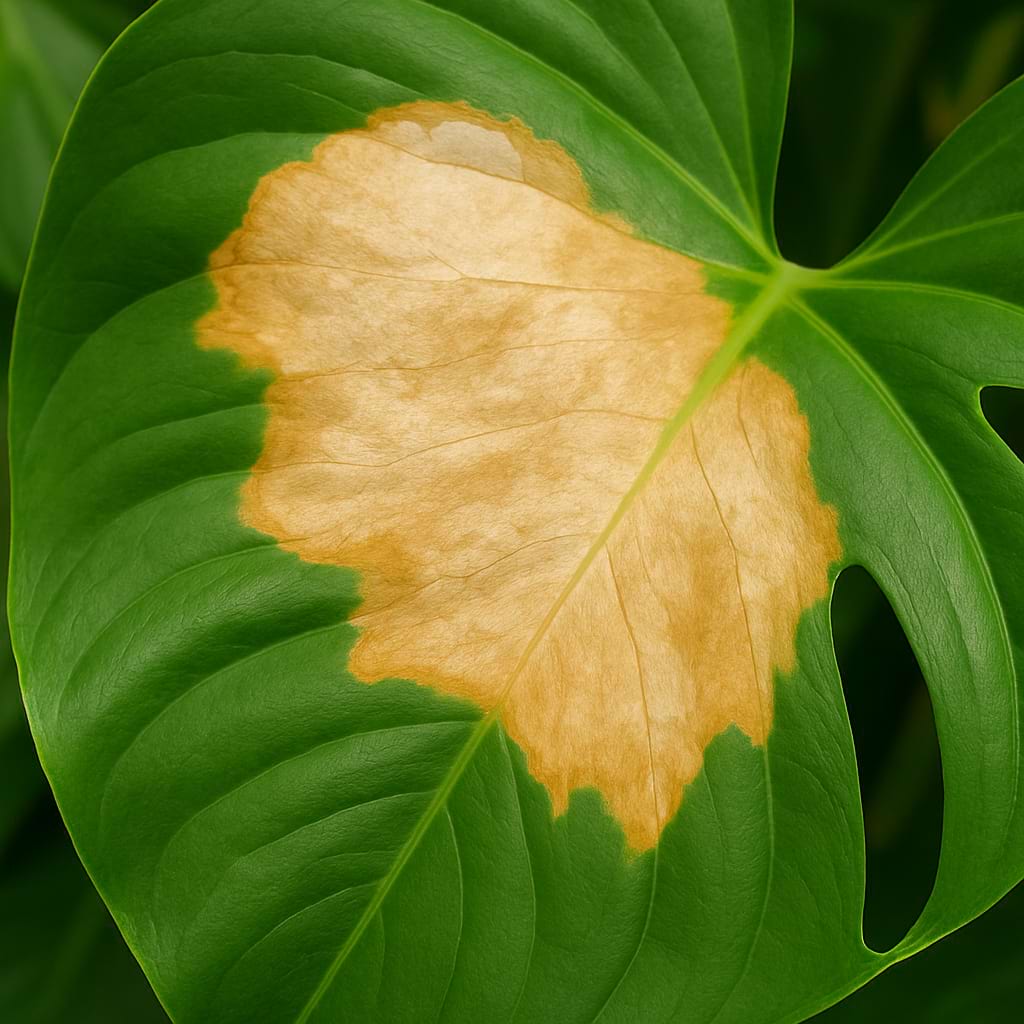
The silver finish is a thin reflective layer over chlorophyll. Strong direct sun bleaches it out. Watch for pale beige patches, papery dry edges, and a yellowish wash. Slide the plant back from the glass or add a sheer curtain.
Rule of thumb: hold your hand between the window and the plant. A soft fuzzy shadow means the light is right. A crisp hard shadow means too much sun. No shadow at all means too dim.
💧 Silver Sword Watering Guide
Consistent moisture, but never soggy. Aroid roots need air pockets to breathe, and wet potting mix invites root rot.
How Often
Push a finger one knuckle deep. If the top inch feels dry and below feels lightly damp, water. In bright light with average humidity, that's every six to ten days in spring and summer, stretching to every two weeks or more in winter. See the watering houseplants primer if it's new to you.
How to Water
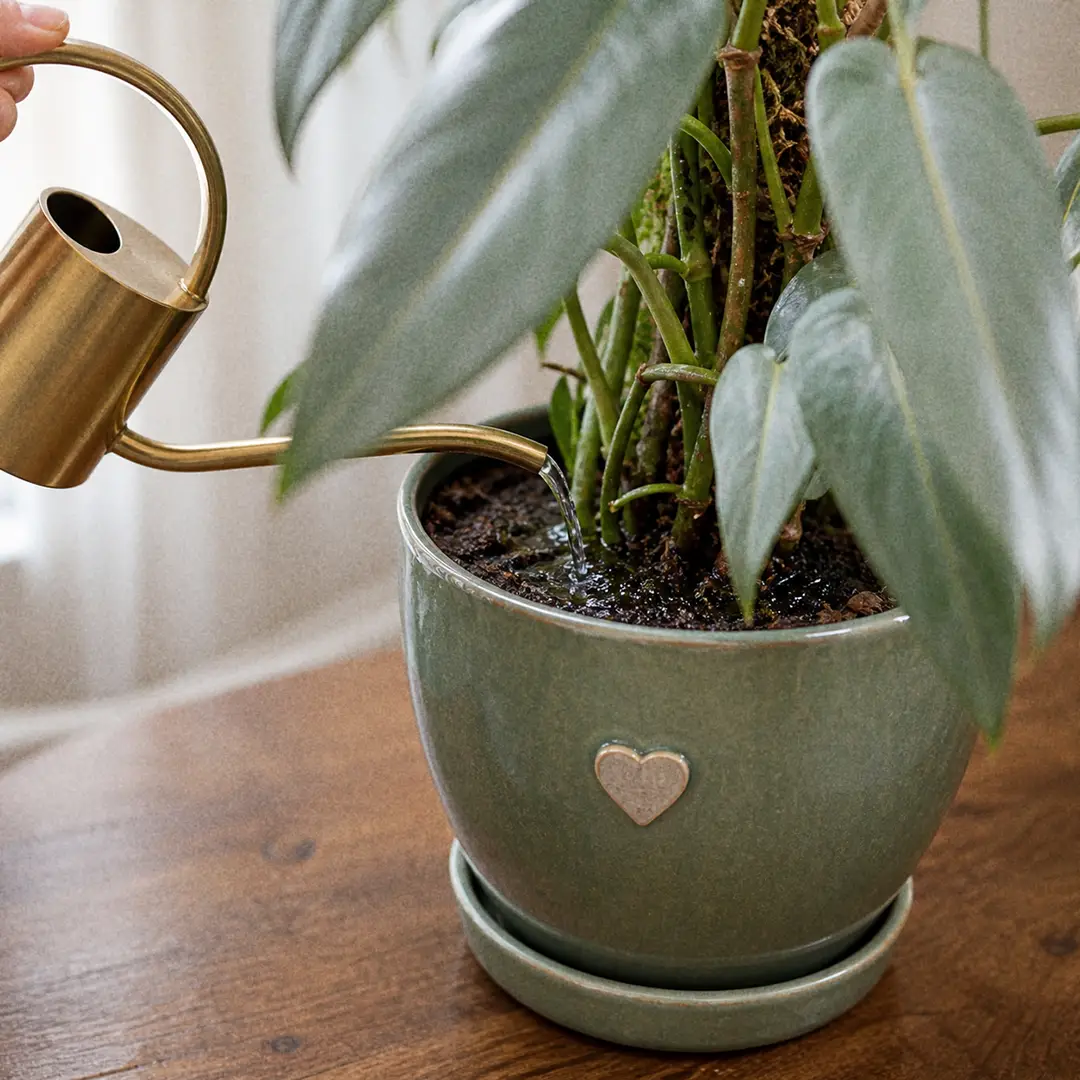
Pour slowly at the soil until water runs from the drainage hole. Let it drain fully, then tip out the saucer. This deep-and-dry approach hydrates the whole root ball and flushes salts.
Signs You're Overwatering
Lower leaves yellowing one after another, sour or musty soil smell, soft mushy stems near the base, soil staying wet over a week, aerial roots browning instead of staying creamy white.
Signs You're Underwatering
Leaves curling lengthwise like a closing scroll, crispy brown edges, soil pulling away from the pot, new silvery leaves stalling halfway through unfurling, dull drooping petioles.
If the soil has gone bone dry and is repelling water, bottom watering is the fastest rehydration: twenty minutes in room-temperature water, then drain.
Heavily chlorinated or hard tap water can cause brown tips over time. If your tap runs rough, leave a watering can out overnight or use filtered water.
🪴 Best Soil for Silver Sword
What the Soil Needs
Standard potting soil is too dense. The Silver Sword wants a chunky, fast-draining mix that mimics the loose forest floor and crumbly bark its parents climb.
A Simple DIY Aroid Mix
- 2 parts quality indoor potting soil
- 1 part orchid bark (medium grade)
- 1 part perlite or pumice
- 1/2 part horticultural charcoal
- A handful of worm castings
Squeeze a fistful. It should hold loosely and crumble when nudged. Too clumpy: add more bark and perlite. See soil for houseplants for what each ingredient does.
Pre-Made Options
If DIY isn't your thing, look for a bag labeled "aroid mix" or "monstera and philodendron mix." Avoid "moisture control" and "African violet mix," both far too wet.
The silver finish depends on healthy roots. Get the soil right and most other problems take care of themselves.
🍼 Fertilizing Silver Sword
The metallic blue-silver tone is partly a feeding story. Healthy, well-fed plants push richer pigments. The trick is enough food without overdoing it, since Philodendrons are sensitive to salt buildup.
When and How Often
Feed every three to four weeks during the active growing season (roughly March through September). Stop completely from late fall through winter. Use a balanced liquid fertilizer (NPK 3-1-2 or 10-10-10) at half the label dose. See fertilizing houseplants for the why.
What to Use
If you prefer slow-release, a scoop of granular aroid food worked into the top inch in early spring feeds for several months. I top that up with a diluted liquid feed every six weeks.
Reading the Plant
New leaves close in size to older ones, with vivid silver emergence: feeding is on point. Smaller new leaves and dull color: bump up frequency or strength slightly. Brown tips with a white crust on the soil: flush the pot with plain water and skip a feeding cycle. Pale stripes between veins on older leaves: try a monthly half-strength feed with micronutrients.
🌡️ Silver Sword Temperature Range
Ideal Range
A tropical plant. Sweet spot is 65 to 80°F (18-27°C), where most homes already live. The Silver Sword dislikes sudden swings and reacts badly to cold air.
Drafts and Heat Sources
Avoid cold drafts from leaky windows, hot blasts from heating vents, AC blowing on the leaves, and anything below 55°F (13°C), which can damage leaves and stall growth.
Seasonal Moves
Move the plant away from cold windows in winter. If you summer it outside, bring it back in well before nights regularly fall under 60°F. Wipe-down and pest inspection on the way back inside saves trouble later.
💦 Silver Sword Humidity Requirements
Ideal Humidity
The Silver Sword genuinely thrives in moist air. More humidity-loving than the average Philodendron. Leaves stay glossier, the silver finish is more obvious, and new leaves emerge larger.
- Ideal: 60 to 80 percent
- Tolerable: 50 percent
- Trouble below: 40 percent (crispy edges, stalled growth)
Easy Boosters
To boost it: a small humidifier, grouping with other tropical plants, a pebble tray under the pot (pot on pebbles, not in water), or moving to a bright bathroom. See humidity for houseplants. Misting offers only a quick boost and can invite fungal spots if leaves stay wet overnight.
🌸 Silver Sword Flowers (Rare Indoors)
Why It Rarely Blooms Indoors
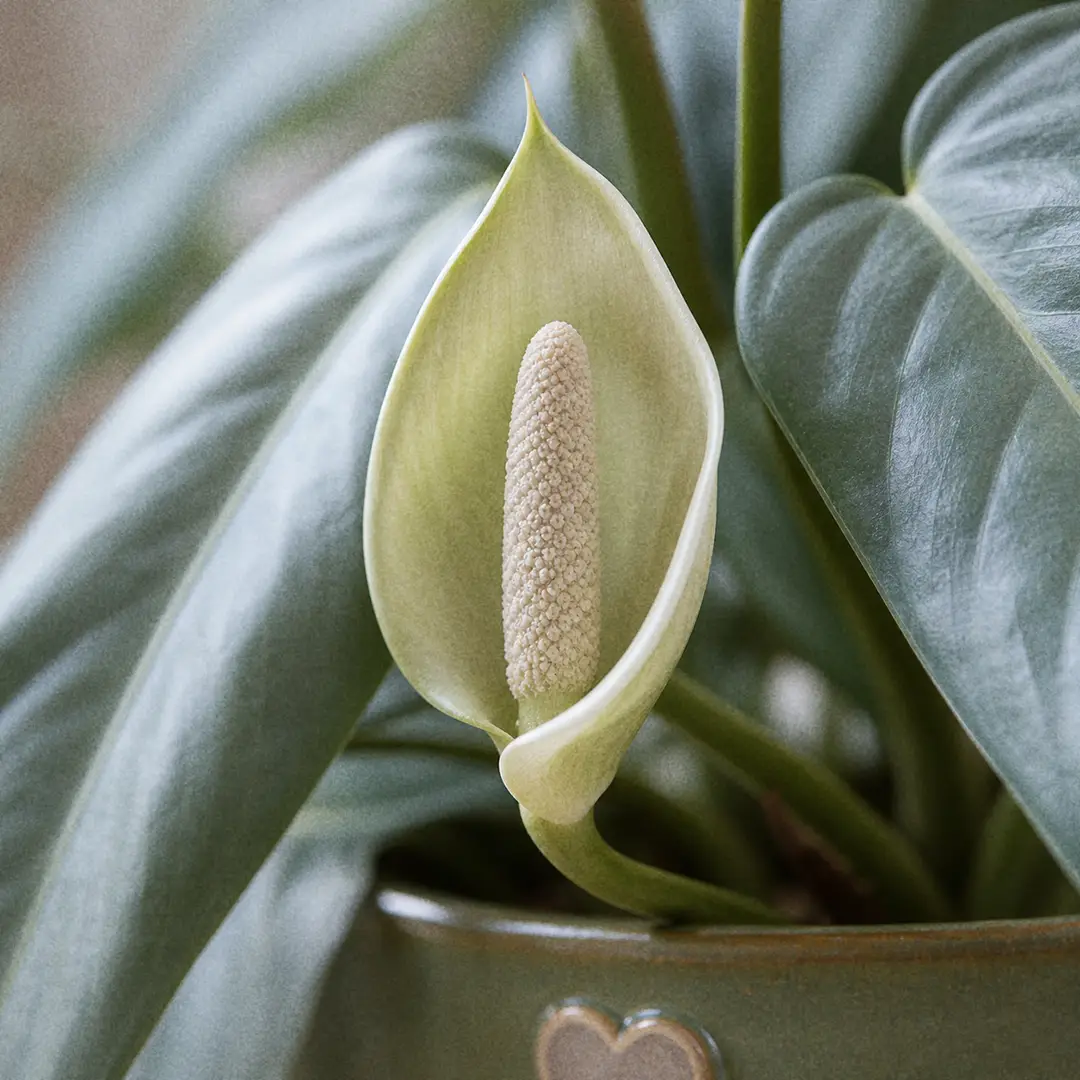
Grown for its leaves, not flowers. A mature plant in near-perfect conditions for years can produce the classic aroid inflorescence: a pale green spathe wrapping a cream spadix. Indoors, genuinely uncommon.
What to Do If It Blooms
If yours blooms, treat it as a curiosity. The flower drains energy for a modest visual reward. Most growers leave it to enjoy or snip it off to push more silvery leaves. There's no wrong choice.
🏷️ Silver Sword Types and Varieties
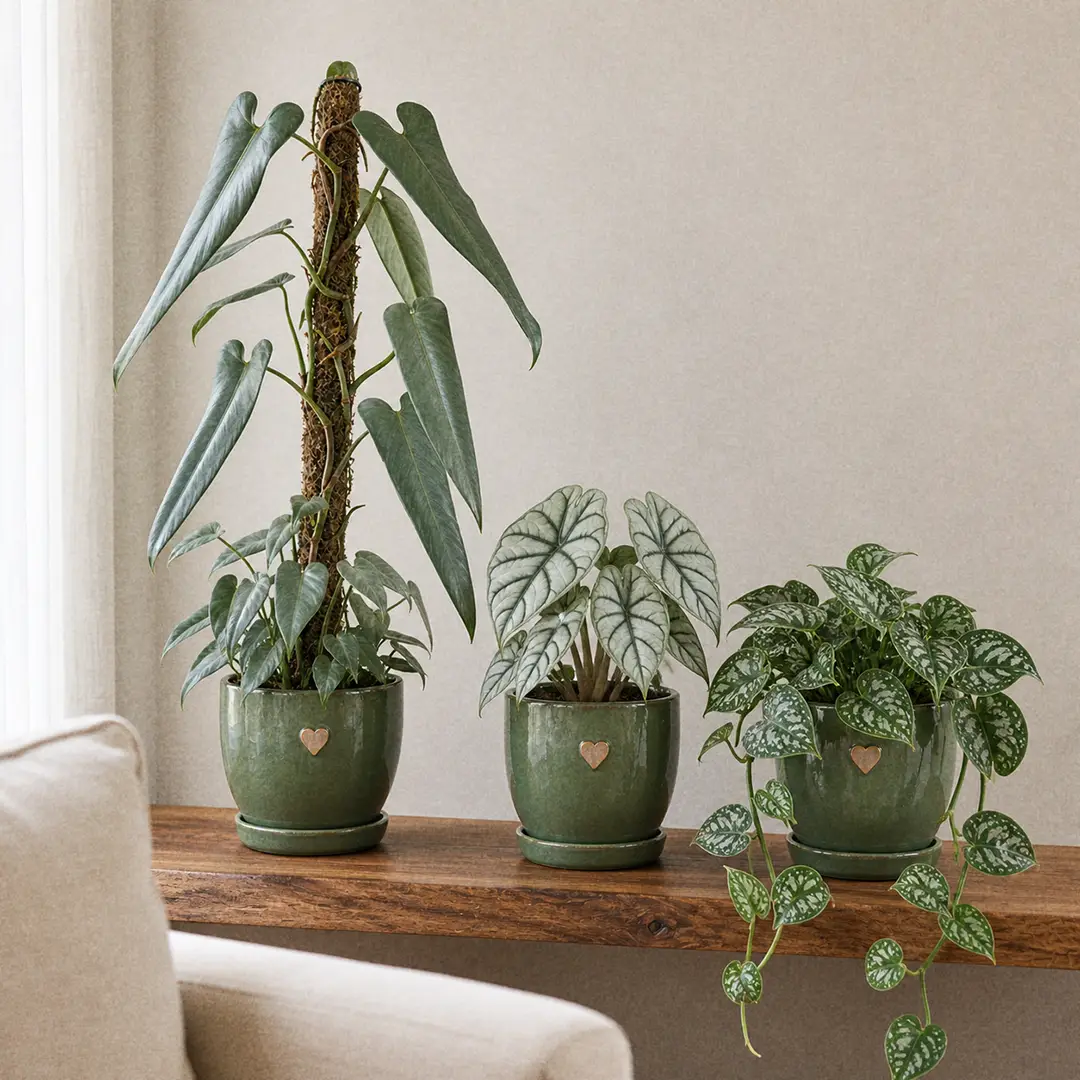
Philodendron hastatum is a single species, not a cultivar group. The confusion is with similar-looking silvery-blue plants.
Juvenile vs. Mature
Almost every Silver Sword you buy is sold in juvenile form: small, arrow-shaped ("hastate") leaves with the silvery sheen at its strongest. As the plant climbs, leaves elongate into long swords, the base grows two backward-pointing lobes, and color shifts to a deeper green-blue. Same plant; give it a moss pole and time.
Vs. Heart-Leaf Philodendron
Heart-Leaf Philodendron has small matte heart leaves. Silver Sword is larger with metallic silver leaves. Almost identical care.
Vs. Philodendron Brasil
Philodendron Brasil is a variegated trailer with small heart leaves splashed lime and green. Silver Sword climbs.
Vs. Alocasia Silver Dragon
Alocasia Silver Dragon stays small with stout heart leaves and dark veining. Much fussier about humidity and watering.
Vs. Scindapsus Silver Lady
Different genus. Scindapsus Silver Lady is a small-leafed trailer. Many growers happily own both.
Silver Sword Pothos Confusion
If you see "Silver Sword Pothos" or "Silver Sword Vine," that's a different plant (usually a Scindapsus). A true hastatum tends to cost more because of its endangered wild status.
🪴 Potting and Repotting
This is a fast grower, so potting matters more than for slower Philodendrons. A pot-bound Silver Sword stalls; a freshly repotted one bounces back fast.
When to Repot
Every one to two years, or when roots circle the root ball, grow out of drainage holes, water runs straight through with no absorption, or new leaf production slows despite good light and feeding.
How to Repot
Water lightly the day before. Choose a pot only one to two inches wider. Fill the bottom inch with fresh aroid mix. If the plant is on a moss pole, decide whether to keep it (less stress) or upgrade to a taller one. Slide the plant out, loosen outer roots, trim mushy ones, and set it at the same depth (don't bury lower nodes). Backfill, tap to settle, water thoroughly, and return to bright indirect light. Skip fertilizer for four weeks. See repotting houseplants.
The Moss Pole Question
A Silver Sword without a climbing surface never reaches its full potential. As a hemiepiphyte, it's designed to shimmy up tree trunks. Indoors, a tall moss pole gives aerial roots a damp textured surface to grip, which signals the plant to push bigger mature leaves. Coir poles, sphagnum-stuffed poles, or moss-wrapped wooden planks all work. Keep the moss damp in summer.
If your plant has outgrown a short pole, repotting time is the time to upgrade to one twice as tall. Drainage holes are non-negotiable in any pot. Terracotta dries faster (good if you tend to overwater); glazed ceramic and plastic hold moisture longer.
✂️ Pruning Silver Sword
Cleanup and shape control, not strict training. You do steer where the energy goes.
When to Prune
Spring and early summer are ideal for major cuts. Outside of that, snip off yellow or damaged leaves whenever they appear. Always sterilize snips with rubbing alcohol between cuts.
How to Prune
Cut yellowing or damaged leaves at the petiole base. For long leggy stretches with too much space between leaves, cut just above a node to encourage branching from below. That node cut is the key move: the plant usually pushes two new growth points from the node below the cut, and you get a fuller-looking specimen.
Leaf Cleaning
The silvery leaves collect dust quickly and lose their sheen. Every two weeks, wipe upper and lower surfaces gently with a soft damp cloth. Clean leaves photosynthesize better. Skip leaf shine sprays.
🌱 How to Propagate Silver Sword
One of the easiest aroids to propagate. Roots quickly from stem cuttings in spring or summer. Every cutting makes the parent fuller and gives you a new plant.
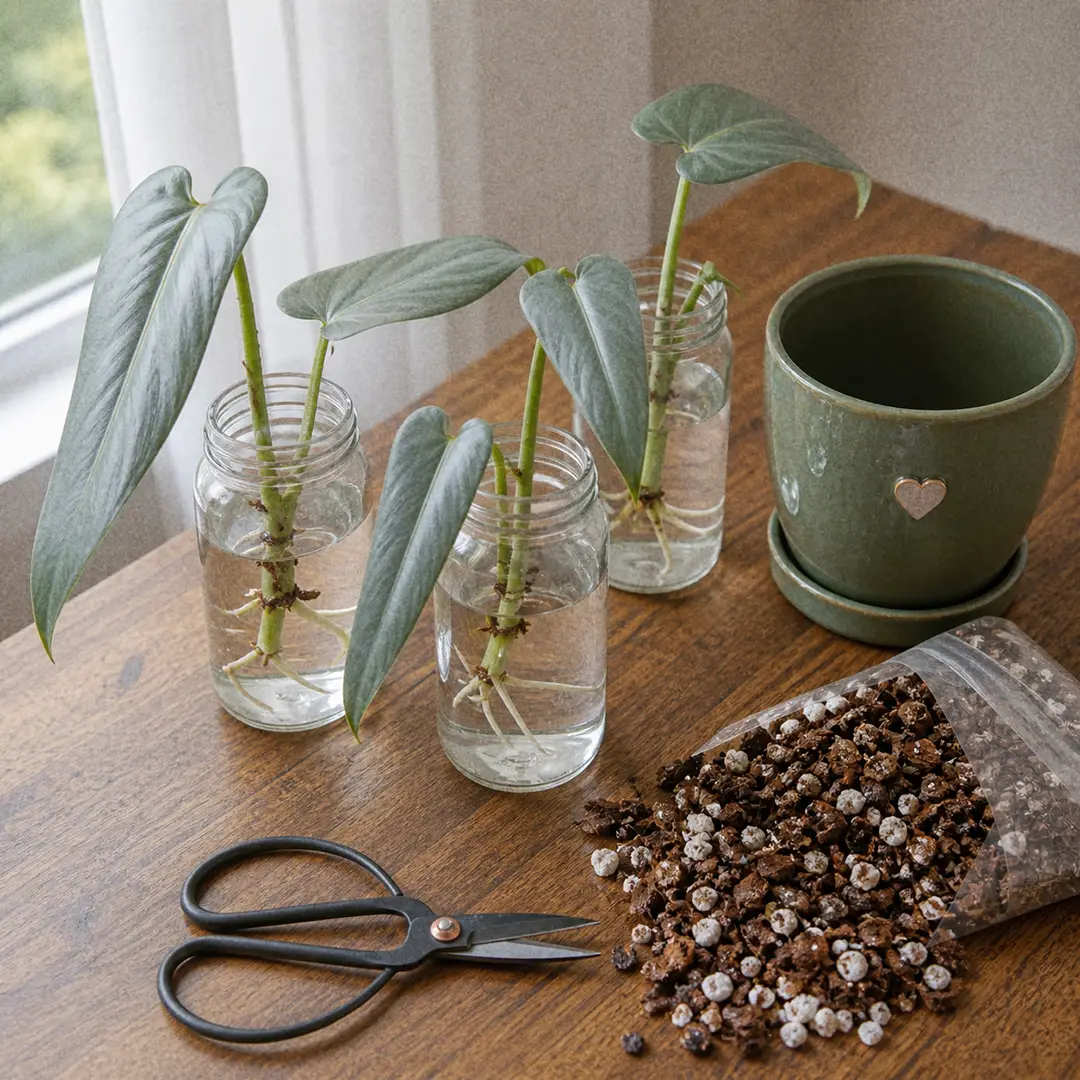
Water Propagation
The method I use most because it's visual.
- Pick a healthy stem with at least two leaves and one or two visible nodes (small bumps where leaves and aerial roots emerge).
- Cut about one inch below a node with clean sharp snips.
- Strip the bottom leaf if it would sit underwater.
- Place in a clear glass jar of room-temperature water with at least one node submerged.
- Set in bright indirect light, change the water every five to seven days.
- Roots appear in two to three weeks. Once they're two to three inches long, pot the cutting up in chunky aroid mix.
See the water propagation guide for troubleshooting.
Soil Propagation
Take a cutting the same way. Dip the cut end in rooting hormone (optional but speeds things up). Plant in moist chunky aroid mix with at least one node buried. Cover with a clear plastic bag or propagation dome. Bright indirect light, soil lightly moist. New leaf growth about a month later signals rooting.
Air Layering
For mature plants where you don't want to lose the main stem. Wrap a node-and-aerial-root section in damp sphagnum moss, cover with cling film, seal with twist ties, and mist through a slit weekly. Once strong white roots are visible in three to six weeks, cut below the rooted section and pot up.
Single-leaf cuttings without a node won't root. Tap water with very high mineral content can also stall roots; switch to filtered if your tap leaves a crust.
🐛 Silver Sword Pests
Tough in practice, but dry indoor air invites trouble. Inspect new leaves and undersides every couple of weeks. Quarantine new plants for two weeks. That habit prevents most disasters.
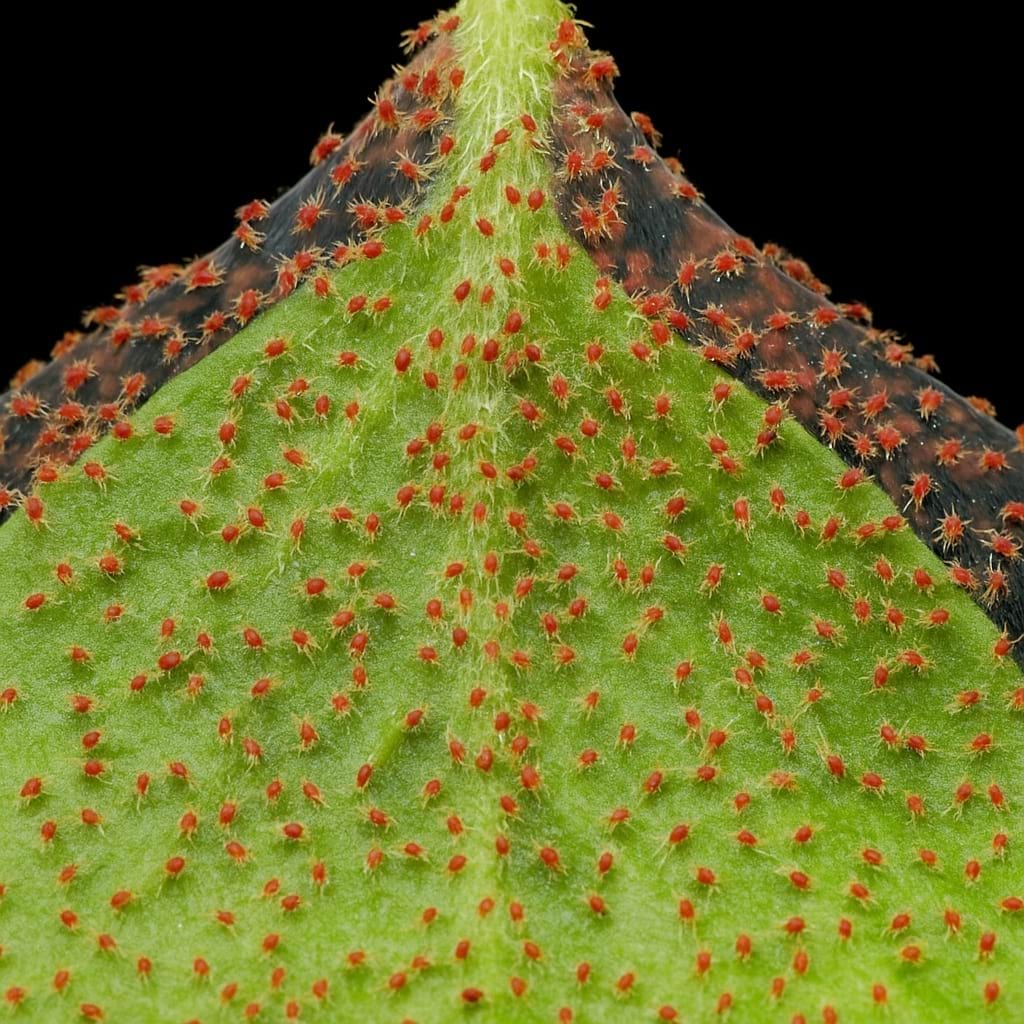
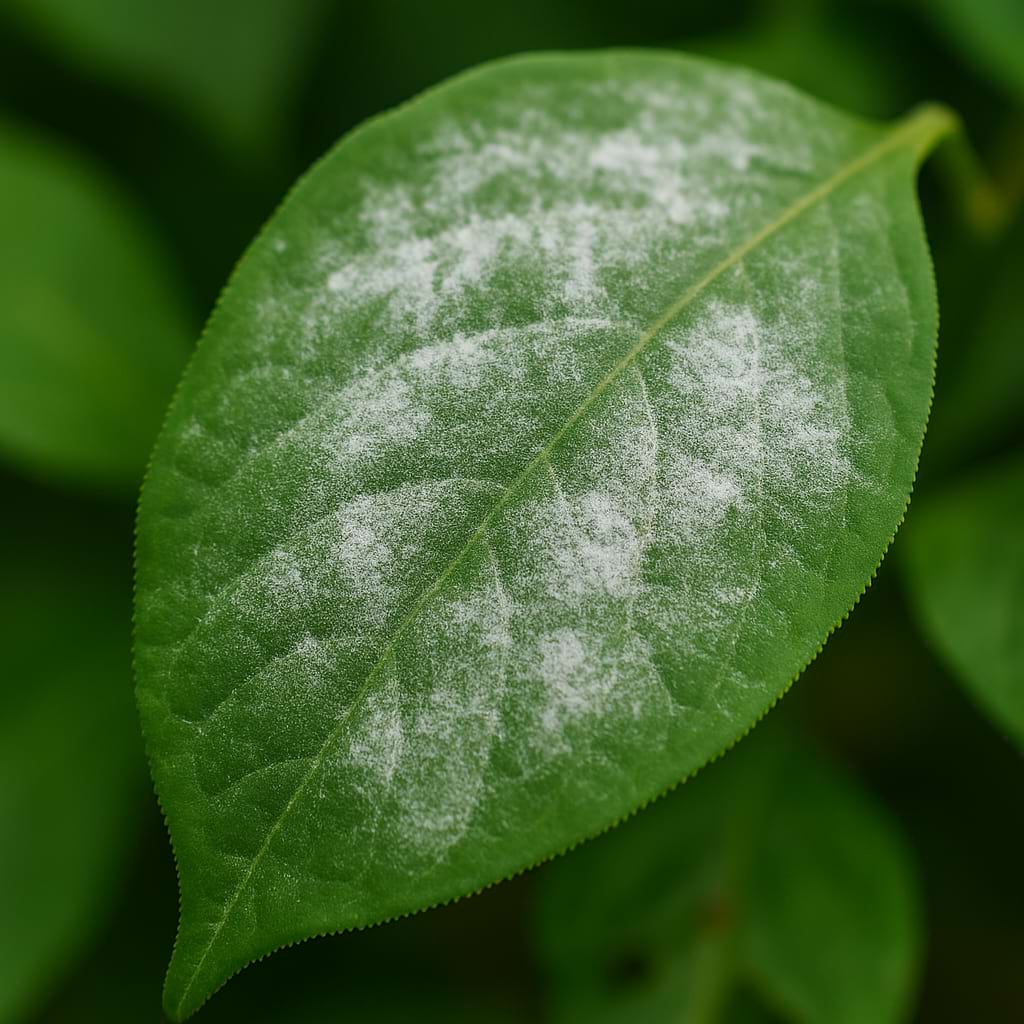
Spider mites are the most common, especially in dry winter air. Webbing in leaf joints and stippled dots. Wipe leaves, raise humidity, treat with insecticidal soap or neem weekly until two clean inspections.
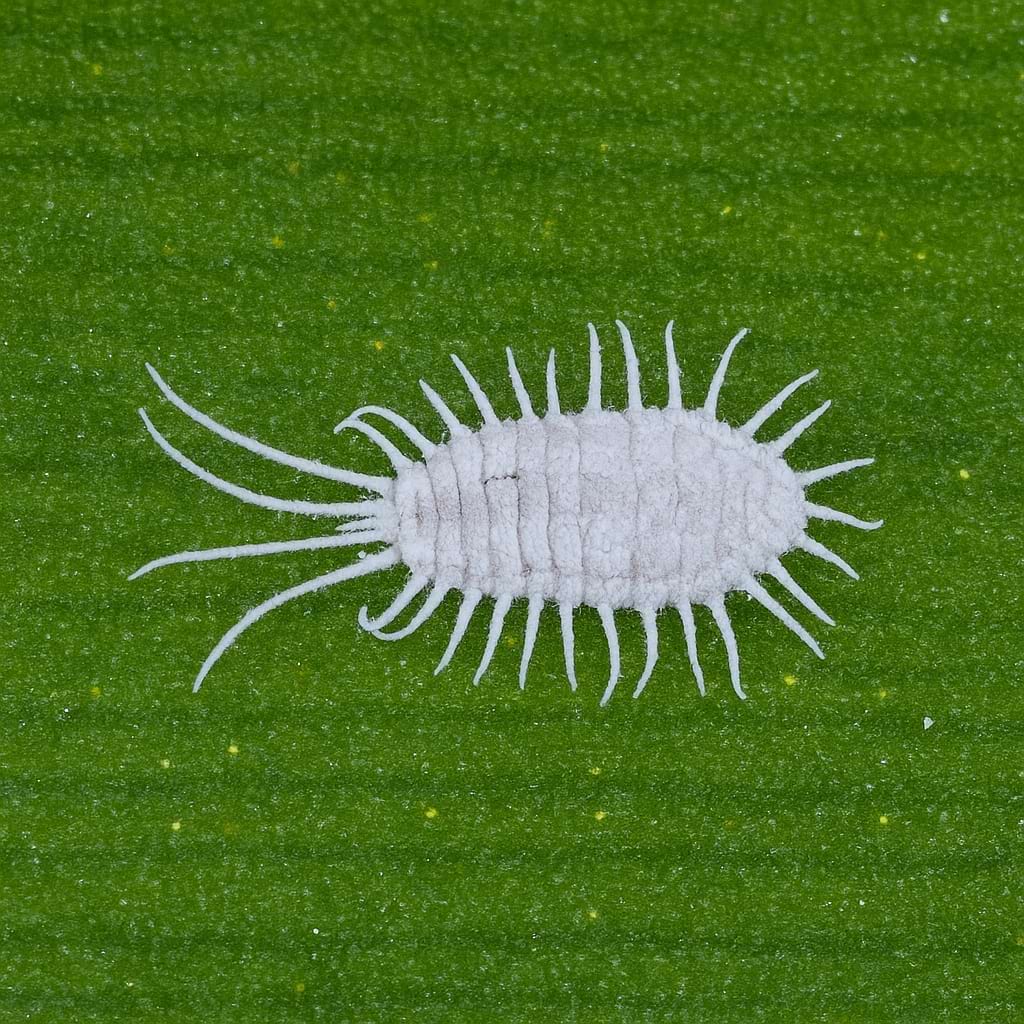
Mealybugs hide in unfurling silver leaves and where petiole meets blade. Cottony tufts. Dab with a cotton swab dipped in 70 percent alcohol.
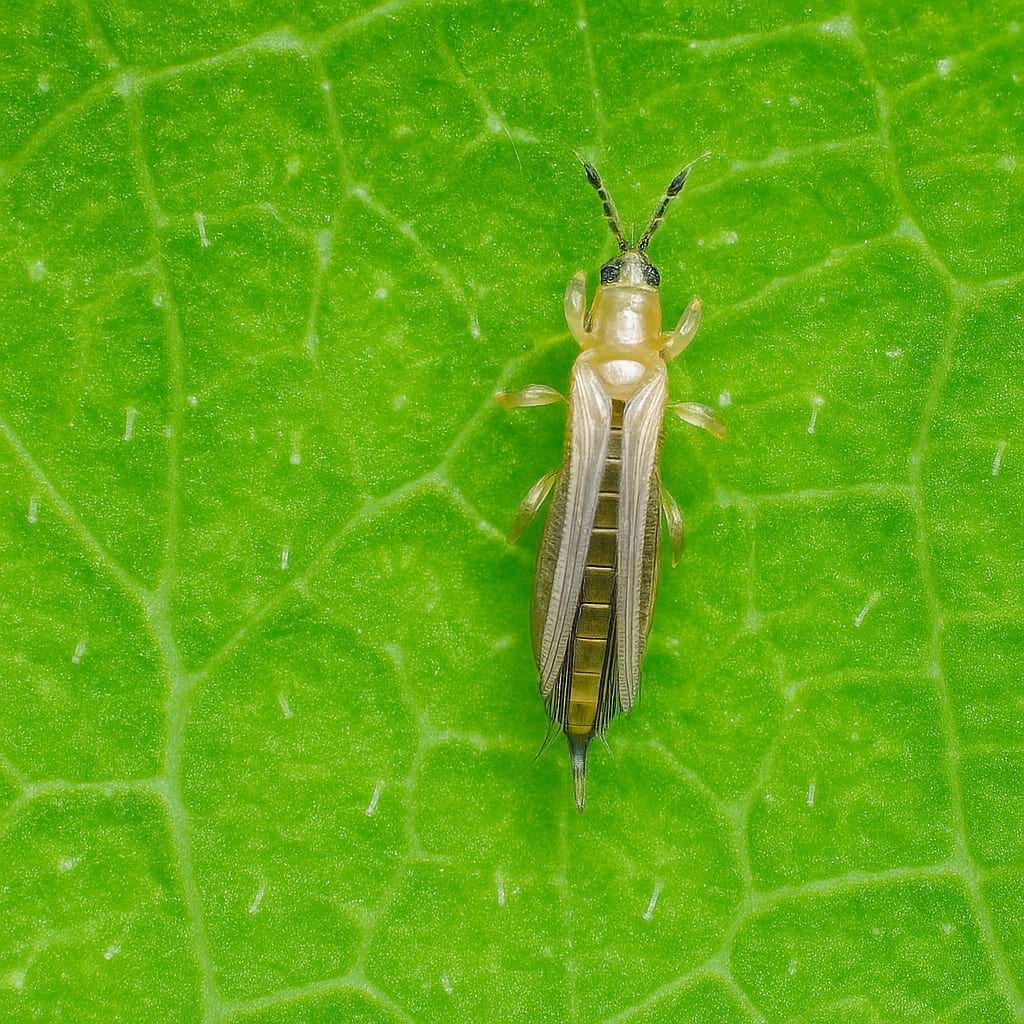
Thrips leave silvery scratches and deform new leaves. They especially love silvery foliage where their damage hides. Treat aggressively with a soil drench or repeated insecticidal soap, and isolate.
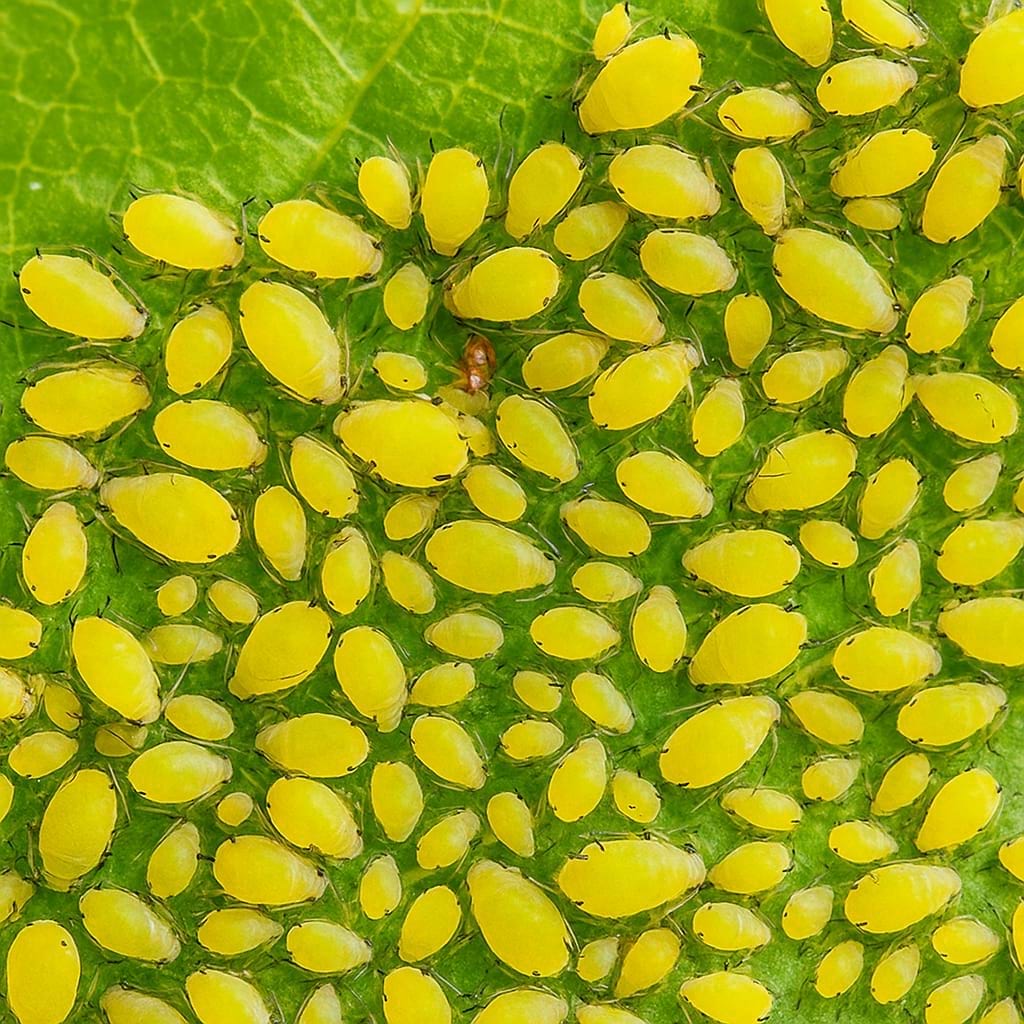
Aphids cluster on new growth. Rinse in the sink, follow up with insecticidal soap.
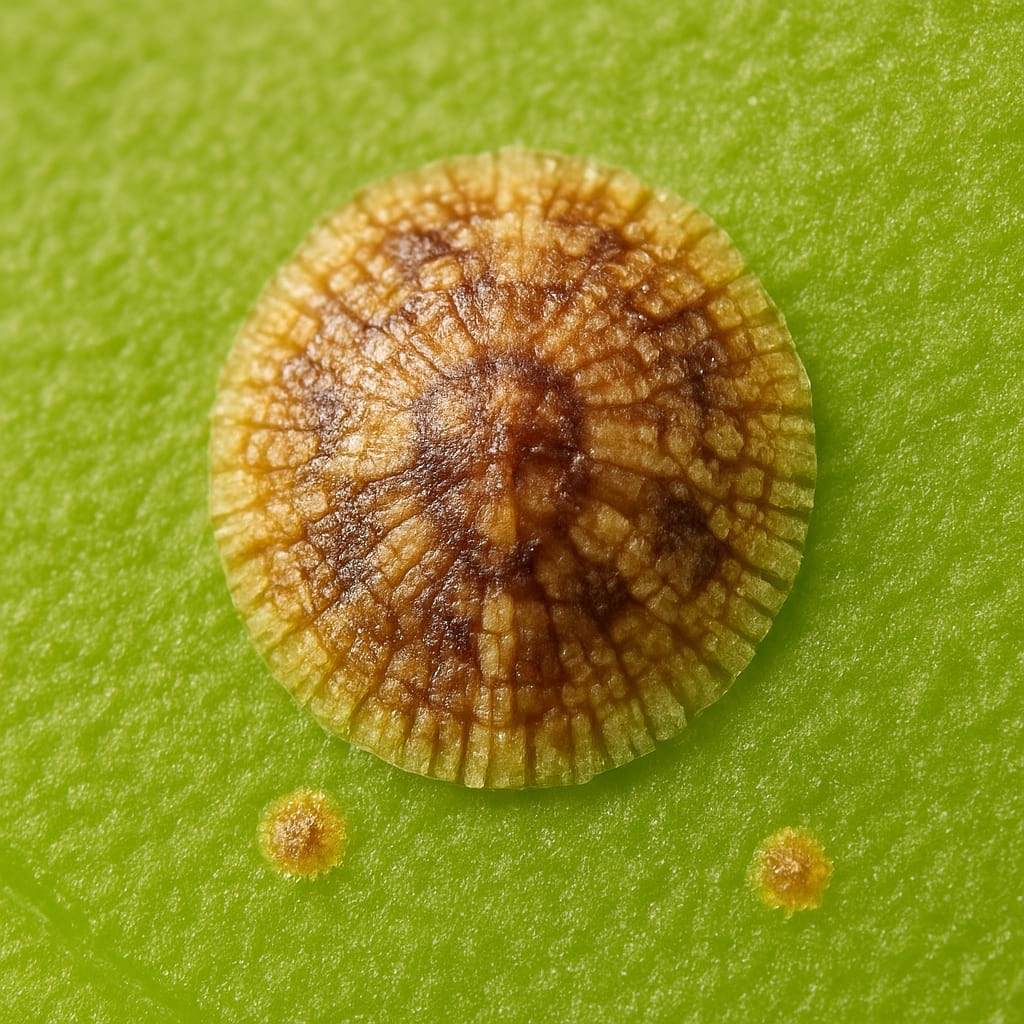
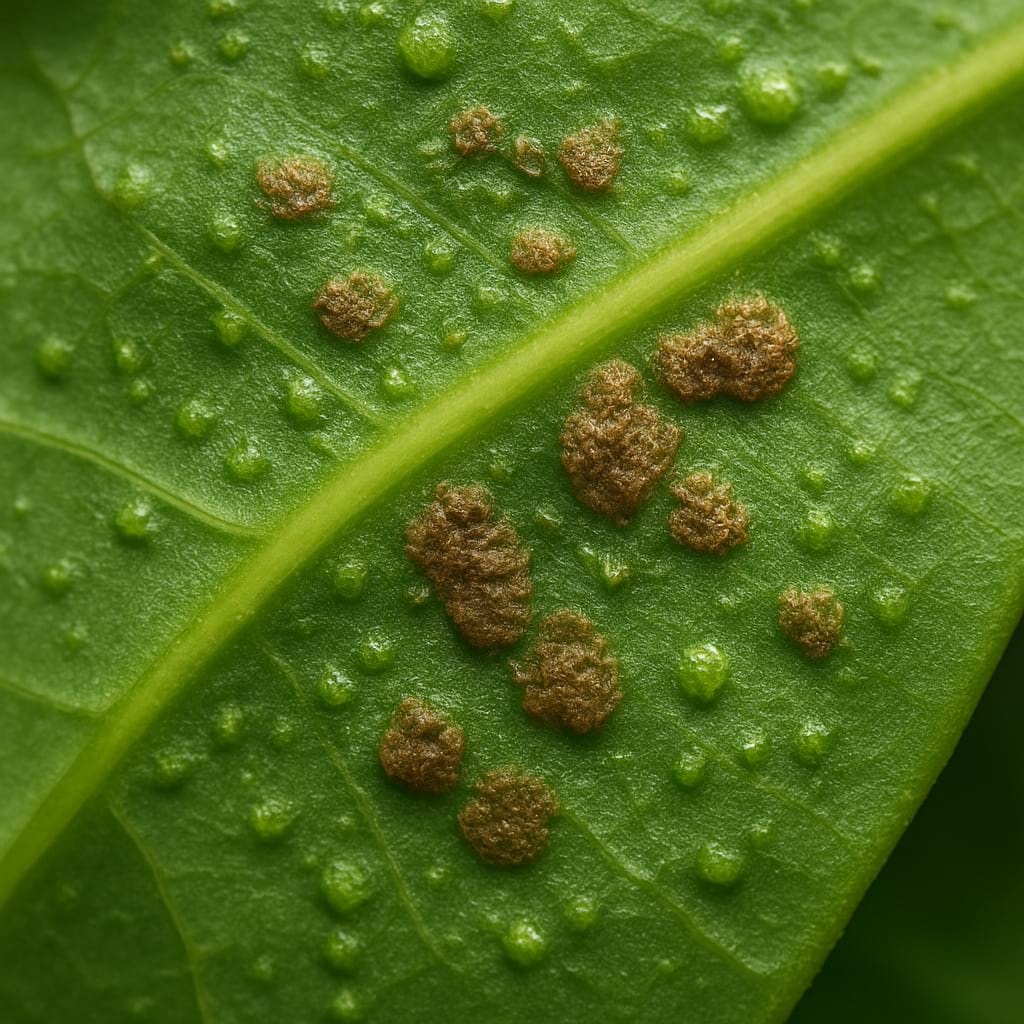
Scale insects appear as small brown bumps on petioles. Scrape off and treat with neem.
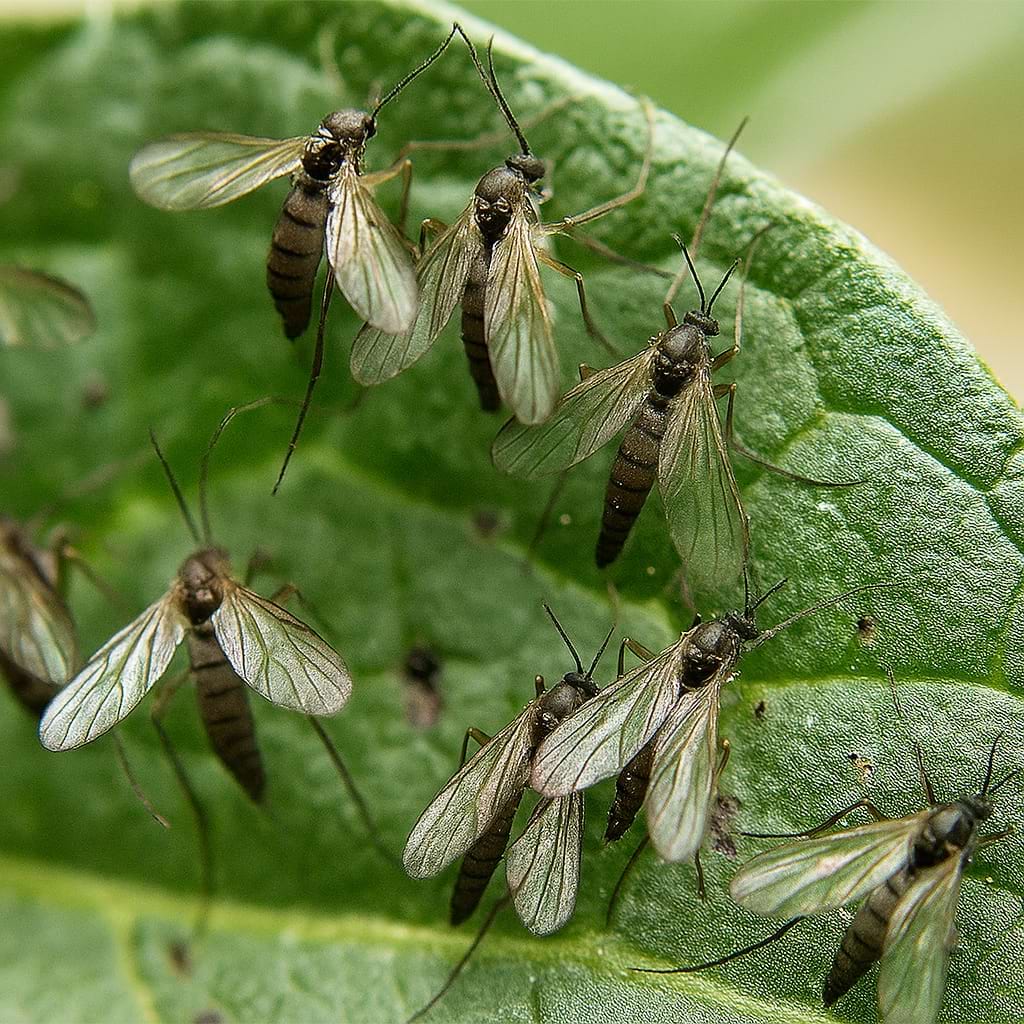
Fungus gnats mean the soil's staying too wet. Let the top inch dry, top-dress with sand, use yellow sticky traps.
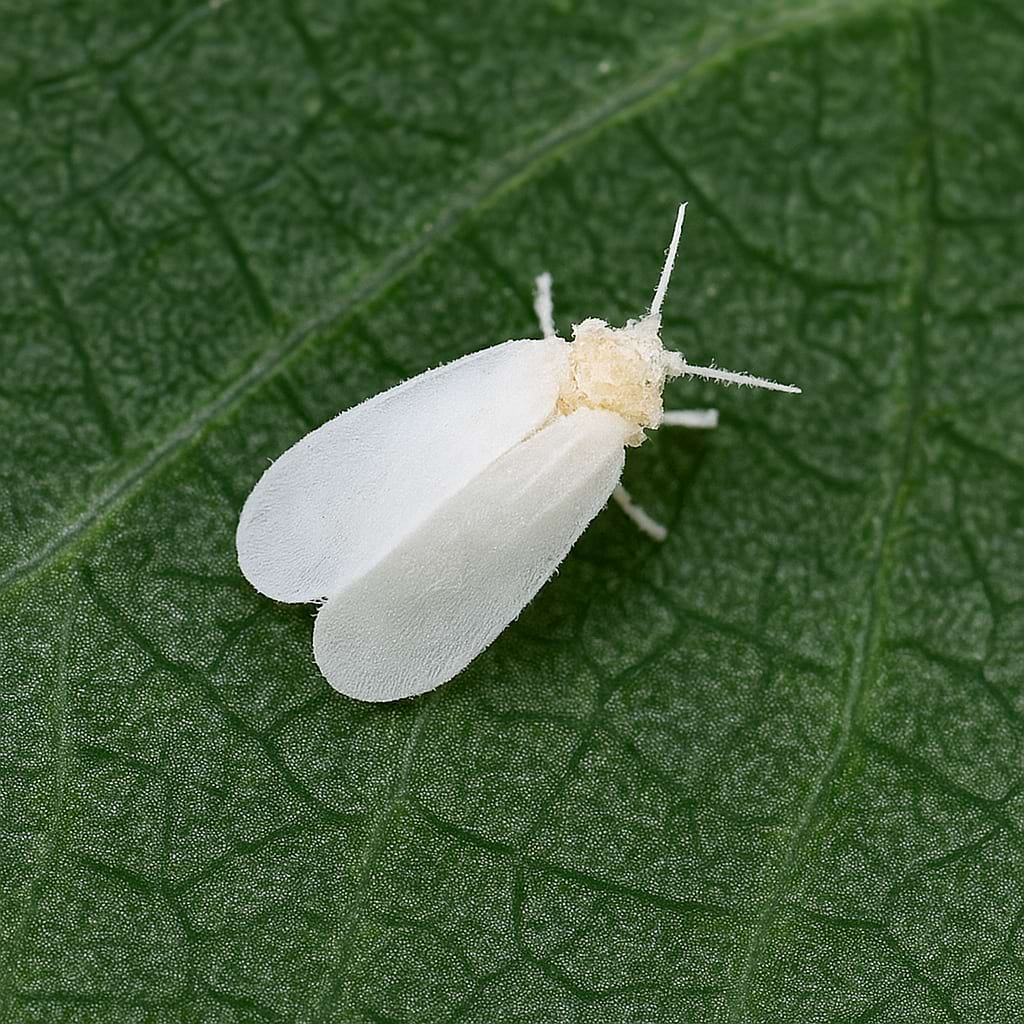
Whiteflies rise in a cloud when you brush the plant. Yellow sticky traps and weekly insecticidal soap clear them in a few weeks.
🩺 Common Silver Sword Problems
Most issues trace to watering, light, or air.
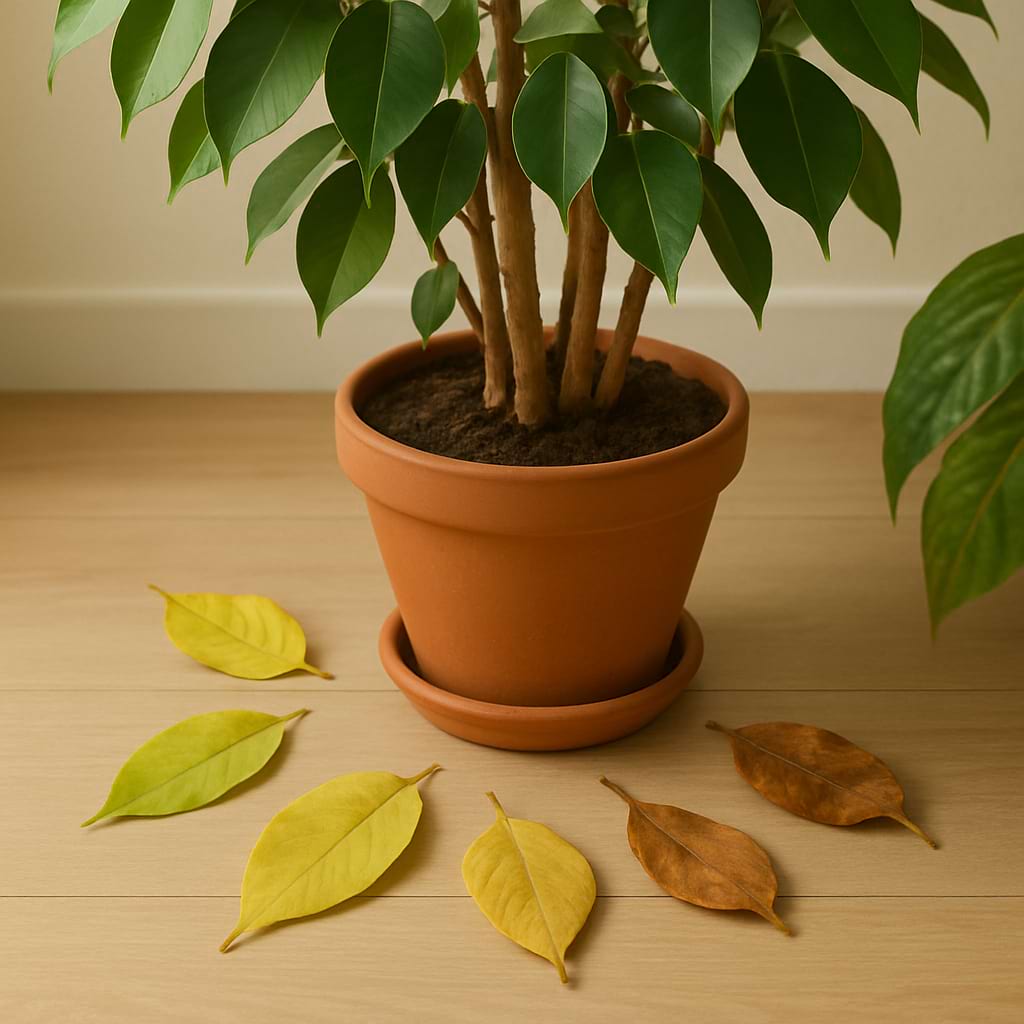
Yellowing leaves on the lower part of the plant usually mean overwatering. If the soil is wet a week after watering, you're watering too often or the soil is too dense.
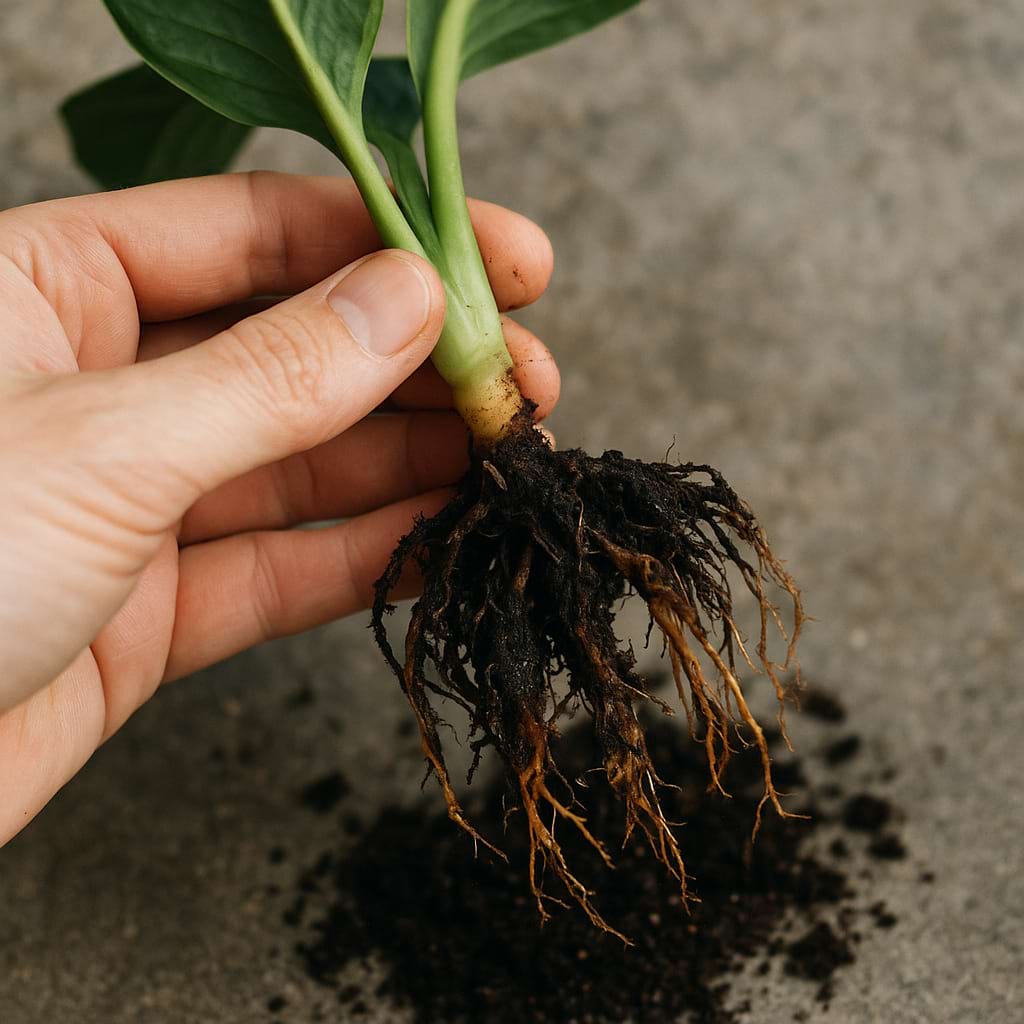
Root rot is the worst-case overwatering. Yellowing with mushy stems and a sour smell means trim every soft brown root back to firm white tissue and repot. A stem cutting from a healthy upper section is good insurance during triage.
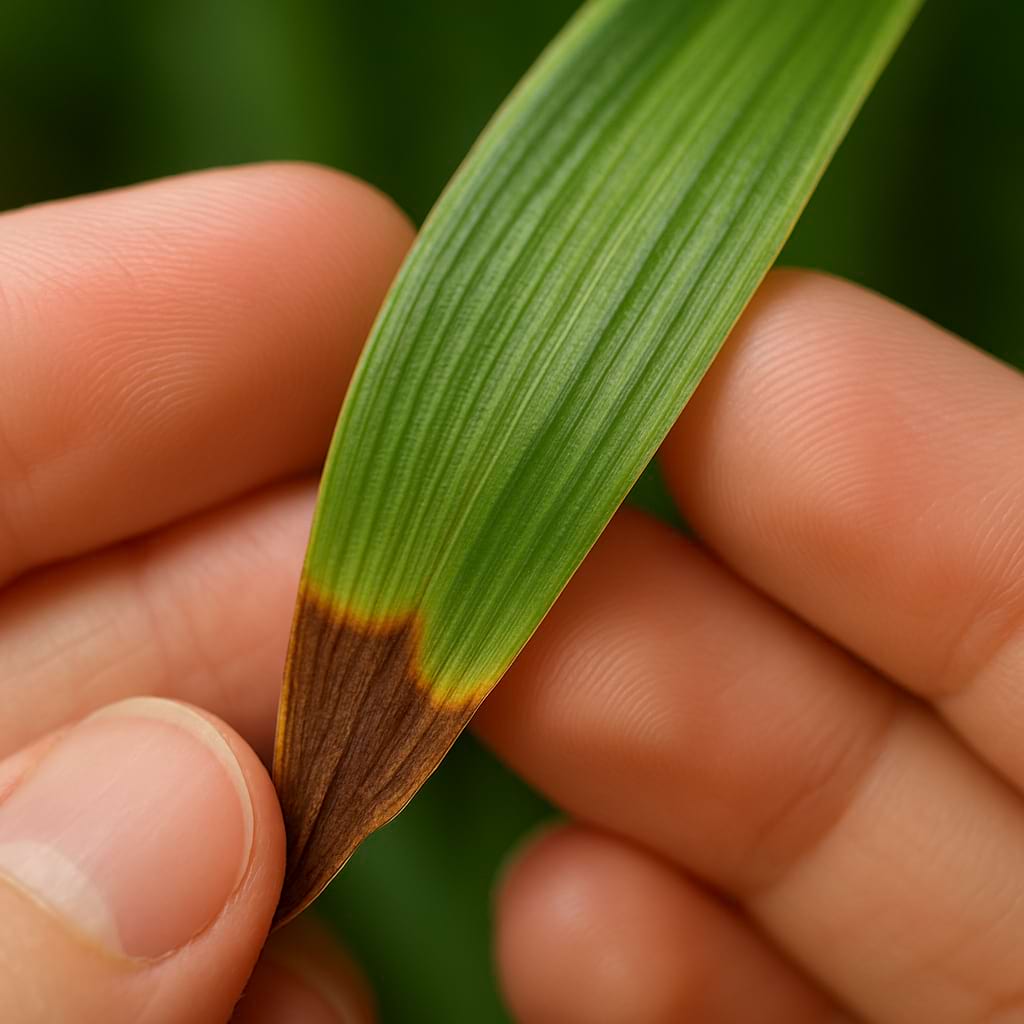
Brown crispy edges point to dry air, inconsistent watering, or salt buildup. Boost humidity, settle into a steady rhythm, flush the pot every couple of months.
Curling leaves usually mean thirst, but can also signal pests or cold drafts.
Leggy growth means reach for more light. Also check if the moss pole is dry.
Small leaves almost always mean the plant has nothing to climb on, or the pole is too short, dry, or cramped. Mature leaves only show up once the plant is actively climbing.
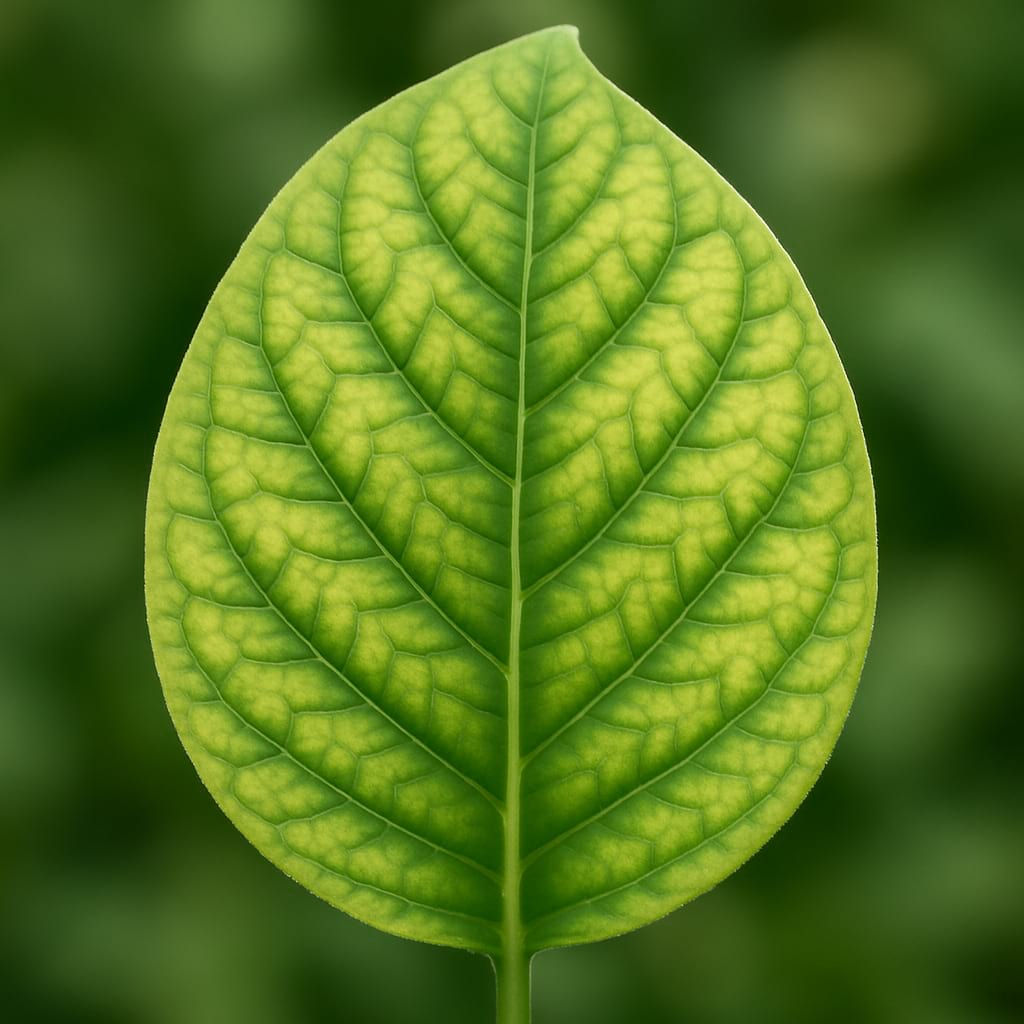
Sunburn shows as bleached papery patches on leaves catching direct afternoon sun. The Silver Sword burns more easily than darker Philodendrons because the silver layer is thin.
Nutrient deficiency shows as smaller new leaves with washed-out color. Start a regular half-strength feed.
Fungal or bacterial leaf spot shows dark spots ringed with yellow when leaves stay wet overnight. Trim affected leaves and improve air circulation.
Edema shows as water-filled blisters on the underside of leaves from inconsistent watering. Settle into a steadier rhythm.
Leaf drop is usually shock from a cold draft, sudden move, or heavy overwatering. Remove the trigger and the plant stabilizes in a week or two.

🖼️ Silver Sword Display Ideas
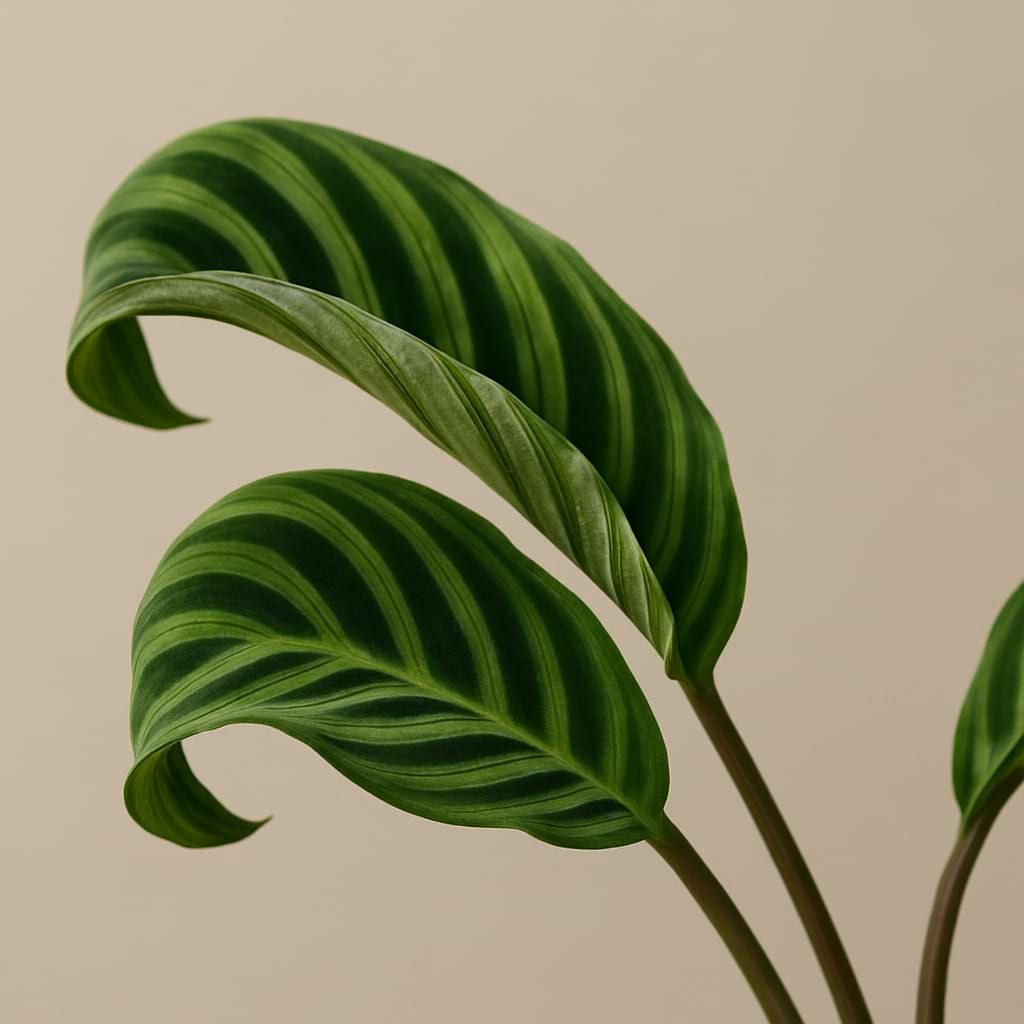
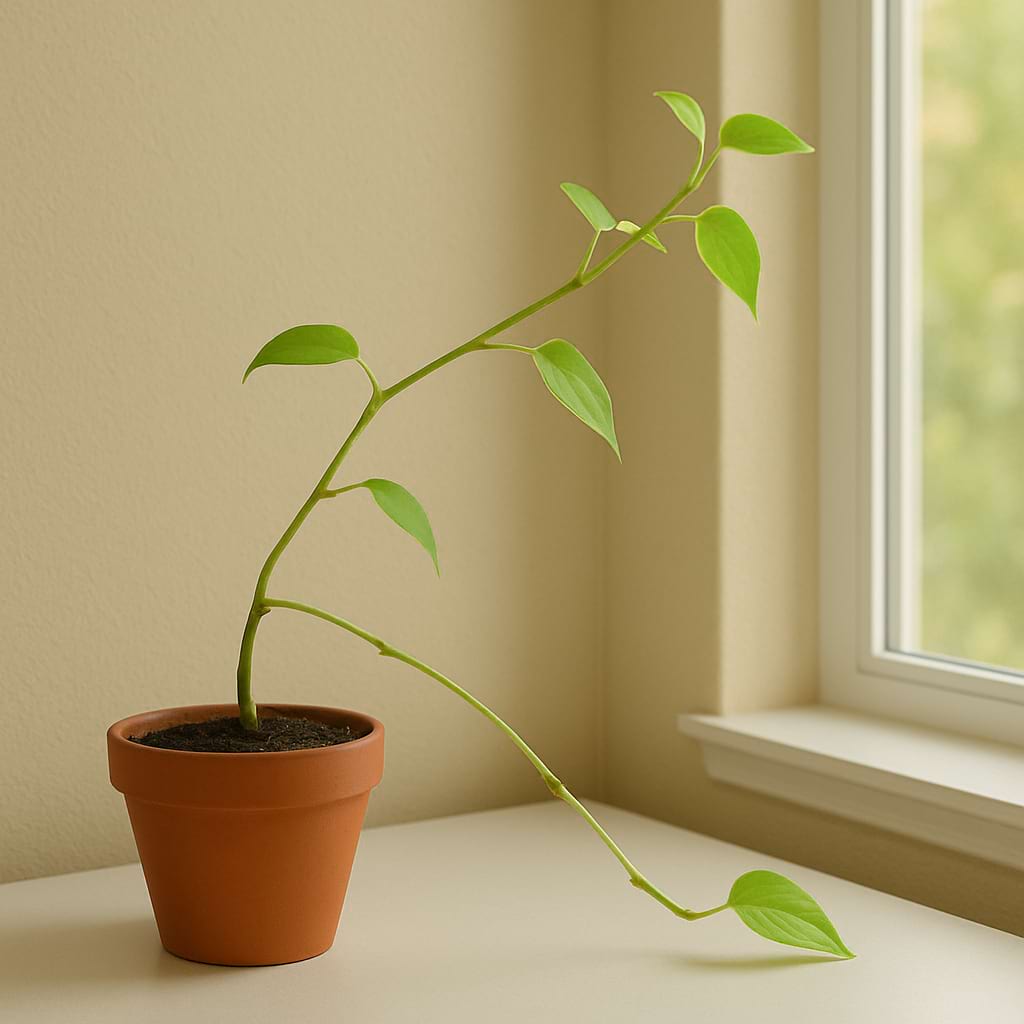
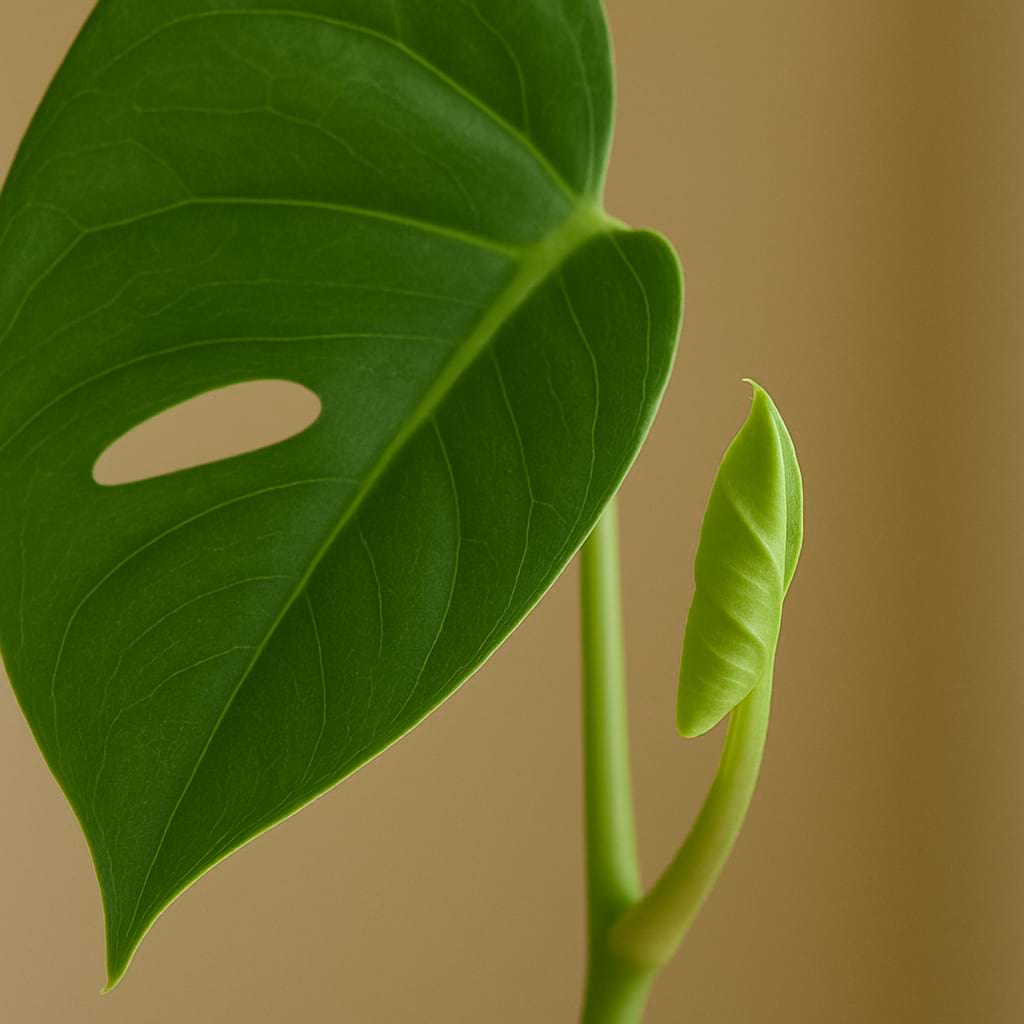
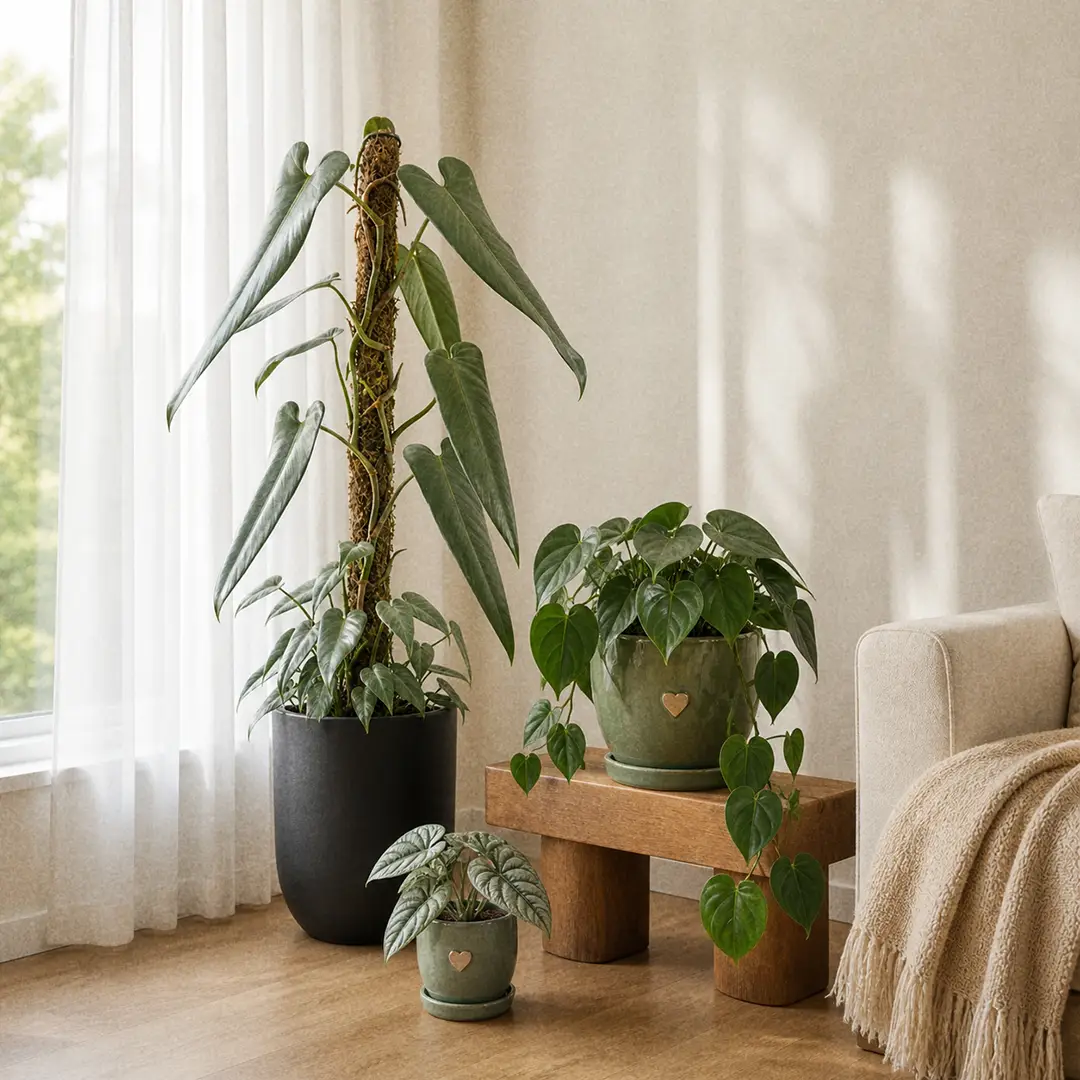
The metallic silver-blue does most of the styling work on its own. Your job is a climbing structure and a pot that lets the foliage talk.
Pot and Color Picks
Matte black or charcoal pots make the silver-blue glow. Deep terracotta reads warm. Pale gray and concrete keep it modern. Avoid metallic silver pots (two silver layers cancel out).
Moss-Pole Setups
A tall moss pole is the best climbing surface for leaf size. A coir pole looks cleaner but takes longer for aerial roots to grip. A wall-mounted trellis in a bathroom turns the plant into living wall art.
Where to Place It
Works well in a bright living-room corner, a bathroom with a window (warmth and humidity push leaf size and color), or a sunroom.
Plant Pairings
A trailing Heart-Leaf Philodendron softens the base of the pole. A Philodendron Brasil nearby brings warm lime contrast. For an all-silver story, pair with an Alocasia Silver Dragon and a Scindapsus Silver Lady trailing above. For drama, a Moonlight Philodendron beside it gives neon chartreuse against cool silver. At floor level, a Philodendron Gloriosum crawling across a wide shallow bowl gives you a dark matte counterweight to all that vertical shine.
Plan vertical space when you bring one home. On a six-foot pole near a bright window it quickly becomes a room's focal plant.
🌟 Silver Sword Pro Tips
Light first, pole second, everything else third. Together they bring out the bigger, bluer leaves the plant is famous for.
Repot before the plant tells you twice. Silver Swords grow fast and dislike being severely pot-bound. A pot-up every one to two years is cheap insurance.
Underwater rather than overwater. A thirsty Silver Sword recovers in a day. A drowned one may not.
Mind the drafts. A spot great in summer can be too cold in January.
Wipe leaves every two weeks. Dust dulls the silver tone faster than people realize.
Keep it out of reach. Toxic to pets and people if chewed (calcium oxalate crystals).
Quarter-turn at every watering keeps growth even on all sides of the pole.
Take a backup cutting in spring as insurance against root rot or a winter setback.
Plan vertical space from day one. Pick a corner or wall where the plant can climb to four to six feet eventually.
❓ Frequently Asked Questions
Why aren't my new leaves as silver as in the photos?
Usually not enough light or a young plant settling in. Move it closer to a bright window. New leaves should emerge with clear silver within a flush or two. If recently shipped or repotted, give it a full month to acclimate.
Is the Silver Sword a climbing plant?
Yes. Philodendron hastatum is a hemiepiphyte designed to climb tree trunks. Indoors it produces its larger mature leaves only on a moss pole, coir pole, or wooden plank. A Silver Sword left to trail keeps its small juvenile leaves and grows slowly.
How big does it get indoors?
Six to ten feet within a few years on a tall moss pole. Mature leaves can grow eight to twelve inches long.
How fast does it grow?
Fast in good conditions. A new leaf every two to four weeks in spring and summer with a pole, bright light, and steady feeding. A small four-inch nursery plant can become a four-foot specimen in two seasons.
Is it toxic to cats and dogs?
Yes. Like all Philodendrons, it contains calcium oxalate crystals that irritate the mouth, throat, and digestive tract if chewed. Keep out of reach of pets and small children. If a pet bites a leaf, call your vet.
Why are older leaves greener than new ones?
Normal. Every leaf emerges silvery-blue and deepens to green-blue as it ages. A healthy plant shows a mix: a saturated silver leaf at the top, transitional blue-green in the middle, deeper-colored at the base.
Why aren't my leaves growing the long sword shape?
Almost always because it's not climbing. Juvenile arrow-shaped leaves are the default without a pole. Once the plant attaches its aerial roots to a damp moss pole and starts climbing, it switches to mature mode and pushes the longer sword-shaped leaves.
Can I grow it under a grow light only?
Yes, very successfully. A full-spectrum LED running ten to twelve hours a day produces excellent silver, often better than a marginal window. Twelve to eighteen inches above the canopy.
Is the Silver Sword the same as Silver Sword Pothos?
No. A true Silver Sword is Philodendron hastatum. "Silver Sword Pothos" is a marketing name sometimes used for Scindapsus or Hederaceum hybrids with silvery markings. Different plants entirely. If the price seems unusually low, it's probably not the real hastatum.
Is Philodendron hastatum endangered?
In the wild, yes. IUCN lists it endangered, surviving in small remnants of Brazilian Atlantic Forest. Nursery-grown plants come from a small genetic pool and act as a conservation reservoir. Buying a nursery-grown plant doesn't impact the wild population.
ℹ️ Silver Sword Philodendron Info
Care and Maintenance
🪴 Soil Type and pH: Loose, chunky, well-draining aroid mix with a slightly acidic pH around 5.5-6.5.
💧 Humidity and Misting: Happiest at 60 percent or higher; tolerates 50 percent without complaint.
✂️ Pruning: Trim long stems above a node to control length and encourage branching.
🧼 Cleaning: Wipe leaves with a soft damp cloth every two weeks to keep the silver sheen visible.
🌱 Repotting: Every 1-2 years, or when roots circle the bottom of the pot.
🔄 Repotting Frequency: Every 1-2 years
❄️ Seasonal Changes in Care: Cut watering and stop feeding from late fall through winter.
Growing Characteristics
💥 Growth Speed: Fast
🔄 Life Cycle: Perennial evergreen
💥 Bloom Time: Very rare indoors
🌡️ Hardiness Zones: 9b-11 outdoors
🗺️ Native Area: Atlantic Forest of southeast Brazil; classified as endangered in the wild
🚘 Hibernation: No, but growth slows in winter
Propagation and Health
📍 Suitable Locations: Bright living rooms, plant shelves with a moss pole, sunrooms, humid bathrooms with light
🪴 Propagation Methods: Stem cuttings root reliably in water or directly in soil.
🐛 Common Pests: Spider Mites, Mealybugs, Thrips, Aphids, Scale Insects, Fungus Gnats, Whiteflies
🦠 Possible Diseases: Root rot, leaf spot, occasional bacterial blight
Plant Details
🌿 Plant Type: Climbing evergreen aroid (hemiepiphyte)
🍃 Foliage Type: Evergreen, glossy, sword-shaped to hastate leaves
🎨 Color of Leaves: Metallic silvery-blue when young, deepening to green-blue with maturity
🌸 Flower Color: Pale green spathe with cream spadix (rarely seen indoors)
🌼 Blooming: Almost never indoors
🍽️ Edibility: Not edible, contains calcium oxalate crystals
📏 Mature Size: 6-10 feet indoors on a pole
Additional Info
🌻 General Benefits: Striking silver foliage; mild air-cleaning effect typical of aroids
💊 Medical Properties: None; sap is irritating
🧿 Feng Shui: Cooling, calming energy associated with water and reflection
⭐ Zodiac Sign Compatibility: Pisces
🌈 Symbolism or Folklore: Calm strength, quiet luxury, growth through patience
📝 Interesting Facts: Wild Philodendron hastatum is listed as endangered by the IUCN, surviving in only a few remnants of Brazilian Atlantic Forest. The plants in cultivation today are an important conservation reservoir.
Buying and Usage
🛒 What to Look for When Buying: Pick a plant with at least one fully silver new leaf and firm, evenly colored petioles. Avoid washed-out specimens stored in deep nursery shade.
🪴 Other Uses: Outdoor climber on shaded patios in tropical climates; popular in conservatories
Decoration and Styling
🖼️ Display Ideas: Climbing a moss pole, against a totem, or trained up a wall trellis
🧵 Styling Tips: Pair with a matte black or charcoal pot to push the silver-blue tone forward.
🪴 See also 🪴
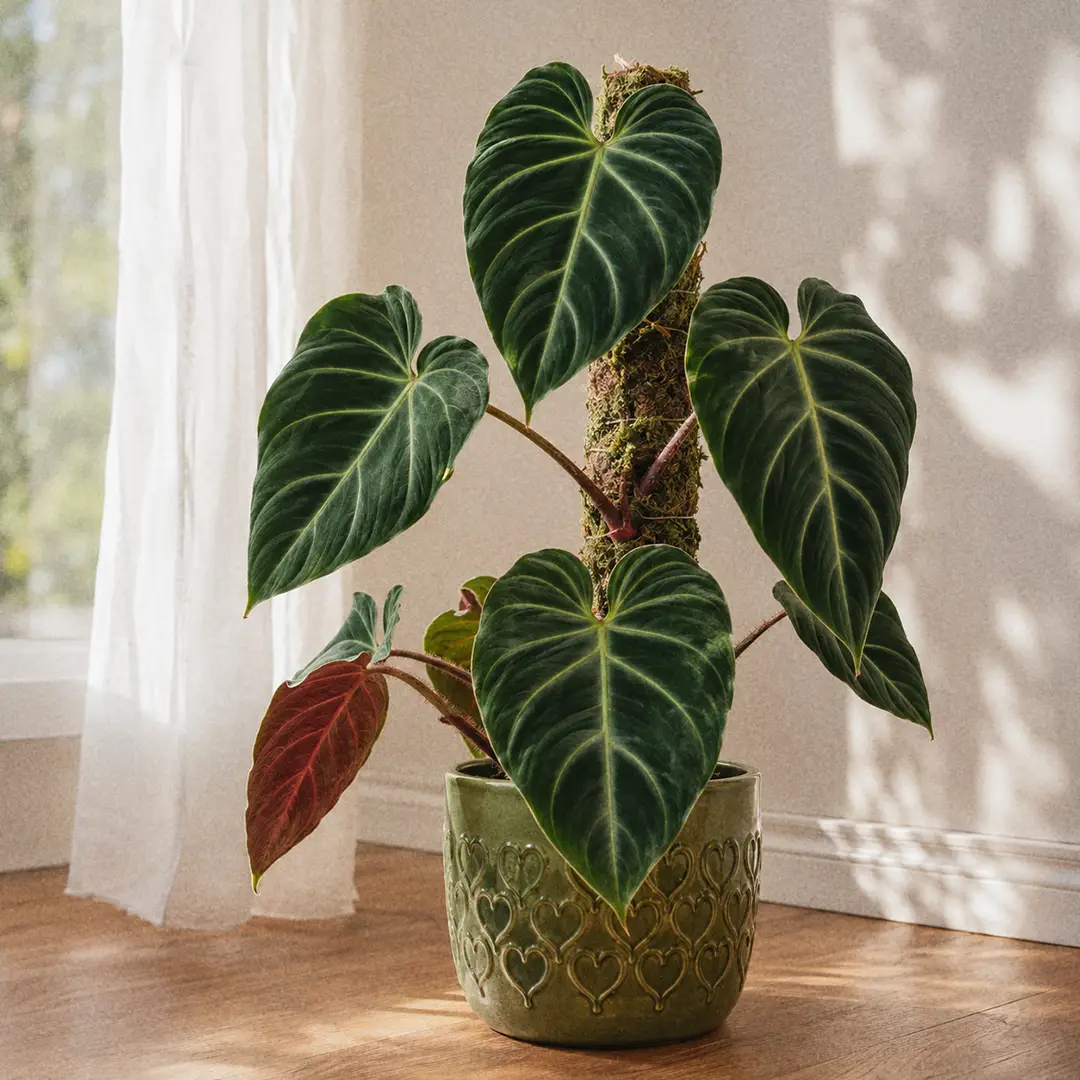
Complete Guide to Philodendron Verrucosum Care and Growth
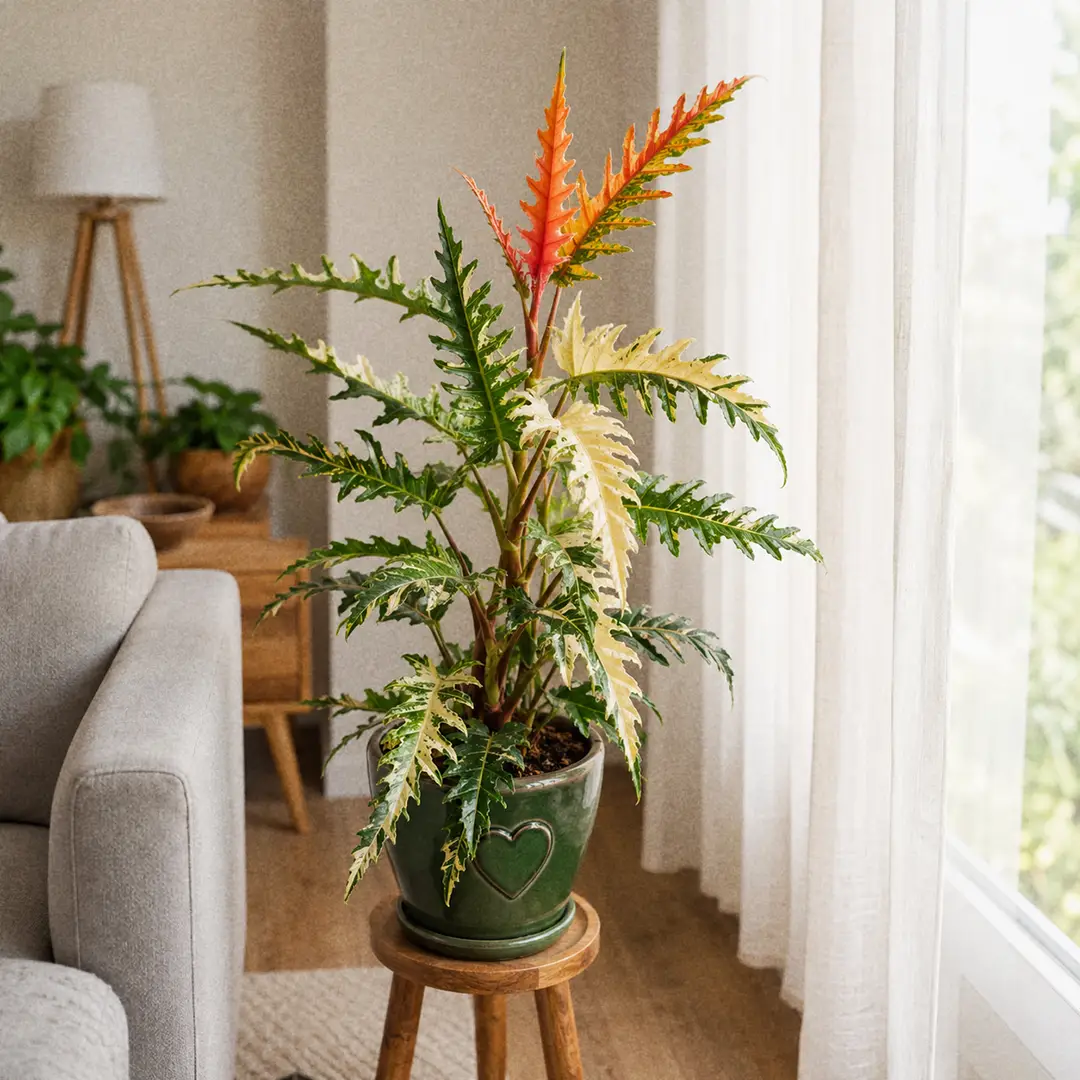
Complete Guide to Philodendron Ring of Fire Care and Growth
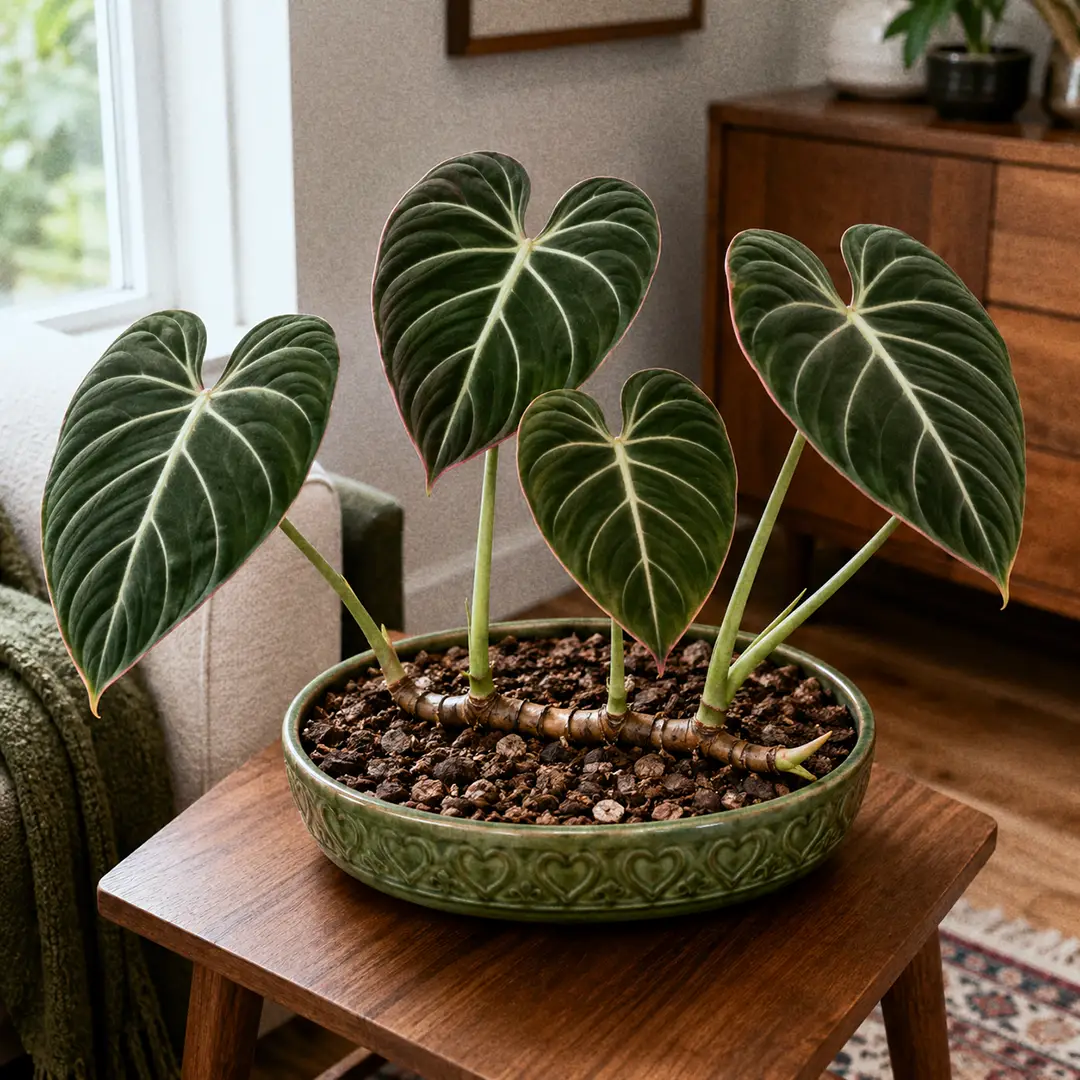
Complete Guide to Philodendron Gloriosum Care and Growth
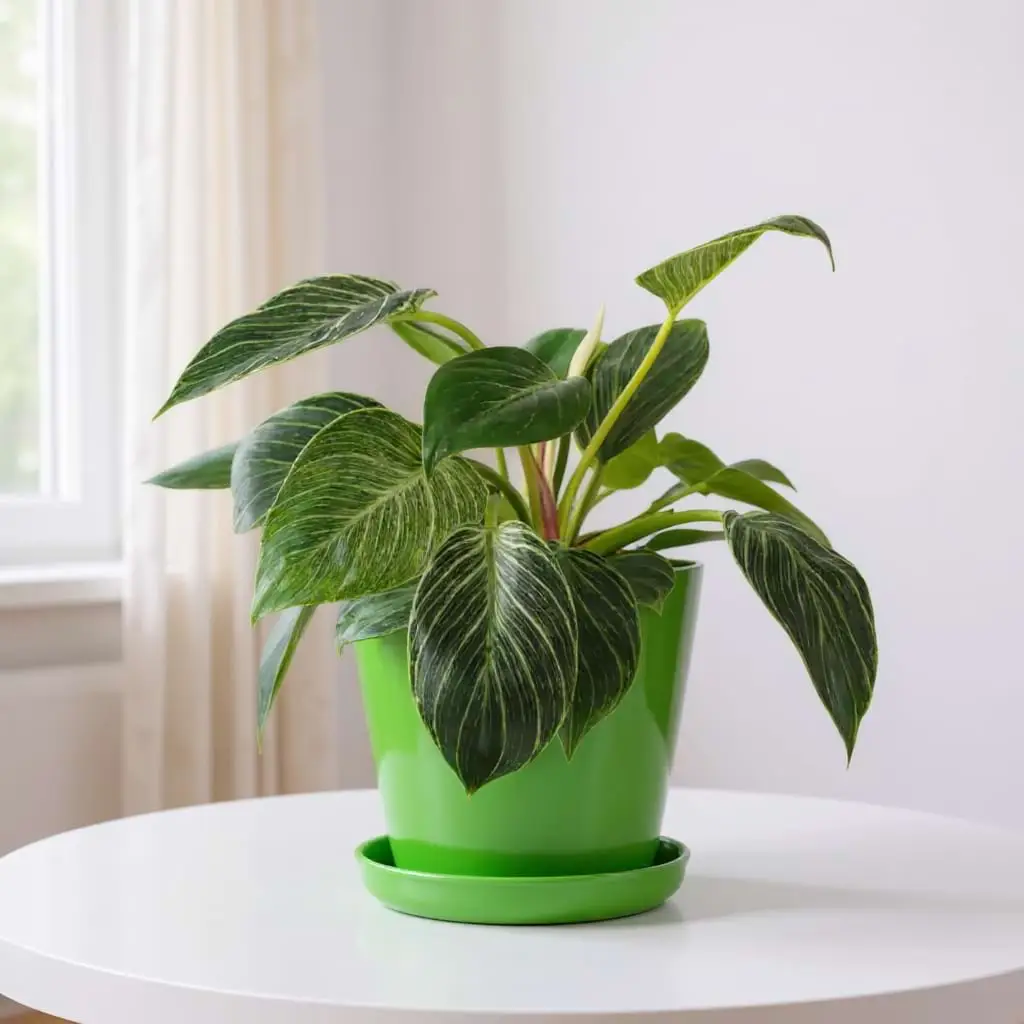
Complete Guide to Philodendron Birkin Care and Growth
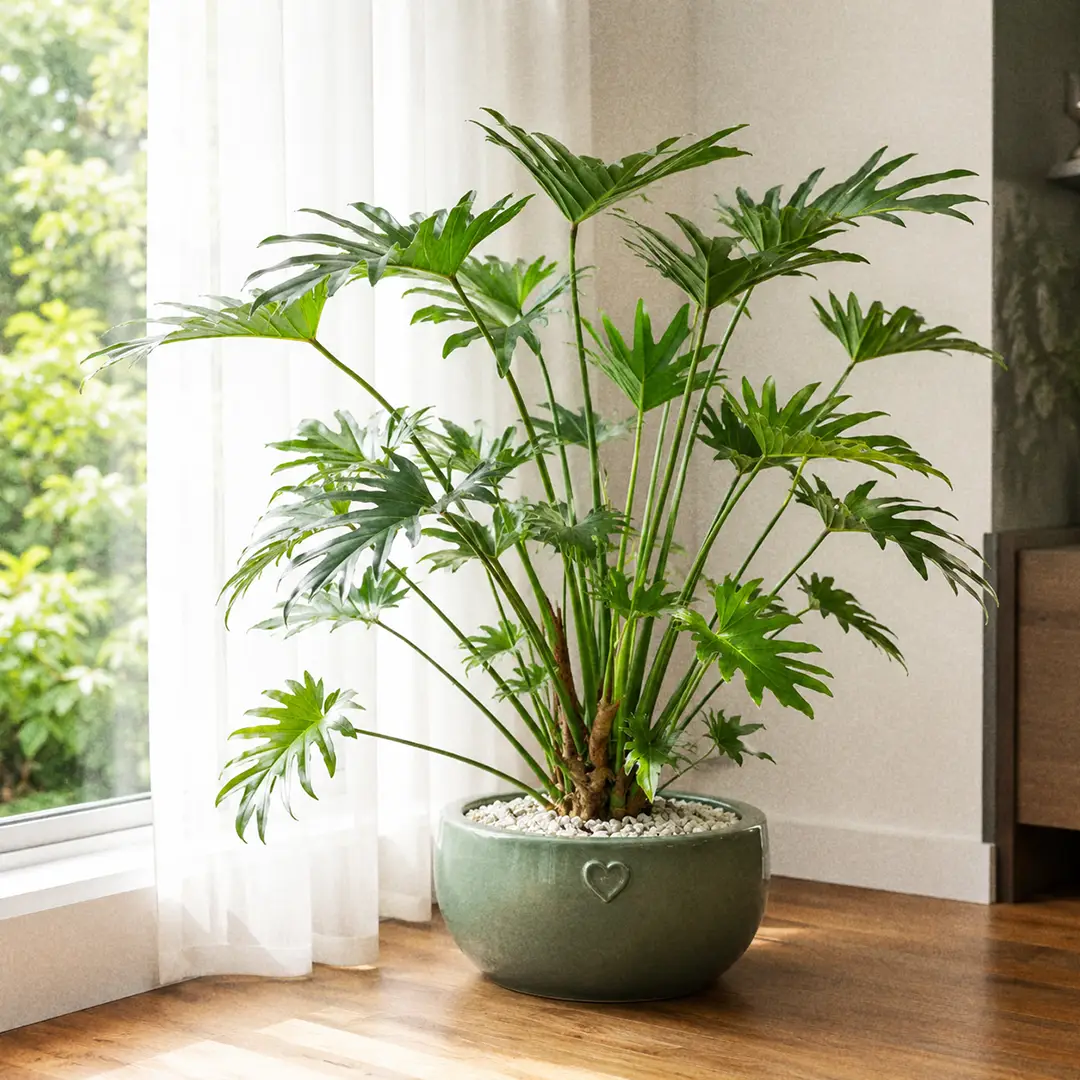
Complete Guide to Xanadu Care and Growth
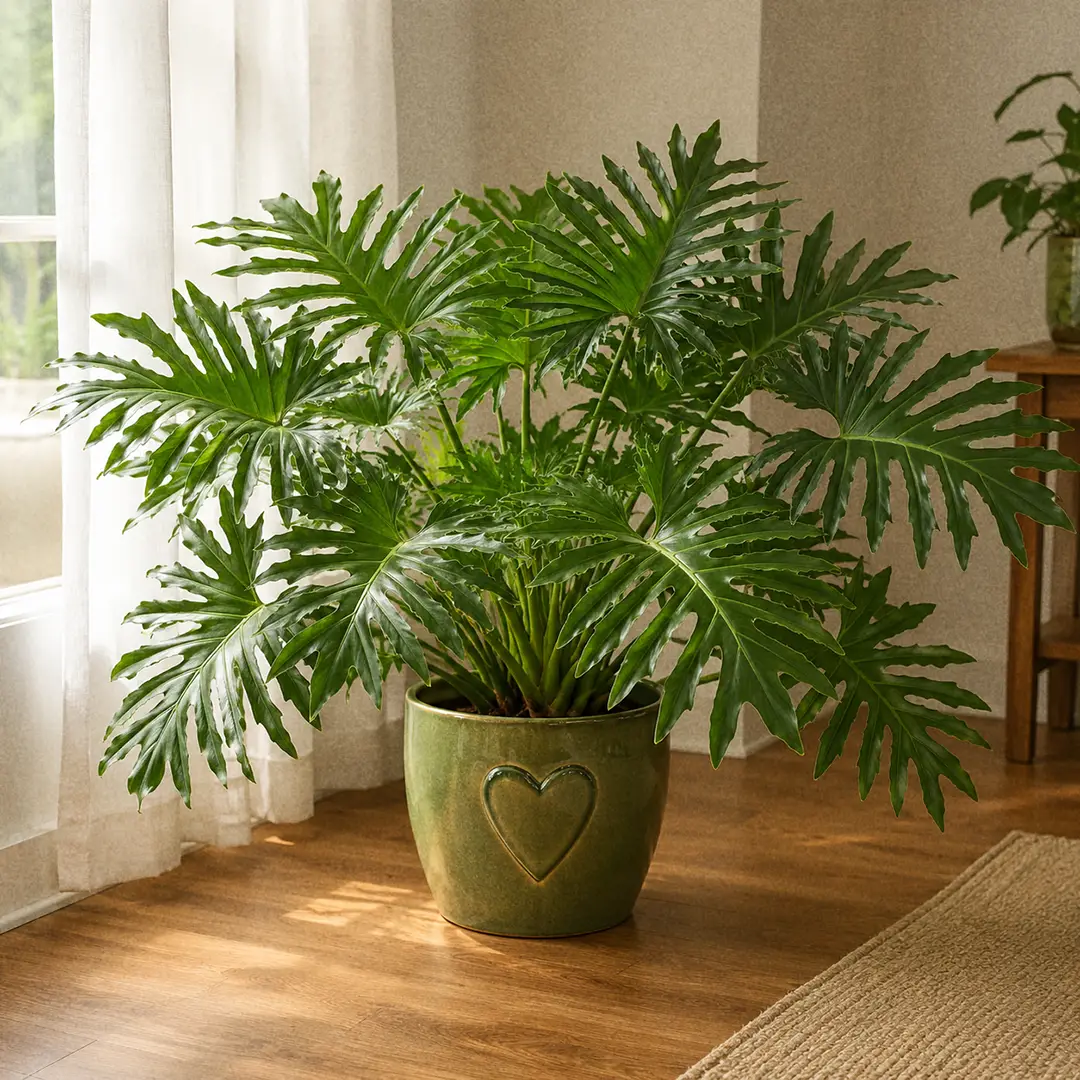
Complete Guide to Hope Selloum Care and Growth
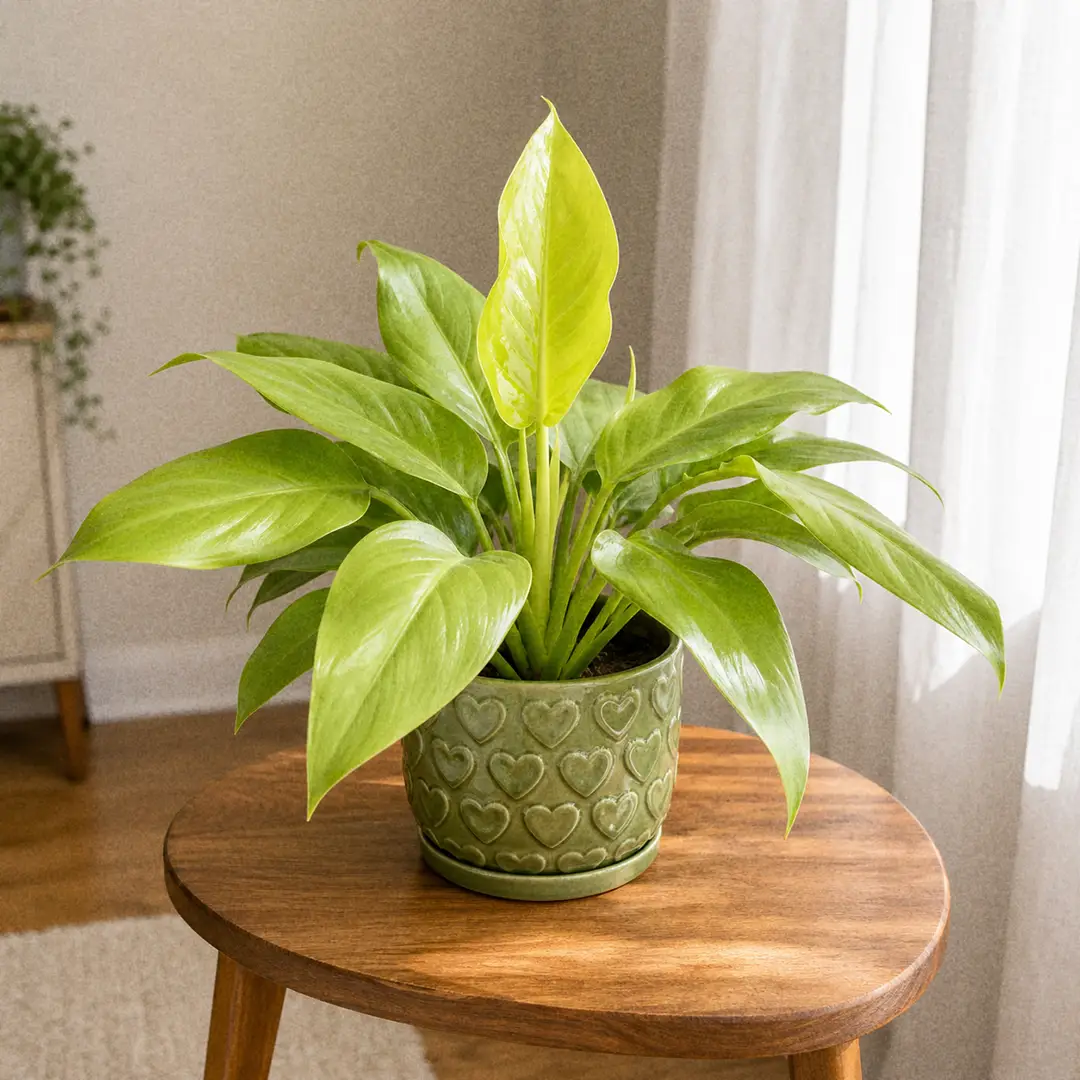
Complete Guide to Moonlight Philodendron Care and Growth
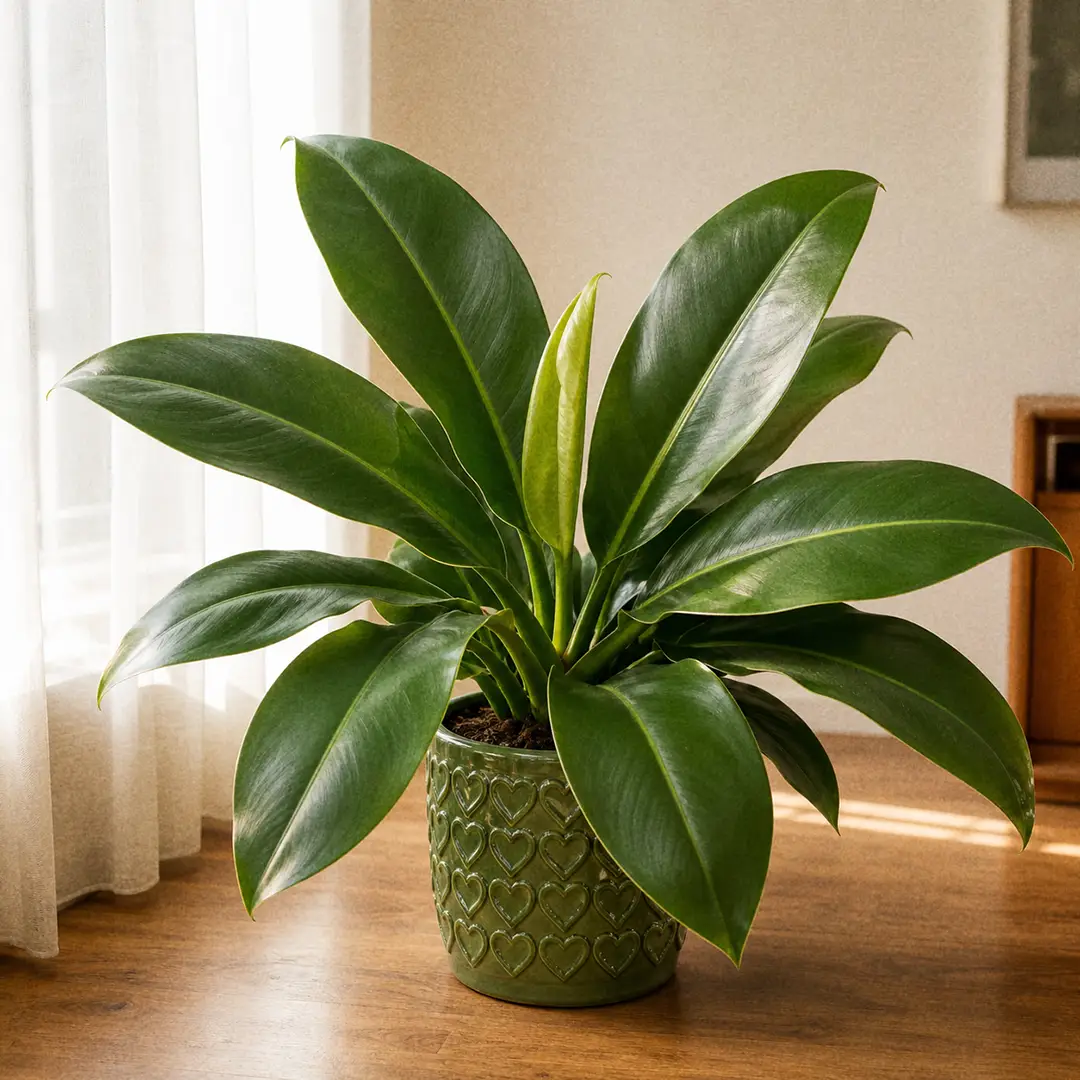
Complete Guide to Imperial Green Care and Growth
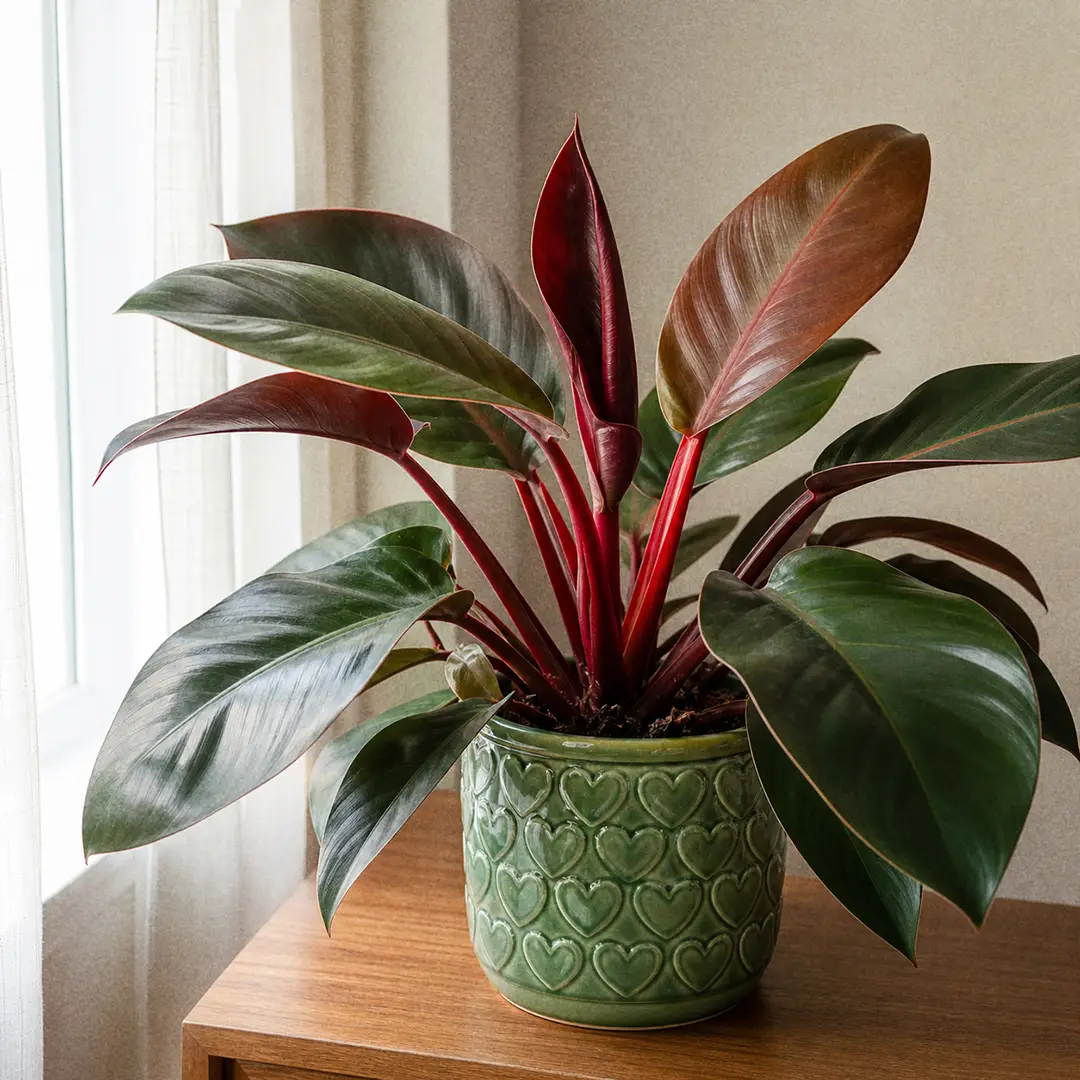
Complete Guide to Rojo Congo Care and Growth
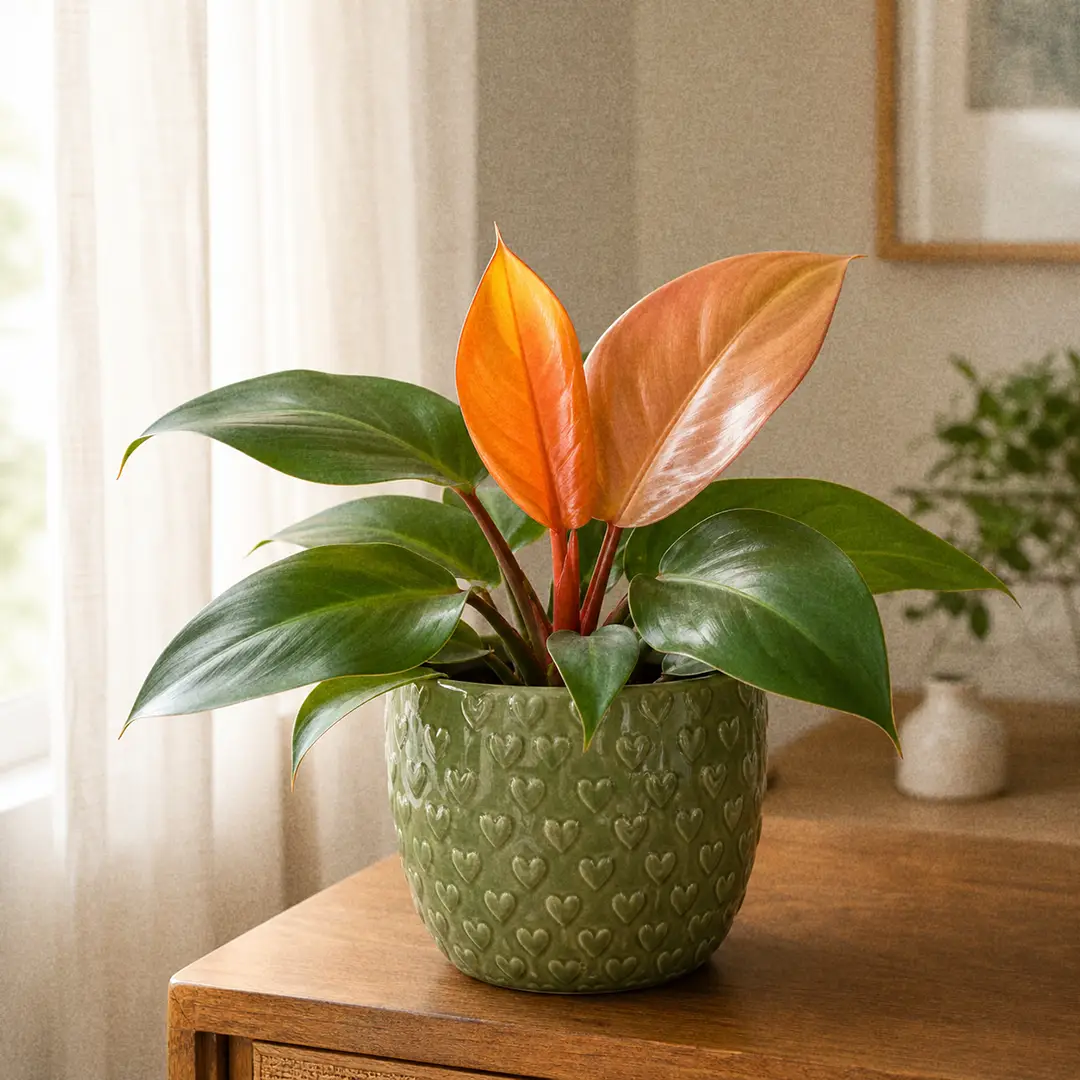
Complete Guide to Prince of Orange Care and Growth
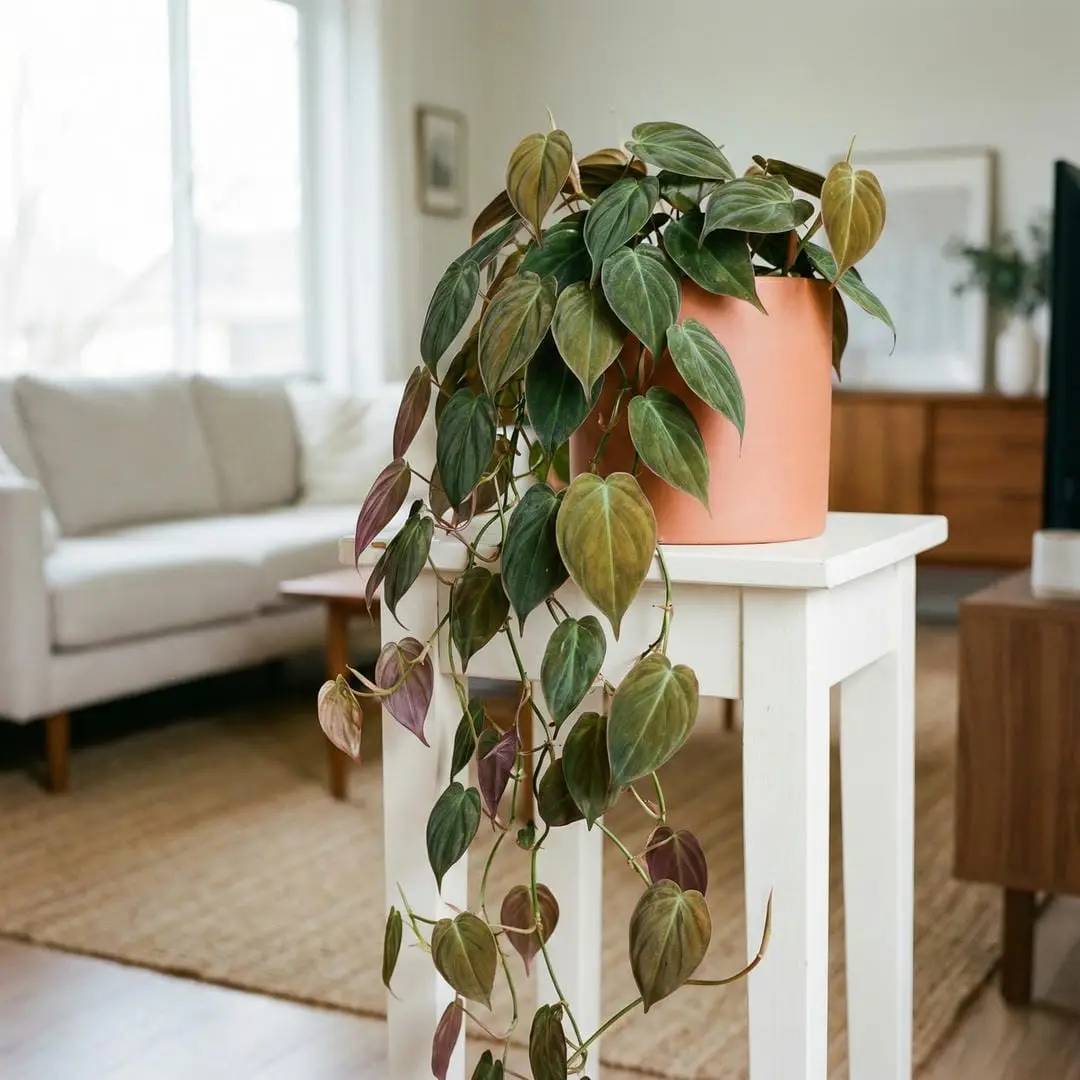
Complete Guide To Velvet Leaf Philodendron Care and Growth
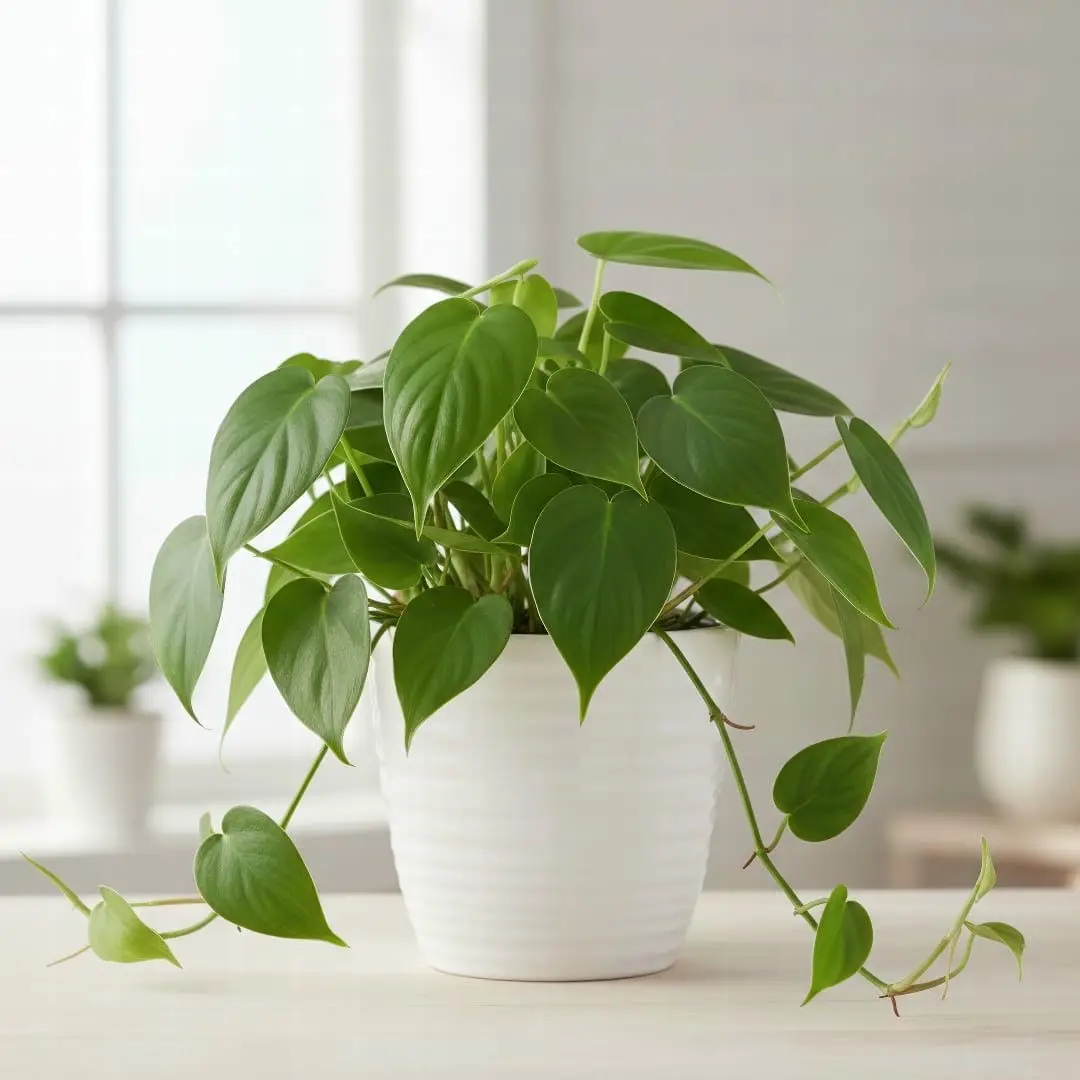
Complete Guide To Heart-leaf Philodendron Care and Growth
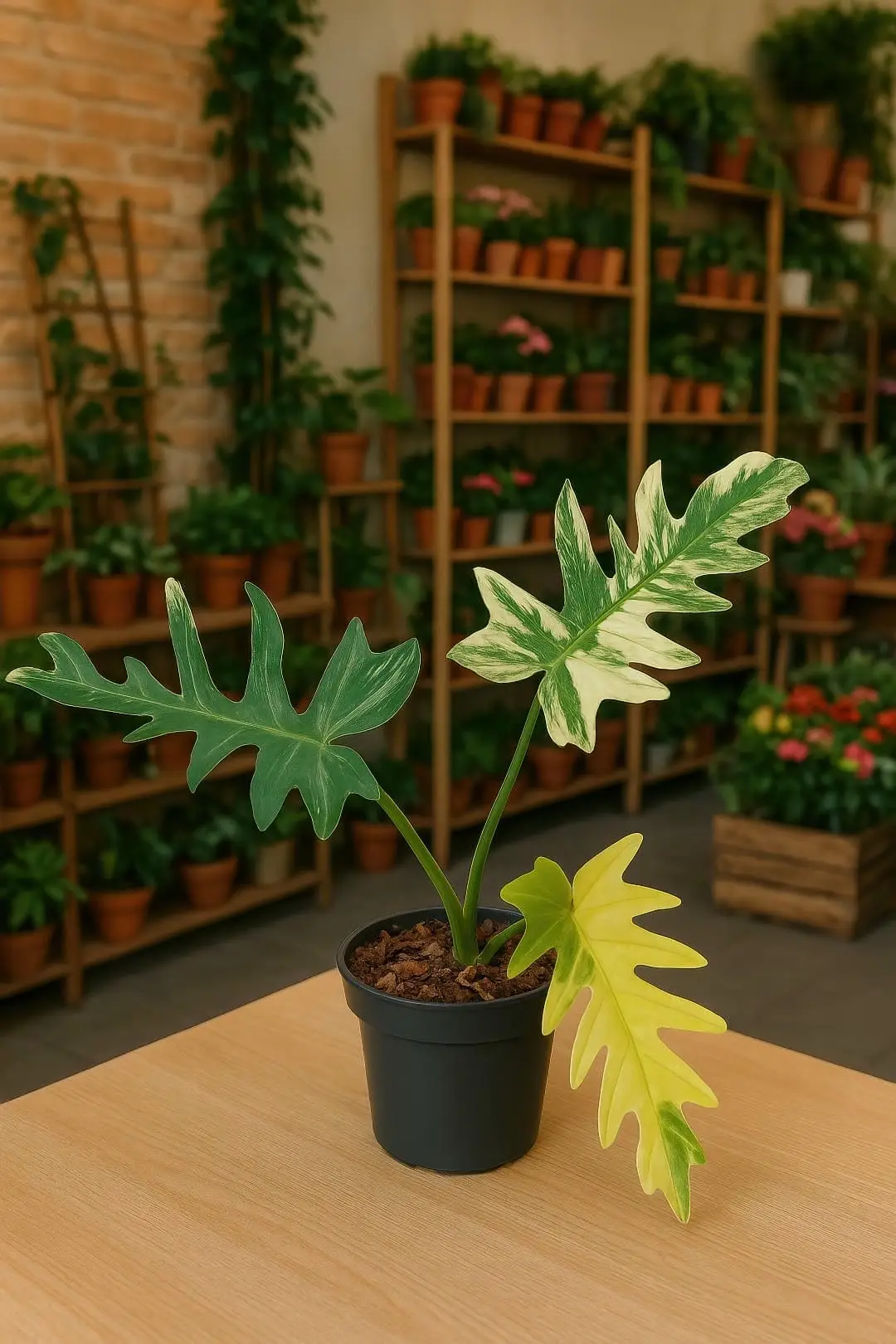
Complete Guide to Philodendron Florida Beauty x Tortum Care and Growth
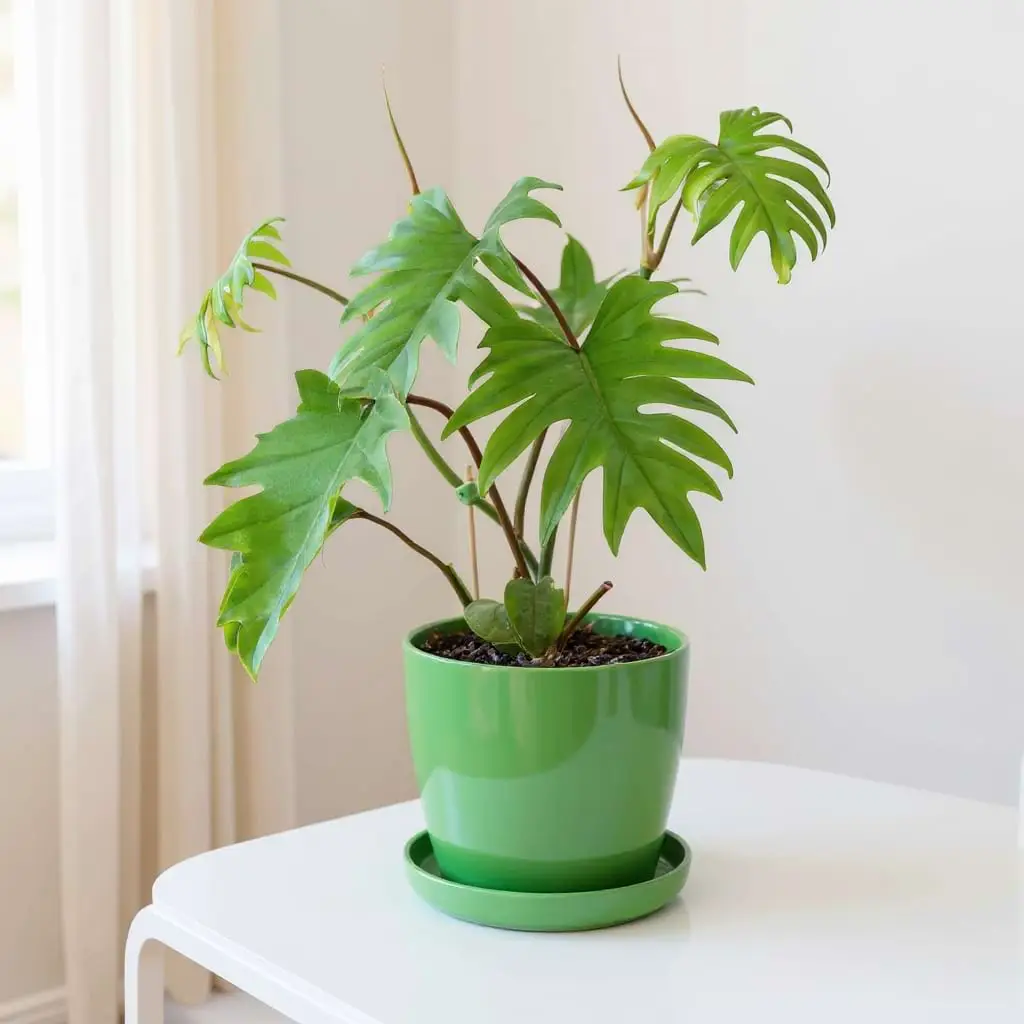
Complete Guide to Philodendron Mayoi Care and Growth
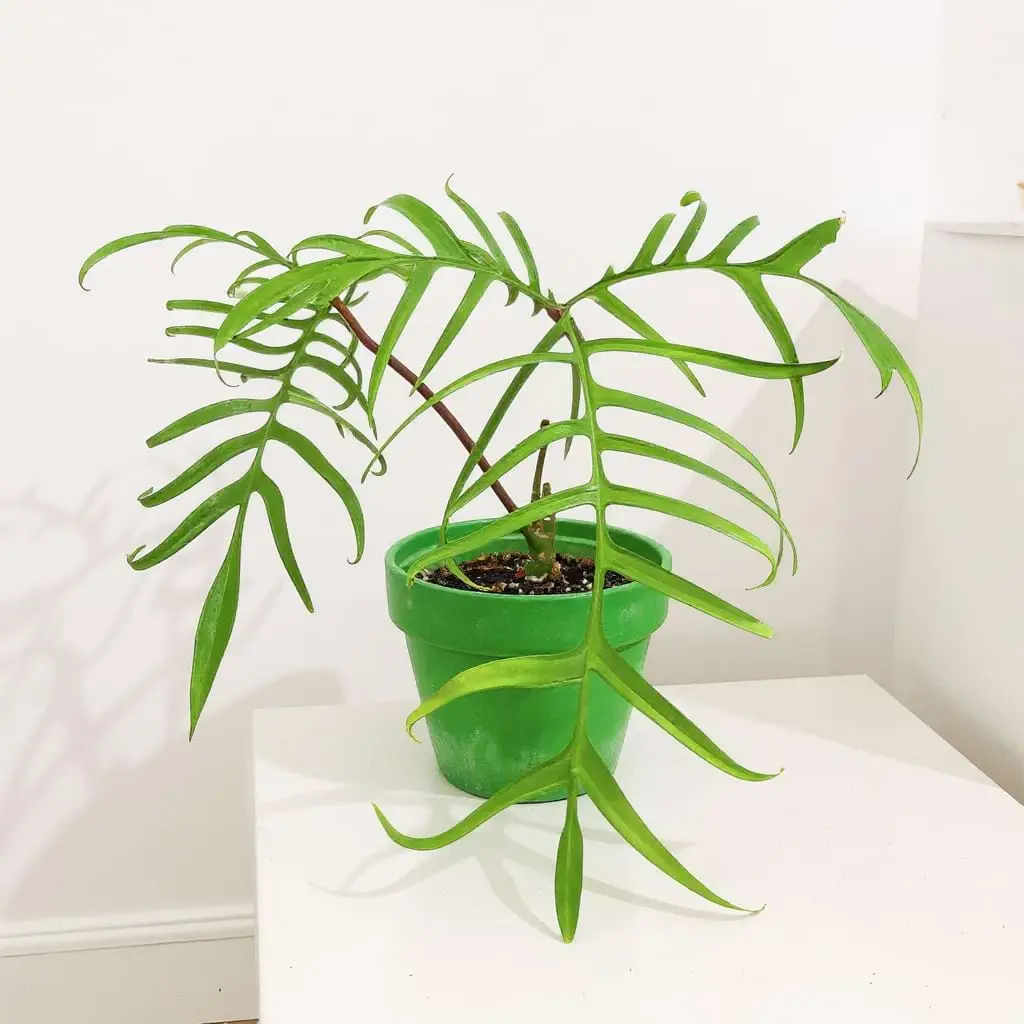
Complete Guide to Philodendron Polypodioides Care and Growth
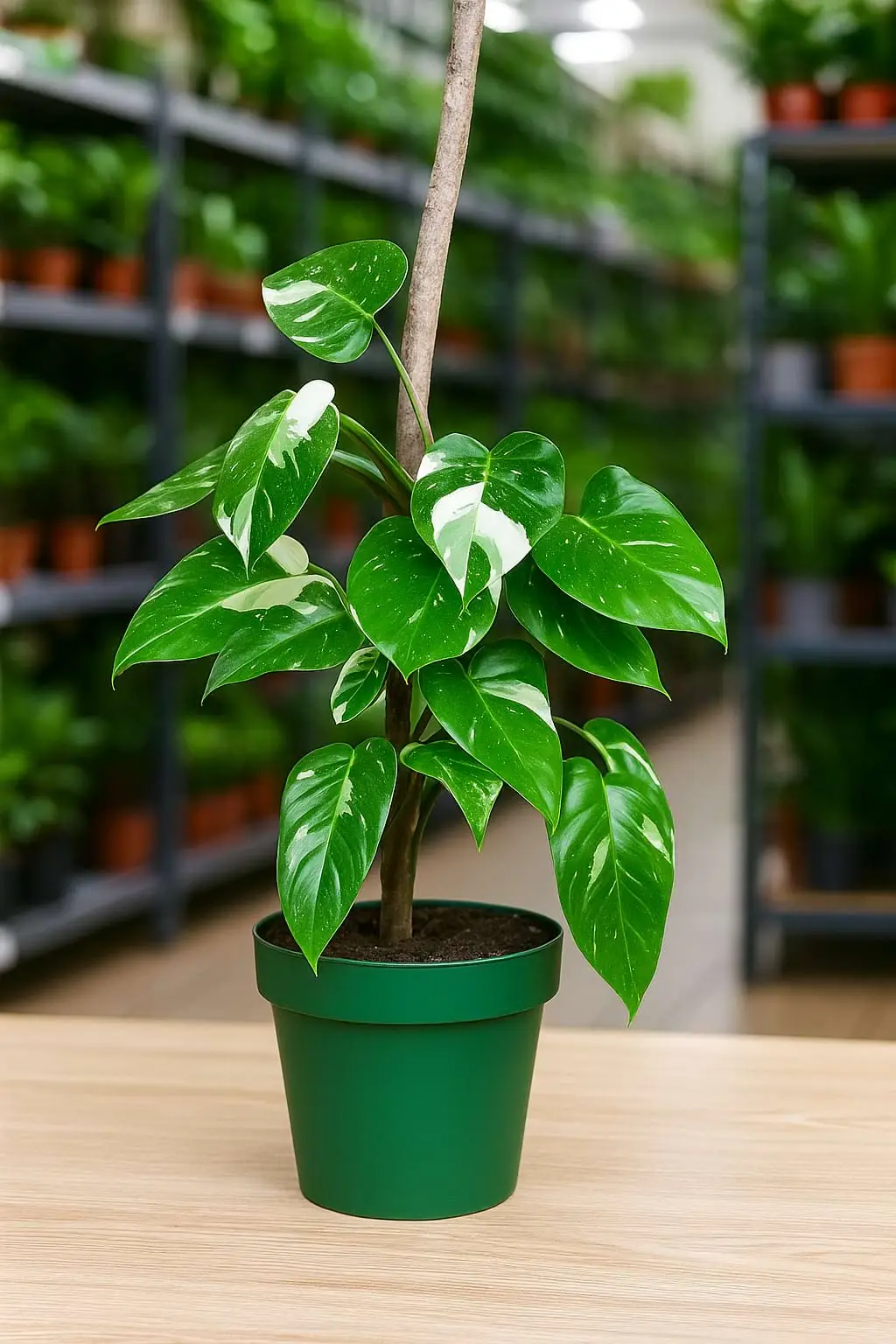
Complete Guide to Philodendron White Princess Care and Growth
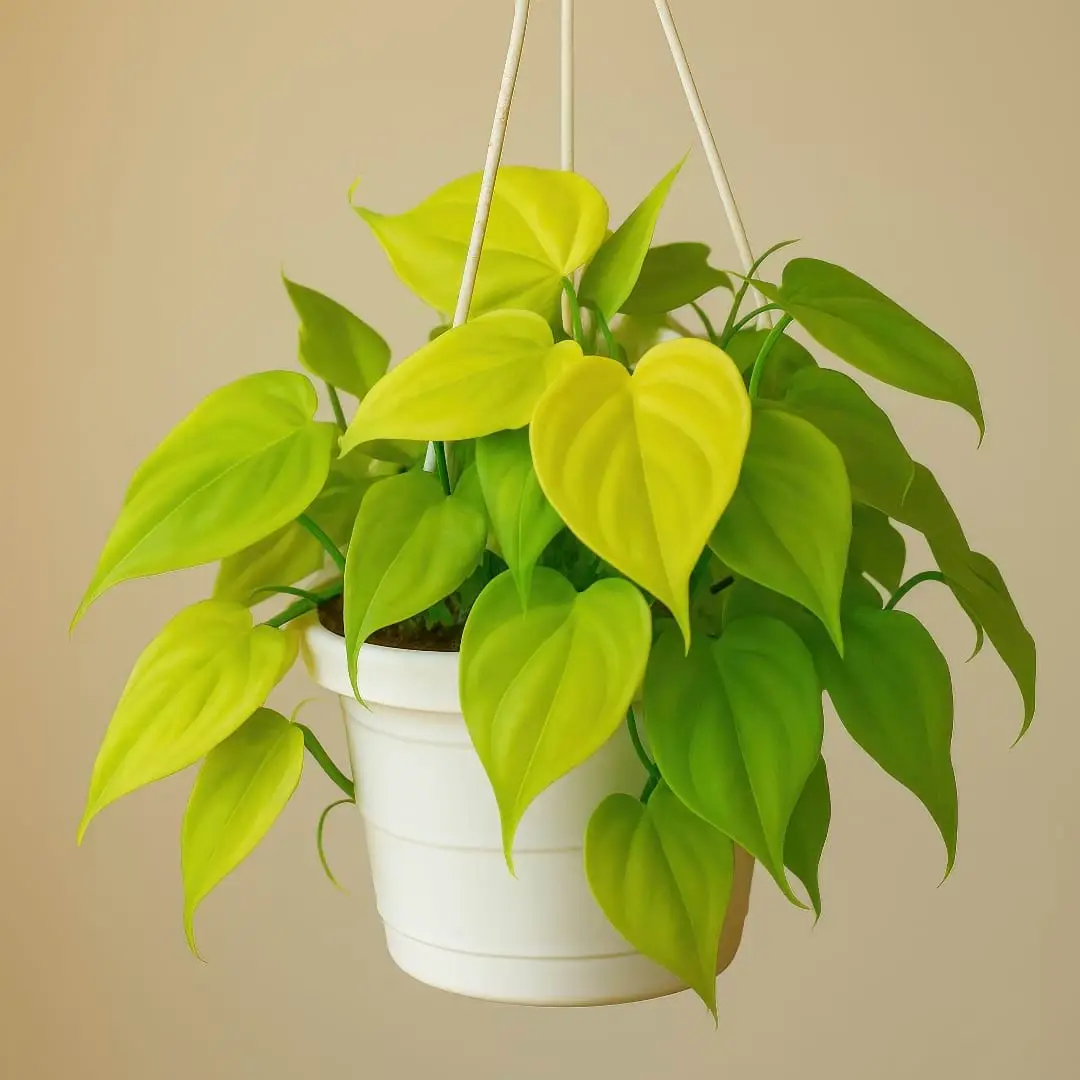
Complete Guide To Lemon Lime Philodendron Care and Growth

Houseplant101 Forum
Questions & Comments
Ask a question, share your plant experience, or help other plant owners.
Comments are temporarily unavailable.
Open the Houseplant101 ForumNo comments yet
Be the first to ask a question or share your experience about this page.
Log in or create an account
Comments use your Houseplant101 Forum account, but you can stay on this page.
Create a new account