
Iron Cross Begonia
Begonia masoniana
Mason's Begonia, Begonia Iron Cross, Begonia mas, Crocodile Begonia


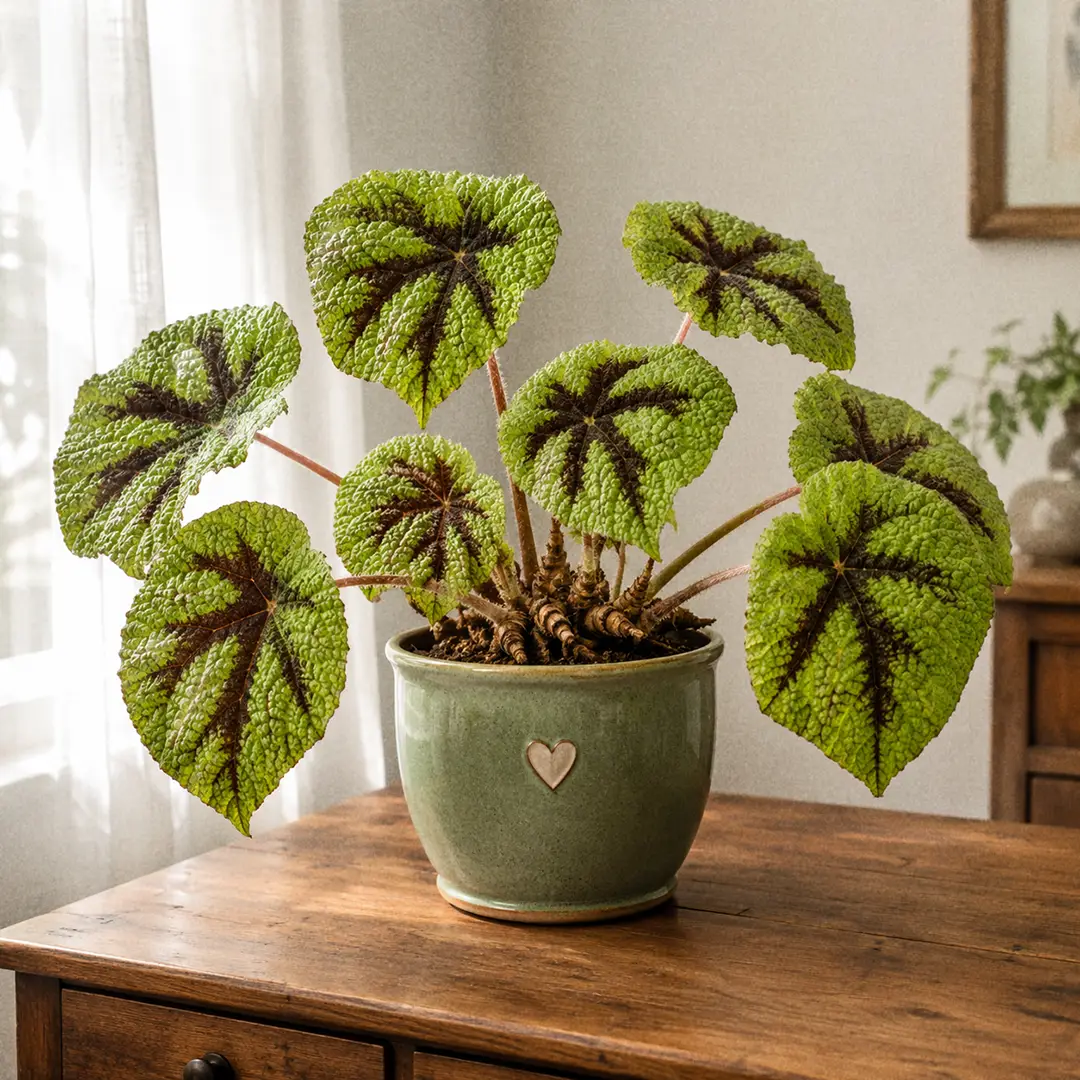
The Iron Cross Begonia (Begonia masoniana) is a rhizomatous showpiece with bright apple-green, deeply puckered leaves marked by a dramatic chocolate iron-cross pattern at the center. A statement foliage plant that brings texture, contrast, and quiet drama to a humid, brightly lit corner.
📝 Iron Cross Begonia Care Notes
🌿 Care Instructions
⚠️ Common Pests
📊 Growth Information
🪴 In This Guide 🪴

☀️ Iron Cross Begonia Light Requirements (Bright Indirect, No Direct Sun)
Light shapes the whole look of this plant. Generous bright indirect light brings out the deepest cross pattern, the most vivid green base, and the tightest puckering. Marginal light makes new leaves stretched, pale, and smoother. Direct sun scorches them within a single afternoon.
The Sweet Spot
The Iron Cross is happiest in bright, filtered, indirect light for six to eight hours a day. Two to three feet back from a bright east-facing window is ideal. North-facing rooms work if the window is large. South or west works with a sheer curtain or the plant pulled four to six feet back from the glass.

Quick test: hold your hand palm-down where you plan to place the plant. A soft fuzzy shadow means bright indirect. A sharp shadow means too sunny. No shadow means too dim.
Too Little vs. Too Much Light
A starved plant stretches petioles, the rhizome crawls toward the brightest point, and the cross marking fades to a brownish smudge. Move closer or add a grow light. Too much direct sun bleaches the upper surface and leaves crispy curled tips. Damaged leaves do not heal, but the next ones come in clean once you fix the placement.
In a windowless space, a full-spectrum LED running ten to twelve hours a day fourteen to eighteen inches above the canopy grows beautiful Iron Cross Begonias.
💧 Iron Cross Begonia Watering Guide (Top Inch Dry, Then Drench)
The rhizome is fleshy and stores moisture, the roots are shallow, and the leaves are slow to lose water. The plant rots quickly if the soil stays soggy but bounces back fast from a dry-down. When in doubt, err on the dry side.
How Often
Push a finger one knuckle deep. If the top inch is dry and the soil deeper is lightly damp, water. In a typical home, that lands every five to eight days in spring and summer, every ten to fourteen days in winter. The watering houseplants primer covers the basics.
How to Water
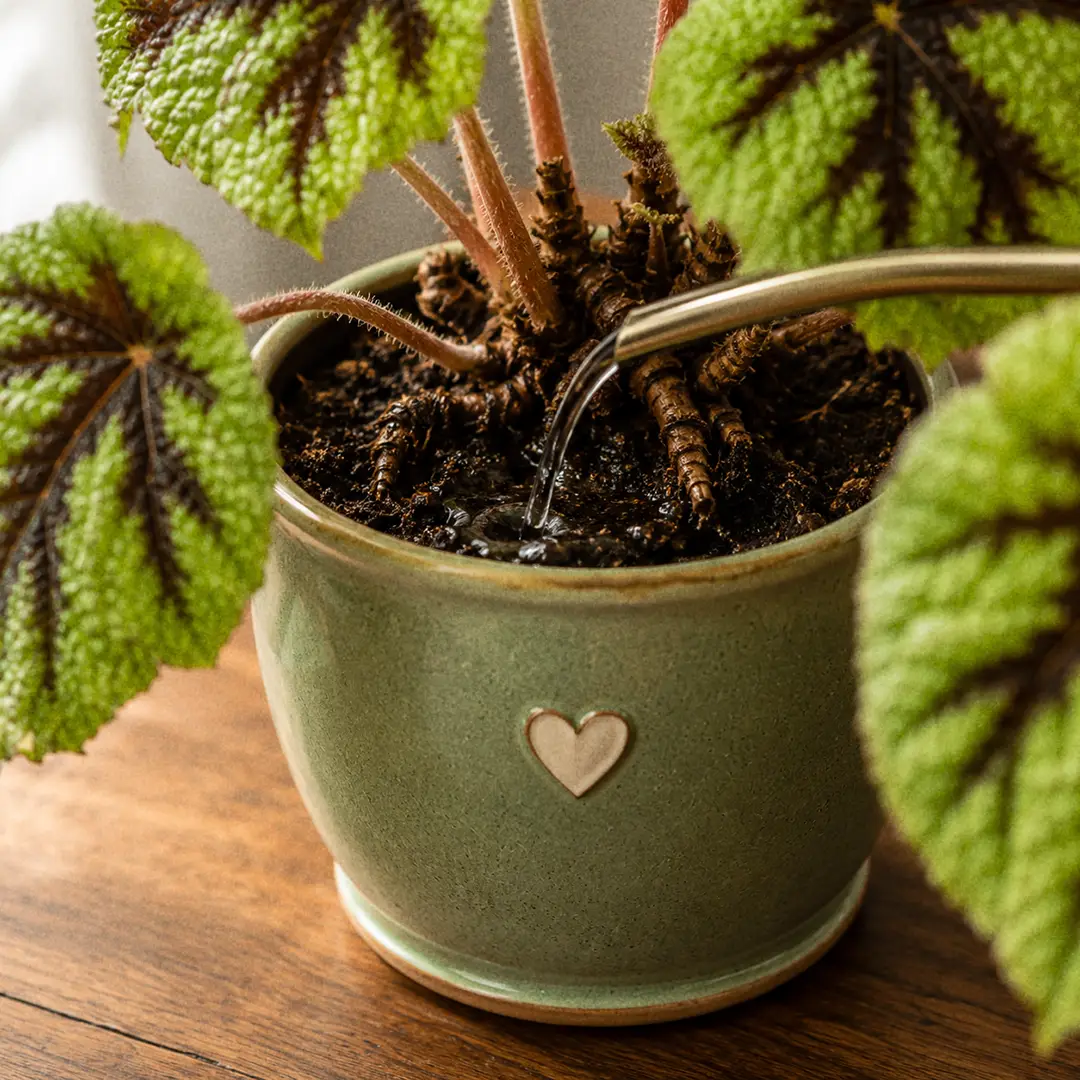
Water at the soil line, never over the leaves. The puckered surface traps droplets in tiny pockets, and water sitting on foliage overnight invites powdery mildew and bacterial leaf spot. Pour slowly with a slim-spouted can. Water until liquid runs from the drainage hole, drain fully, and tip out anything in the saucer.
If the soil pulls away from the pot sides, use bottom watering: set the pot in room-temperature water for fifteen to twenty minutes, then drain.
Signs of Overwatering
- A sour or musty smell from the soil
- Lower leaves yellowing all in the same week
- Soft, mushy patches on the rhizome
- A film of algae or white mold on the soil
Signs of Underwatering
- Leaves drooping and curling downward
- Crispy brown edges
- Soil pulling away from the pot
- New leaves stalling halfway
A thirsty plant perks up within a day. A drowned one usually needs a rescue repot. Most tap water is fine, but flush the pot with plain water once or twice a year to clear salts. Switch to filtered or rainwater if your tap runs hard.
🪴 Best Soil for Iron Cross Begonia (Light, Airy, Fast Drainage)
What the Soil Needs
Standard potting soil packs down around the rhizome, holds water at the surface, and rots the shallow roots. The Iron Cross wants a chunky, fast-draining mix.
A Simple DIY Mix
- 2 parts quality houseplant or African violet mix
- 1 part fine orchid bark
- 1 part perlite or pumice
- 1/2 part horticultural charcoal
- 1/2 part coco coir or leaf mold
Squeeze a fistful: should hold loosely, then crumble. The base soil guide covers what each ingredient does. If DIY is not your thing, lighten a "begonia mix" or "African violet mix" with perlite and a handful of bark. Skip anything labeled "moisture control."
A single bad week of overwatering in dense soil can take this plant out. Chunky airy mix in a pot with real drainage is the most important care decision you make.
🍼 Fertilizing Iron Cross Begonia (Light Feed in Spring and Summer)
Iron Cross Begonias are moderate feeders. A steady warm-month rhythm produces bigger leaves with deeper cross markings. Skip winter feeding completely.
When and What
Feed every three to four weeks from March through September. A balanced liquid fertilizer (10-10-10 or 20-20-20) at half strength works well. The fertilizing guide explains why half strength is safer. A small pinch of slow-release granules in early spring will feed the plant for several months.
Reading the Plant
- New leaves the same size as older ones, well puckered, with a clear cross: feeding is on point.
- Smaller smoother leaves with faded markings: bump frequency slightly, or check the light first.
- Brown tips and white crust on soil: salt buildup. Flush with plain water and skip a feeding.
- Pale stripes between veins: try a quarter-strength micronutrient feed once a month.
🌡️ Iron Cross Begonia Temperature Range
Ideal Range
A subtropical understory plant: warm and stable, with cooler nights welcome. Sweet spot is 65 to 75°F (18 to 24°C).
Drafts and Vents
Avoid cold drafts, heating vents, AC blowing on the leaves, anything below 55°F (13°C), and big swings within a day. In autumn, move the plant a step away from cold glass. In summer it tolerates up to 85°F as long as humidity stays up.
Keep It Indoors
I keep Iron Cross indoors year-round; outdoor sun and breezes invite every problem this plant is prone to.
💦 Iron Cross Begonia Humidity Requirements (High and Steady)
Humidity is the single most important variable. Coming from humid subtropical forests, Begonia masoniana prefers moist air.
- Ideal: 60 to 75 percent
- Tolerable: 50 percent
- Trouble below: 40 percent
- Survives, barely: 30 percent
Easy Boosts
- Run a small humidifier on a timer
- Group with other tropical plants
- Set the pot on a pebble tray
- Move to a bright bathroom or kitchen
- Tuck into a glass plant cabinet or terrarium
- Cluster with other plants that love humidity
Do Not Mist
The general humidity guide covers the topic, but this is one of the few plants where misting actively causes harm. The puckered leaves trap droplets, and that moist surface is exactly where powdery mildew starts. Raise ambient air moisture instead.
🌸 Iron Cross Begonia Flowers (Modest and Optional)
What the Flowers Look Like
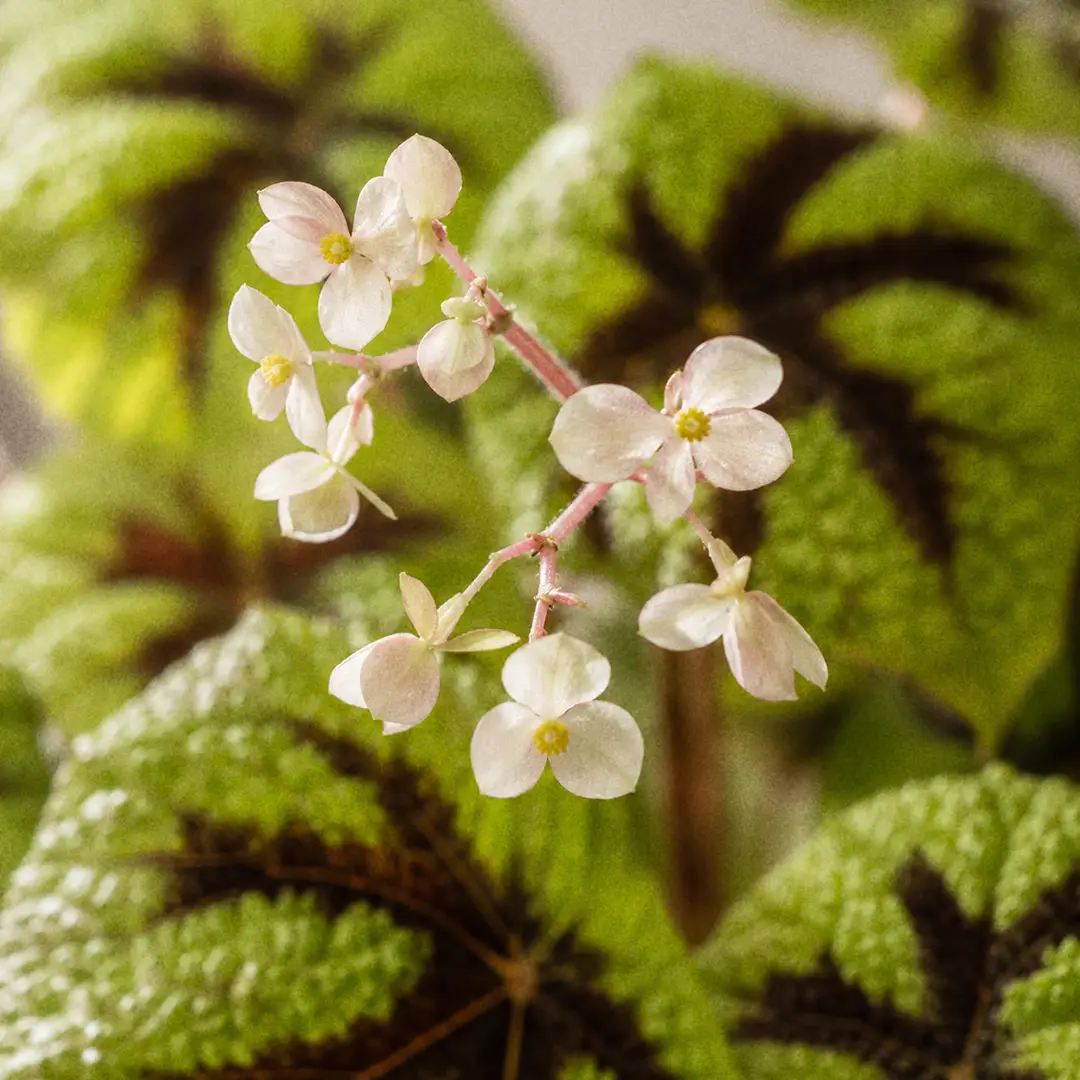
This plant is grown for its leaves. A happy mature Iron Cross occasionally throws small clusters of greenish-white to pale pink blooms on slender stalks in spring or early summer. They are pretty up close but cannot compete with the foliage.
Pinch or Keep?
Most growers pinch the flower stalks off as soon as they appear, redirecting energy into bigger leaves. If you enjoy the blooms, leave them. Either choice is fine. If yours has never bloomed, that is normal indoors.
🏷️ Iron Cross Begonia Types and Varieties
The Iron Cross is a single named species, Begonia masoniana, with a few distinct forms and a handful of lookalikes.
Classic Iron Cross (Begonia masoniana)
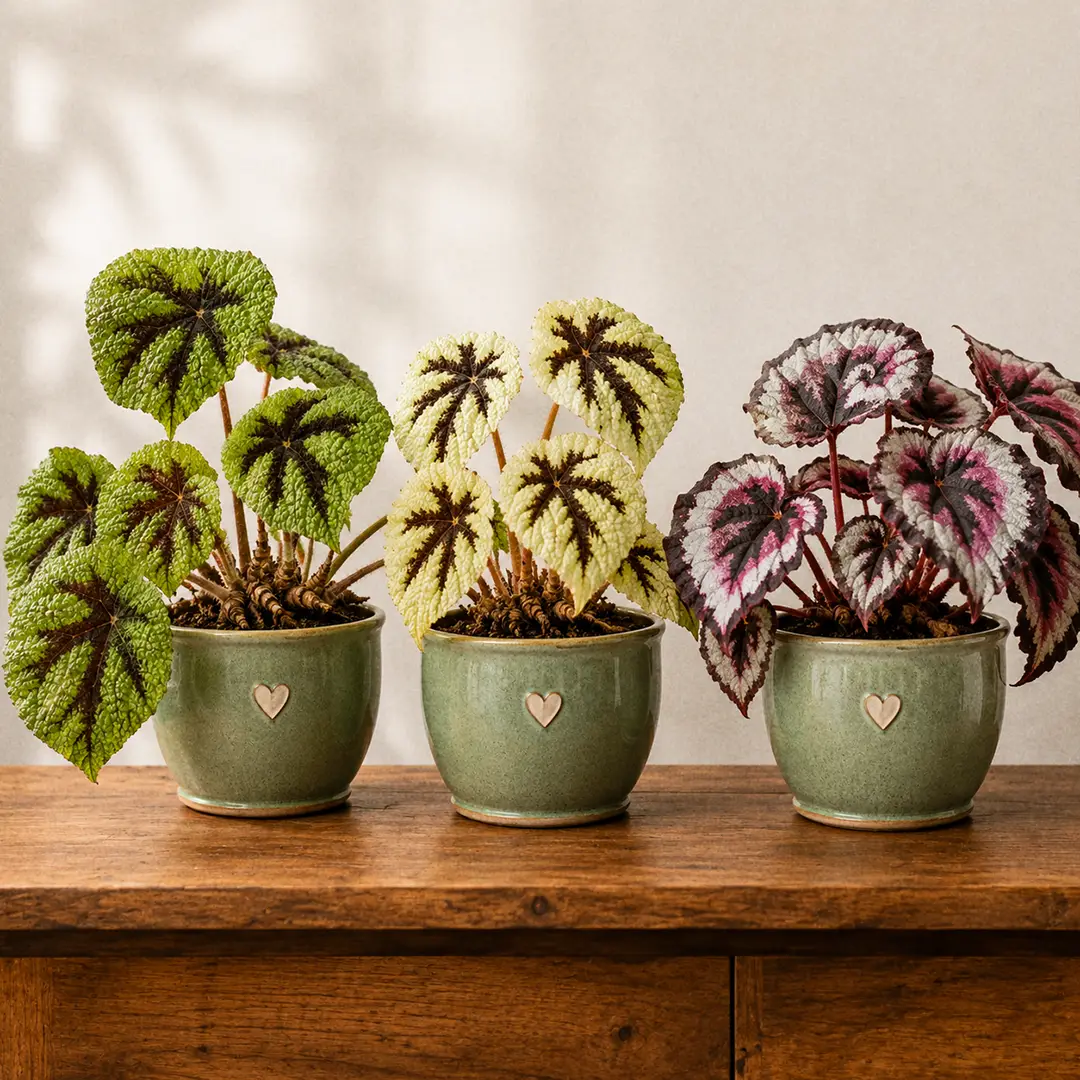
The standard form. Bright apple-green leaves, deeply puckered, chocolate-brown cross radiating from the petiole. Twelve to eighteen inches tall and wide.
Iron Cross Yellow / 'Rock' Form
Cream-yellow to pale chartreuse leaves with the same dark cross. Slightly fussier about humidity. Pricier and harder to find.
'Mountain Haze'
Larger leaves, more silvery green base, softer diffused cross. Same care as the classic.
Quick Compare
The Polka Dot Begonia (Begonia maculata) is a cane begonia: tall bamboo stems, smooth angel-wing leaves with silver spots. Watering and propagation are completely different.
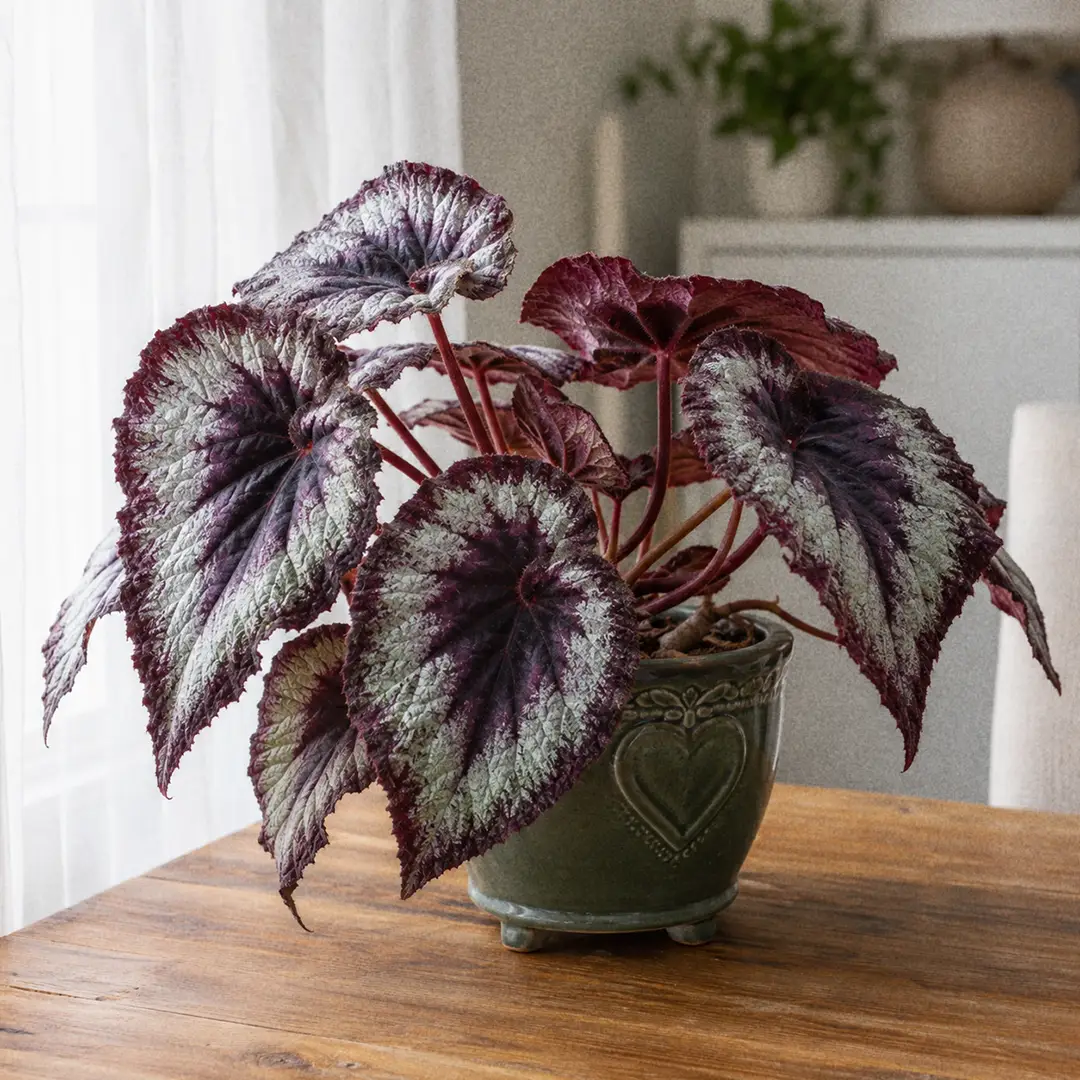
The Begonia Rex group covers thousands of rhizomatous cultivars with silver, burgundy, or pink patterning. Care is similar; the leaf pattern is the difference.
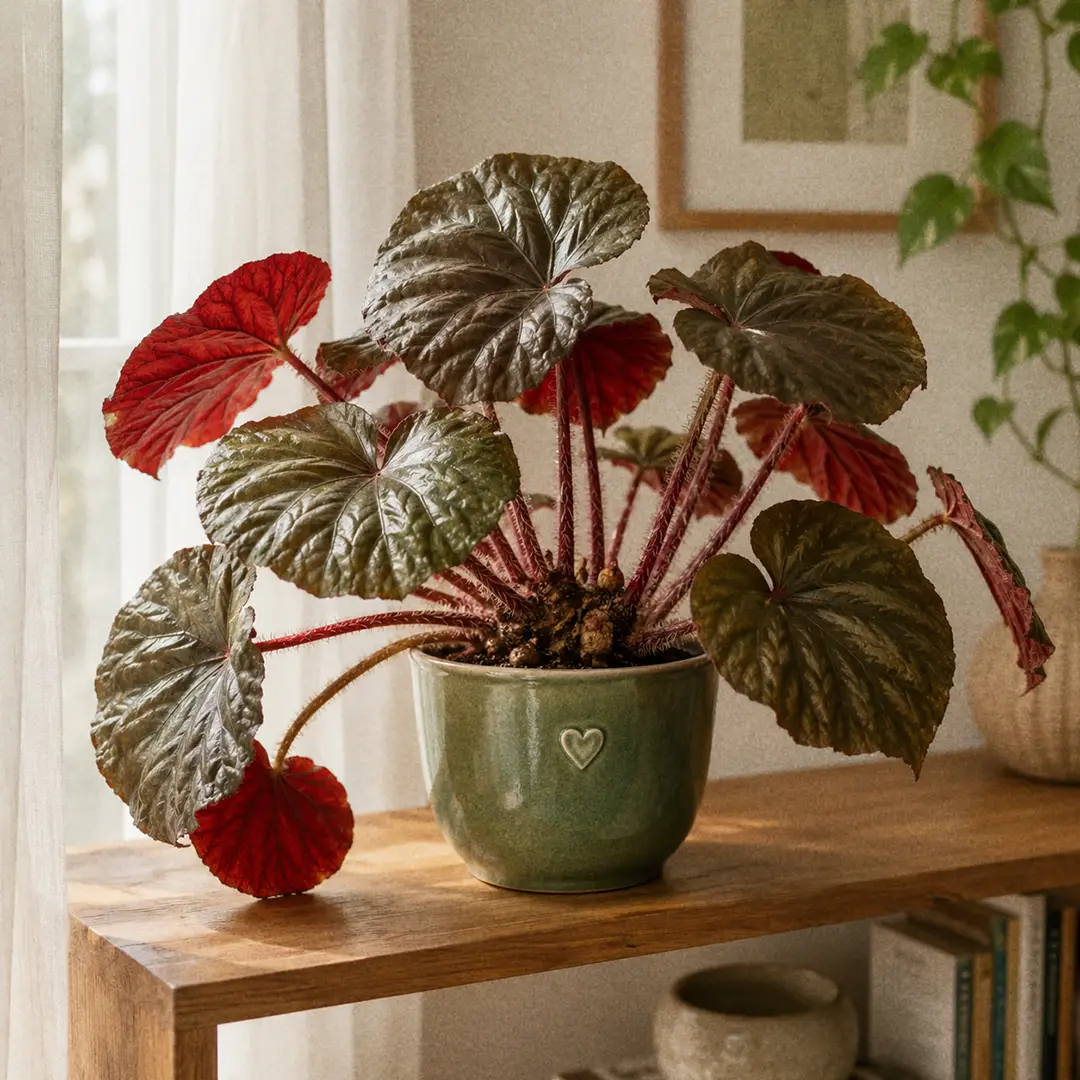
The Beefsteak Begonia is also rhizomatous, with smooth glossy round leaves and a red underside. More drought-tolerant than the Iron Cross.
The Strawberry Begonia is not a begonia at all (it is a saxifrage) but is pet-safe, which matters if you have curious pets.
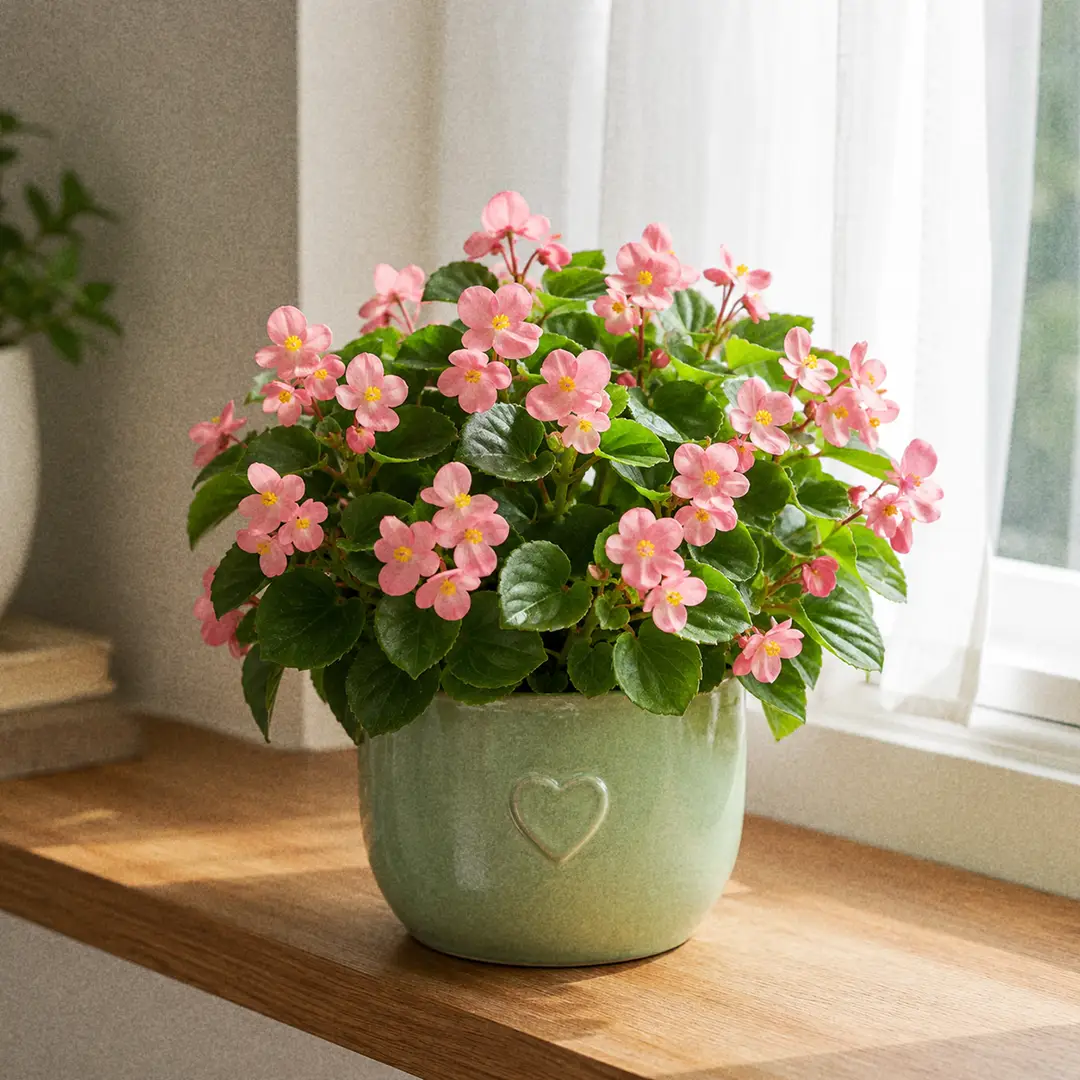
The Wax Begonia is fibrous-rooted with small glossy leaves and continuous flowers. Easier and more flower-forward; tolerates dry air better.
When buying, check the rhizome: a real Iron Cross has a thick segmented horizontal rhizome at the soil surface. Tall woody stems mean a different begonia.
🪴 Potting and Repotting Iron Cross Begonia
The rhizome creeps horizontally, and roots fan out shallowly. A wide low pot beats a tall narrow one. Going up too quickly traps unused moisture and rots the plant.
When to Repot
Plan to repot every two years, or when the rhizome creeps over the rim, roots circle tightly, water runs straight through, or growth slows.
Choose a Wide, Shallow Pot
Wider than tall, only one to two inches wider than the current pot. Drainage holes required. Terracotta is great because it dries faster.
How to Repot
- Water lightly the day before.
- Fill the bottom inch with chunky begonia mix.
- Slide the plant out. Brush soil from the rhizome and trim soft brown sections.
- Set at the same depth: the rhizome should sit at or just above the soil line, never buried.
- Backfill, tap to settle, water lightly, return to its bright spot.
The repotting guide covers timing and pot choice. Skip fertilizer for four weeks after repotting.
Never Bury the Rhizome
This is the most common new-owner mistake. A buried rhizome traps moisture against the crown and rots from the centre out. Set it on top of the soil, with only the roots underneath.
✂️ Pruning Iron Cross Begonia
Pruning is mostly cleanup. The plant stays naturally compact.
What to Prune
- Yellowing or spent leaves: cut the petiole at its base.
- Damaged or torn leaves: same approach.
- Browned tips: trim following the leaf's rounded shape.
- Flower stalks (if you want bigger leaves): pinch at the base as soon as they appear.
Do not cut into the rhizome itself unless propagating. New leaves emerge along its length from small bud points, so rhizome damage permanently reduces leaf production.
Use clean sharp scissors and wipe blades with rubbing alcohol between cuts to avoid spreading bacterial leaf spot or powdery mildew.
Cleaning
Dust blocks light and dulls the cross pattern. Once a week, lift dust with a soft dry brush. Skip damp cloths, leaf-shine sprays, and water rinses; the puckered surface holds water in tiny pockets and wet leaves overnight invite trouble.
🌱 How to Propagate Iron Cross Begonia
A single leaf can produce a whole new plant, sometimes several. The methods are simple and the success rate is high. The propagation primer covers the broader principles.
Method 1: Whole-Leaf Cuttings
Easiest for first-timers.
- Cut a healthy mature leaf at the petiole, leaving about half an inch attached.
- Insert the petiole into damp begonia mix so the leaf base rests just above the soil.
- Cover with a clear bag or propagation box to hold humidity.
- Place in bright indirect light. Keep soil lightly damp.
- Tiny plantlets emerge at the petiole base in four to eight weeks.
- Separate and pot up once they have two or three leaves of their own.
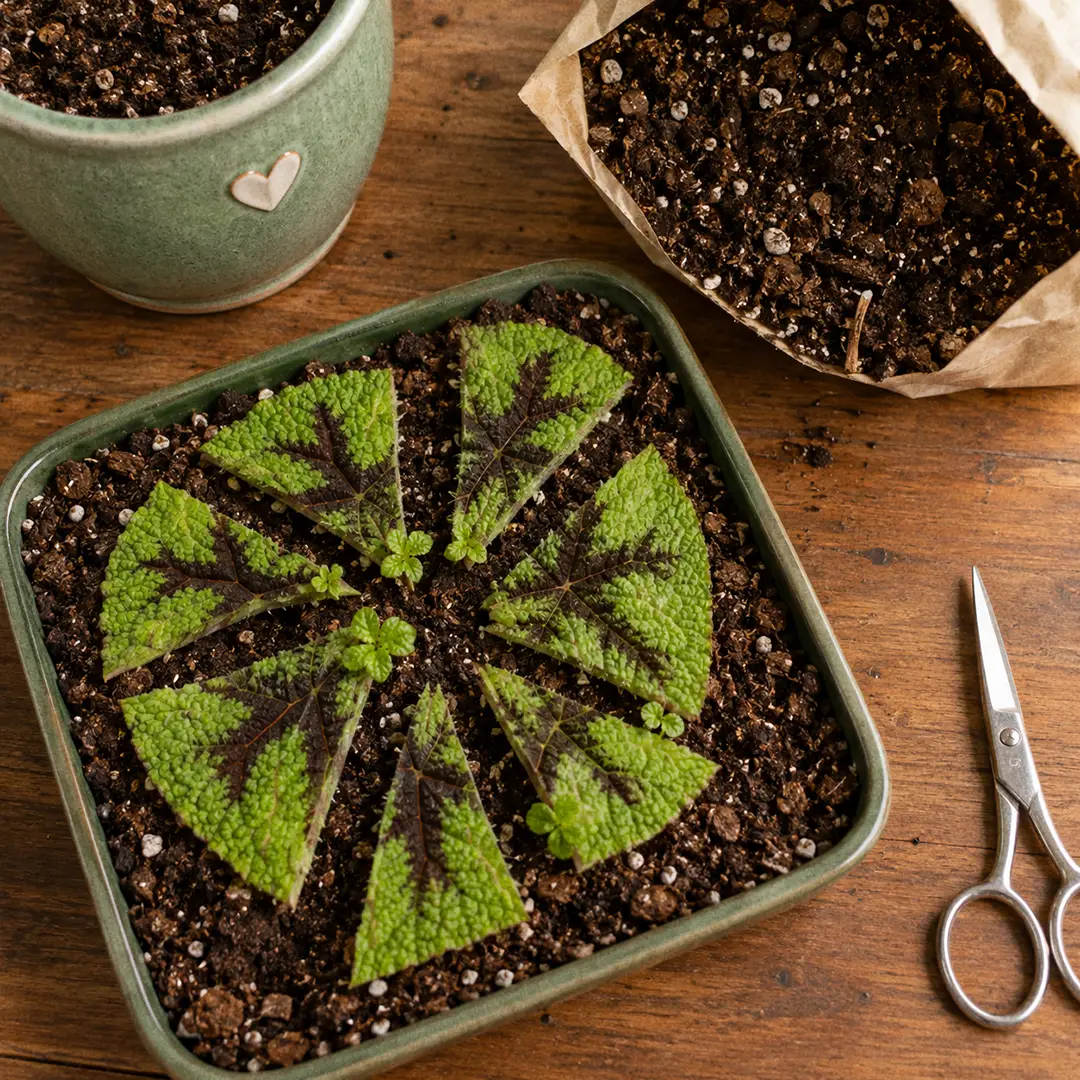
Method 2: Leaf Wedge Cuttings
Turns one leaf into many plants. Each main vein can produce a plantlet.
- Cut a healthy leaf at the petiole.
- Slice into pie-shaped wedges, each with a section of main vein.
- Press wedges gently into damp mix, vein side down, wider edge slightly buried.
- Cover with a clear lid for high humidity.
- Place in bright indirect light, keep soil lightly damp.
- Plantlets emerge at the cut vein points in four to eight weeks.
Method 3: Rhizome Division
If your plant has filled its pot, divide during a spring repot.
- Slide the plant out, brush away soil to see how the rhizome connects.
- Find a natural break point with attached roots and at least two leaf points.
- Cut cleanly with a sterile knife.
- Dust the cuts with cinnamon or charcoal powder.
- Pot each section at the original depth, rhizome at or above the soil surface.
- Water lightly, skip fertilizer for a month.
What Does Not Work
Plain tap water rots the petiole before it roots. Small leaf fragments without a vein section produce nothing. Burying the rhizome deep kills the buried section. The soil propagation walkthrough covers domes, heat mats, and rooting hormone.
🐛 Iron Cross Begonia Pests and Treatment
Inspect leaf undersides and the rhizome every couple of weeks. Quarantine new plants for two weeks before placing them next to your Iron Cross.
Mealybugs hide in unfurling leaves and petiole bases like cotton tufts. Dab with a swab of 70% isopropyl alcohol. They nestle into the puckered texture, so check carefully.
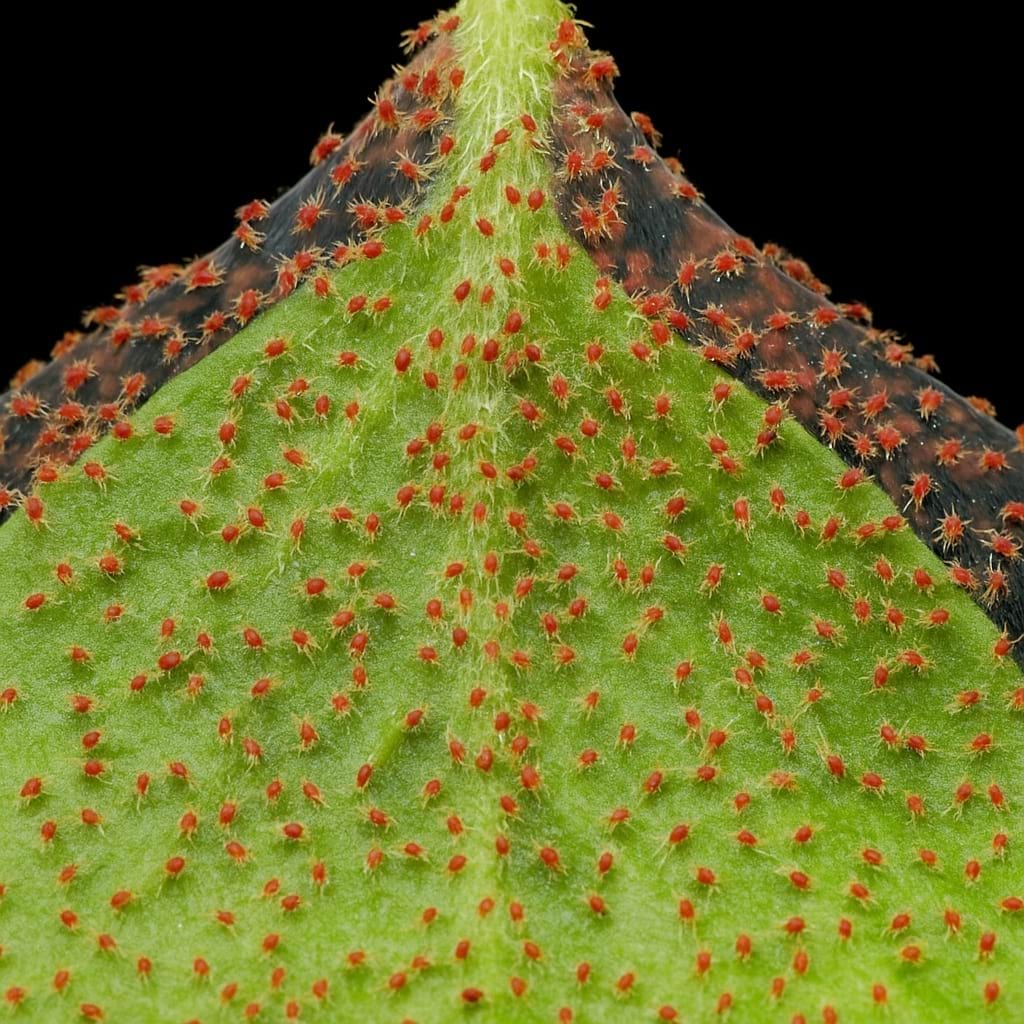
Spider mites move in when winter heating dries the air. Look for webbing and stippled dots. Wipe leaves, raise humidity, treat weekly with insecticidal soap or neem oil. The puckered surface gives them hiding spots, so be thorough.
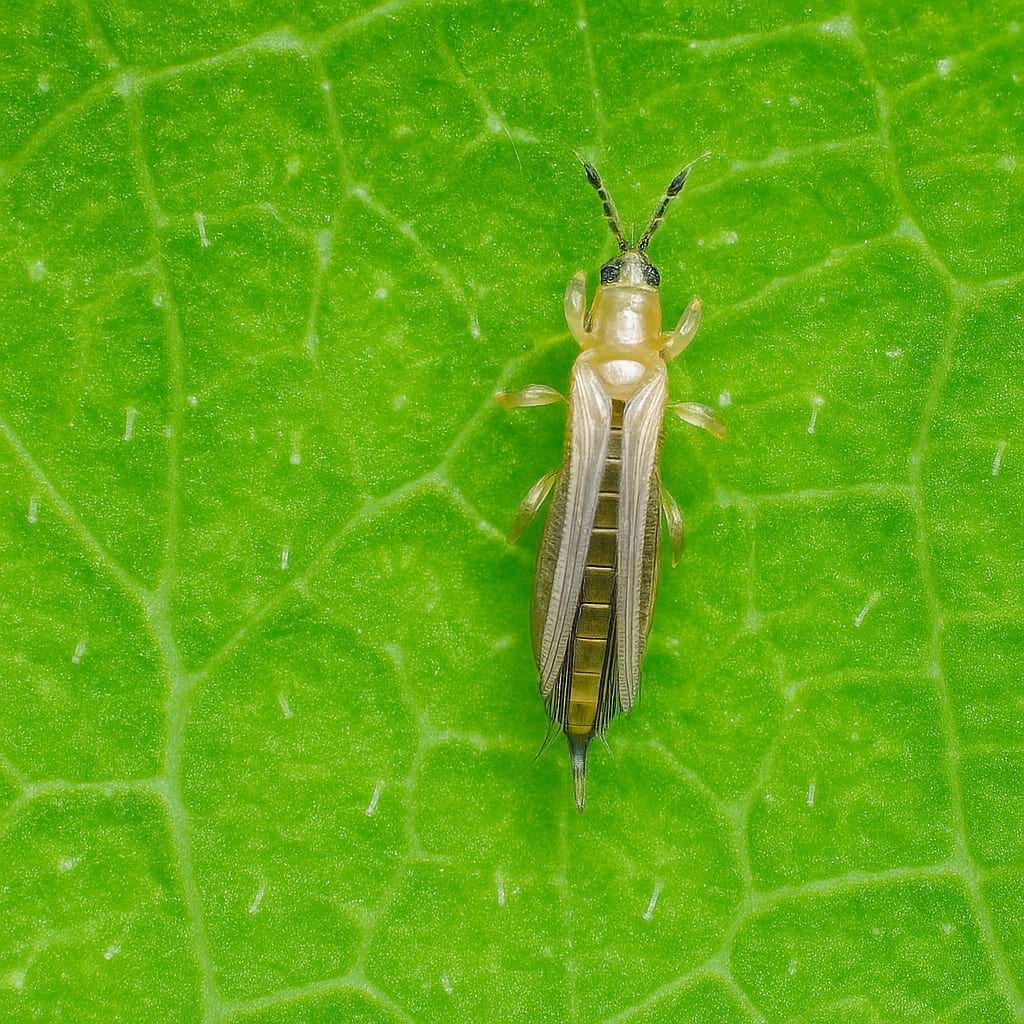
Thrips leave silvery scratches and deform new leaves, robbing them of the cross pattern. Treat aggressively with insecticidal soap or weekly neem oil rounds. Isolate the plant.
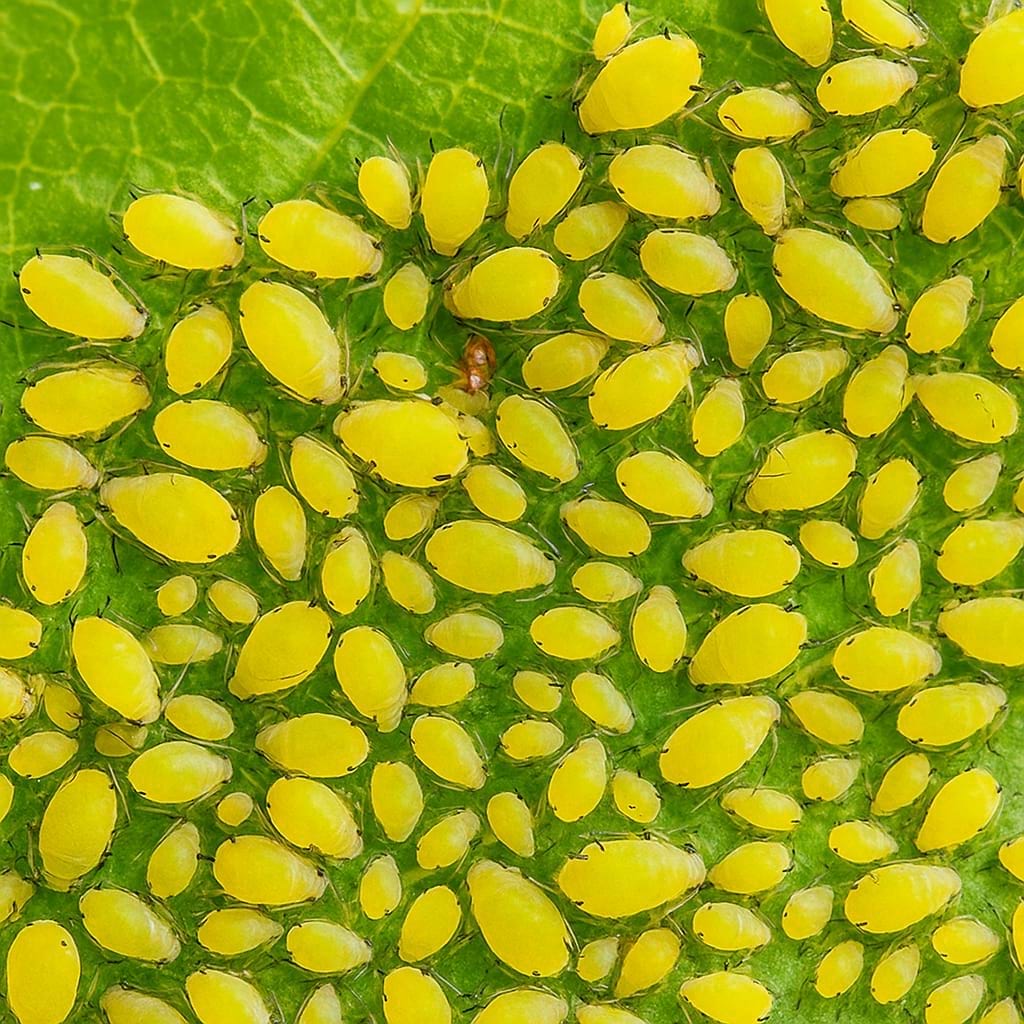
Aphids cluster on the freshest growth. Rinse off in the sink, follow up with insecticidal soap.
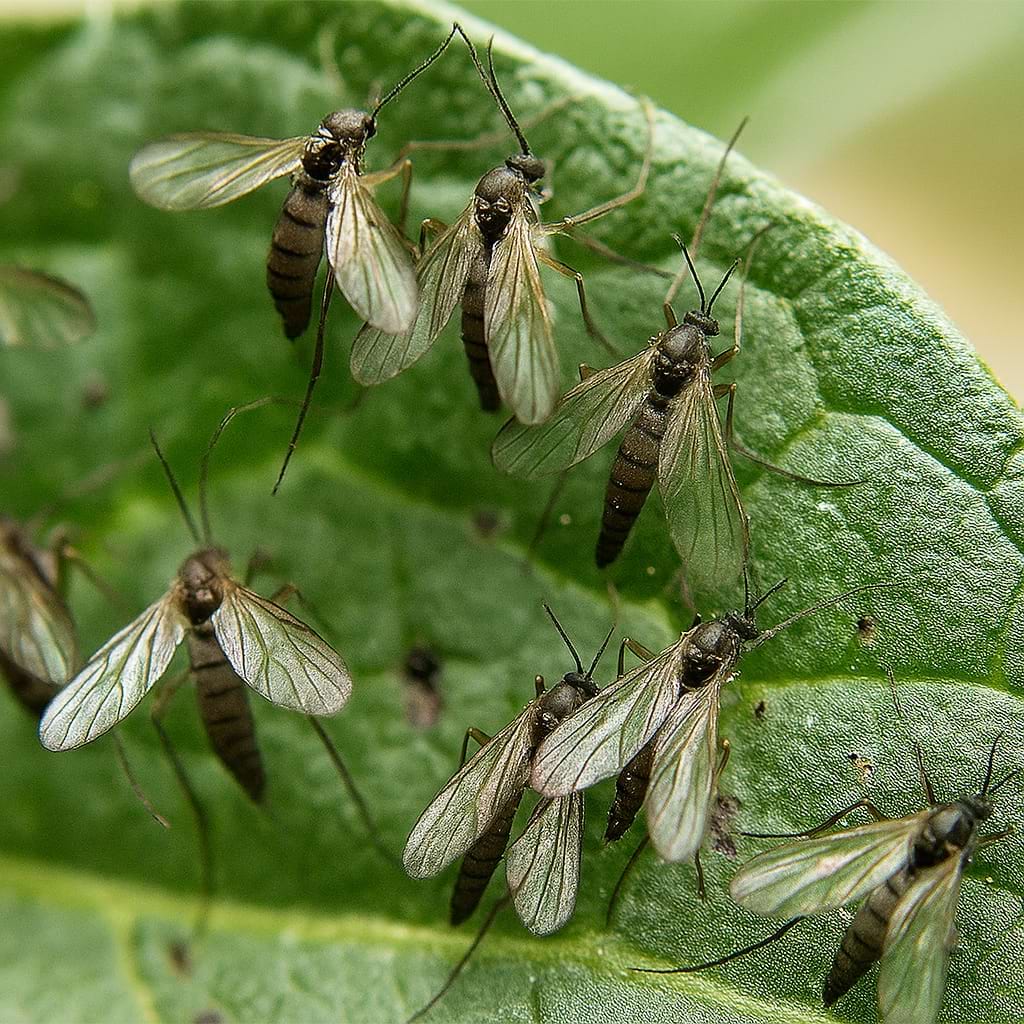
Fungus gnats signal soil staying too wet. Let the top inch dry, top-dress with bark or sand, use yellow sticky traps.
A note on neem oil: apply in the evening, never in direct sun, and never on leaves that will stay wet overnight. The combination of residue, water, and stagnant air can encourage powdery mildew.

🩺 Common Iron Cross Begonia Problems
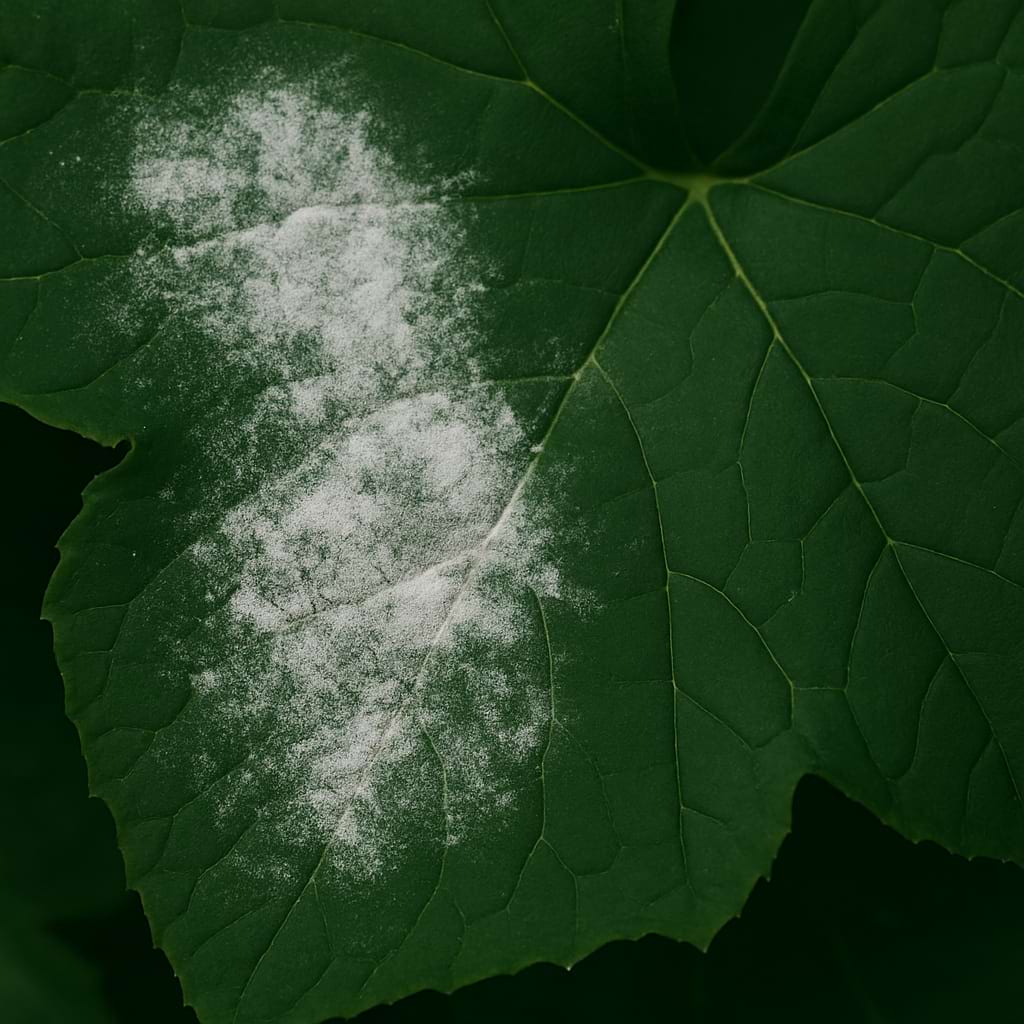
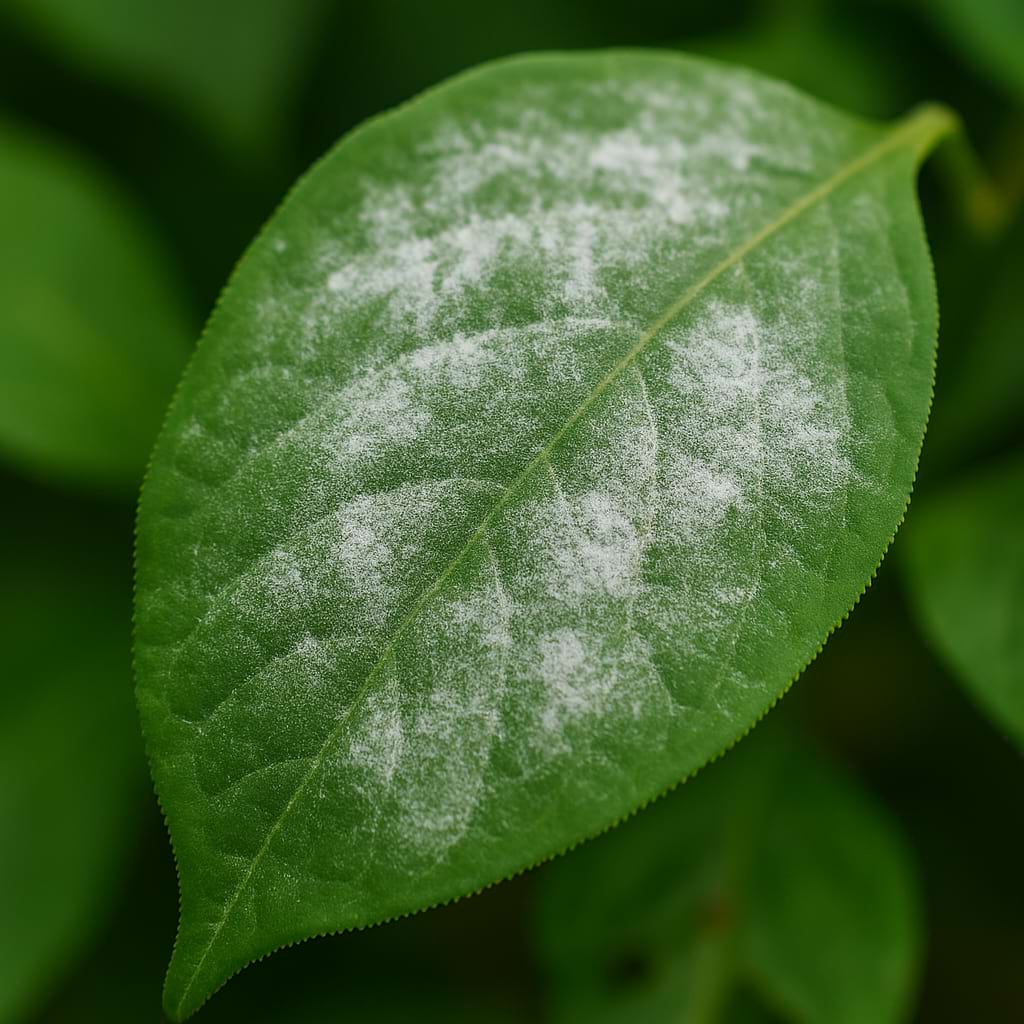
Powdery mildew is the most common problem. White dusty coating on the upper surface, often starting on older leaves. Caused by stagnant humid air, wet leaves, or temperature swings. Treat with a fungicide labeled for begonias, improve airflow with a small fan, and stop misting.
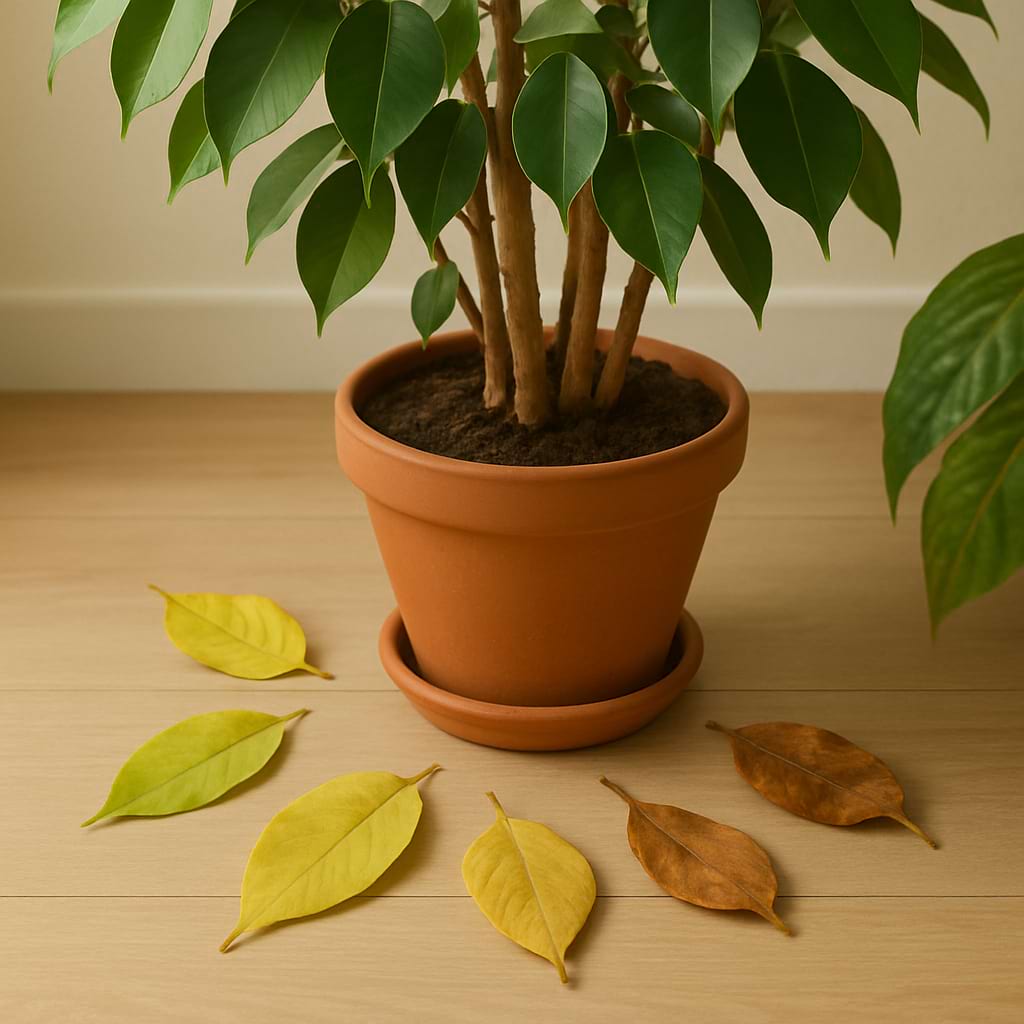
Yellowing leaves on older lower tiers usually mean overwatering or natural aging. Check soil moisture; if it is wet a week after watering, dial back.
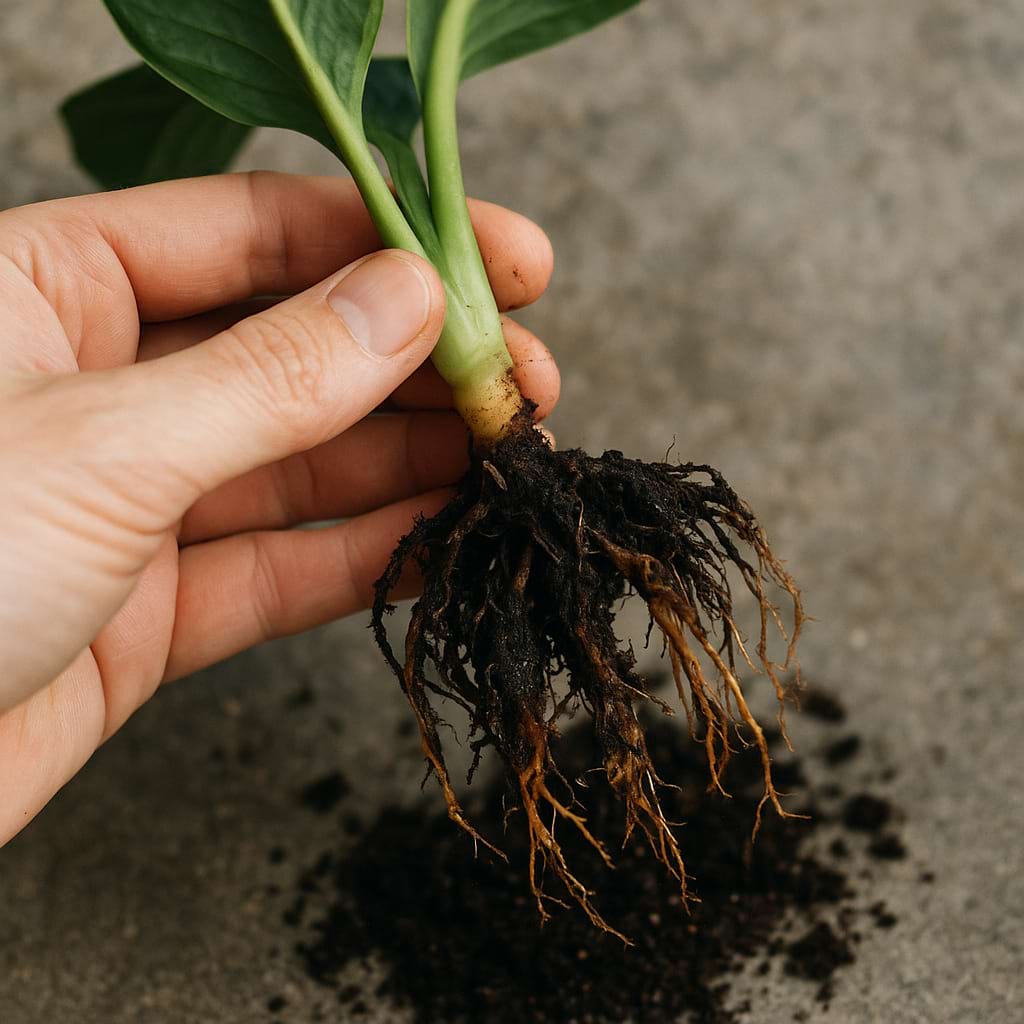
Root rot is the worst overwatering outcome. If yellowing pairs with mushy rhizome patches and sour smell, slide the plant out, trim soft sections back to firm white tissue, dust with cinnamon, and repot in fresh mix. Skip fertilizer for a month.
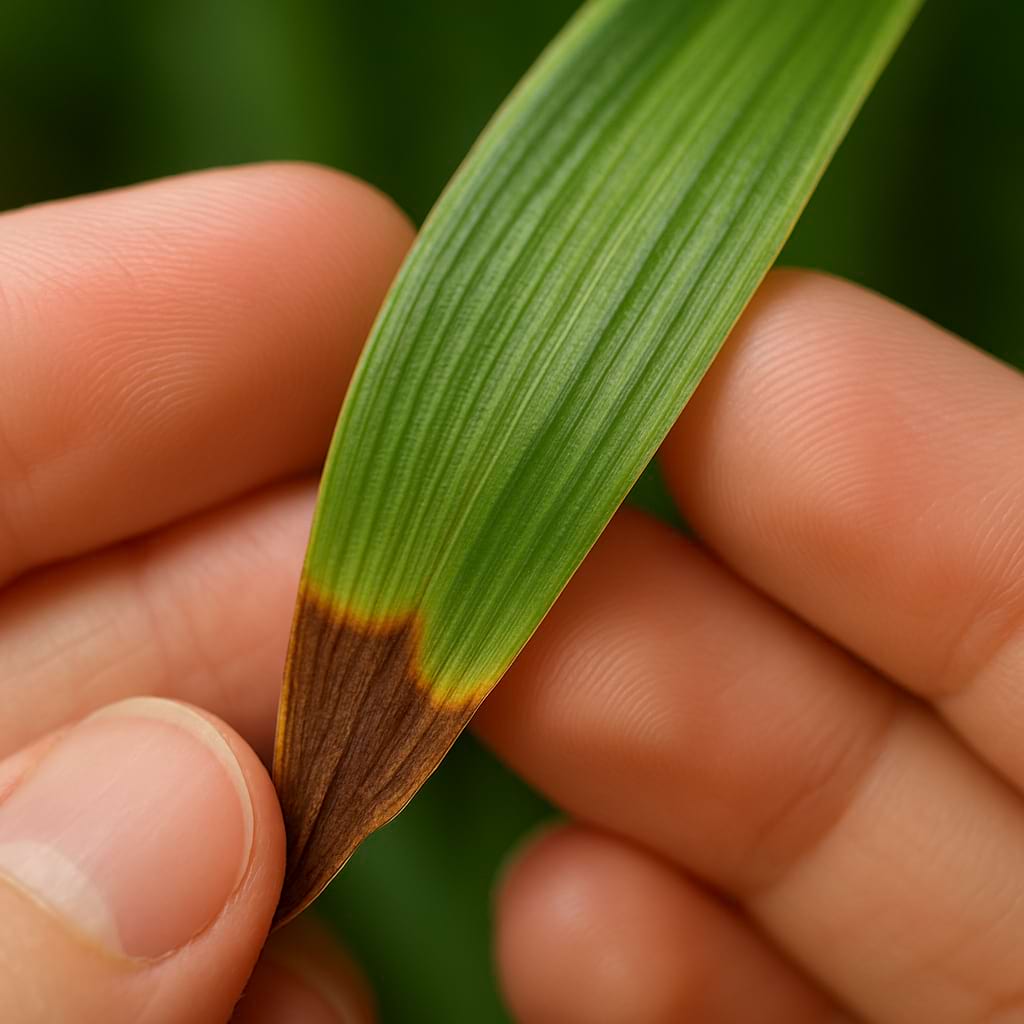
Brown crispy edges point to dry air or salt buildup. Boost humidity and flush the pot every couple of months.
Leaf drop of multiple leaves over a few days signals shock from a sudden change. Stabilize conditions and check the rhizome for soft sections. A healthy plant can lose a third of its canopy and rebuild within a season.
Fungal or bacterial leaf spot shows as dark spots ringed with yellow. Trim affected leaves, water the soil only, improve airflow.
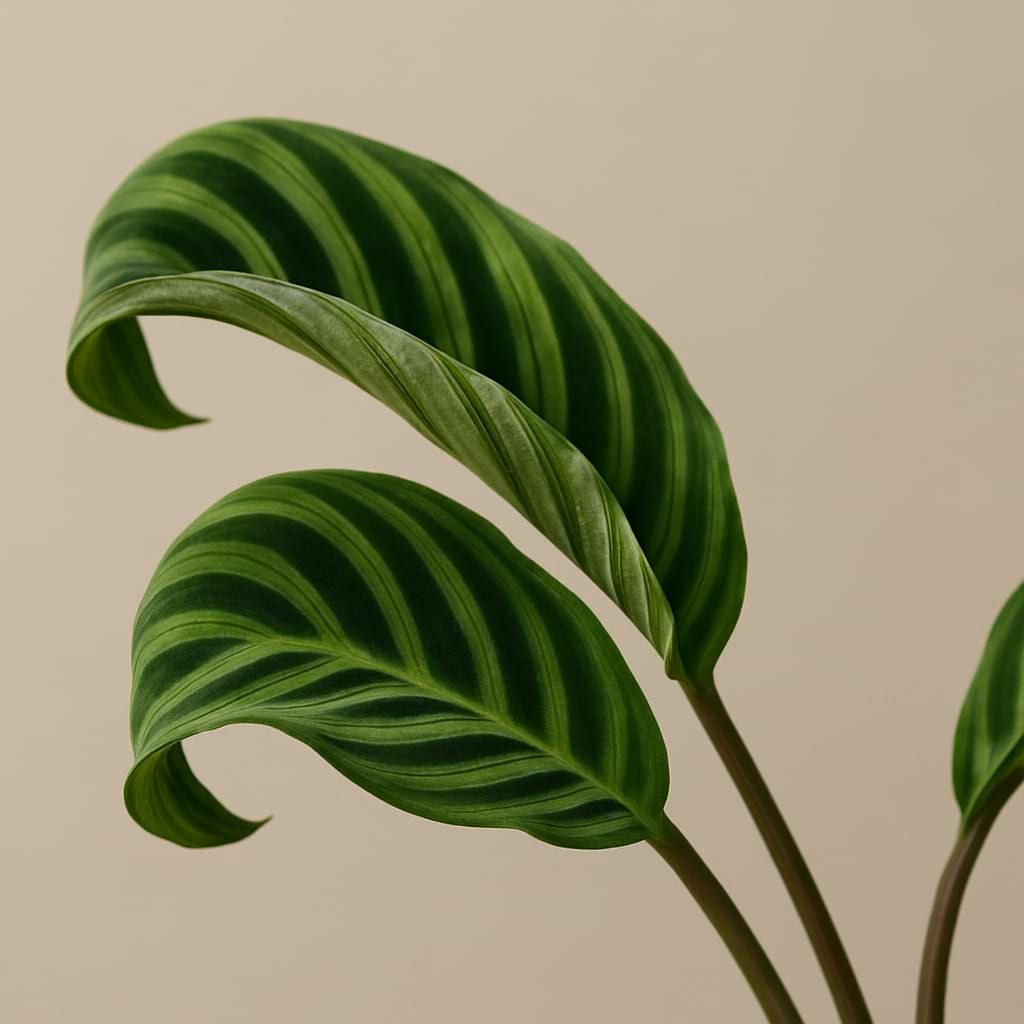
Curling leaves usually mean thirst, but can also signal thrips or cold drafts. Check the soil and then the leaf undersides with a magnifier.
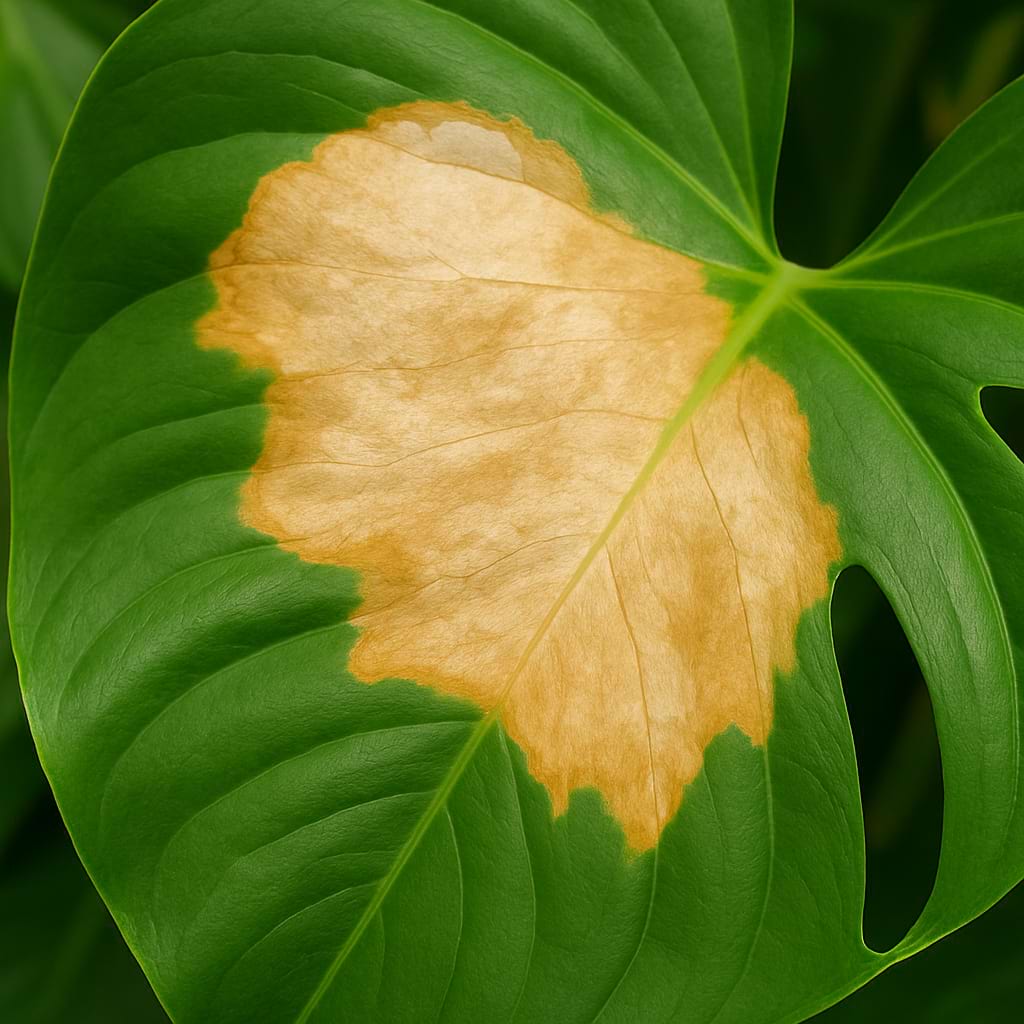
Sunburn shows as bleached papery patches from direct afternoon sun. Move back from the glass or hang a sheer curtain.

🖼️ Iron Cross Begonia Display and Styling Ideas
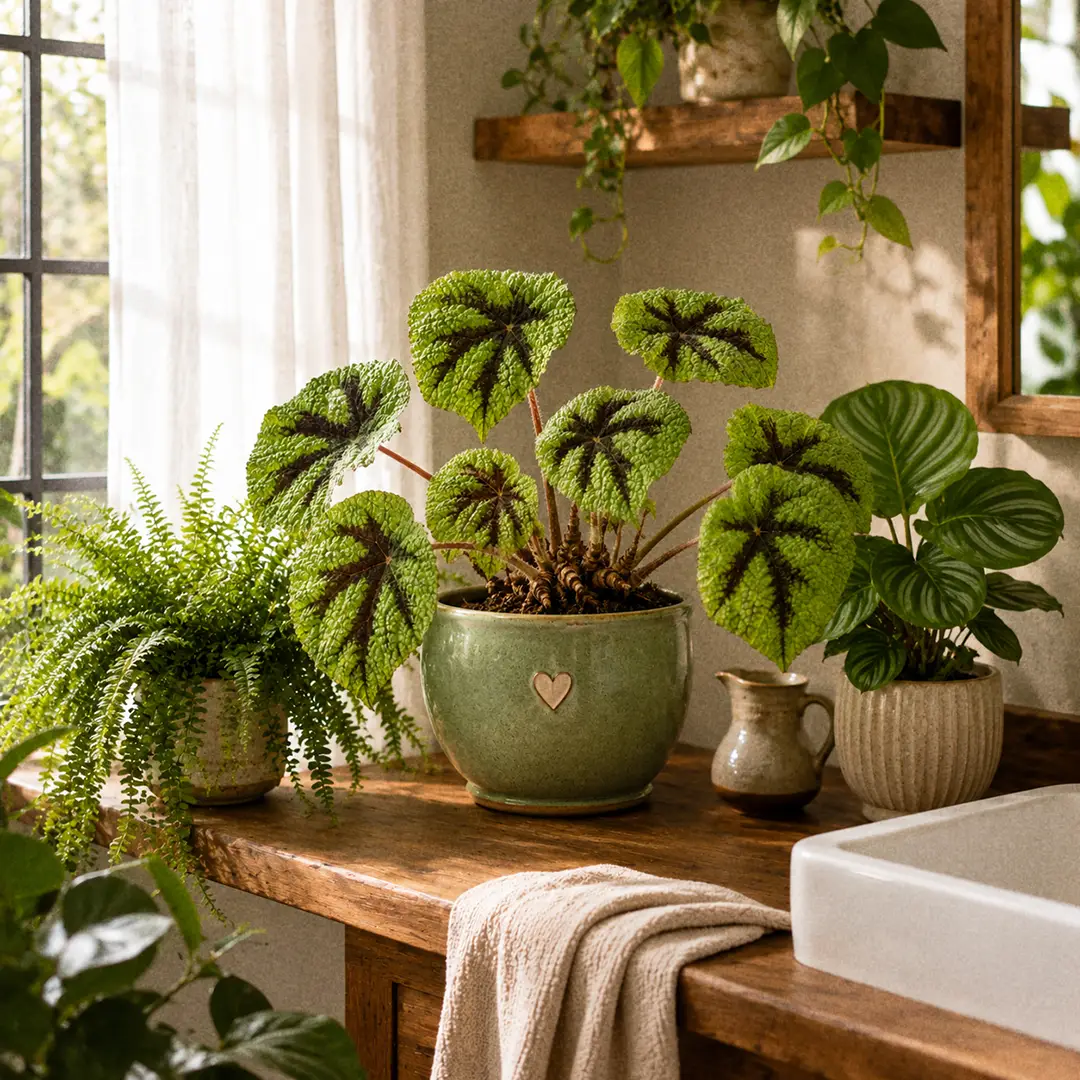
This plant earns a featured spot. The bold cross pattern reads from across the room, and the puckered texture rewards close-up looking.
Pot Pairings
Charcoal or matte black frames the apple-green and makes the dark cross pop. Deep terracotta gives a warm contrast and echoes the chocolate markings. Pale gray and concrete read modern. Avoid loud patterns that fight the leaf drama.
Spaces That Work
A bright bathroom with shower humidity, a wide side table near a sheer-curtained window, a glass plant cabinet, a humid sunroom, or inside a closed terrarium.
Companion Planting
The bold puckered leaves shine next to very different textures. Pair with a fine-fronded Boston Fern or Bird's Nest Fern. A smooth-leafed Calathea Orbifolia or Watermelon Peperomia highlights the cross. A trailing Strawberry Begonia on a higher shelf adds movement. For a full begonia moment, set it next to a Polka Dot Begonia.
Position the plant where the cross sits at eye level for someone seated nearby. The leaves get more interesting the closer you look.
🌟 Iron Cross Begonia Pro Care Tips
✅ Humidity is everything. A correctly humidified plant forgives a lot of small care misses.
🌬️ Airflow prevents disease. A small fan on low solves stagnant air without lowering humidity meaningfully.
🪴 Wide and shallow beats tall and deep. A creeping rhizome wants surface space.
💧 Underwater rather than overwater. A thirsty plant perks up in a day; a drowned one usually does not recover.
🚫 Never wet the leaves. No misting, no overhead watering, no leaf shine.
🌿 Pinch the flowers if you want bigger leaves.
🌱 Try leaf-wedge propagation at least once. One leaf can become four or five new plants in two months.
🐾 Keep it out of reach. Mildly toxic to pets and people.
🔄 Quarter-turn at every watering. Keeps the rosette symmetrical.
📏 Repot before the rhizome falls off the edge.
🪞 Light, humidity, water, in that order when troubleshooting.
❓ Frequently Asked Questions
Is the Iron Cross Begonia hard to care for?
Moderate, not hard. Bright indirect light, high humidity, well-draining soil, water at the soil line, and the plant mostly takes care of itself. The biggest pitfalls are overwatering and dry winter air.
Why does my Iron Cross have powdery white spots?
That is powdery mildew, the most common problem on this plant. It thrives in stagnant humid air, especially when leaves stay wet. Stop misting, improve airflow with a fan, and treat with a begonia-safe fungicide.
Is Iron Cross Begonia toxic to pets?
Yes. Like most begonias, it contains soluble calcium oxalates. Keep it out of reach. The Strawberry Begonia is a non-toxic alternative.
How do I propagate Iron Cross Begonia?
Leaf wedge cuttings are the most reliable. Cut a leaf into pie-shaped wedges with a section of main vein in each, press vein-side down into damp mix, cover with a clear lid. Plantlets emerge in four to eight weeks.
Why is the cross marking fading?
Almost always not enough light. Move closer to a bright window or supplement with a grow light. Existing leaves never recover the deep color, but new ones will show the full pattern.
Should I mist my Iron Cross Begonia?
No. The puckered surface traps water in pockets, and wet leaves overnight invite powdery mildew. Raise ambient humidity with a humidifier instead.
Why are my Iron Cross leaves curling?
Most often thirst. Check the soil first. If moist, check leaf undersides for thrips or spider mites and check for cold drafts.
Can I grow Iron Cross in a closed terrarium?
Yes, and the stable high humidity suits it well. Use good drainage and open the lid for a few hours every few days for airflow.
How big does an Iron Cross get?
Twelve to eighteen inches tall and wide. It grows outward along the rhizome rather than upward. Individual leaves can reach six to eight inches across.
ℹ️ Iron Cross Begonia Info
Care and Maintenance
🪴 Soil Type and pH: Loose, fast-draining, slightly acidic mix with a pH around 5.8-6.5.
💧 Humidity and Misting: Happiest above 60 percent; struggles below 40 percent in dry winter air.
✂️ Pruning: Trim spent leaves at the rhizome and pinch off rare flower stalks to redirect energy.
🧼 Cleaning: Lift dust off the puckered leaves with a soft dry brush; never wet the foliage to clean it.
🌱 Repotting: Every 2 years, or when the rhizome is creeping over the pot rim.
🔄 Repotting Frequency: Every 2 years
❄️ Seasonal Changes in Care: Cut watering and stop feeding from late fall through winter; protect from cold drafts.
Growing Characteristics
💥 Growth Speed: Moderate
🔄 Life Cycle: Perennial evergreen
💥 Bloom Time: Spring to early summer (rare and modest indoors)
🌡️ Hardiness Zones: 10-12 outdoors
🗺️ Native Area: Southern China, Vietnam, and surrounding subtropical Southeast Asia
🚘 Hibernation: No, but growth slows noticeably in winter
Propagation and Health
📍 Suitable Locations: Bright bathrooms, kitchen counters near a window, terrariums, plant cabinets, north-facing rooms with a humidifier
🪴 Propagation Methods: Leaf wedge or whole-leaf cuttings on damp soil; rhizome division at repotting time.
🐛 Common Pests: Mealybugs, Spider Mites, Thrips, Aphids, Fungus Gnats
🦠 Possible Diseases: Powdery mildew, botrytis, leaf spot, root rot
Plant Details
🌿 Plant Type: Rhizomatous begonia
🍃 Foliage Type: Evergreen, broad ovate to heart-shaped leaves with a deeply puckered, bullate texture
🎨 Color of Leaves: Apple green to chartreuse with a dark chocolate-brown iron-cross pattern at the center
🌸 Flower Color: Small greenish-white to pale pink clusters
🌼 Blooming: Rare and inconspicuous indoors; grown for foliage
🍽️ Edibility: Not edible
📏 Mature Size: 12-18 inches
Additional Info
🌻 General Benefits: Striking patterned foliage, compact spreading habit, low-maintenance once humidity is dialed in
💊 Medical Properties: None; ornamental only
🧿 Feng Shui: Brings grounded, protective energy thanks to the cross-shaped leaf marking
⭐ Zodiac Sign Compatibility: Taurus
🌈 Symbolism or Folklore: Strength, balance, and individuality
📝 Interesting Facts: Begonia masoniana was introduced to Western horticulture in 1952 by British plantsman Maurice Mason, who collected it in Singapore from a plant originally brought in from Southeast Asia. The bold cross marking gave the plant its English common name almost instantly. A lesser-known yellow-leaved cultivar sometimes called 'Rock' or 'Iron Cross Yellow' has cream-yellow leaves with the same dark cross.
Buying and Usage
🛒 What to Look for When Buying: Look for a compact plant with several fully developed leaves, a firm rhizome at the soil line, and clear, evenly spaced cross markings. Avoid plants with soft brown spots, white powdery patches, or yellowing lower leaves. Check the underside of every leaf for tiny webbing or pests.
🪴 Other Uses: Closed terrarium specimen, conservatory display, indoor plant cabinet, mossy understory
Decoration and Styling
🖼️ Display Ideas: Wide low planter on a side table, terrarium centerpiece, grouped with ferns and Calatheas in a humid corner
🧵 Styling Tips: Choose a wide shallow planter rather than a tall narrow one so the creeping rhizome has room to spread. Pair with smooth-leaved companions so the puckered texture reads clearly.
🪴 See also 🪴
Complete Guide to Beefsteak Begonia Care and Growth
Complete Guide to Begonia Rex Care and Growth

Houseplant101 Forum
Questions & Comments
Ask a question, share your plant experience, or help other plant owners.
Comments are temporarily unavailable.
Open the Houseplant101 ForumNo comments yet
Be the first to ask a question or share your experience about this page.
Log in or create an account
Comments use your Houseplant101 Forum account, but you can stay on this page.
Create a new account