
Walking Iris
Neomarica gracilis
Apostle Plant, Apostle's Iris, Fan Iris, Twelve Apostles, Toad-cup Lily, Brazilian Walking Iris


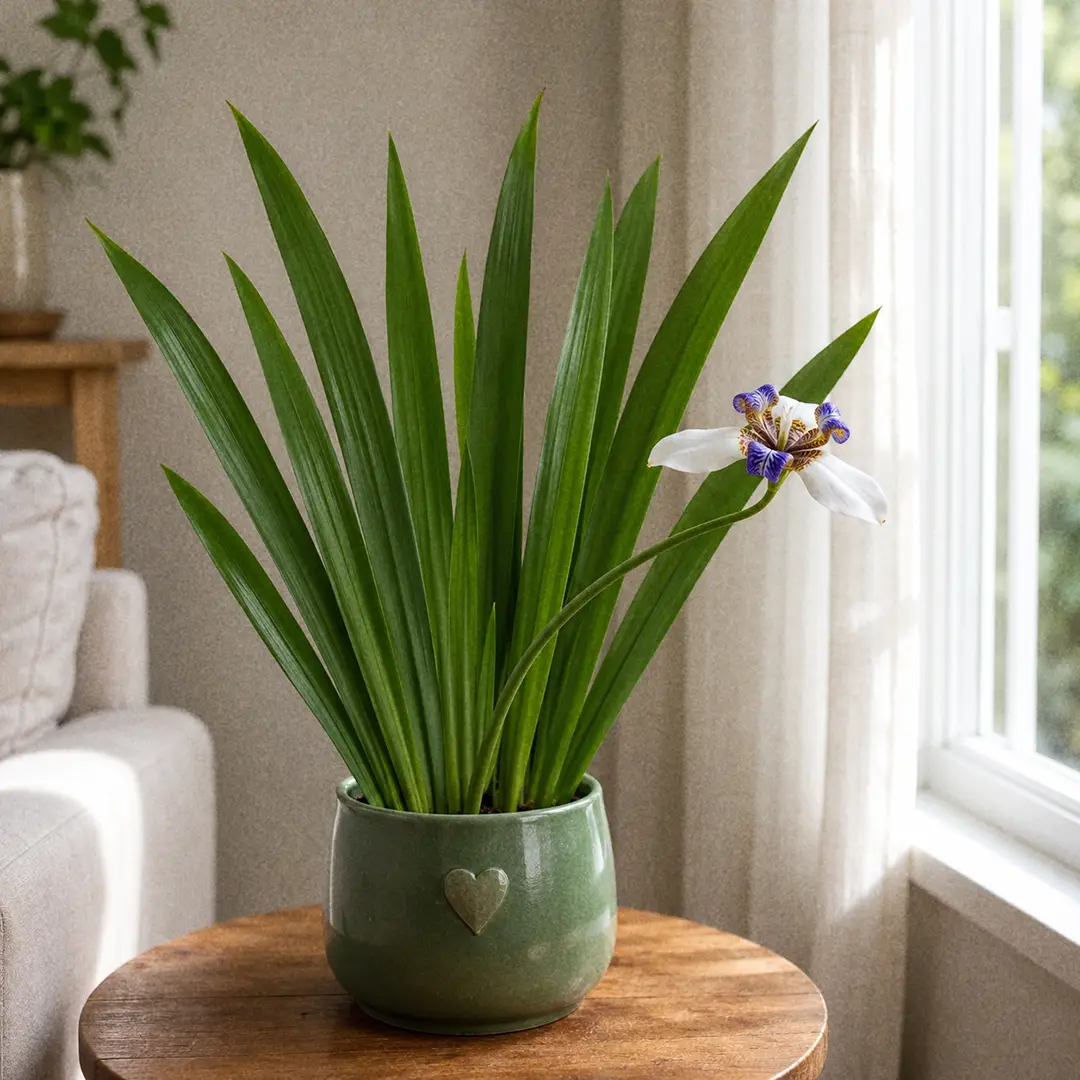
The Walking Iris (Neomarica gracilis) is a fan-leaved flowering houseplant that produces astonishing white, blue, and yellow iris-like blooms, each lasting a single day before a baby plantlet sprouts on the same flower stalk. The weight of the plantlet bends the stalk to the soil, where it roots and the plant literally walks itself across your shelf. Easy, forgiving, and one of the most charming flowering plants you can grow on a bright indoor windowsill.
📝 Walking Iris Care Notes
🌿 Care Instructions
⚠️ Common Pests
📊 Growth Information
🪴 In This Guide 🪴

☀️ Walking Iris Light Requirements (Bright Indirect to Morning Sun)
Light is the difference between a plant that flowers for weeks and one that just sits there looking like a fan of green swords. Think "bright morning, gentle afternoon."
The Sweet Spot
Aim for bright indirect light with one to three hours of soft direct sun a day. An east-facing windowsill is close to ideal: cool morning rays, bright shade by lunchtime. South and west also work if you set the plant two to four feet back from the glass or use a sheer curtain. North windows keep it alive but it likely won't flower without a grow light.

Too Little Light
A light-starved Walking Iris looks healthy but refuses to bloom. New leaves come in narrower and longer, colour drifts pale yellow-green, the fan leans toward the brightest side of the room. If you've had your plant a year with no buds, light is the answer. Move it to an east window or add a small grow light on a ten- to twelve-hour timer.
Too Much Light
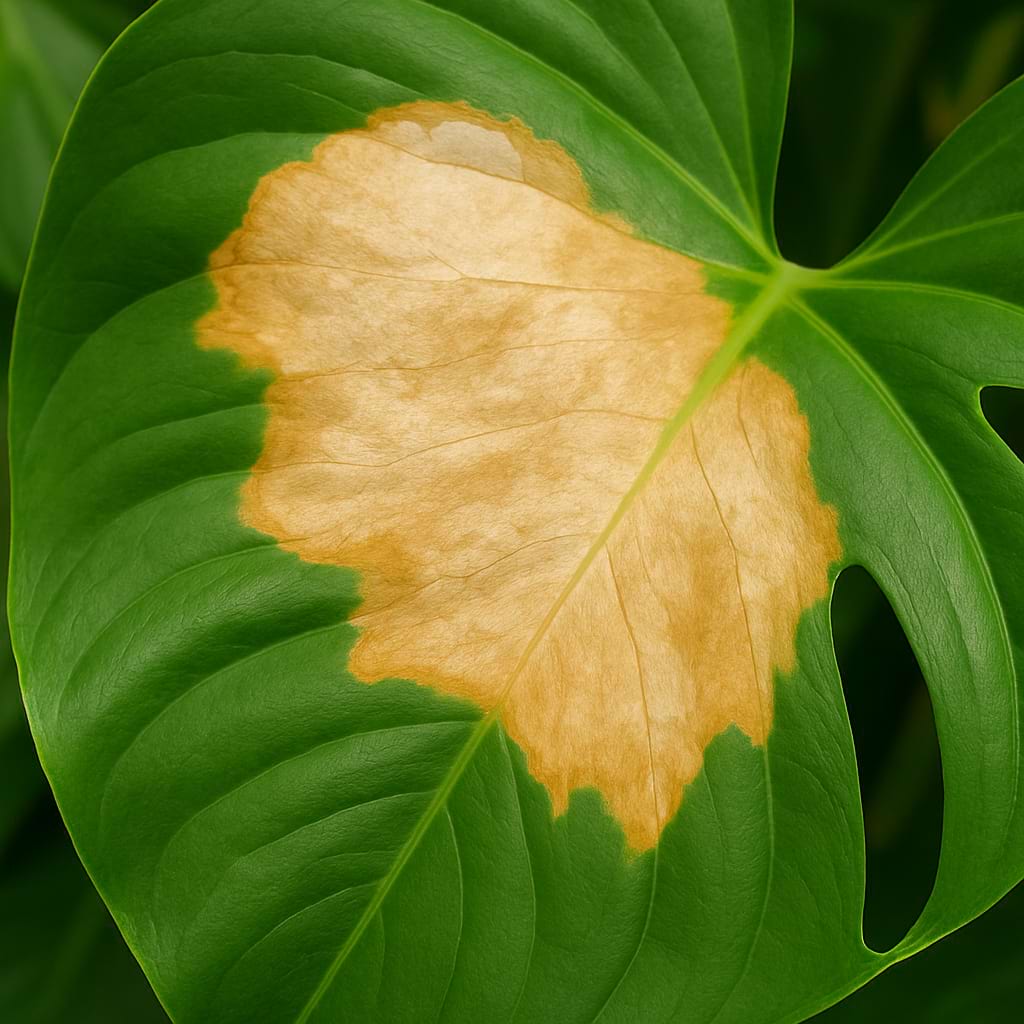
Direct afternoon summer sun through south or west glass can scorch leaves in a few hours. Watch for bleached patches, papery edges, brown tips, and flowers that drop early. Pull the plant a foot back from the window or hang a sheer curtain. A happy fan holds its leaves upright and firm. Stretched and floppy means too dim. Bleached patches and crisp tips mean too bright.
💧 Walking Iris Watering Guide
Walking Iris comes from wet Brazilian forest edges. It likes its soil like a wrung-out sponge: lightly damp, never bone dry, never sodden.
How Often
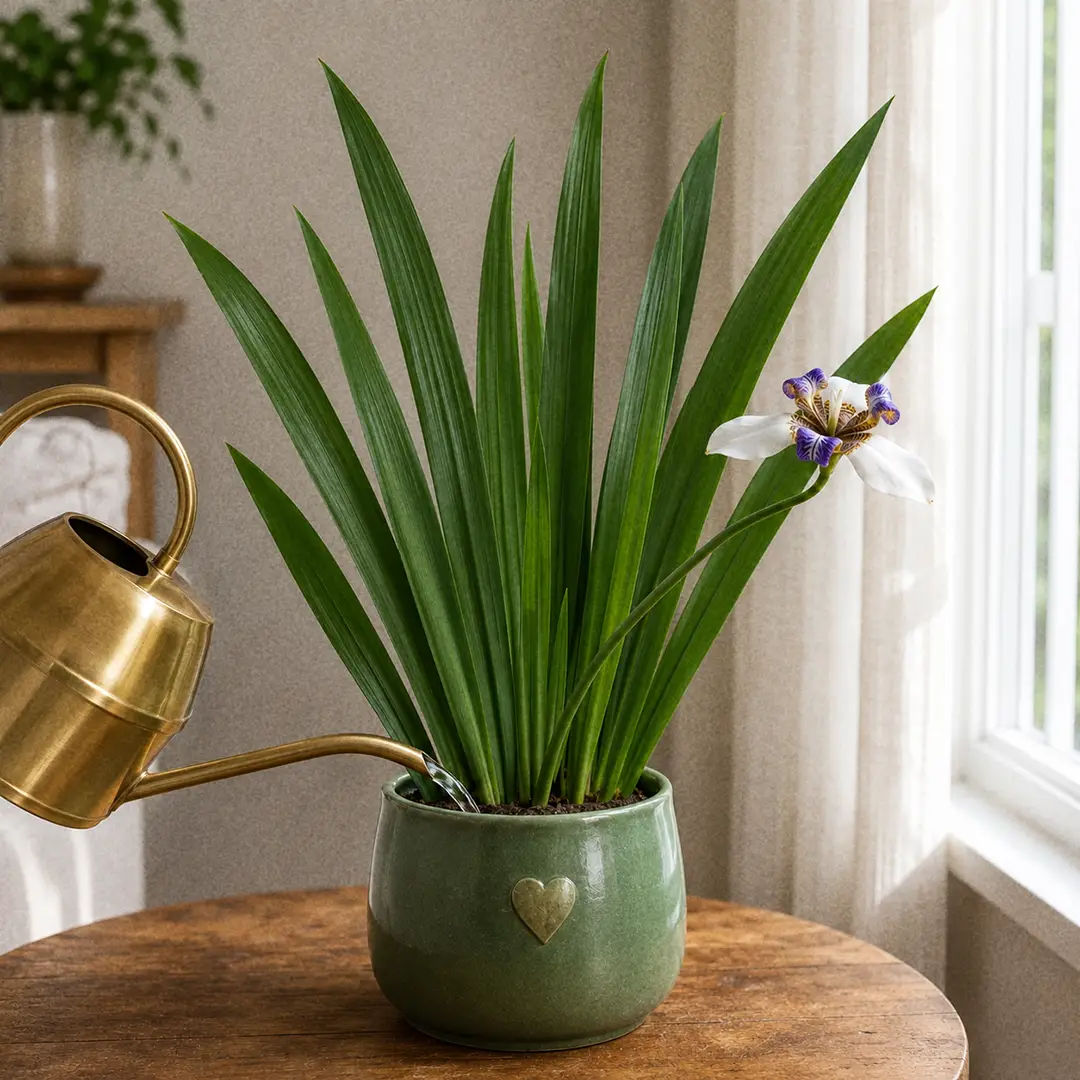
Push a finger an inch into the soil. If the top half-inch is dry and below feels lightly damp, water. In spring and summer that's roughly every five to seven days. In autumn and winter, every ten to fourteen days. A moisture meter helps if you're still calibrating, since this plant doesn't dramatically wilt the way a Cape Primrose does. See the watering houseplants primer for the basics.
How to Water
Water at the soil until you see a steady stream from the drainage hole, then stop. Let the pot drain ten minutes and tip out the saucer. Standing water is the fastest route to rhizome rot here. Don't water into the centre of the fan; trapped water at the crown rots leaf bases, especially in cool winter rooms. Aim at the soil, not the foliage.
Water Quality
This plant is mildly sensitive to fluoride and chlorine. If your tap water leaves white crusts on pots, switch to filtered, rainwater, or tap water left out 24 hours. Room-temperature water is gentler than cold straight from the tap.
Bottom watering works well as an occasional alternative, fifteen to twenty minutes in a tray once a fortnight. Don't bottom-water exclusively, since the rhizome benefits from an occasional top-down flush to wash out salts.
🪴 Best Soil for Walking Iris
Walking Iris likes a mix that holds moisture without compacting and drains freely without drying out instantly.
What the Soil Needs
The rhizome wants steady moisture but hates sitting in water. Aim for a loamy, humus-rich mix that stays lightly damp between waterings and drains within seconds when you pour water in. pH 6.0 to 7.0 keeps nutrients available.
DIY Soil Mix
A reliable blend: two parts general indoor potting soil, one part compost or worm castings, one part perlite or coarse sand, and a handful of pine bark fines if you have them. The compost feeds the rhizome, perlite keeps air around the roots, and bark fines stop the mix from packing down over time.
Pre-Made Options
If you buy ready-made, a quality houseplant or "indoor tropical" mix works, lightened with an extra handful of perlite at potting time. Avoid pure peat mixes (they go from wet to brick), fine sandy cactus mixes (drain too fast), and garden soil (compacts in a pot and brings pests). The soil for houseplants guide goes deeper if you're new to blending.
🍼 Fertilizing Walking Iris
Walking Iris is a moderate feeder. How you fertilise it directly affects how often it flowers.
When and How Often
In spring and summer, feed every two to three weeks with a balanced liquid fertilizer at half strength. In autumn and winter, drop to monthly at quarter strength, or stop entirely if the plant isn't pushing new growth. Feeding a resting plant just builds salts.
What to Use
A 10-10-10 or 20-20-20 formula works for general feeding. To push more flowers on a mature plant, switch to a "bloom" formula (higher phosphorus, like 10-30-20) for one or two feeds in early spring. For low-maintenance care, scatter a teaspoon of slow-release granular fertilizer (14-14-14) on the soil surface in early spring. It feeds for three to four months.
Over-Fertilizing Signs
If you see white crusts on the soil or brown crispy tips, flush the pot under lukewarm water for a couple of minutes and skip the next two feeds. A spring repot resets things too.
🌡️ Walking Iris Temperature Range
Comfortable between 65 and 80°F (18-27°C) by day, tolerant of a night drop to about 55°F (13°C). A cool winter rest at the lower end often triggers heavier spring flowering.
Ideal Range
Sustained cold below 50°F can rot the rhizome; hot dry air above 90°F crashes flowers. Outdoors, hardy in USDA zones 9 to 11. In summer, it loves a sheltered patio holiday. Once nights stay above 55°F, ease it outside over a week to avoid sunburn, and bring it back before the first cold front.
Drafts and Heat Sources
Keep it away from cold window panes, draughty doors, and vents. A radiator blasting warm dry air will scorch leaf tips and shorten flower life. If the plant sits near a kitchen door that opens onto cold winter air, move it back a foot or two.
💦 Walking Iris Humidity Requirements
Walking Iris is content anywhere from 40 to 60 percent, which covers most homes most of the year. It does not need a steamy bathroom.
Ideal Humidity
It prefers the upper end of that range during active growth, and there are real rewards above 50 percent: glossier leaves, longer-lasting flower stalks, fewer brown tips. Most homes hover around 40 to 45 percent, which is fine, but winter heating can drop indoor air closer to 25 percent and that's when tips start crisping.
Easy Boosters
A small humidifier near the plant is the most reliable lift in winter. A pebble tray adds a few extra points in a small room, and grouping plants together raises local humidity. Skip misting on this one. The fan is mildly susceptible to fungal leaf spot, and wet foliage encourages it.
🌸 Walking Iris Flowers
The flowers are why people fall for this plant. Spectacular, complicated, and very brief, plus a free baby plant on the spent stalk.
What the Bloom Looks Like
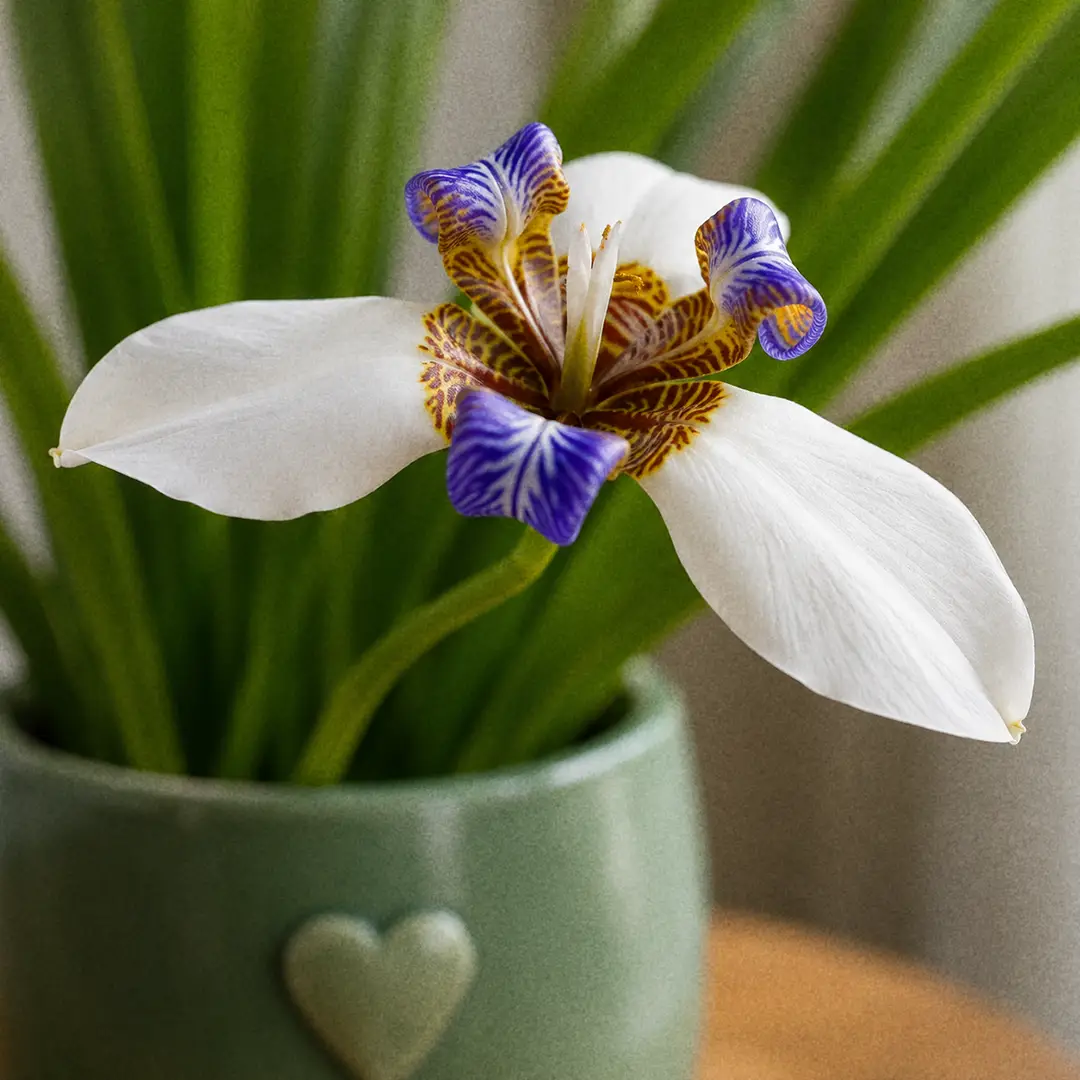
Six tepals in two layers: three large flat white outer ones and three smaller inner ones striped violet-blue, yellow, and red-brown. The whole bloom is about three inches across. Some cultivars (especially Neomarica northiana) are sweetly fragrant.
Bloom Cycle
Each flower opens in the morning, peaks at mid-day, and finishes by evening. The same stalk pushes out new flowers in succession for a week or more, and a happy plant flowers in flushes from late winter through early summer. Folklore says the fan needs twelve leaves before its first bloom (hence "Twelve Apostles"). In practice, most plants flower at eight to twelve leaves with enough light. If your plant has not flowered after two years, see the failure to bloom guide. It's almost always light.
The Walking Trick
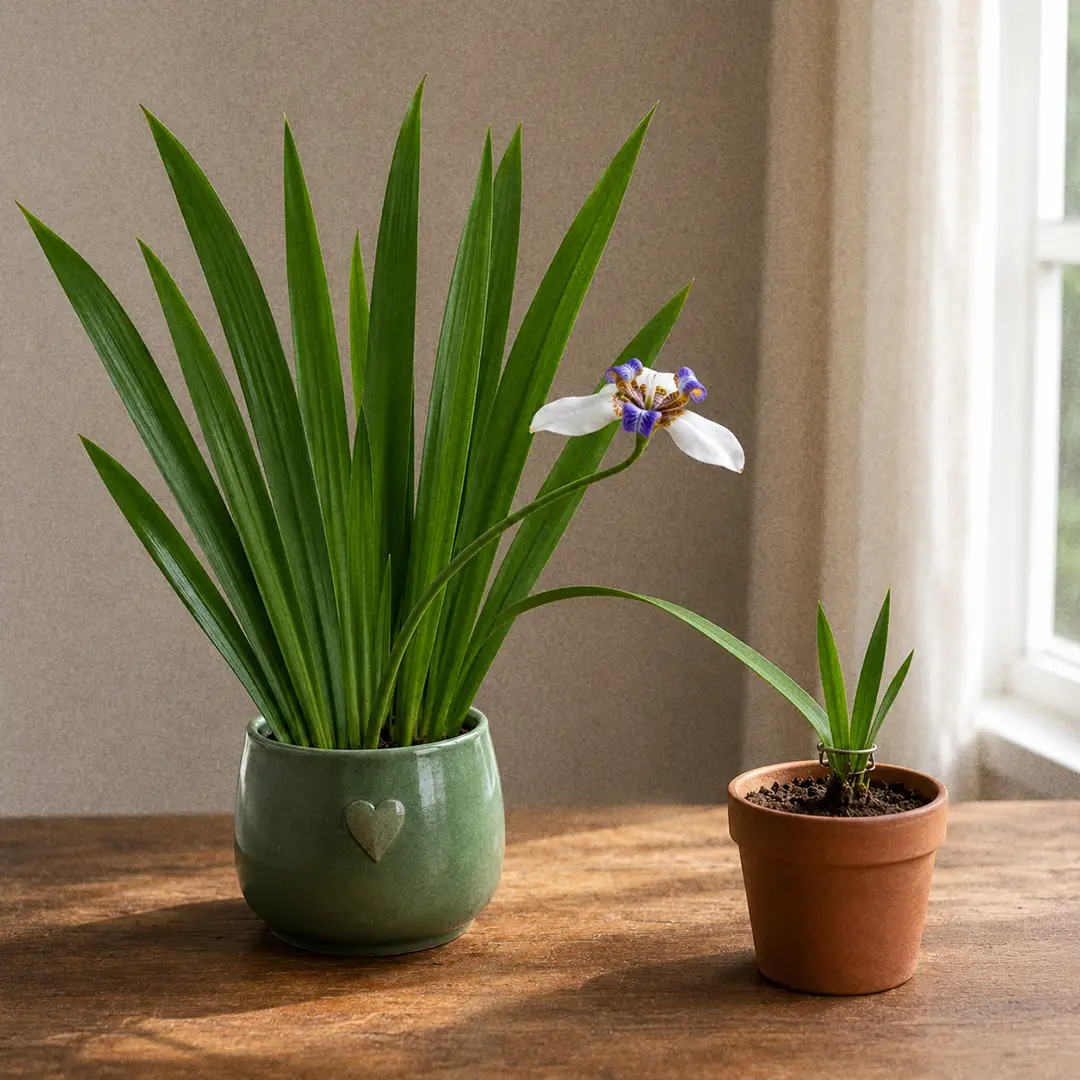
After the last flower fades, the same node produces a tiny new fan: a baby Walking Iris. As it grows it weighs the stalk down toward the ground. Indoors, set a small pot next to the parent and pin the plantlet onto it with a hairpin until it roots. Snip the stalk six weeks later and you have a new plant.
🏷️ Walking Iris Types and Varieties
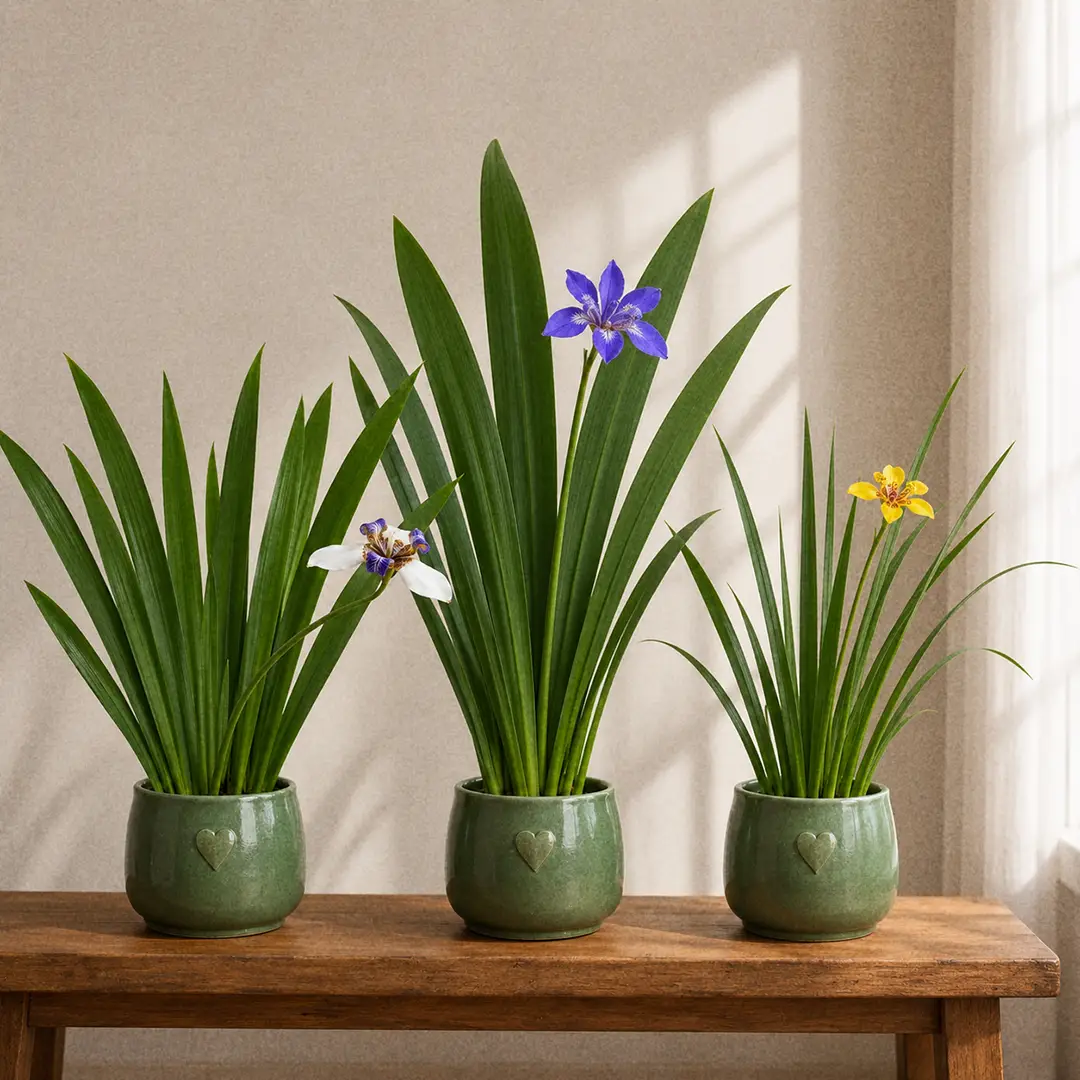
The "Walking Iris" name covers several closely related Neomarica species. All grown the same way, but flowers and fan size vary.
Neomarica gracilis (Brazilian Walking Iris)
The standard species with classic white tepals banded violet-blue and yellow. Fans 18 to 30 inches. The most beginner-friendly.
Neomarica caerulea (Giant Walking Iris)
Taller and bolder, with all-blue or violet-blue flowers and fans hitting 36 to 48 inches. Flowers last slightly longer. The showpiece if you have floor space.
Neomarica northiana
Similar flower colour to gracilis but distinctly fragrant. A great pick for a small enclosed sunroom.
Neomarica longifolia (Yellow Walking Iris)
Bright yellow blooms accented in brown, sometimes sold as Trimezia martinicensis. Narrower grassier fans. Slightly less cold-tolerant and fussier about humidity.
If you want one foolproof plant for a sunny east window, go with Neomarica gracilis.
🪴 Potting and Repotting Walking Iris
Walking Iris grows from a creeping rhizome that spreads sideways across the soil surface. Wide pots, not deep ones.
Pot Choice
A six- to ten-inch wide pot suits a young plant; twelve- to fourteen-inch suits a mature one for two or three years. Drainage holes are not optional. A glazed ceramic pot with two or three drainage holes works beautifully.
When and How
Repot every two to three years, or when the rhizome creeps to within an inch of the pot rim. Spring is best. A slightly snug pot can actually push more flowers, so don't size up too eagerly.
Lift the plant, shake away loose soil, trim soft brown or hollow rhizome sections, and check for dark stringy dead roots. Settle the rhizome in fresh wide pot at the same depth (top flush with soil surface). Backfill, firm gently, water in, and keep out of strong sun for a week. See the repotting guide for general principles. If the plant has multiple fans, divide it now (see propagation below).
✂️ Pruning Walking Iris
Goal: tidy, not stripped.
When to Prune
Trim spent flower stalks at the base only after their plantlet has rooted or been potted up separately. The flat green stalk feeds the plantlet; chopping early kills the offset. Remove tatty older outer leaves at the rhizome in spring as the new fan pushes through. Tug them gently first; if they release, no cut needed.
How to Prune
For an individual leaf with a brown crispy tip, trim at a downward angle to mimic the natural taper. The cut won't regrow but will look less obvious. Use clean snips and cut just inside the brown edge.
What Not to Cut
Don't cut the flat green stalks if you can't see a bud yet. They aren't leaves, they're flower stalks doing future work. Don't cut central new leaves either, even if they look creased or pale. They firm up in a week or two.
🌱 How to Propagate Walking Iris
The most fun part of owning this plant. Two methods, and most growers use both.
The Walking Plantlet (Easiest)
Once a stalk finishes blooming, watch the spent node for a tiny new fan. Within weeks it'll be a couple of inches tall. Set a small pot of damp mix next to the mother, lay the stalk across it, and pin the plantlet onto the soil with a hairpin. Keep moist for four to six weeks while the plantlet roots and still feeds from the mother. Snip the connecting stalk and you have an independent plant. You can also cut the plantlet off early (with an inch of stalk) and root it under a clear bag, but the success rate is lower.
Rhizome Division
A mature plant with several fans can be divided in spring at repotting. Lift the plant, shake off loose soil, find natural break points, and cut between fan sections with a clean sharp knife. Each division needs a fan and a healthy chunk of rhizome with roots. Pot each into fresh mix and keep out of direct sun for a week. The plant division guide covers the technique. Seed is possible but takes three to five years to flower.
🐛 Walking Iris Pests
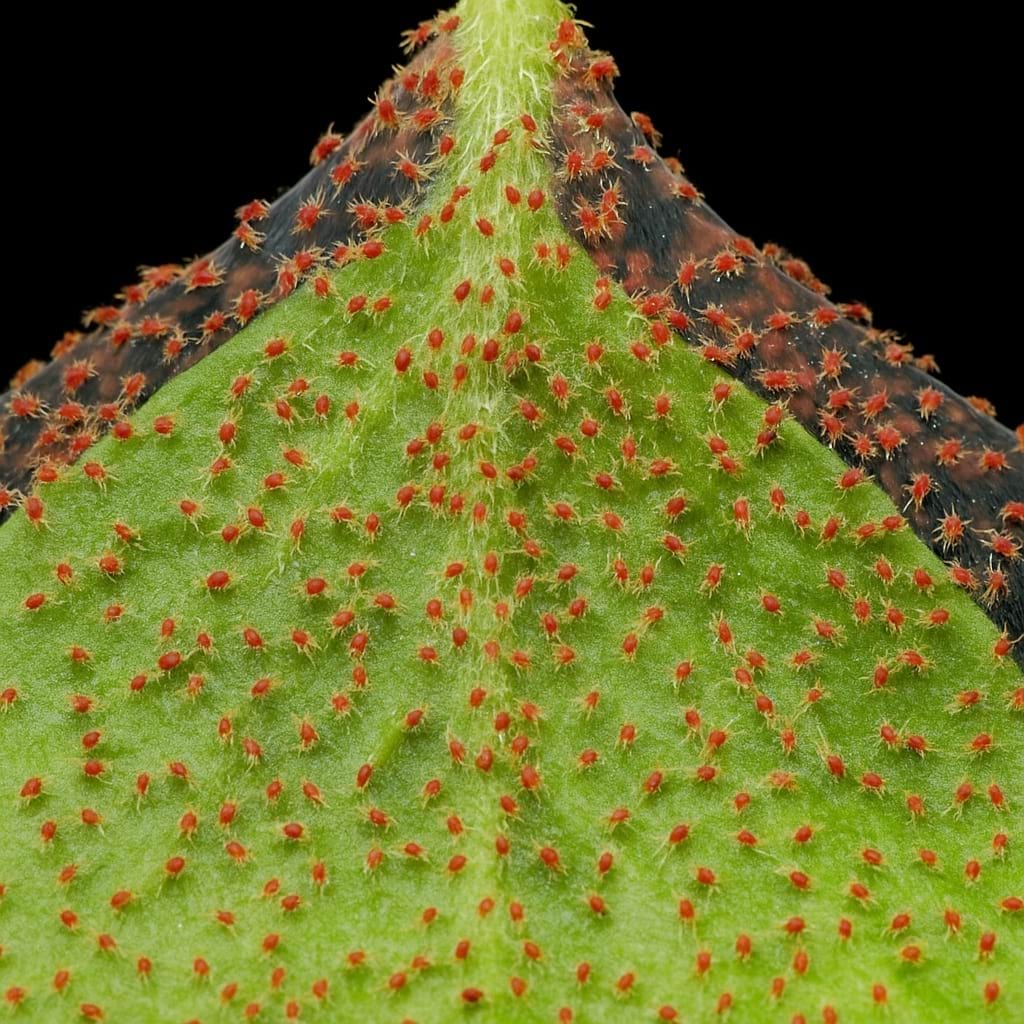
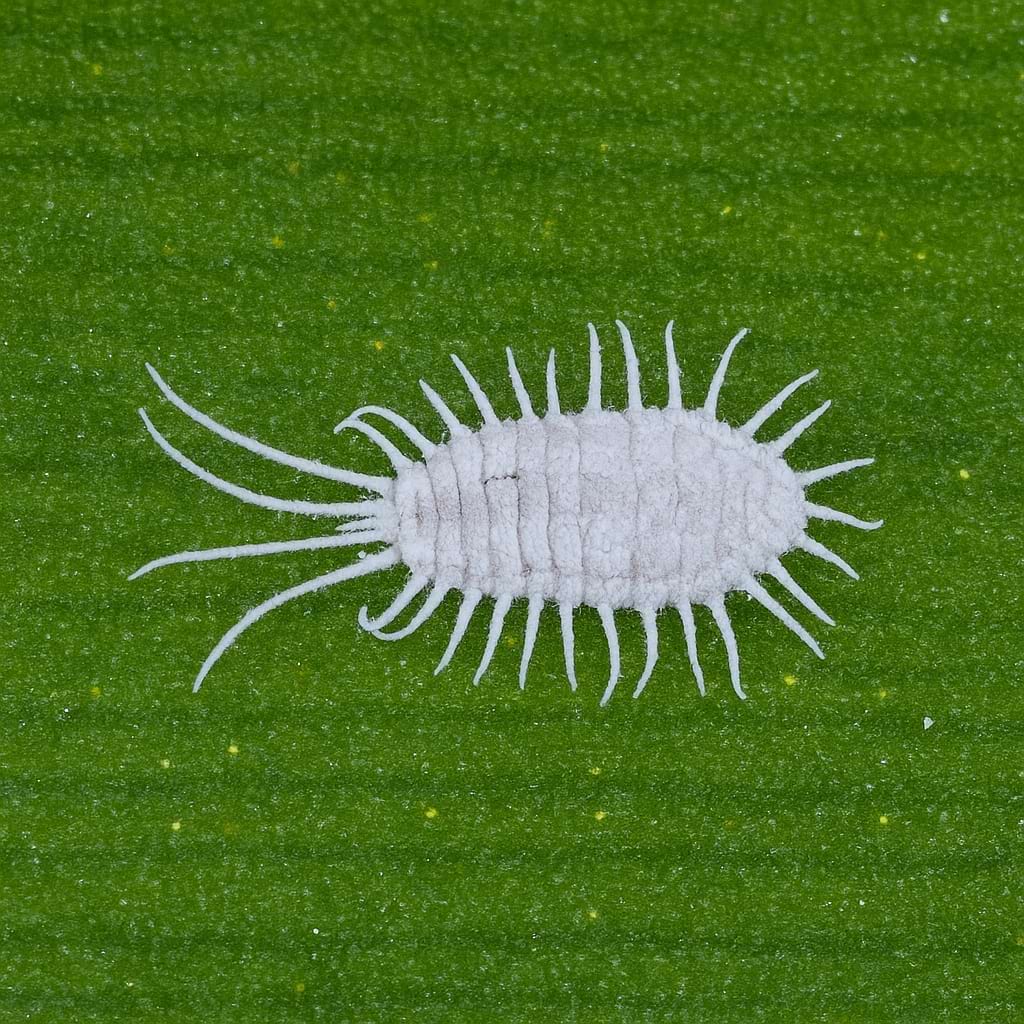
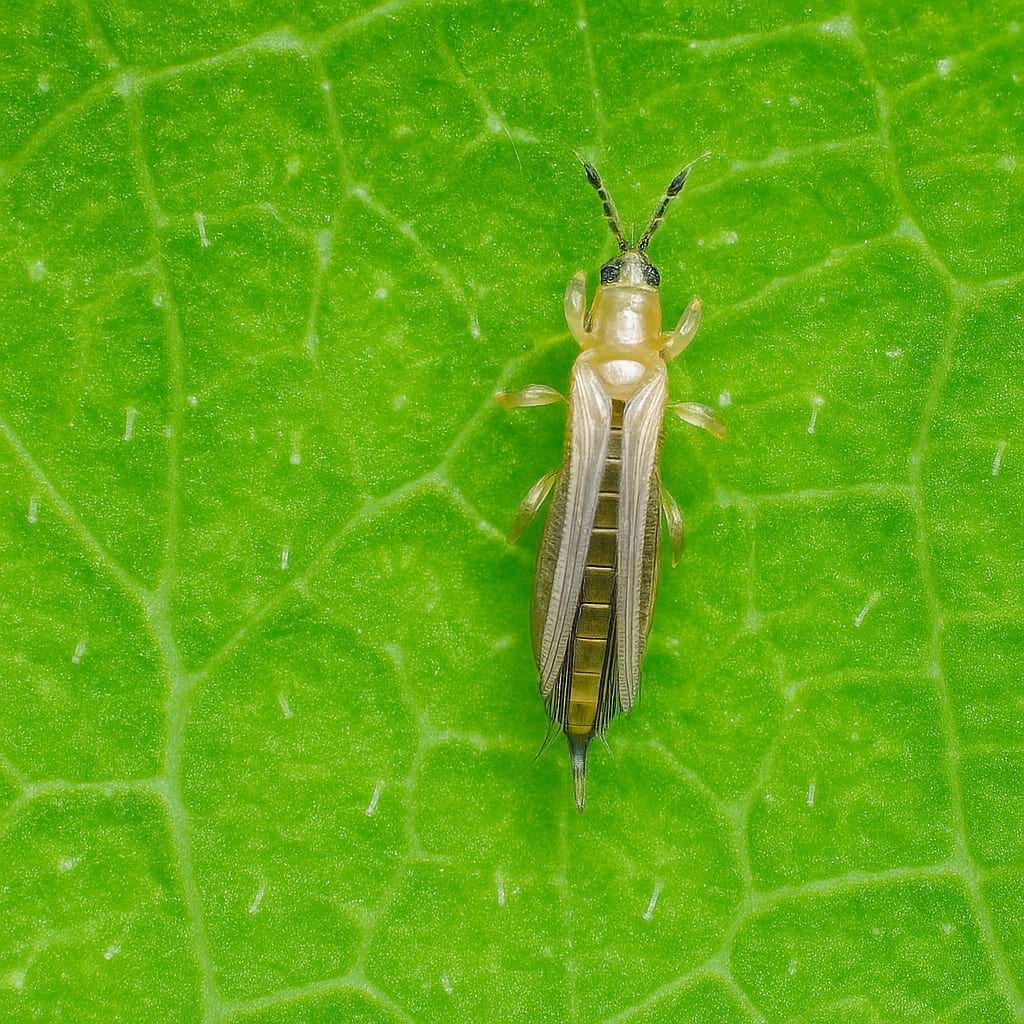
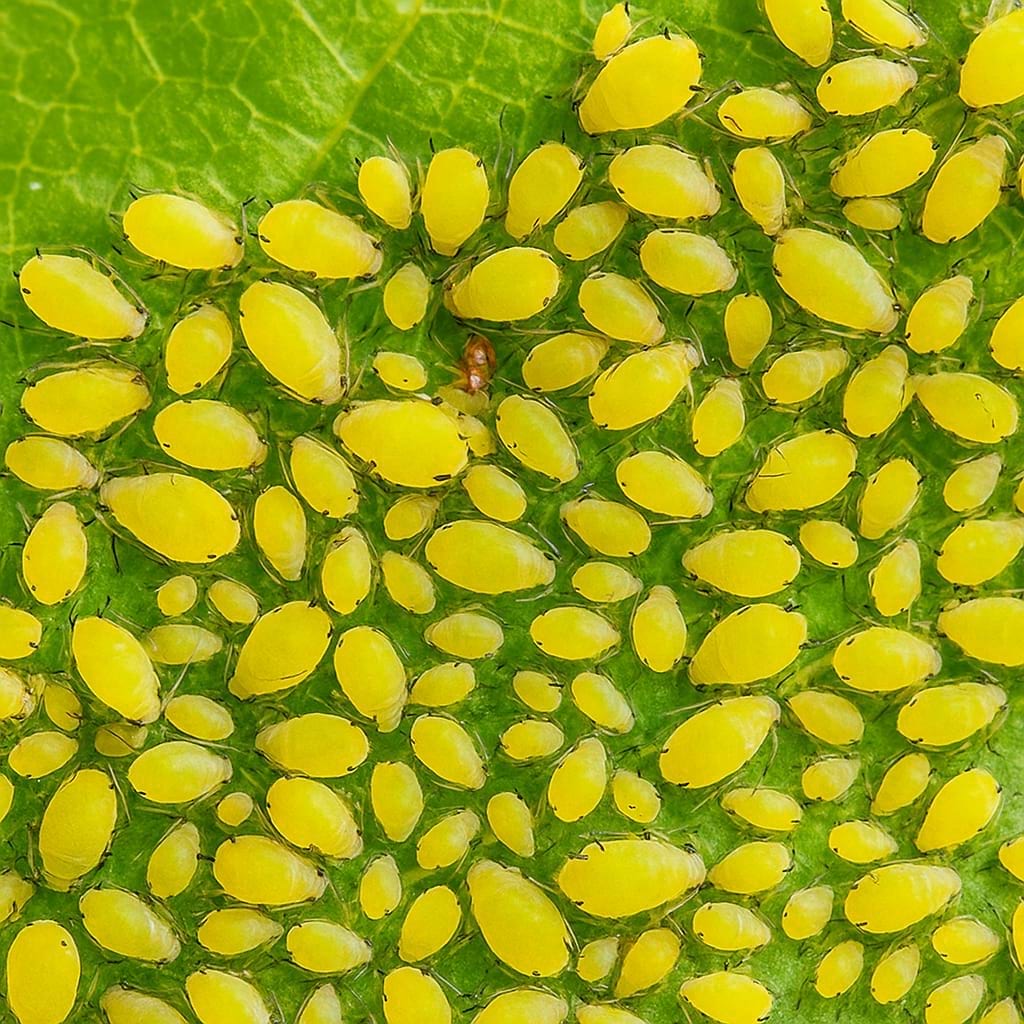
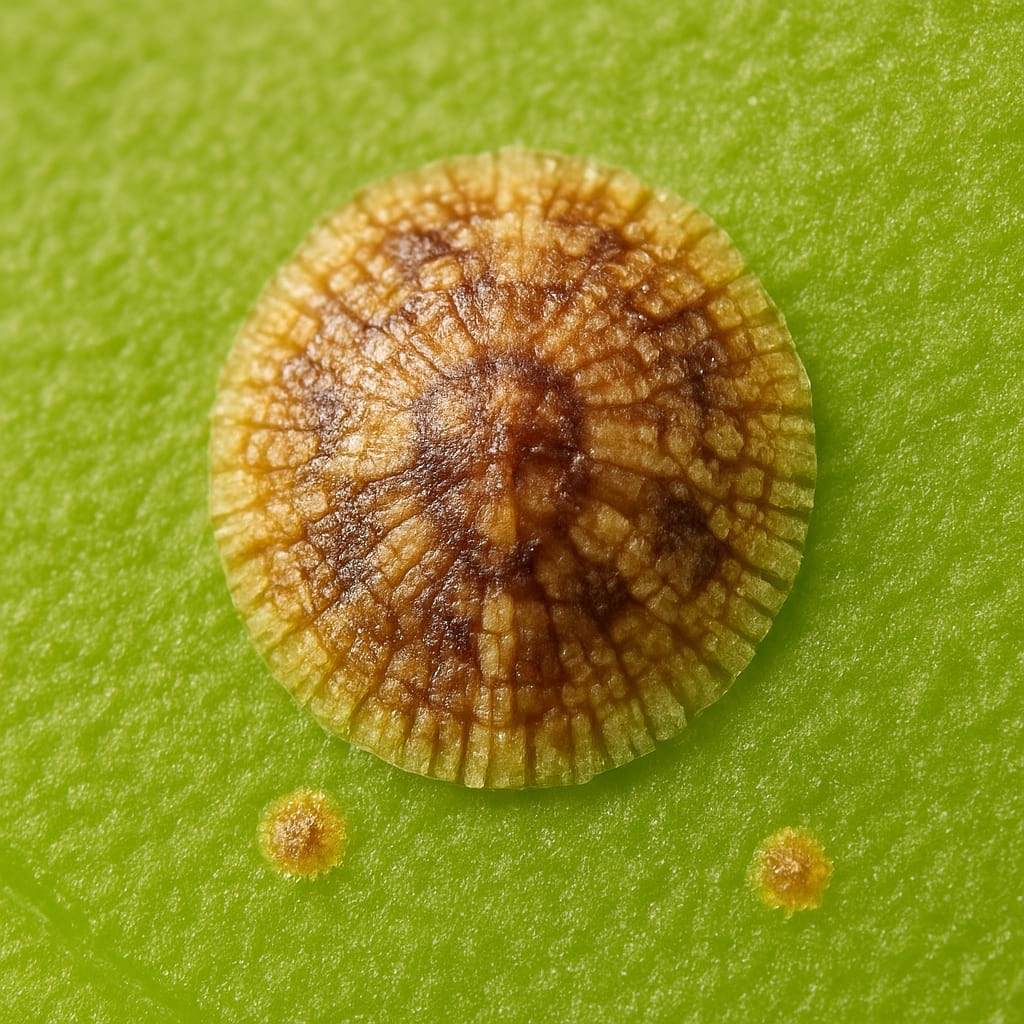
Not particularly pest-prone, but the long leaves do offer surface for sap-suckers. The most common indoor pests are spider mites, mealybugs, and thrips. Less often, aphids or scale.
Spider mites show up in dry winter rooms as fine pale stippling and faint webbing. Wipe both leaf surfaces, raise humidity, and treat with insecticidal soap weekly for three weeks.
Mealybugs hide in leaf-base crevices as small white cottony specks. Touch each with a cotton swab dipped in 70 percent alcohol, then wipe with insecticidal soap.
Thrips leave silvery streaks and black frass dots. Use yellow sticky traps as early warning and treat with insecticidal soap.
Aphids cluster on flower-stalk tips. Knock them off with a sink spray and repeat every three days for a week.
Scale insects attach as flat brown bumps along leaf undersides. Scrape with a fingernail and treat with horticultural oil.
Always isolate the affected plant. Leaves don't heal a heavily scarred surface, so quick action matters.
🩺 Common Walking Iris Problems
Most issues trace back to too much water at the rhizome, too little light, or sudden environmental shocks.
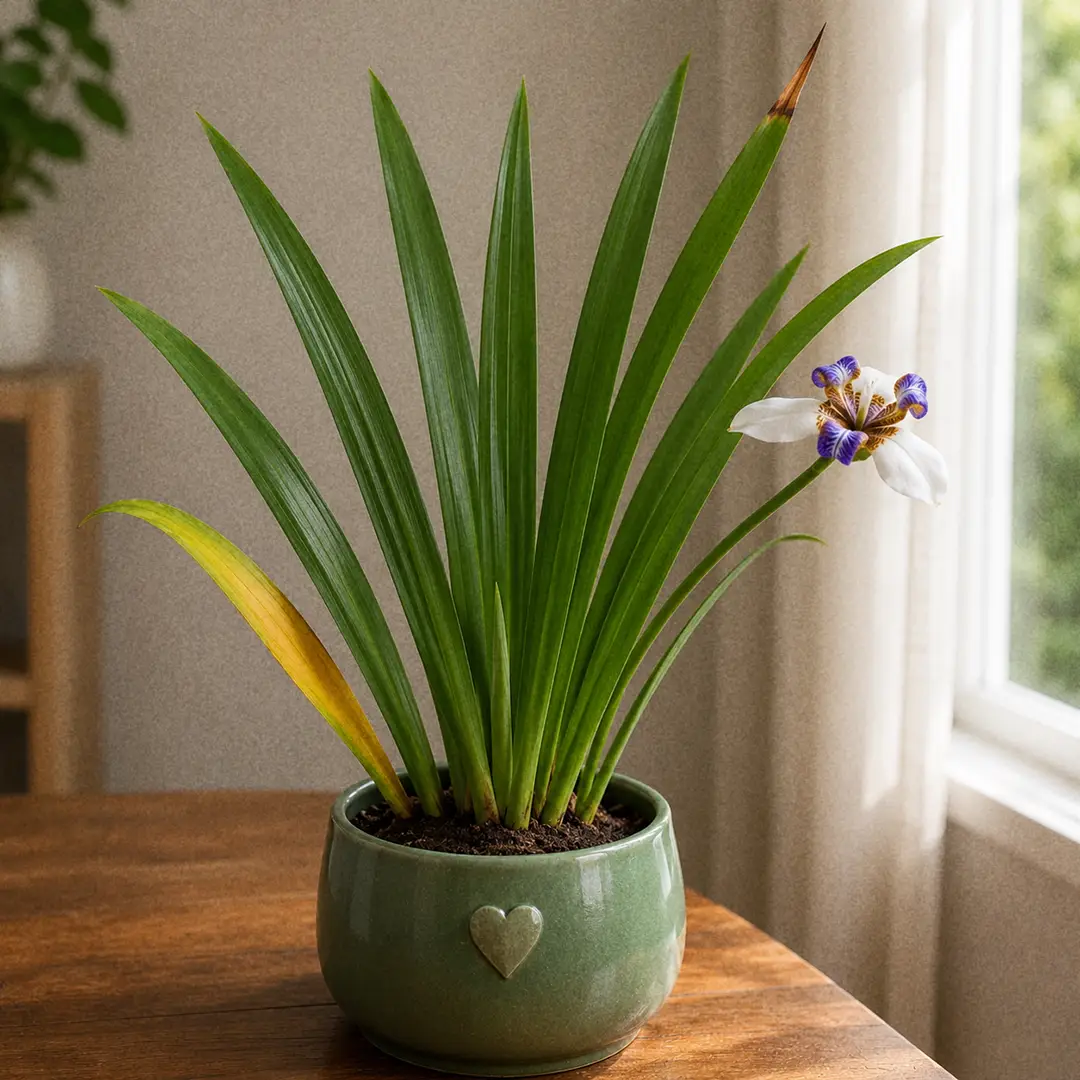
Root rot: a limp fan despite damp soil. Tip the plant out, trim every soft section back to firm white tissue, repot into fresh dry mix, and hold off water for ten days.
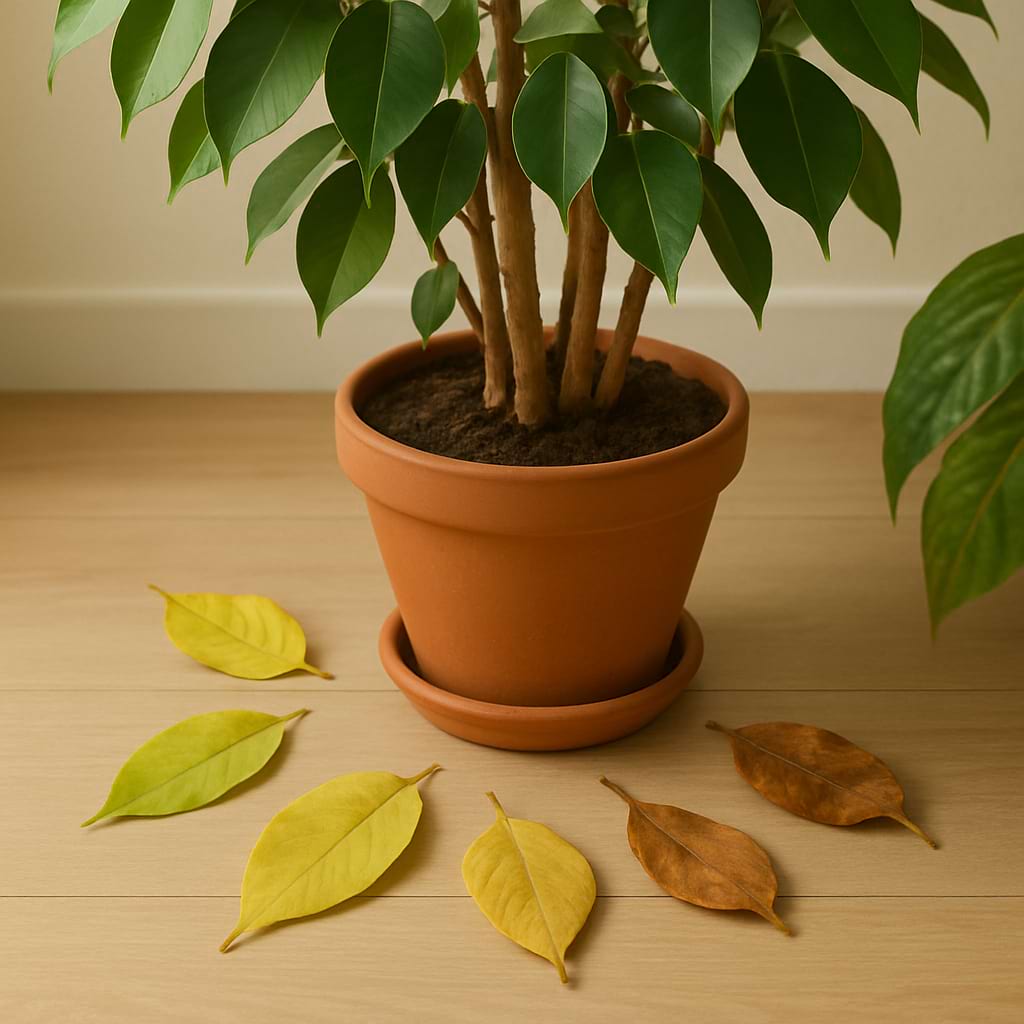
Yellowing leaves: outer leaves yellow as part of normal aging. Whole-fan yellowing with soft centre growth points to overwatering. Yellowing with crispy edges points to underwatering or salt buildup.
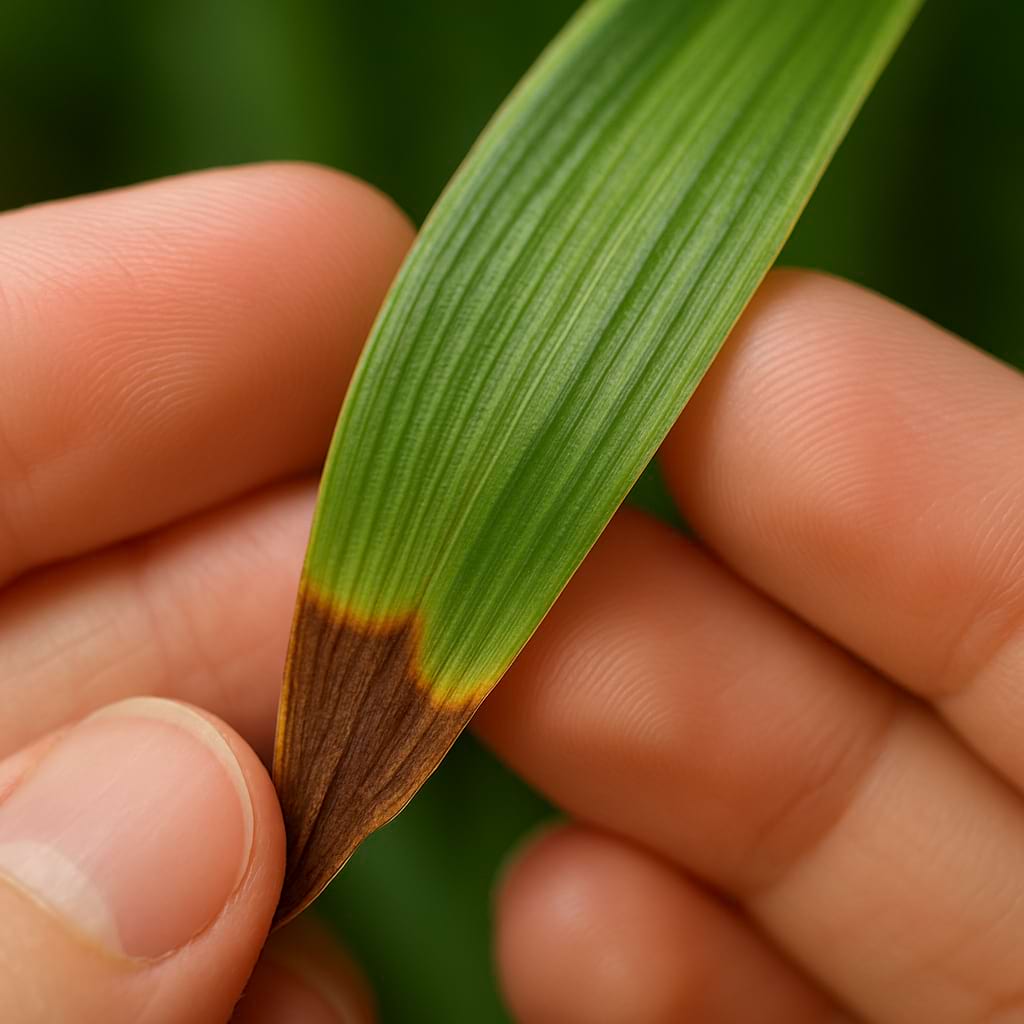
Brown crispy edges: dry air, fluoride or chlorine sensitivity, or overfeeding. Switch to filtered water, lift humidity, flush the soil.
Failure to bloom: almost always a light issue on a mature plant. The plant needs one to three hours of soft direct sun a day. Move it closer to a window or add a grow light.
Leaf drop: modest amounts are normal. Sudden heavy drop follows temperature shock or a soggy repot.
Sunburn: bleached pale patches on the sun-facing side. Move back from the window or add a sheer curtain.
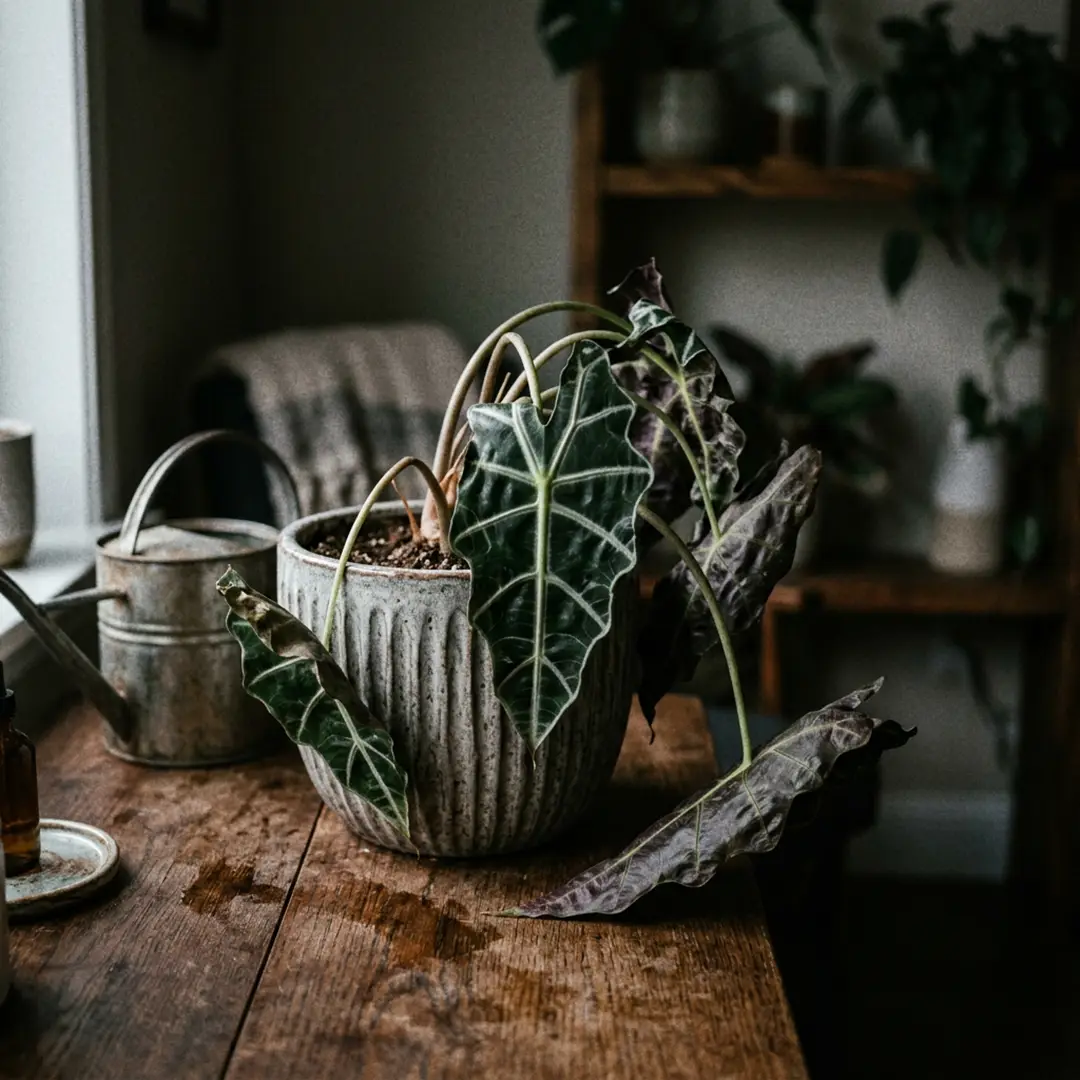
Wilting and drooping is more often root rot than thirst. Check the soil first; if soggy, treat as root rot.
Leaf spot (small brown circular blemishes) appears in cool wet conditions or on plants with wet foliage. Cut affected leaves and stop misting.



🖼️ Walking Iris Display Ideas
The fan looks best with room to flare: a low wide pot on a kitchen island, a tall floor pot in a sunroom, or a single pedestal plant in a bay window.
Solo Setups
A single specimen earns the most attention. A low neutral pot keeps the eye on the architecture of the leaves, and a pedestal lets the arching flower stalks lean out into open space. The most rewarding setup is letting it earn its name. Set the parent on a low shelf and place two or three smaller pots of soil within reach of the longest stalks. As plantlets emerge, pin them in. Over a couple of seasons one starter becomes a small flock.
Grouped Arrangements
For pairings, it works beautifully with a Spider Plant (another walker) and a Boat Lily. For a flowering corner, group it with a Cape Primrose and an African Violet on a bright east window.
🌟 Walking Iris Pro Tips
Rotate the pot a quarter turn at every watering. Fans grow toward the brightest light, and consistent rotation keeps them symmetrical.
Leave a slightly snug pot. A mildly crowded Walking Iris flowers harder than the same plant in an oversize pot.
Cool nights trigger flowers. A six-week stretch of 55-60°F nights in late winter, with slightly drier soil, often pushes the first flower stalks.
Catch plantlets early. Pin them when they're two to three inches tall, not after a month of waiting.
Clean leaves with the back of your hand. Once a fortnight removes dust, polishes the leaf, and helps you feel for early pests.
Don't panic when a flower closes by sundown. That's the cycle. Watch the same stalk the next morning.
Feed lightly during a bloom flush. Heavy fertilising can actually shorten the display.
❓ Frequently Asked Questions
Why does my Walking Iris flower only last one day?
Normal. Each Neomarica gracilis bloom opens in the morning and closes by evening. A single stalk produces several blooms in succession over days or weeks, and a mature plant throws multiple stalks at once during spring. Think of it like a daylily: a rotation of single-day flowers.
Why is my Walking Iris not blooming?
Almost always too little light. The plant needs one to three hours of soft direct sun a day. An east window, or south or west with a sheer curtain, is the easiest spot. A grow light on a twelve-hour timer also works. Make sure the fan has at least eight to twelve leaves, and try a slightly cooler, drier late-winter rest to kick off the first flowers.
Is Walking Iris toxic to pets?
Generally listed non-toxic, but the rhizome and sap of some iris-family plants contain mild irritants that can upset a curious pet's stomach. I treat it as low-risk but still keep it out of reach of nibblers. For a fully pet-safe flowering plant, try a Cape Primrose.
How does the Walking Iris actually walk?
The flat green stalks that carry the flowers are botanically modified leaves. After a flower fades, the same node produces a tiny new fan: a baby plant. As it grows it weighs the stalk down, and the plantlet roots wherever it lands. The parent has effectively walked forward by the length of the stalk.
Why are the tips of my Walking Iris leaves turning brown?
Brown tips usually mean dry air, fluoride or chlorine in tap water, or fertilizer salt buildup. Switch to filtered or rainwater, lift humidity, and flush the pot. Brown tips don't heal, but new leaves come in clean once the cause is fixed.
How do I separate a plantlet from the mother?
Wait until the plantlet has rooted into its own pot of soil. Set a small pot of damp mix next to the parent and pin the plantlet on with a hairpin while the flower stalk is still attached. After four to six weeks the plantlet has its own roots. Snip the connecting stalk close to the new fan.
How big does a Walking Iris get?
Neomarica gracilis fans reach 18 to 30 inches tall, with flower stalks slightly higher before bending under their plantlets. The clump spreads sideways over time. The Giant Walking Iris (Neomarica caerulea) can hit four feet in good light.
Can I bottom-water a Walking Iris?
Yes, especially if you're nervous about water sitting in the crown. Set the pot in room-temperature water for fifteen to twenty minutes once a fortnight, then drain. Alternate with top watering so the rhizome gets an occasional flush to wash out salts.
Does Walking Iris go dormant in winter?
Not truly. Indoors, growth slows when daylight shortens, but the plant stays evergreen. A mild winter rest with cooler temperatures and slightly drier soil often produces a stronger spring flower flush.
ℹ️ Walking Iris Info
Care and Maintenance
🪴 Soil Type and pH: Loamy, humus-rich mix with one part compost, two parts general potting soil, one part perlite or coarse sand; pH 6.0-7.0.
💧 Humidity and Misting: Comfortable in average household humidity around 40 to 50 percent; happier above 50 in winter.
✂️ Pruning: Snip spent flower stalks once their plantlets have rooted, and remove tatty outer leaves at the rhizome.
🧼 Cleaning: Wipe the long sword leaves with a soft damp cloth every few weeks, supporting each blade with one hand to avoid creasing it.
🌱 Repotting: Every two to three years, or when the rhizome spreads to within an inch of the pot edge.
🔄 Repotting Frequency: Every 2-3 years
❄️ Seasonal Changes in Care: Heavy growth and flowering from late winter through early summer; rest the plant slightly cooler and drier through autumn and mid-winter.
Growing Characteristics
💥 Growth Speed: Moderate
🔄 Life Cycle: Evergreen rhizomatous perennial
💥 Bloom Time: Late winter through early summer in flushes; each flower opens for a single day
🌡️ Hardiness Zones: 9-11 outdoors; grown indoors elsewhere
🗺️ Native Area: Tropical Brazil, with related species across Mexico, Central America, and the West Indies
🚘 Hibernation: No true dormancy, but slows visibly in low winter light
Propagation and Health
📍 Suitable Locations: Bright east-facing windowsills, sunlit kitchen counters, conservatories, sunrooms, plant shelves with a couple of hours of soft direct sun, sheltered patios in summer
🪴 Propagation Methods: Pin the plantlets that form on flower stalks into a neighbouring pot, or divide the rhizome in spring.
🐛 Common Pests: Spider Mites, Mealybugs, Thrips, Aphids, Scale Insects
🦠 Possible Diseases: Root rot, crown rot, leaf spot, rhizome rot, occasional rust
Plant Details
🌿 Plant Type: Rhizomatous evergreen perennial in the iris family (Iridaceae)
🍃 Foliage Type: Evergreen, sword-shaped, arranged in flat fans
🎨 Color of Leaves: Glossy mid-green to deep green, sometimes with a faint central crease
🌸 Flower Color: White outer tepals with inner segments banded in violet-blue, yellow, and brown
🌼 Blooming: Yes, freely indoors once established and given enough light, in flushes that last several weeks
🍽️ Edibility: Not edible
📏 Mature Size: 18-30 inches (foliage); flower stalks arch up to 36 inches before bending
Additional Info
🌻 General Benefits: Striking blooms, self-propagating "walking" habit, tolerates a wide range of indoor conditions, fragrant in some cultivars
💊 Medical Properties: None recorded; sap may mildly irritate sensitive skin
🧿 Feng Shui: Movement and renewal energy, associated with growth that travels and gentle forward momentum
⭐ Zodiac Sign Compatibility: Pisces
🌈 Symbolism or Folklore: Wandering grace, brief beauty, rebirth and continuity (each flower passes, but a new plant takes its place)
📝 Interesting Facts: The "Apostle Plant" nickname comes from a long-standing piece of garden folklore that says the fan must produce twelve leaves before it will bloom for the first time, echoing the twelve apostles. The genus name Neomarica honours Marius, a Roman general, with "neo" added to set the genus apart from the older Marica. The plant's most famous trick, the walking habit, is a true reproductive strategy: the flat green flower stalk is anatomically a modified leaf, and after a flower fades, a tiny plantlet pushes from the same node, weighs the stalk to the ground, and roots where it lands.
Buying and Usage
🛒 What to Look for When Buying: Look for a plant with at least one full fan of firm, deep-green sword leaves, no soft brown spots at the base, and ideally a flower stalk or visible bud. A fan with eight or more leaves is close to flowering size. Avoid plants with mushy crowns or papery yellowed outer leaves at the rhizome.
🪴 Other Uses: Conservatory feature plant, shaded patio container in summer, ground cover under tree canopies in zones 9 and warmer, gift plants to share offsets with friends
Decoration and Styling
🖼️ Display Ideas: Tall floor pot near an east-facing patio door, a low wide bowl on a kitchen island where flower stalks can arch, a sunroom shelf where neighbouring pots can catch the walking plantlets
🧵 Styling Tips: Give the fan room to flare; it looks best as a single specimen rather than crowded into a group, and a low neutral pot keeps the eye on the architecture of the leaves.

Houseplant101 Forum
Questions & Comments
Ask a question, share your plant experience, or help other plant owners.
Comments are temporarily unavailable.
Open the Houseplant101 ForumNo comments yet
Be the first to ask a question or share your experience about this page.
Log in or create an account
Comments use your Houseplant101 Forum account, but you can stay on this page.
Create a new account