
Lipstick Plant
Aeschynanthus radicans
Lipstick Vine, Basket Vine, Aeschynanthus, Red Bugle Vine


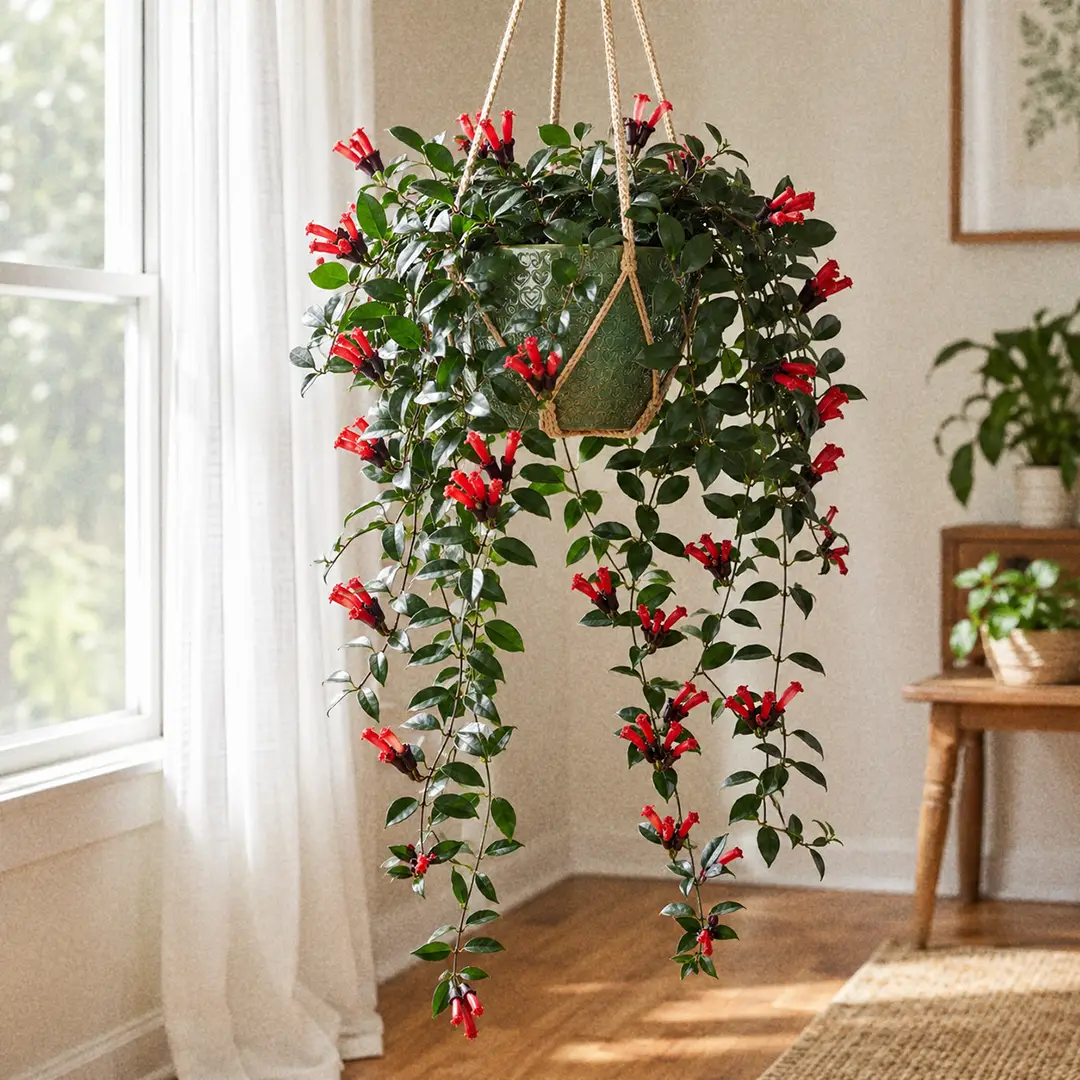
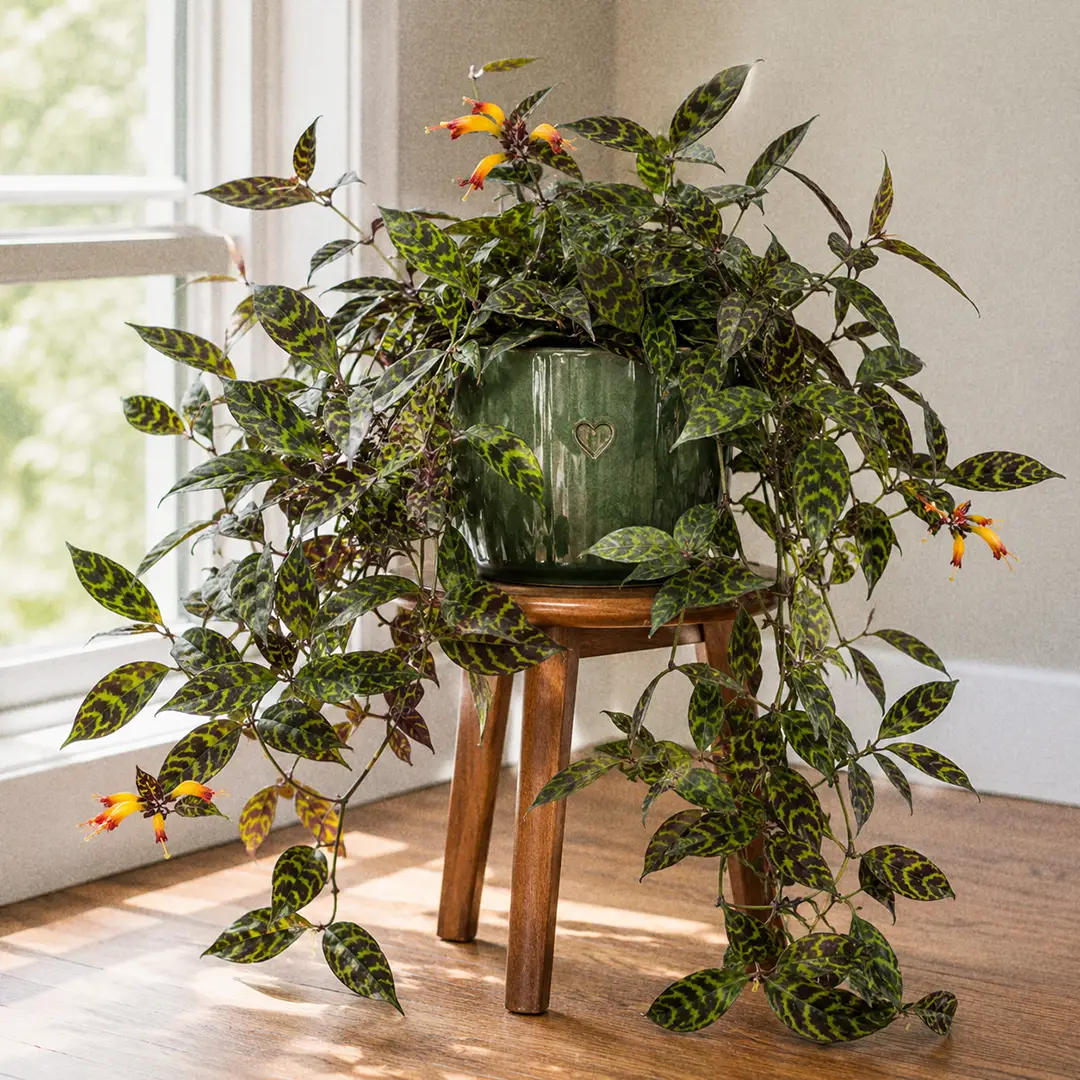
The Lipstick Plant (Aeschynanthus radicans) is a tropical trailing Gesneriad named for the bright red tubular flowers that push out of dark maroon calyces, looking exactly like little tubes of lipstick. It is a long-lived hanging-basket plant that blooms in summer and again into autumn when given bright indirect light, steady warmth, and humid air.
📝 Lipstick Plant Care Notes
🌿 Care Instructions
⚠️ Common Pests
📊 Growth Information
🪴 In This Guide 🪴

☀️ Lipstick Plant Light Requirements (Bright Indirect, A Touch of Direct Sun)
Light is the single biggest factor in whether your Lipstick Plant blooms. Without enough of it, the plant grows fine but refuses to flower.
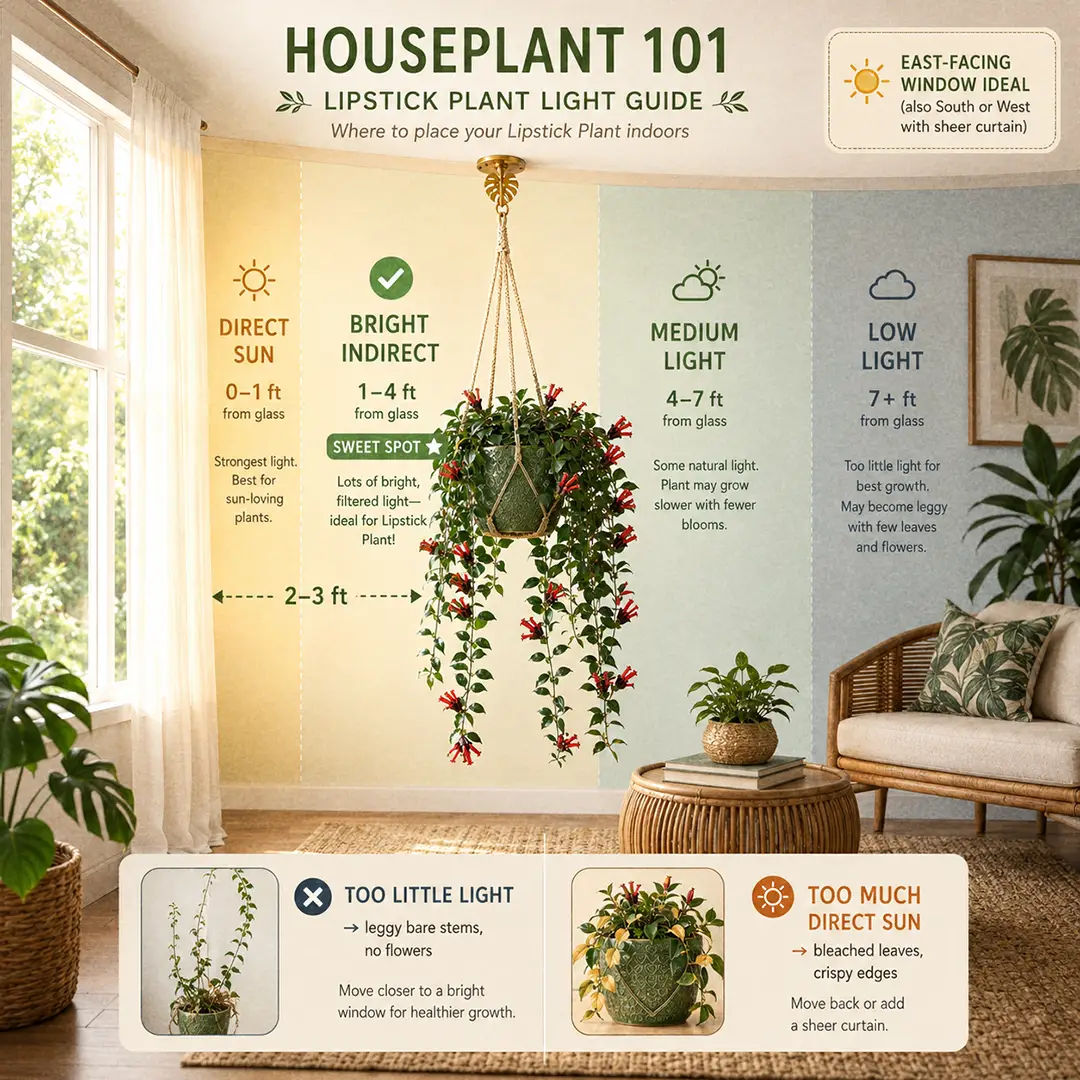
The Sweet Spot
Aim for bright indirect light with one to three hours of soft morning sun. An east-facing window two to four feet inside the room is the gold standard. A south- or west-facing window with a sheer curtain works equally well, and a bright bathroom window often produces the heaviest blooms thanks to the bonus humidity.
A north-facing window is usually too dim to bloom this plant. If north is all you have, add a small grow light on a timer for ten to twelve hours a day. Aeschynanthus responds very well to artificial light.
Too Little Light
Long stretches of bare stem, leaves spaced too far apart, no blooms. New growth leans toward the window. Move the basket closer, or add a small grow light directly above.
Too Much Light
Pale washed-out patches on exposed leaves, papery brown edges, a yellow cast across the plant. Pull the plant a foot back from the glass or add a sheer curtain. Watch out for summer sun on a south window; the same spot that was gentle in spring can scorch in July.
💧 Lipstick Plant Watering Guide (Top Inch Dry, Then Drench)
This plant is an epiphyte. Its roots want wet-then-dry-then-wet, not constant moisture. Soggy soil for days is what kills it.
How Often
Push a finger an inch into the soil. Dry on top, faintly damp below means water. In a typical home with bright indirect light, that lands around every five to seven days in spring and summer, and every ten to fourteen days in winter. The general houseplant watering primer covers the broader logic.
Hanging baskets dry faster than tabletop pots. Plants in heavy bloom drink slightly more. Terracotta dries faster than plastic. Check the soil, do not count days.
How to Water
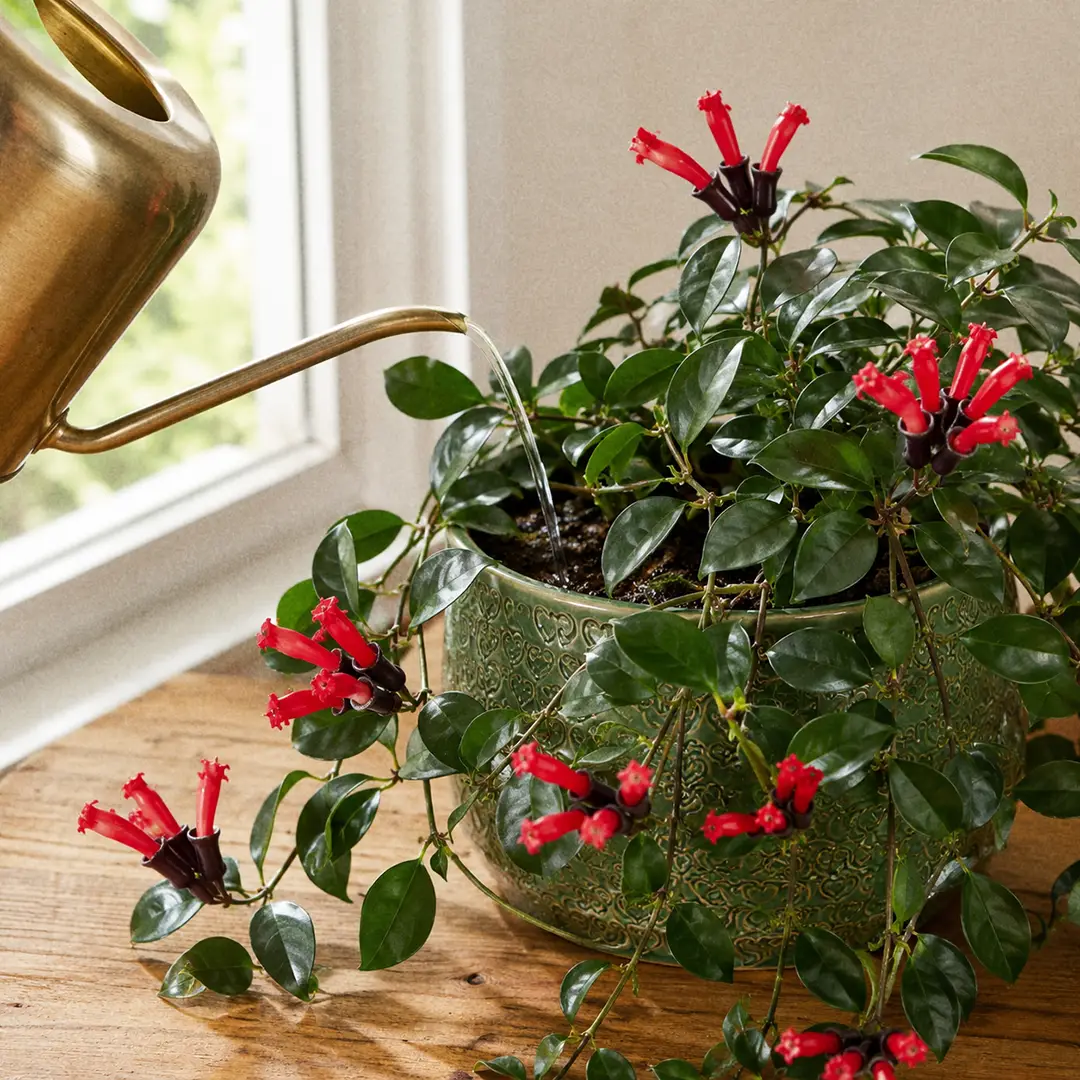
Water at the soil line, slowly, until water runs from the drainage holes. Drain fully and tip out the saucer. Standing water at the base of the pot is the fastest route to root rot.
Keep water off open flowers when possible. Bottom watering works well for hanging baskets that are awkward to take down. Lift the basket into a basin of room-temperature water for fifteen to twenty minutes, then let it drain.
Overwatering vs Underwatering
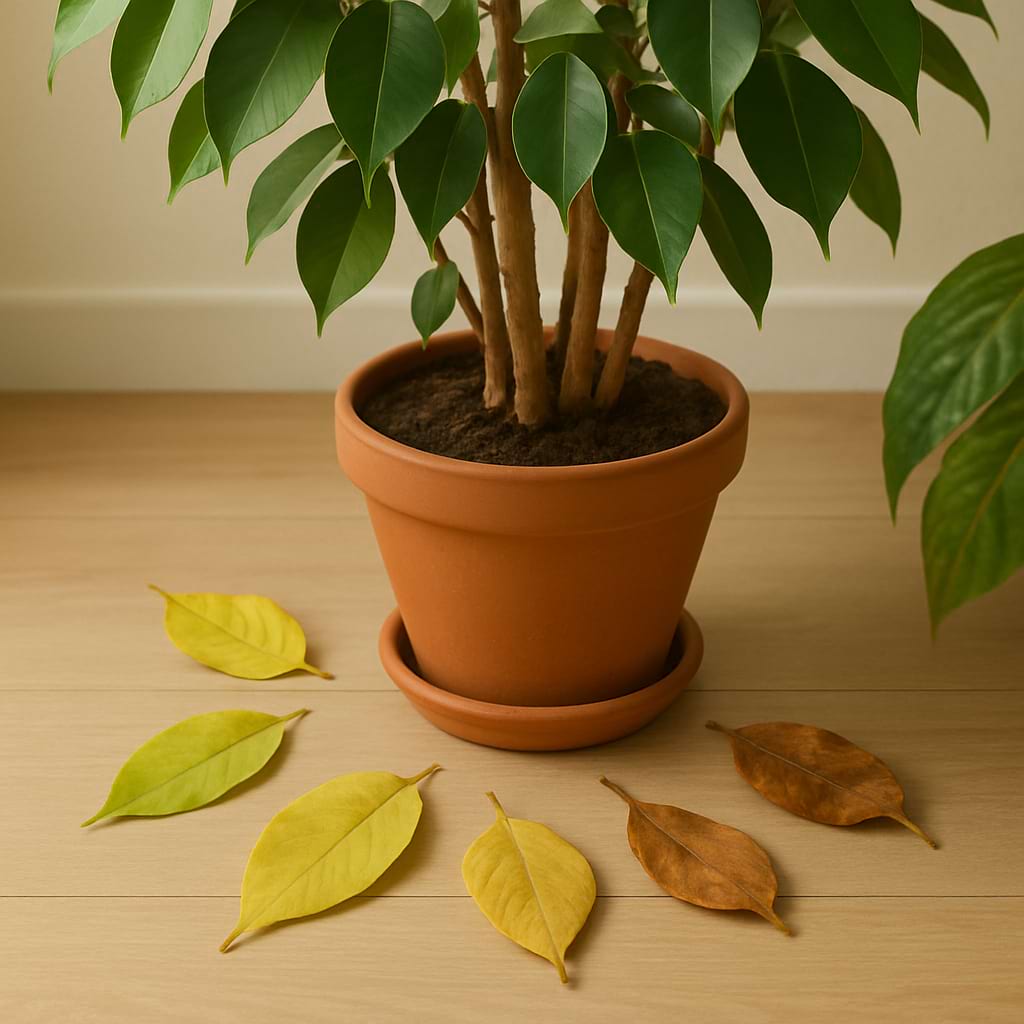
Overwatered plants show lower-leaf yellowing within a week of watering, soft black patches at the stem base, a sour smell, and unopened buds blackening and falling.
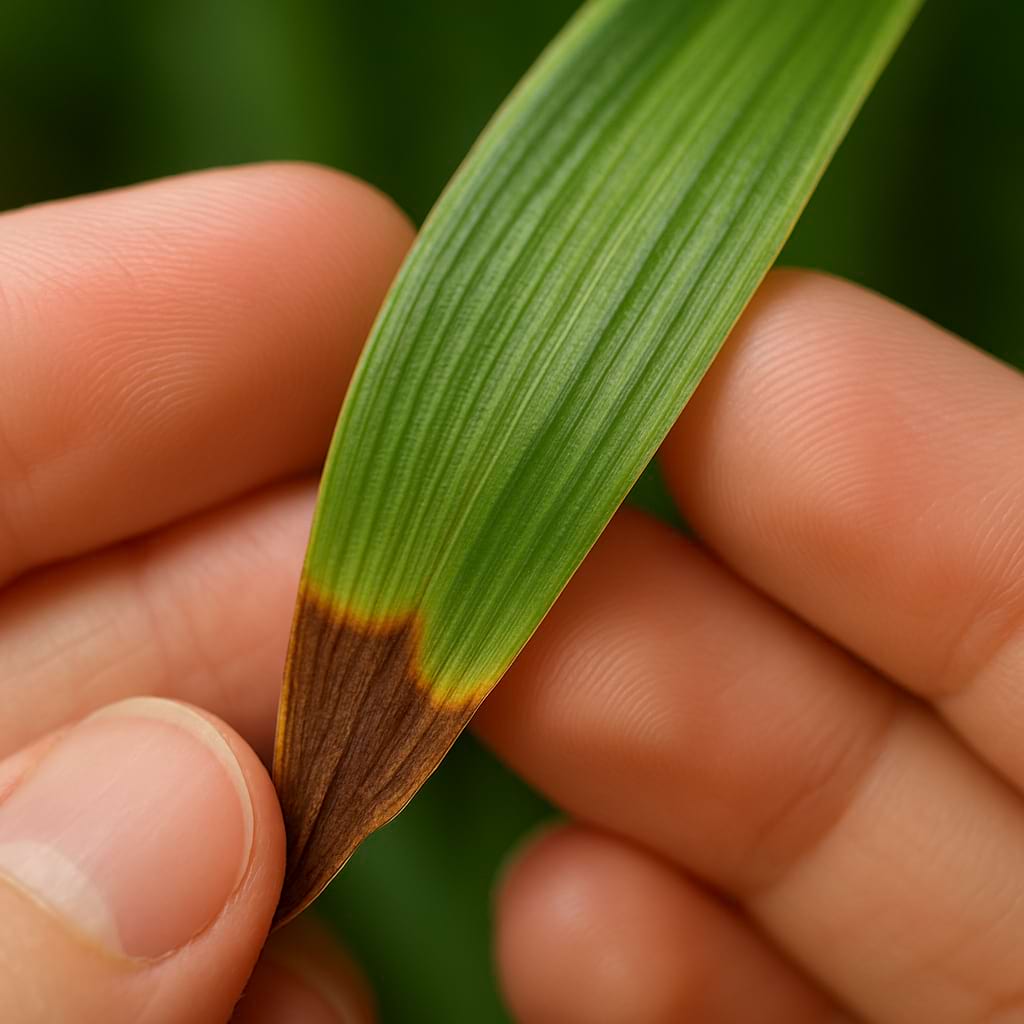
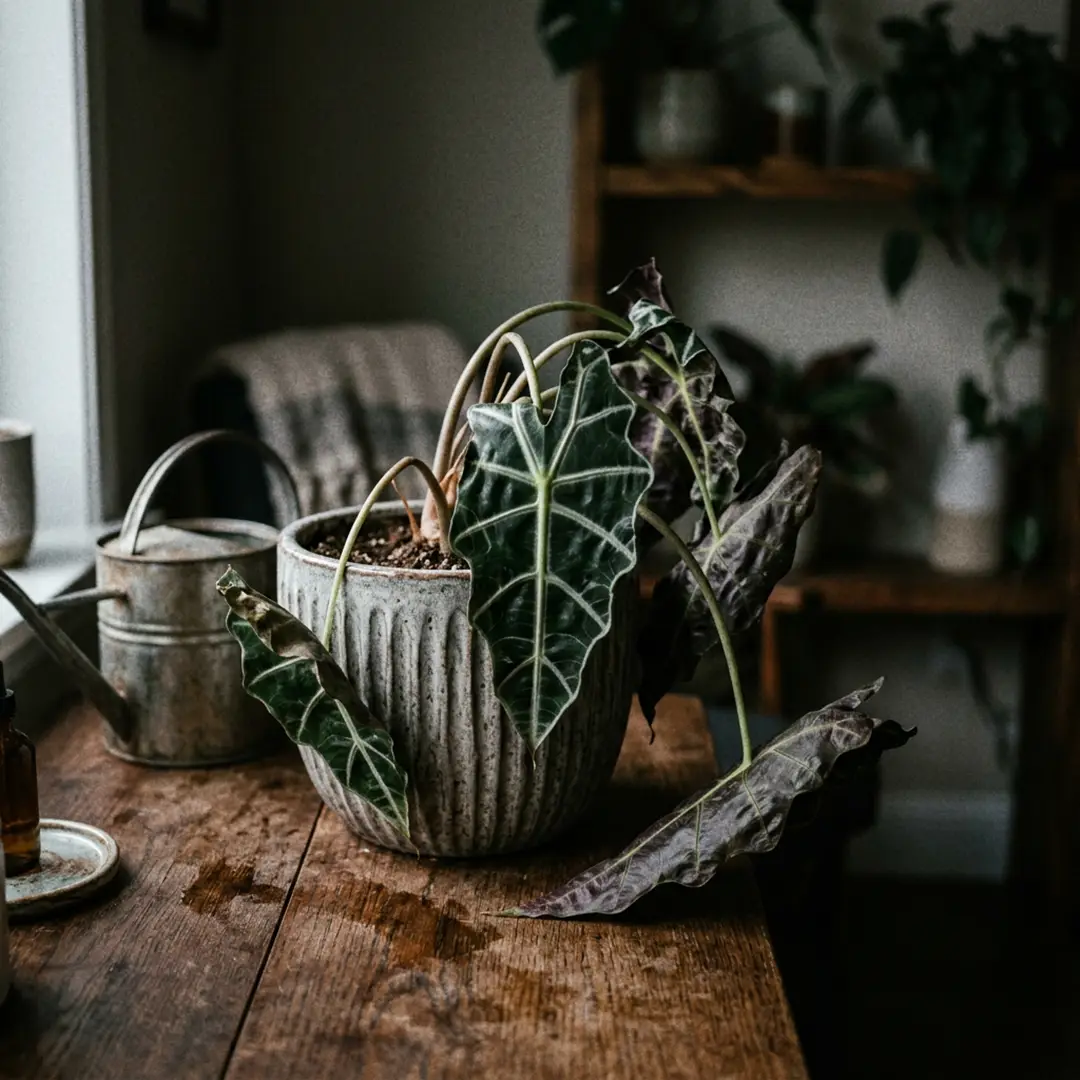
Underwatered plants show limp stems and soft leaves, crispy tips, soil pulling from the pot sides, and a lightweight pot. A drink revives them within a day. Rot keeps declining even after you stop. Err on the dry side.
Water Quality
Average tap water is fine. If your tap runs hard, leave the can out overnight or use filtered water. Always room temperature. Cold water on warm roots can leave faint pale rings on the leaves.
🪴 Best Soil for Lipstick Plant (Light, Airy, Epiphyte-Friendly)
Standard potting soil is too dense. The roots want fast drainage with just enough moisture-buffering to stay lightly damp.
A Simple DIY Mix
- 2 parts quality indoor potting soil or peat-based mix
- 1 part orchid bark (fine to medium)
- 1 part perlite or pumice
- 1/2 part coco coir or sphagnum moss
- A small handful of horticultural charcoal
Squeeze a fistful. It should hold briefly, then crumble apart cleanly. Aim for the springy, chunky texture of a good orchid mix.
Premix Option
An "African Violet mix" works well, since both plants share a love of light, slightly acidic soil. Open it up with a handful of orchid bark and perlite. Avoid anything labeled "moisture control," which holds far too much water for an epiphyte.
🍼 Fertilizing Lipstick Plant (Light, Steady, Bloom-Pushing)
Lipstick Plants are heavy bloomers, and they prefer a steady light feed over occasional heavy doses.
When and What
Feed every two weeks from March through October, dropping to monthly or pausing in winter. Use a balanced liquid houseplant fertilizer (around 10-10-10 or 20-20-20) at half the label dose. The general fertilizing guide covers why half strength is the safer rhythm.
In late spring, switch to a higher-phosphorus formula (10-30-20 or any "bloom booster") for two or three feedings to push bud formation. African Violet fertilizer is the easiest off-the-shelf choice. Return to balanced after the bloom-push.
Reading the Plant
- Glossy leaves and steady new growth: on point.
- Pale, smaller leaves: bump strength slightly.
- Lush green growth but no buds: too much nitrogen. Switch to bloom booster.
- Brown tips and chalky white soil: salt buildup. Flush the pot with plain water.
- Sudden bud drop after feeding: fertilizer burn. Pause for a month, restart at half strength.
🌡️ Lipstick Plant Temperature Range
Ideal Range
Sweet spot is 65 to 80°F (18 to 27°C). This is a tropical plant; it is noticeably less cold-tolerant than its Cape Primrose cousin.
Drafts and Vents
Avoid sustained nights below 55°F (13°C), cold drafts, and hot blasts from heating vents or AC pointed at the foliage.
The Cool-Down That Triggers Blooms
Here is the most useful trick on this page. Lipstick Plants bloom hardest after a slightly cooler, drier rest in late autumn. Through November and December, drop night temps to 60-65°F (16-18°C), cut watering in half, and pause fertilizer. The plant rests, then explodes into a spring-summer bloom flush. This is the same mechanism that drives Christmas Cactus to bloom on cue. A spare bedroom that runs cool at night is perfect.
💦 Lipstick Plant Humidity Requirements
Ideal Humidity
Lipstick Plants like humid air but are far more forgiving than a Maidenhair Fern. The waxy leaves hold moisture in well.
- Ideal: 50 to 70 percent
- Comfortable: 40 to 50 percent
- Trouble below: 25 percent (crispy edges, bud drop)
Boosting Humidity
Run a small humidifier in the room, group with other humidity-loving houseplants, set the pot on a pebble tray, or move it to a bright bathroom. Avoid heavy daily misting, which invites fungal leaf spot when the plant is in bloom. See boosting humidity for indoor plants for winter tips.
🌸 Lipstick Plant Flowers (Red Tubes Pushing From Dark Calyces)
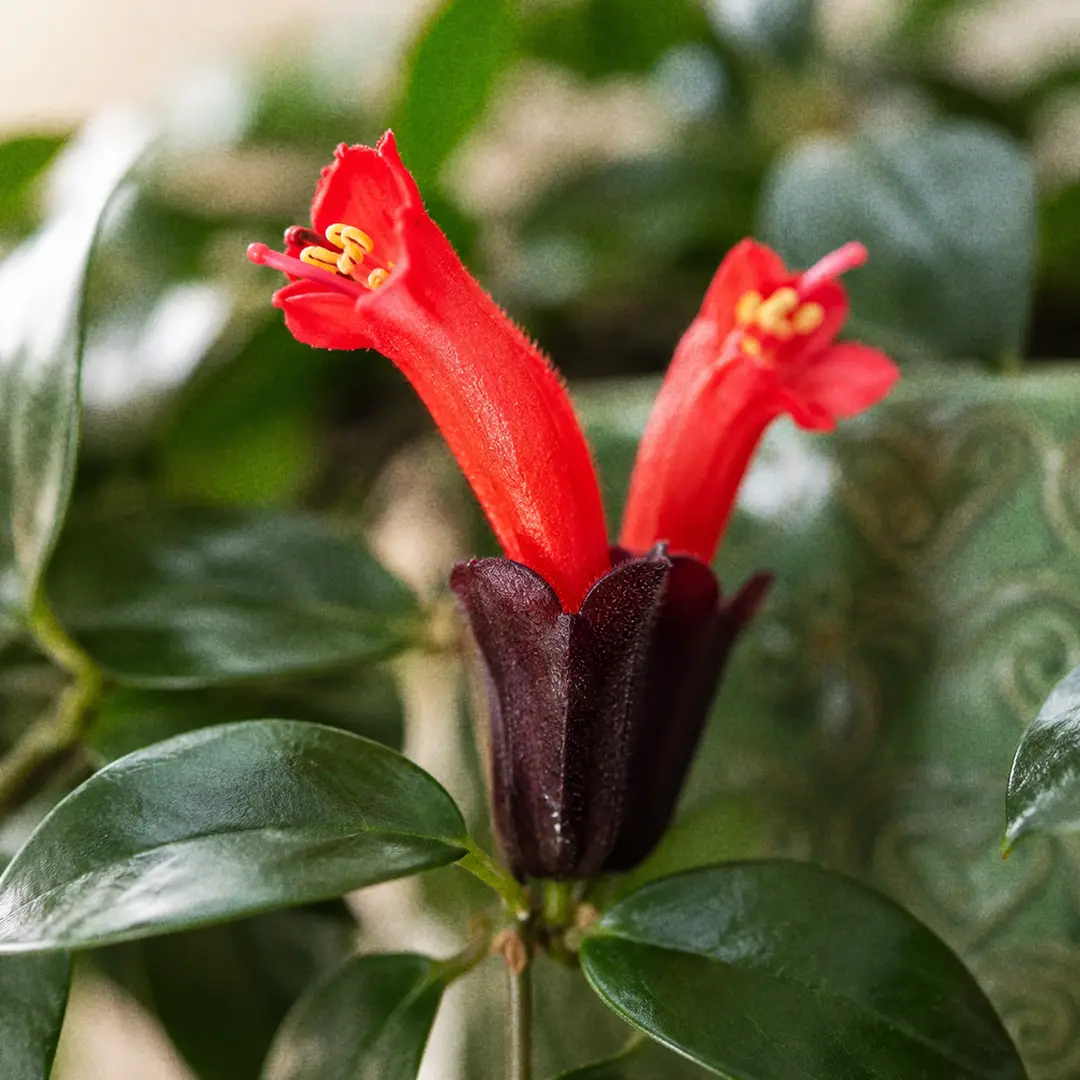
This is where the plant earns its name. Each scarlet tubular flower pushes out of a dark, almost-black calyx at the stem tip, exactly like a tube of lipstick rising from its case. A healthy plant in heavy bloom carries dozens at once.
What the Flowers Look Like
Each flower is two to three inches long, slim and tubular, with the dark calyx staying in place even after the petals drop. The classic species is scarlet red; cultivars come in orange, coral, yellow, and bicolors. Flowers form in clusters of three to eight per stem tip, each lasting five to ten days, with the whole show stretching from late June through early October.
How to Trigger Heavy Blooms
- Bright indirect light with a touch of morning sun.
- Autumn cool-down at 60-65°F (16-18°C) nights for four to six weeks.
- Steady half-strength feeding with a phosphorus push as buds form.
- A slightly snug pot. Repotting too often delays blooming.
- Pruning after each bloom flush. Flowers form on new growth.
If yours has stopped blooming, the cause is almost always light, the missed cool-down, or overwatering through winter. Most stalled plants come back within one seasonal cycle.
Cleanup
Spent flowers drop on their own. Once a week, run your fingers through the foliage and pull off any browned petals or finished calyces still hanging on.
🏷️ Lipstick Plant Types and Varieties
The genus Aeschynanthus has around 150 species, but only a handful are grown indoors. Most plants sold today are cultivars of A. radicans.
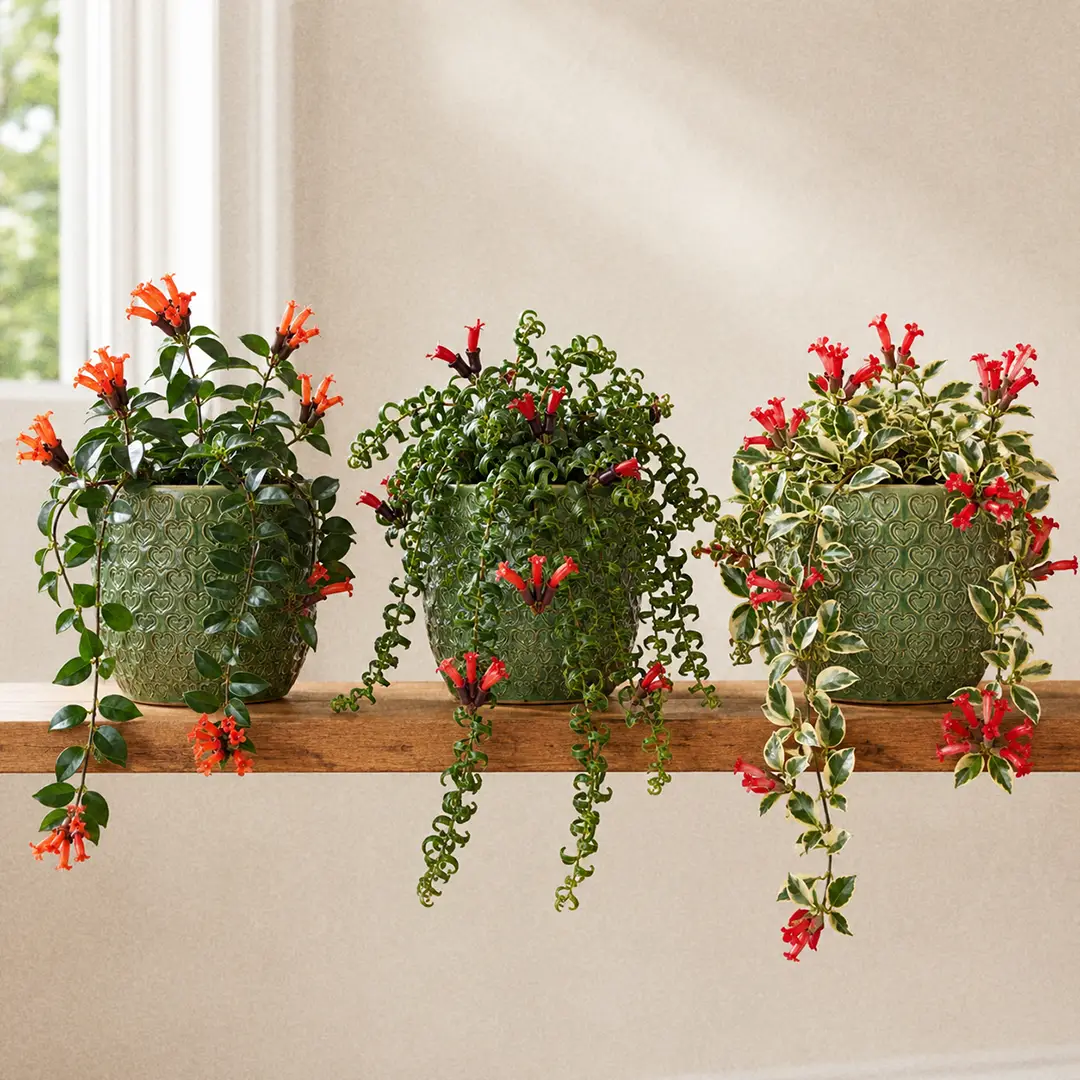
'Mona Lisa'
The most widely sold cultivar, with bright orange-red flowers slightly larger than the species. Vigorous and forgiving; if you cannot find a label and the flowers are orange-red rather than pure scarlet, this is probably it.
'Cassiopeia'
Classic scarlet flowers, compact, and a reliable rebloomer with longer bloom stretches than the type.
'Variegata'
Cream-and-green marbled foliage with the same red flowers. Slower-growing and a touch more demanding on light, since variegated tissue does not photosynthesize as efficiently.
'Rasta' (Curly Lipstick)
Dramatically twisted, curly leaves like little springs along the stems, with the same scarlet flowers. The foliage is a feature even between bloom flushes.
'Black Pagoda'
A different species (A. longicaulis) with near-black marbled leaves and pale yellow-green flowers. Foliage is the showpiece. Care is essentially identical.
Lipstick Plant vs Goldfish Plant
The Goldfish Plant carries pouchy orange fish-shaped flowers. Lipstick Plants carry slim red trumpets from dark calyces. Care is similar; Lipstick is slightly tougher on humidity.
Lipstick Plant vs Hoya
The Hoya Carnosa has thick succulent leaves and tight umbels of waxy flowers. Lipstick Plants have thinner leaves and larger tubular flowers. Hoyas are more drought-tolerant; Lipstick Plants bloom more reliably in their first year or two.
Lipstick Plant vs African Violet
Both are Gesneriads and share feeding and soil preferences. The African Violet is a tabletop rosette; the Lipstick Plant is a trailing vine for hanging baskets.
When buying, look for a full crown of glossy leaves, evenly trailing stems, and ideally a few fat unopened maroon calyces forming.
🪴 Potting and Repotting Lipstick Plant
Lipstick Plants bloom best when slightly root-bound. Plan on a refresh every two to three years, only when genuinely outgrowing the pot.
When to Repot
Look for roots circling the pot bottom, roots growing out of drainage holes, water running straight through, or a noticeable slowdown in growth. Avoid repotting in mid-summer when the plant is in heavy bloom; late winter to early spring is the clean window.
Pot Choice
One to two inches wider than the current root ball, drainage holes mandatory. Hanging baskets are ideal. Plastic baskets hold moisture longer; coco-fibre lined wire baskets drain great but dry fast.
How to Repot
- Water lightly the day before so the root ball holds together.
- Add an inch of fresh epiphyte mix to the new pot.
- Slide the plant out and tease apart tightly circling roots at the bottom.
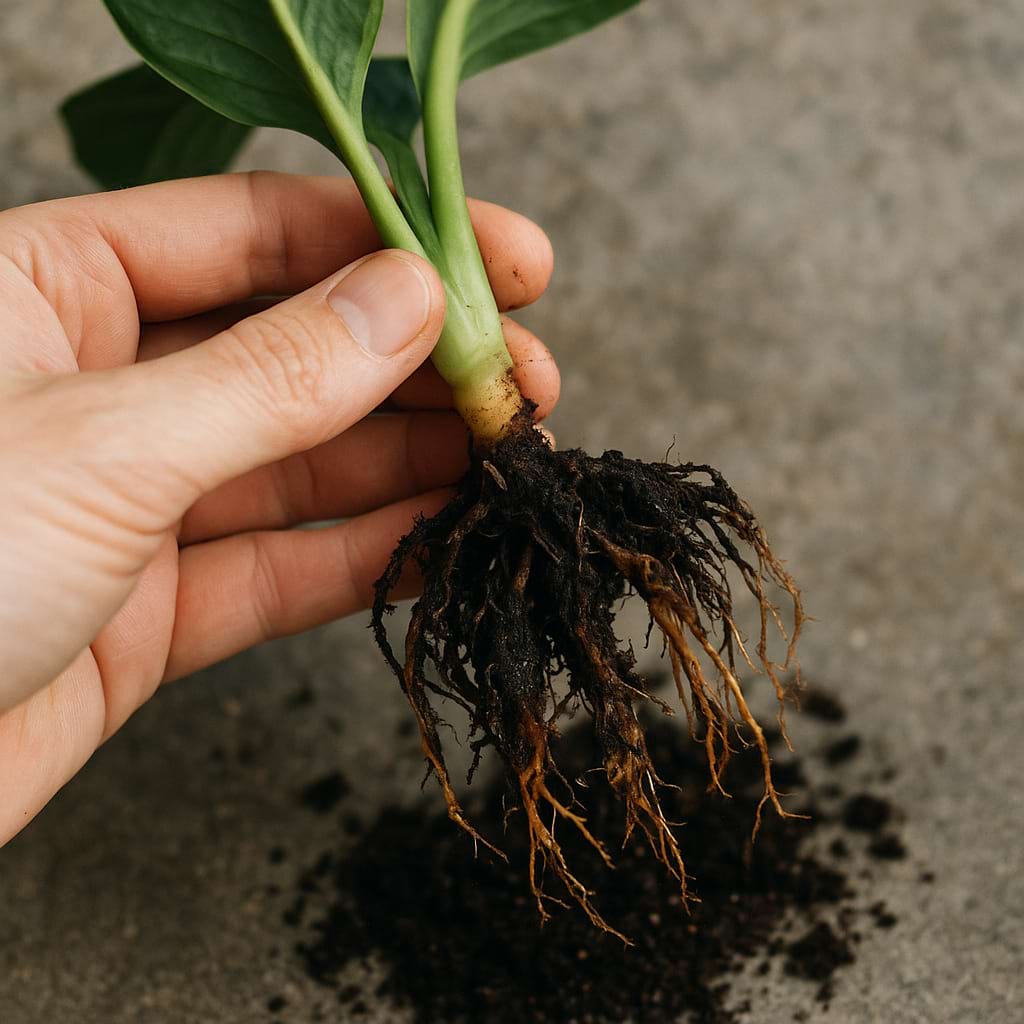
- Trim any mushy or brown roots (healthy ones are firm and pale tan).
- Set the plant at the same depth as before. Do not bury the lowest stems.
- Backfill, tap to settle, do not pack hard.
- Water lightly and return to its usual bright indirect spot.
The general repotting houseplants guide covers the basics. Do not jump into a much larger pot; excess soil holds excess water and rots the roots.
✂️ Pruning Lipstick Plant
Pruning is non-optional if you want a full, flowering plant. Skip it and the plant turns into bare vines with leaves only at the tips.
After Each Bloom Flush
Trim each spent flowering stem back by about a third. The plant branches from the cut point, doubling the stem tips that will carry next year's flowers. Skip this and the plant blooms less each year.
Leggy Stems
Through the season, trim stretched stems back by half to encourage branching. Save the cuttings for propagation. A hard prune in early spring resets a stretched winter plant.
Pinching for Fullness
In spring, pinch the very tip out of non-flowering stems to force branching. Stop by early summer so flowers can form on the new tips.
Damaged Tissue
Snip off any soft, mushy, or dark-spotted leaves at the stem. Clean snips with rubbing alcohol between cuts.
Cleaning
Wipe the smooth waxy leaves with a soft damp cloth every couple of months.
🌱 How to Propagate Lipstick Plant
Stem cuttings root reliably in water or damp soil. A spring cutting is usually a flowering plant the following summer.
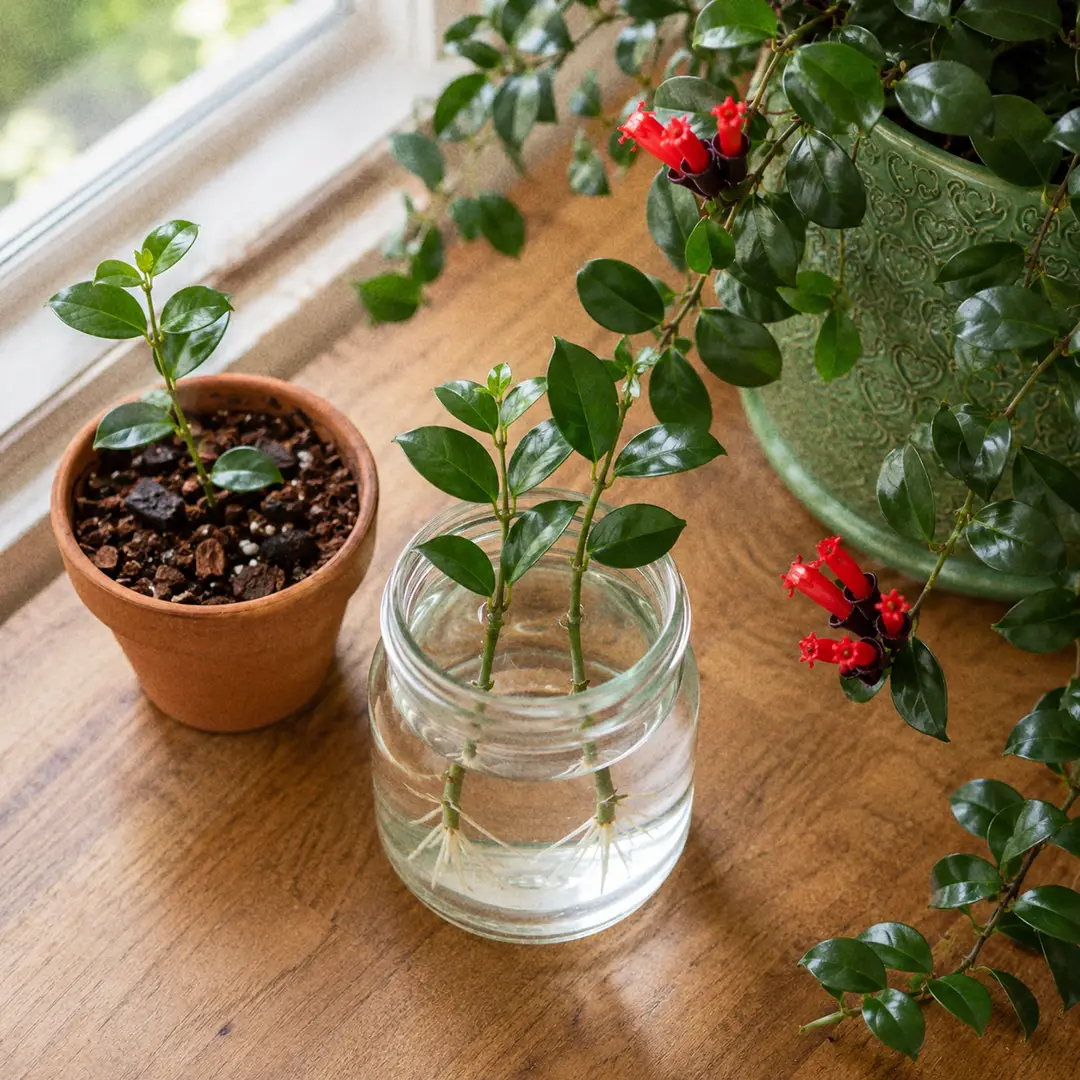
Method 1: Water Propagation
- Choose a healthy, non-flowering stem tip with at least four pairs of leaves.
- Cut a four to six inch piece just below a leaf node.
- Strip the bottom two pairs of leaves.
- Drop into a glass of room-temperature water, no leaves submerged.
- Place in bright indirect light, never direct sun.
- Change the water every three to five days.
- Roots appear within two to three weeks. Pot up when they reach an inch.
The general water propagation guide covers the broader technique.
Method 2: Soil Propagation
- Take a four to six inch cutting and strip lower leaves.
- Let the cut end air-dry for half an hour.
- Dip in rooting hormone (optional) and insert into damp epiphyte mix.
- Cover loosely with a plastic bag to hold humidity around 70 percent.
- Place in bright indirect light. Keep damp, never soggy.
- A gentle tug after three to four weeks tells you if roots have formed.
The soil propagation guide covers the broader technique.
What Does Not Work
Single-leaf cuttings (unlike Cape Primrose) and cuttings without a leaf node. Always cut just below a node.
🐛 Lipstick Plant Pests and Treatment
Inspect leaf undersides and stem joints every couple of weeks. Quarantine new plants for two weeks. That alone prevents most problems.
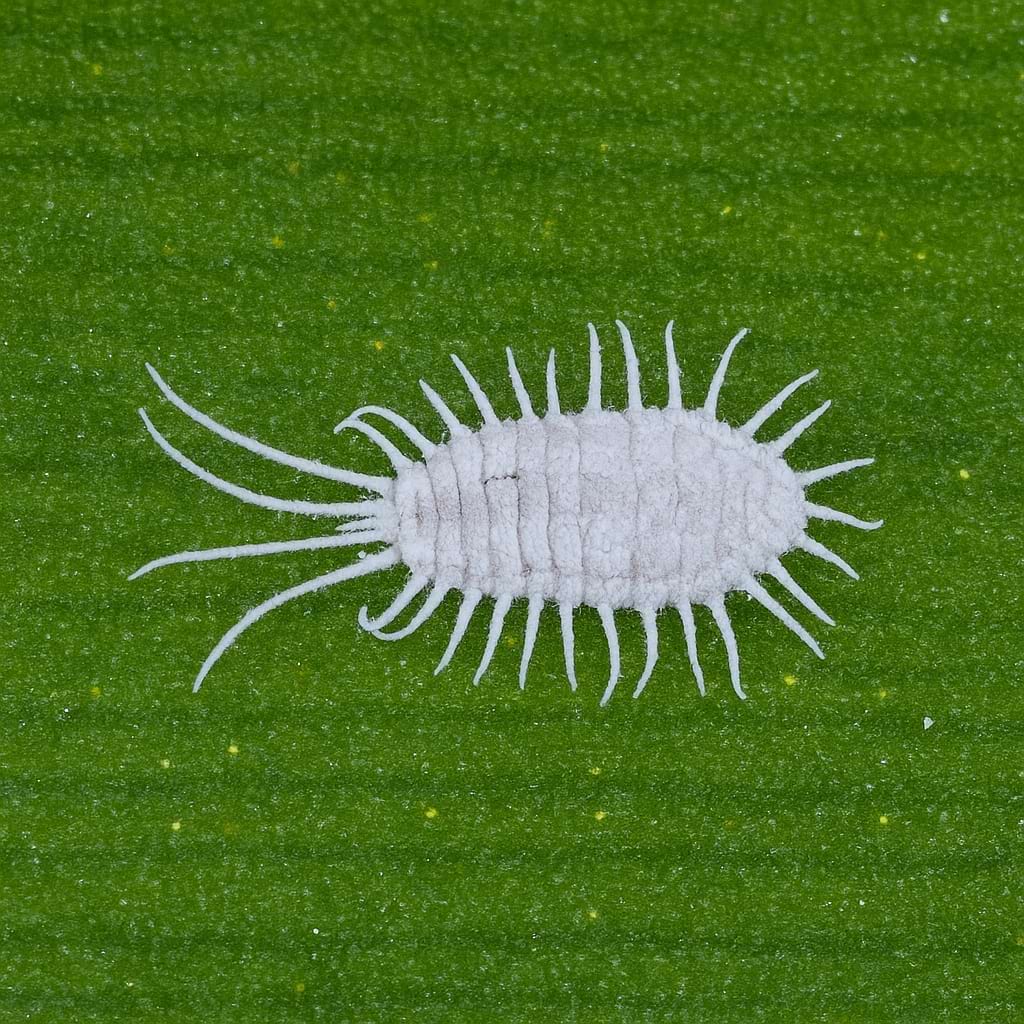
Mealybugs cluster in leaf joints and inside the dark calyces. Dab each with a cotton swab dipped in 70% isopropyl alcohol; repeat every five days for three weeks.
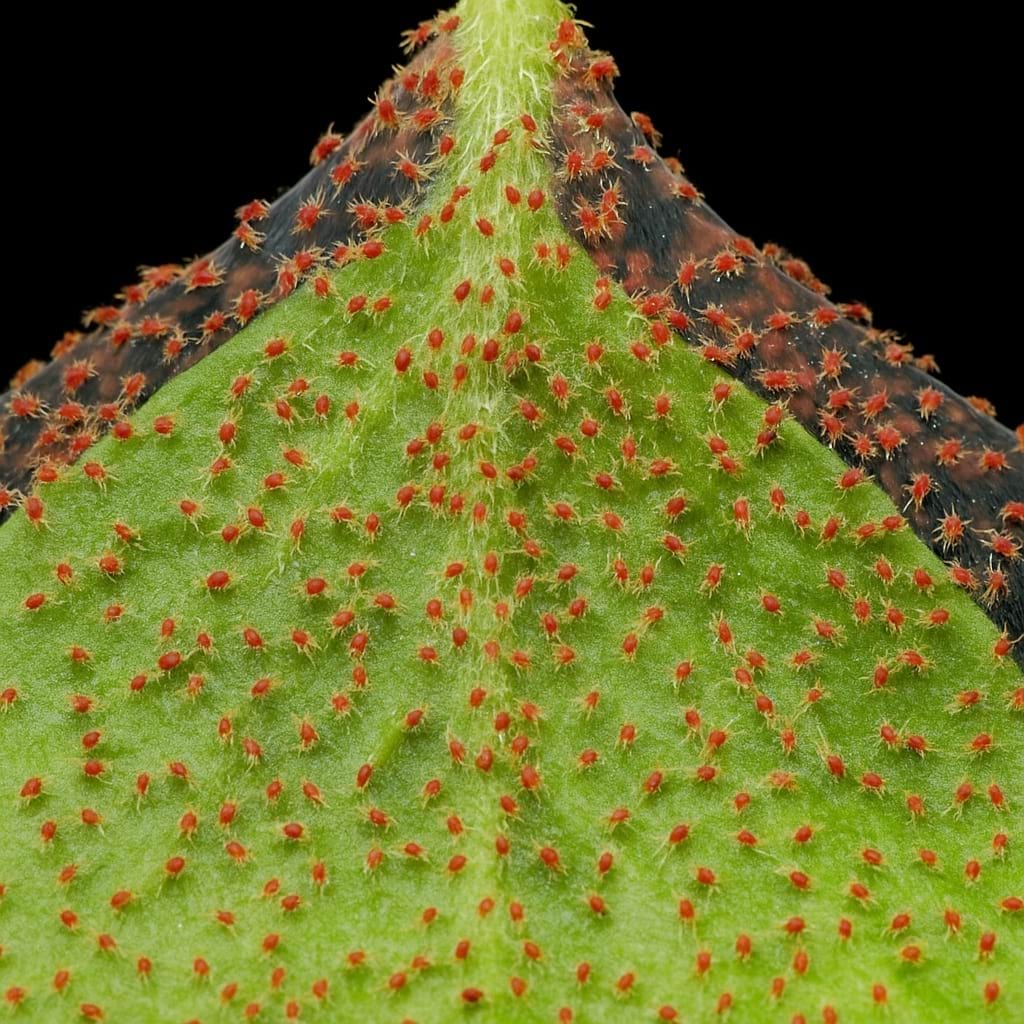
Spider mites hit in dry winter air. Fine webbing and stippled leaves are the signs. Boost humidity and treat with insecticidal soap weekly.
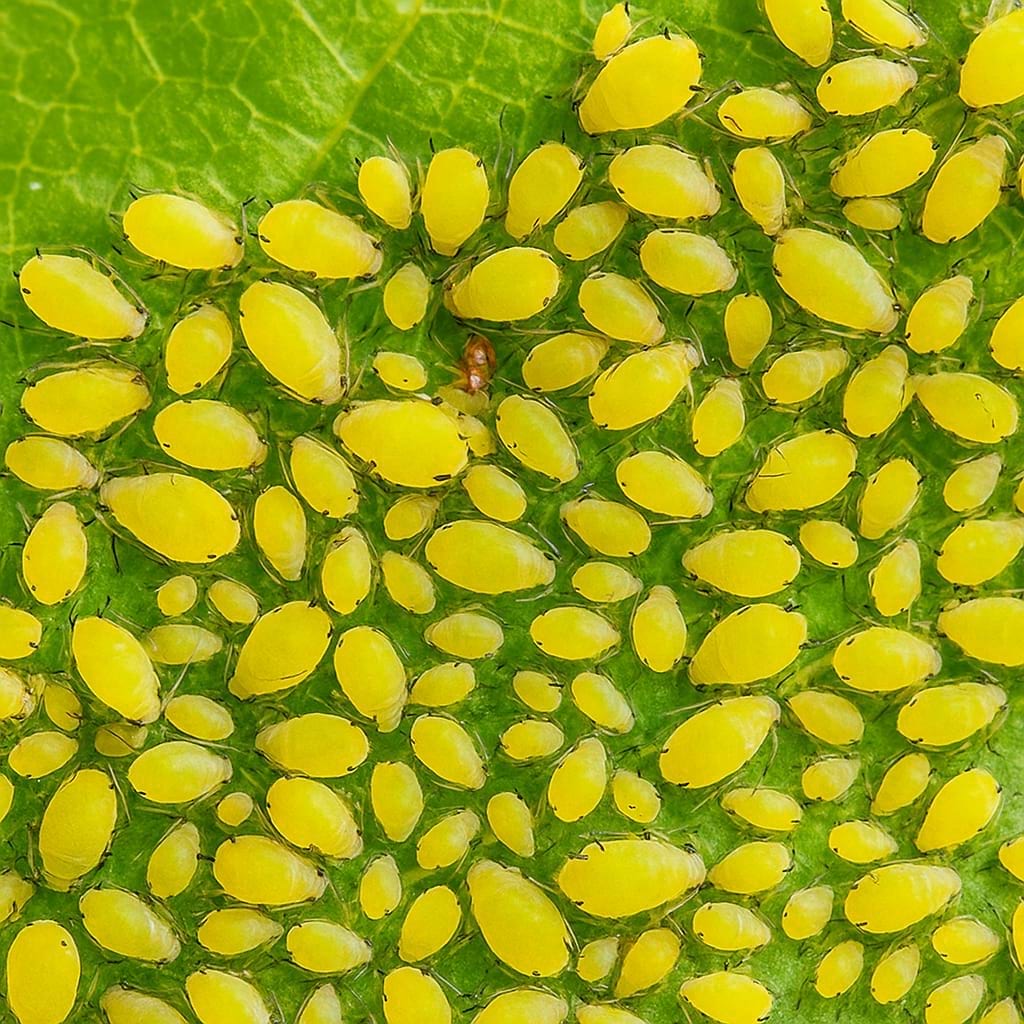
Aphids cluster on new growth. Rinse off in the sink and follow with insecticidal soap.
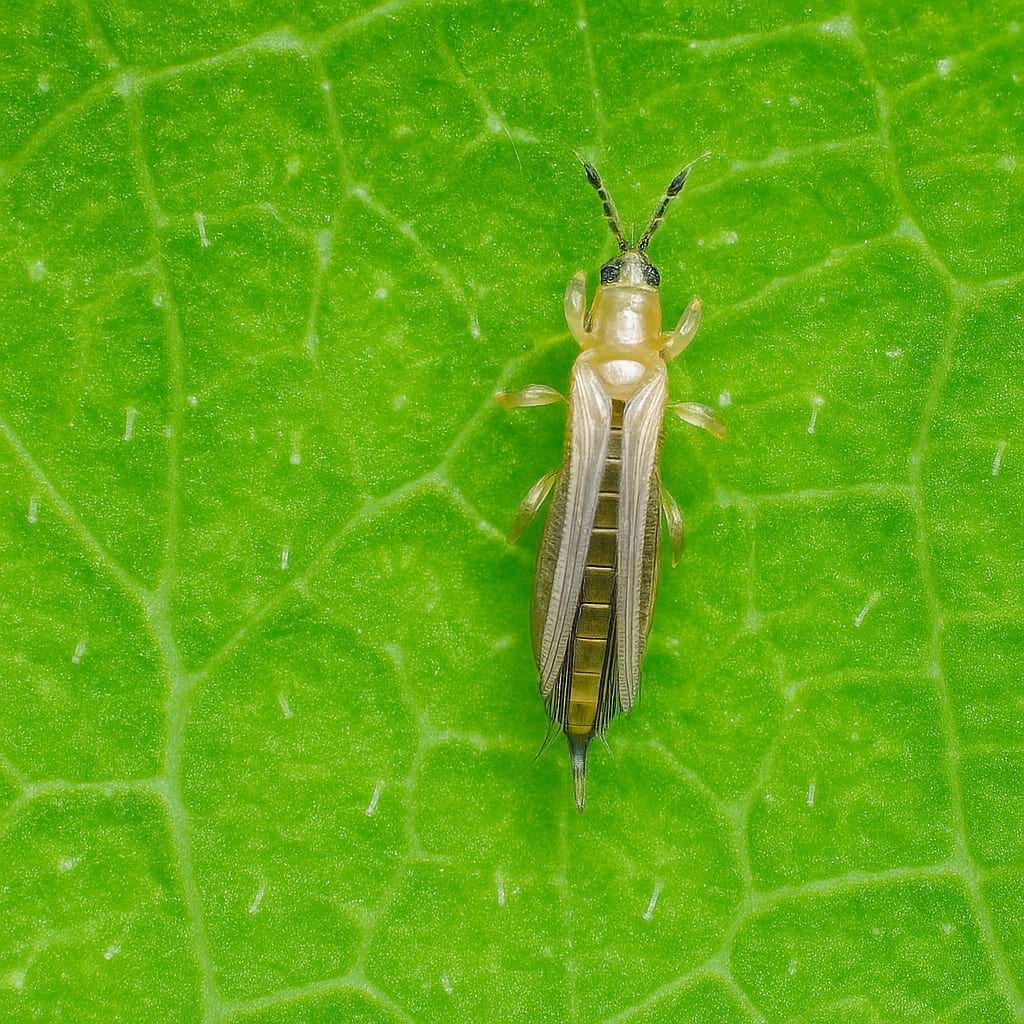
Thrips leave silvery scratches and deform buds. Treat with a whole-plant insecticidal soap drench and isolate.
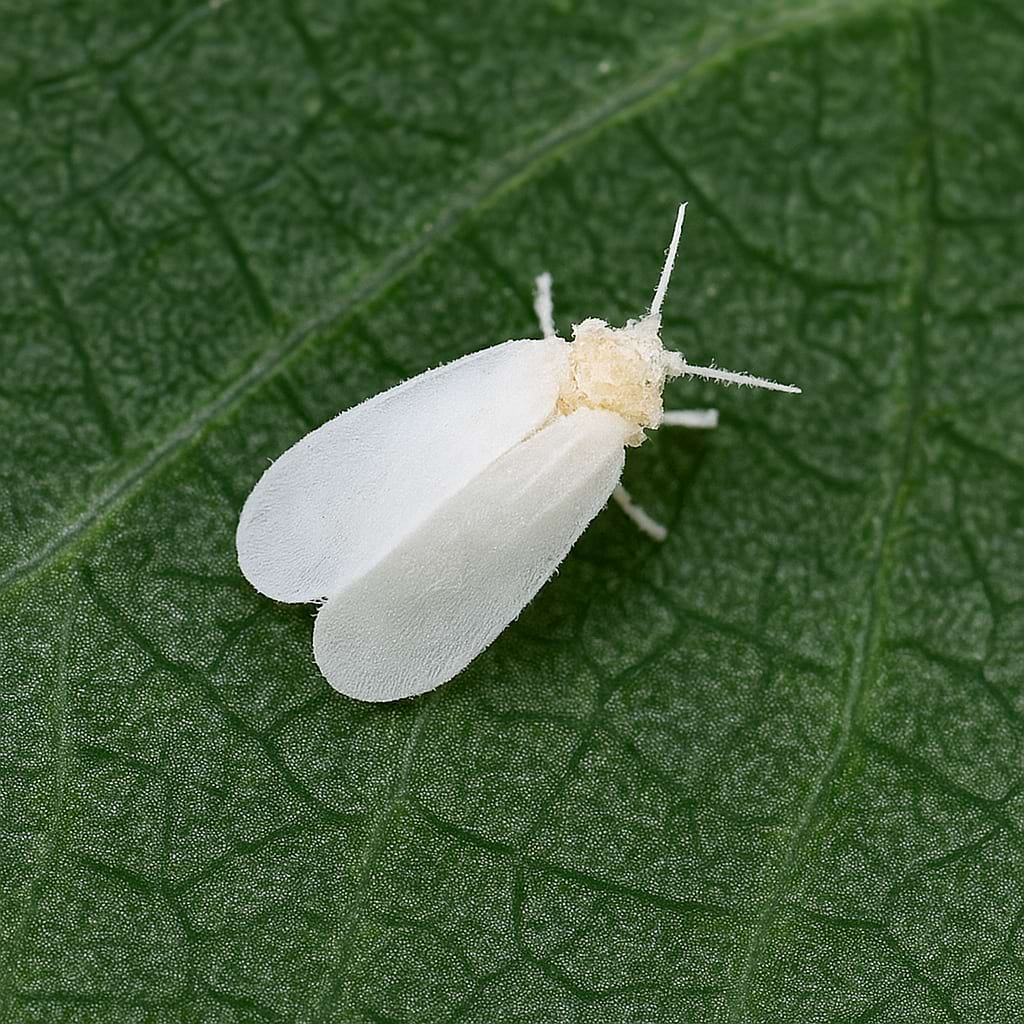
Whiteflies come in on summered-outdoor plants. Yellow sticky traps and weekly insecticidal soap handle them.
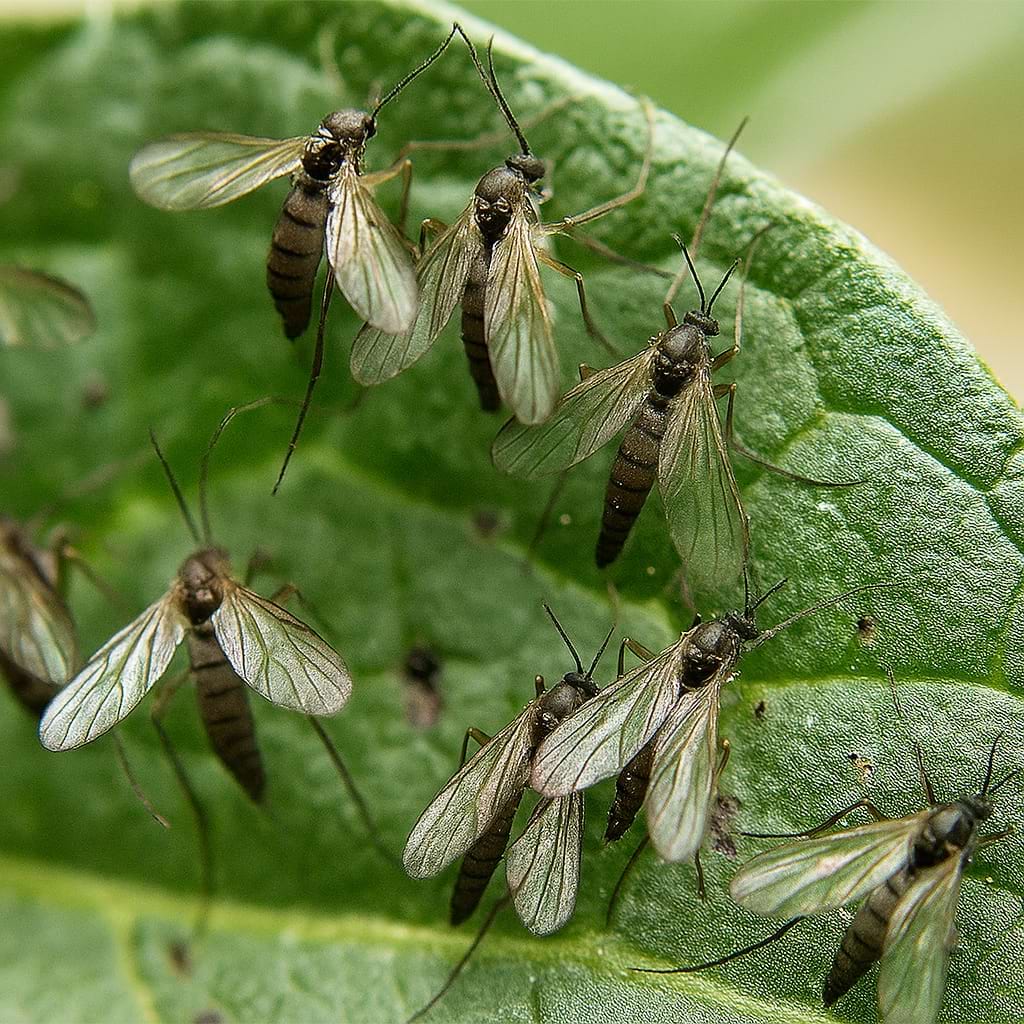
Fungus gnats mean the soil is too wet. Let the top inch dry, top-dress with sand, and use sticky traps.
See pest prevention in winter for seasonal patterns.
🩺 Common Lipstick Plant Problems
Most issues trace back to watering, light, or temperature.
Yellowing leaves on the lower interior usually mean overwatering. Check the soil; if it stays wet a week after watering, cut back.
Root rot is the worst case. Mushy stems plus a sour smell means you slide the plant out, cut to clean tissue, dust with cinnamon, and replant in fresh dry mix.
Failure to bloom almost always means not enough light, a missed autumn cool-down, or too much nitrogen. Move closer to the window or add a grow light.
Leaf drop follows a sudden shock: a move, a draft, or a big watering swing. Stabilize and wait.
Brown crispy edges point to dry air, inconsistent watering, or salt buildup. Boost humidity and flush the soil.
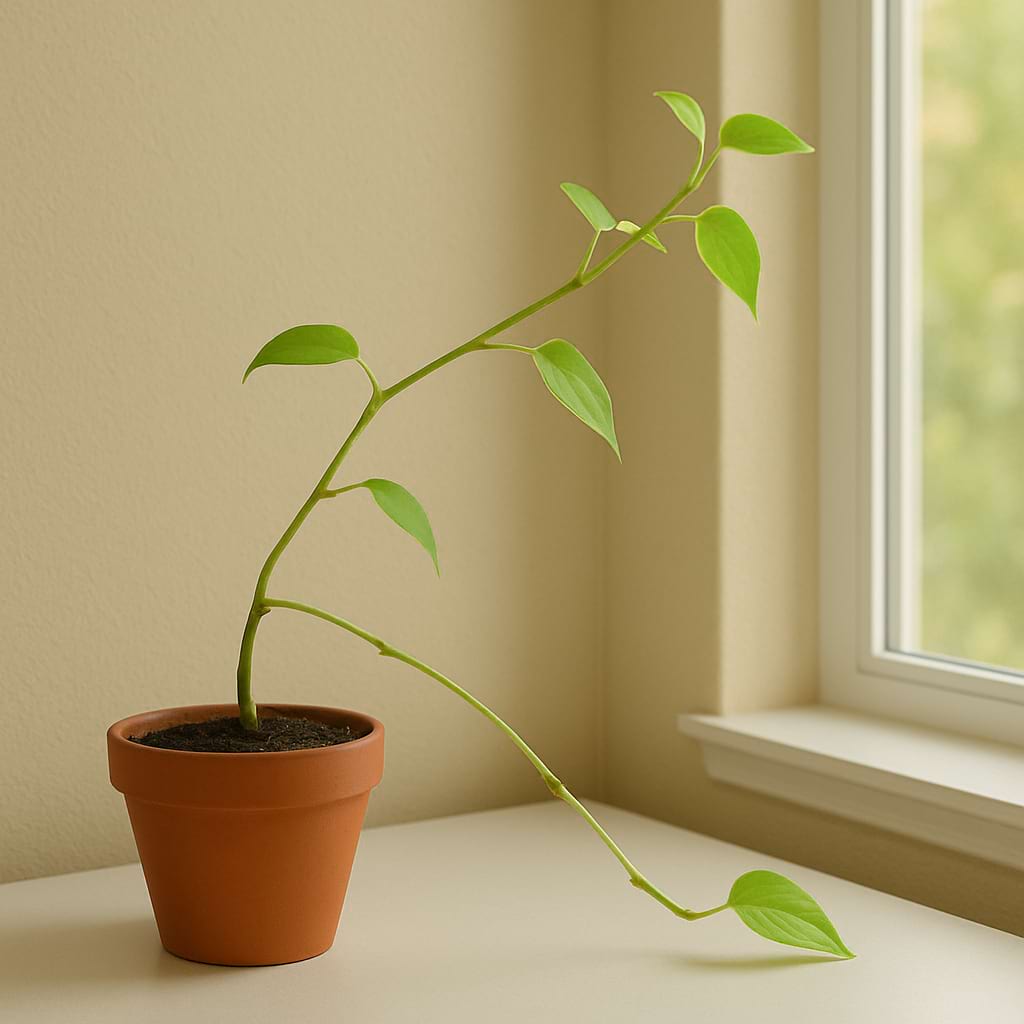
Leggy growth with bare stems means the plant is reaching for light. Move it brighter and prune back.
Wilting with dry soil means thirsty; with wet soil means rotting. Check before acting.
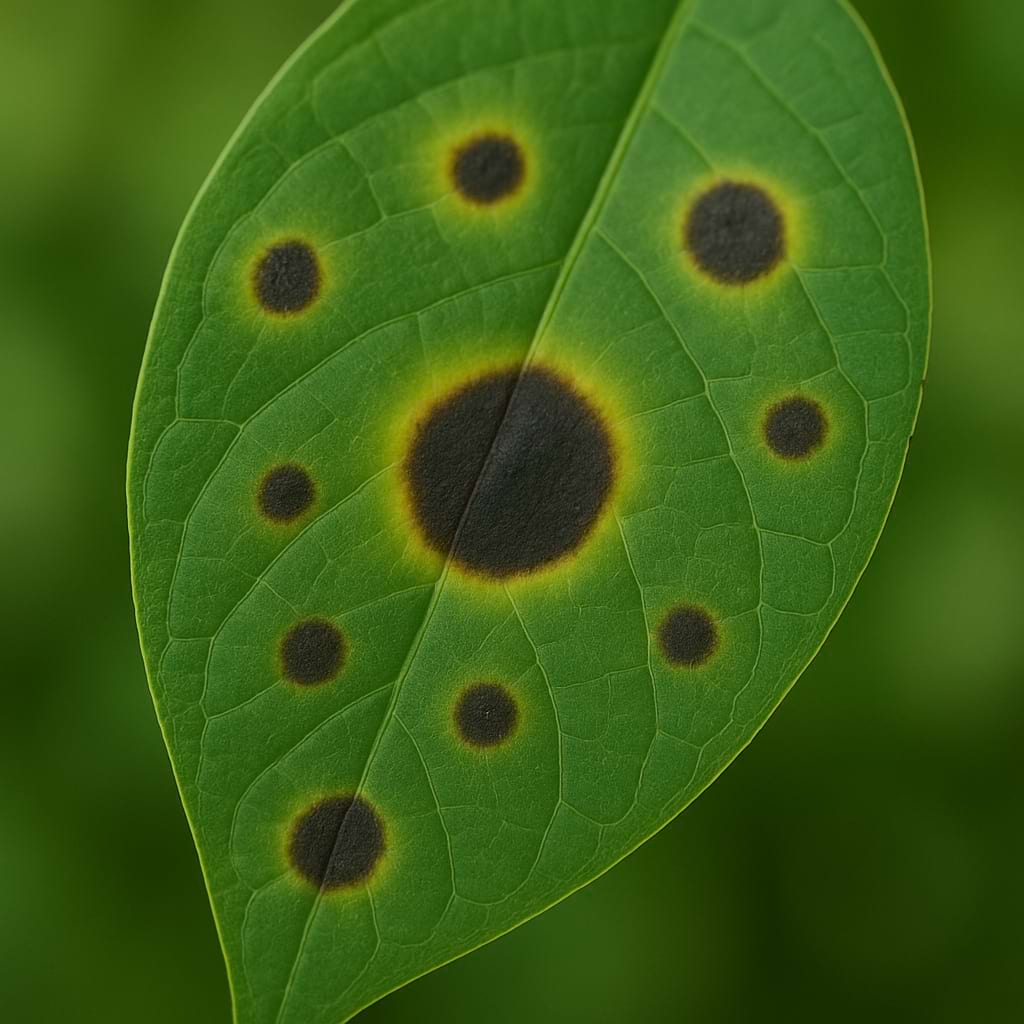
Brown-black spots on leaves are fungal leaf spot from overhead watering or botrytis on spent flowers. Trim, water only at the soil, and improve air flow.

🖼️ Lipstick Plant Display and Styling Ideas
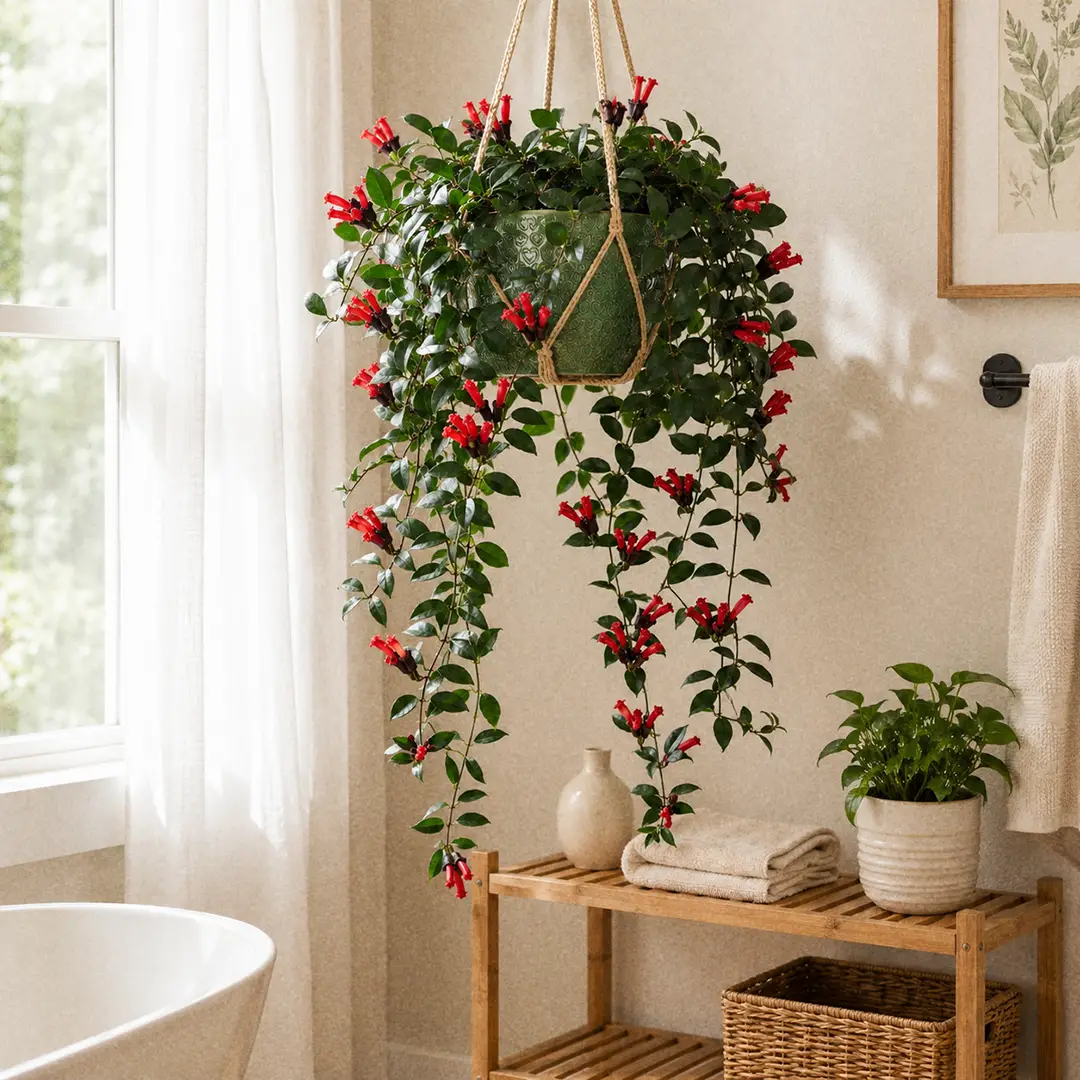
This is a hanging-basket plant first. Let the stems cascade fully; the flowers at the tips are the visual payoff.
Pot Pairings
Cream or ivory ceramic frames the dark foliage cleanly. Charcoal or matte black makes the red flowers pop. Brass or copper hangers add warmth. Avoid loud floral pots; the flowers carry all the visual weight.
Spaces That Work
A bright bathroom near a curtained window, a macrame hanger over a kitchen sink, a tall plant stand beside a sofa, or bark-mounted on a humid sunroom wall.
Companion Plants
Pair with a Hoya Carnosa or String of Hearts on the same window. Place a Peperomia Emerald Ripple below for a calm green backdrop. Avoid sun-hungry plants like a Jade Plant on the same window.
Scale It Up
Three matching baskets along a bright bathroom window create a flowering curtain through summer. Stagger the heights; the trailing stems weave together into a coordinated display.
🌟 Lipstick Plant Pro Care Tips
✅ The autumn cool-down is the bloom trigger. Drop night temps to 60-65°F and cut watering for four to six weeks in November and December.
💧 Drench, drain, dry, repeat. Wet-then-dry rhythm of an epiphyte, not the steady moisture of a fern.
✂️ Prune after every bloom flush. Trim spent flowering stems back by a third to double next year's flowering tips.
🪴 Stay snug in the pot. Slightly root-bound plants bloom more reliably.
☀️ Bright indirect with a touch of morning sun. Get the light right and most other issues solve themselves.
🛁 Bathrooms are bonus territory. Bright bathroom windows are one of the best homes for this plant.
🐾 Pet-safe peace of mind. Non-toxic to cats, dogs, and humans.
🔄 Quarter-turn weekly. Keeps the trailing stems even instead of leaning to one side.
❓ Frequently Asked Questions
Is the Lipstick Plant easy to care for?
Yes, easier than its tropical Gesneriad reputation suggests. Give it bright indirect light, water when the top inch is dry, prune after each bloom, and feed every two weeks at half strength. The one skill to learn is the autumn cool-down rest.
Why is my Lipstick Plant not blooming?
Three causes account for nearly all bloom failure: not enough light, a missed autumn cool-down, or too much high-nitrogen fertilizer. Move closer to light, give it a four to six week rest at 60-65°F nights, and switch to bloom booster for two or three feedings.
Is the Lipstick Plant toxic to cats and dogs?
No. Non-toxic to cats, dogs, and humans, just like its African Violet and Goldfish Plant cousins.
How often should I water my Lipstick Plant?
Check the soil, do not count days. Top inch dry, deeper layer still faintly damp means water. Typically every five to seven days in spring and summer, every ten to fourteen in winter.
Can a Lipstick Plant take direct sun?
Yes, one to three hours of soft morning sun a day, and many growers find this helps trigger blooms. What it does not tolerate is unfiltered hot afternoon sun in summer.
How do I propagate it?
Stem cuttings. Take a four to six inch piece from a non-flowering tip, strip the lower leaves, and root in water or damp soil. Roots appear in two to three weeks.
Why are my leaves dropping?
Usually a sudden shock: a move, a draft, an overwatering event, or a sharp light swing. Some drop during the autumn rest is also normal.
How long does a Lipstick Plant live?
Five to ten years indoors with steady care. Cuttings essentially restart the genetic line indefinitely.
Can I keep it in a bathroom?
Absolutely, and a bright bathroom is one of the best possible homes for this plant. The only requirement is a window with bright indirect light.
Why are my flower buds browning before they open?
Bud drop usually means a sharp moisture swing, fertilizer salt burn, or a sudden temperature shock. Pause feeding, stabilize the spot, and rebuild a steady watering rhythm. Fresh buds usually appear within a few weeks.
ℹ️ Lipstick Plant Info
Care and Maintenance
🪴 Soil Type and pH: Light, airy, slightly acidic mix with perlite, orchid bark, and a peat or coco coir base; pH around 6.0-6.5.
💧 Humidity and Misting: Happiest above 50 percent, tolerates average household humidity, struggles below 30 percent.
✂️ Pruning: Trim leggy stems back by a third after each bloom flush to keep the plant full and push more flowers.
🧼 Cleaning: Gentle wipe with a soft damp cloth on the smooth leaves; brush dust off between leaf pairs every couple of months.
🌱 Repotting: Every 2-3 years, only when truly root-bound; the plant blooms best when slightly snug in its pot.
🔄 Repotting Frequency: Every 2-3 years
❄️ Seasonal Changes in Care: Reduce watering and pause feeding through the lowest-light winter weeks; give the plant a slightly cooler, drier rest to set the next round of flower buds.
Growing Characteristics
💥 Growth Speed: Moderate
🔄 Life Cycle: Evergreen perennial
💥 Bloom Time: Summer through early autumn, often with a smaller spring flush indoors
🌡️ Hardiness Zones: 10-11 outdoors as a tender perennial; grown indoors elsewhere
🗺️ Native Area: Tropical forests of Malaysia, Indonesia, southern Thailand, Java, and the Malay Peninsula
🚘 Hibernation: No, but growth slows visibly in winter
Propagation and Health
📍 Suitable Locations: Hanging baskets near east- or west-facing windows, bright bathroom corners, kitchen plant shelves, sheltered covered porches in summer, plant stands under skylights
🪴 Propagation Methods: Very easy from 4-6 inch stem-tip cuttings rooted in water or directly in damp soil.
🐛 Common Pests: Mealybugs, Spider Mites, Aphids, Thrips, Fungus Gnats, Whiteflies
🦠 Possible Diseases: Root rot, botrytis gray mould, fungal leaf spot, southern blight in warm wet conditions
Plant Details
🌿 Plant Type: Epiphytic trailing vine
🍃 Foliage Type: Evergreen, waxy, smooth-textured
🎨 Color of Leaves: Glossy mid- to deep-green, some cultivars marked with cream or maroon
🌸 Flower Color: Scarlet red most commonly, with orange, coral, yellow, and bicolor cultivars
🌼 Blooming: Yes, flowers heavily through summer indoors with adequate light and a winter rest period
🍽️ Edibility: Not edible
📏 Mature Size: 6-12 inches at the crown; vines trail 2-3 feet
Additional Info
🌻 General Benefits: Long-lasting summer flowers, pet-safe, easy from cuttings, well suited to hanging baskets, reliable rebloomer year after year
💊 Medical Properties: None recorded; the sap can mildly irritate sensitive skin
🧿 Feng Shui: Brings warm, lively, passionate energy and is associated with cheer and abundance in shaded corners
⭐ Zodiac Sign Compatibility: Leo
🌈 Symbolism or Folklore: Affection, warmth, and lasting attraction
📝 Interesting Facts: The genus name Aeschynanthus comes from the Greek aischyne (shame) and anthos (flower), a reference to the way the bright tubular flower seems to "blush" out of its dark calyx. The species name radicans means "rooting," because the trailing stems often produce small aerial roots along their length, which is how the plant attaches itself to tree bark in the wild. The Lipstick Plant is a true epiphyte, growing on branches in tropical forests rather than in the ground, which is why it wants an airy, fast-draining mix and dislikes heavy wet soil.
Buying and Usage
🛒 What to Look for When Buying: Look for a full hanging basket with several long stems trailing evenly around the rim, dark glossy leaves with no soft brown patches, and ideally a few fat unopened maroon calyces already forming at the stem tips. Avoid plants with limp drooping stems, yellow lower leaves, or a pot that smells sour at the soil line.
🪴 Other Uses: Hanging-basket centerpiece, terrarium-edge trailer, mounted on bark slabs as an epiphyte display, gift plant for beginner indoor gardeners
Decoration and Styling
🖼️ Display Ideas: Hanging basket near a bright bathroom window, macrame hanger over a kitchen sink, tall plant stand at the side of a sofa, bark-mounted display on a humid sun room wall
🧵 Styling Tips: Let the trailing stems cascade fully without pinning them up, since the dramatic red flowers along the stem tips are the visual payoff; pair with quieter green foliage plants below to give the eye a calm backdrop.
🪴 See also 🪴

Houseplant101 Forum
Questions & Comments
Ask a question, share your plant experience, or help other plant owners.
Comments are temporarily unavailable.
Open the Houseplant101 ForumNo comments yet
Be the first to ask a question or share your experience about this page.
Log in or create an account
Comments use your Houseplant101 Forum account, but you can stay on this page.
Create a new account